

Quality Assurance in High-Volume Packaging: Stop Defects Fast
One missing label feels small, until you’re 30,000 units into a run and pallets are already staged for pickup. A weak seal can do the same, it starts as a few leaks and quickly turns into scrap, rework, and a late shipment. In high-volume packaging, tiny errors don’t stay tiny because every repeat cycle multiplies the damage.
That’s why Quality Assurance can’t be a final look at the end of the line. It’s the system of checks, standards, and feedback loops that keeps every pack consistent and safe, shift after shift. When QA is built into the process, it catches problems early, before they show up in customer complaints or retailer chargebacks.
In this post, you’ll see where defects usually come from (seals, weights and fills, print and label errors, contamination), and why they spike during changeovers and fast ramp-ups. You’ll also learn how teams build QA into the line with practical controls like in-process checks, vision inspection, code verification, and clear escalation rules.
Finally, we’ll cover which checks matter most in high-volume projects, plus how to measure results so you can prove QA is working (scrap rates, rework time, first-pass yield, and customer returns).
High-volume packaging has unique risks, and QA is what keeps small issues from becoming big losses
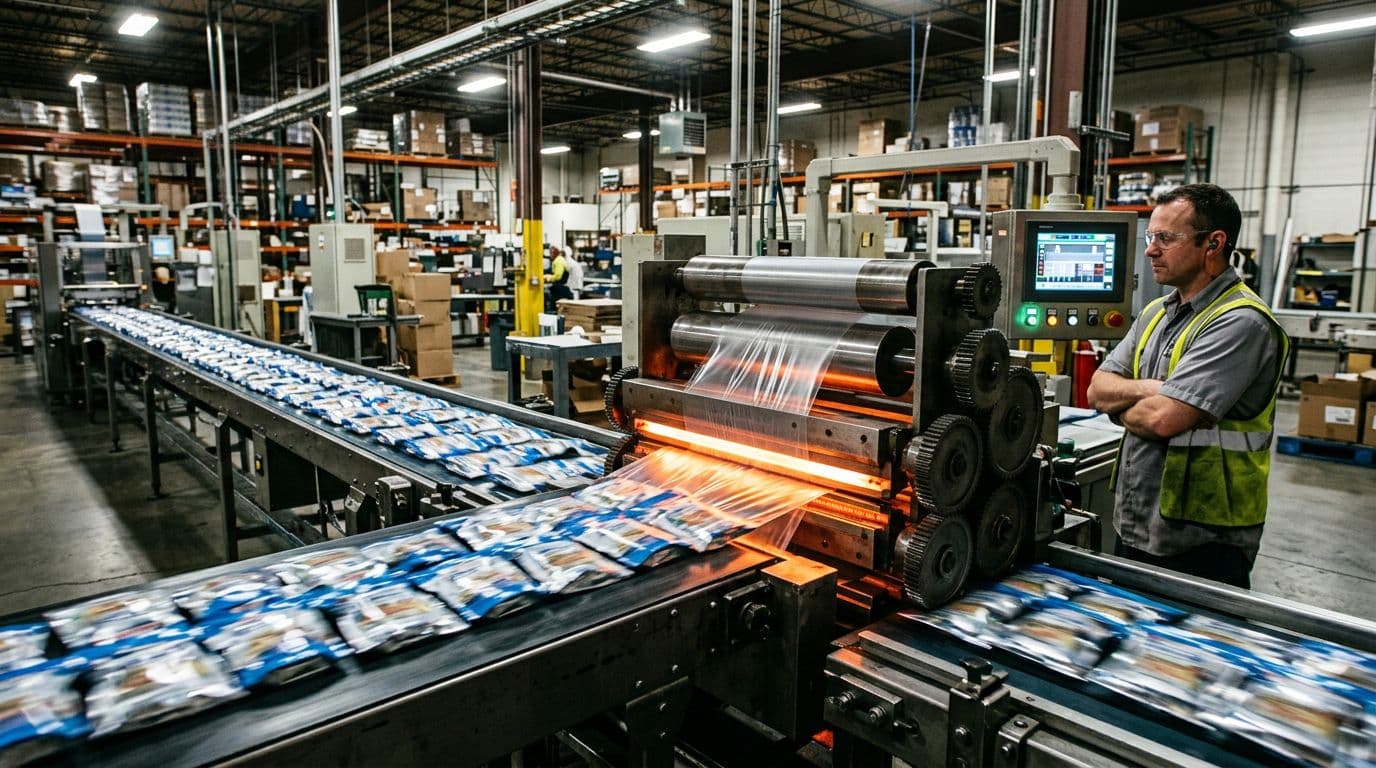
High-volume runs reward consistency, but they punish drift. When the line runs fast and repeats the same move thousands of times an hour, a tiny change in settings or materials can turn into stacks of unsellable product before anyone notices. That’s why Quality Assurance needs to sit inside the process, not just at the end.
In high-volume packaging, the real enemy is time, defects can multiply faster than your sampling plan can react.
What changes when the line runs faster and longer
Speed makes everything more sensitive. As output climbs, small shifts that were harmless on short runs become real failure points on long runs.
Heat and pressure don’t stay perfectly stable for eight or twelve hours. Seal temperature can drift, and pressure settings can creep as the machine warms up. Meanwhile, wear on sealing jaws (nicks, buildup, loss of flatness) can create weak seals that look fine until they hit distribution.
Materials change too. Film can stretch more as tension varies, which pulls graphics out of position and can thin out the seal area. Adhesives can also behave differently with temperature and humidity, so label tack and shrink sleeve performance may change from morning to afternoon.
People are part of the system, too. Operator fatigue shows up as slower reactions to alarms, missed checks, and “looks good” decisions that should have been measured. That’s why manual sampling alone can miss fast-moving problems. If you pull 10 packs every 30 minutes, a 5-minute defect burst can slip through and still create thousands of bad units.
The most common packaging defects in high-volume runs

Defects tend to cluster around a few “usual suspects,” and each one creates a downstream headache:
- Bad seals and leaks: A pouch that seeps on the pallet can trigger returns, cleanup, and rejected loads.
- Wrong fill weight or count: Underfills can bring retailer fines and consumer complaints, overfills quietly bleed margin on every unit.
- Mislabels and barcode issues: The product might be fine, but it won’t scan, so it gets blocked at receiving or at checkout.
- Crooked packs and poor registration: Skewed seals, wrinkled film, or off-center labels often fail retailer visual standards.
- Poor print quality or missing date codes: Smudged ink or missing codes can become a traceability problem during an investigation.
- Contamination: Dust, debris, or product residue where it doesn’t belong becomes a safety risk, especially in food or personal care.
- Damaged cartons: Crushed corners and weak case seals lead to shelf rejects and transit damage claims.
- Mixed lots: One pallet with blended dates or SKUs can force holds and time-consuming sorting.
Cost of poor quality, explained in plain numbers
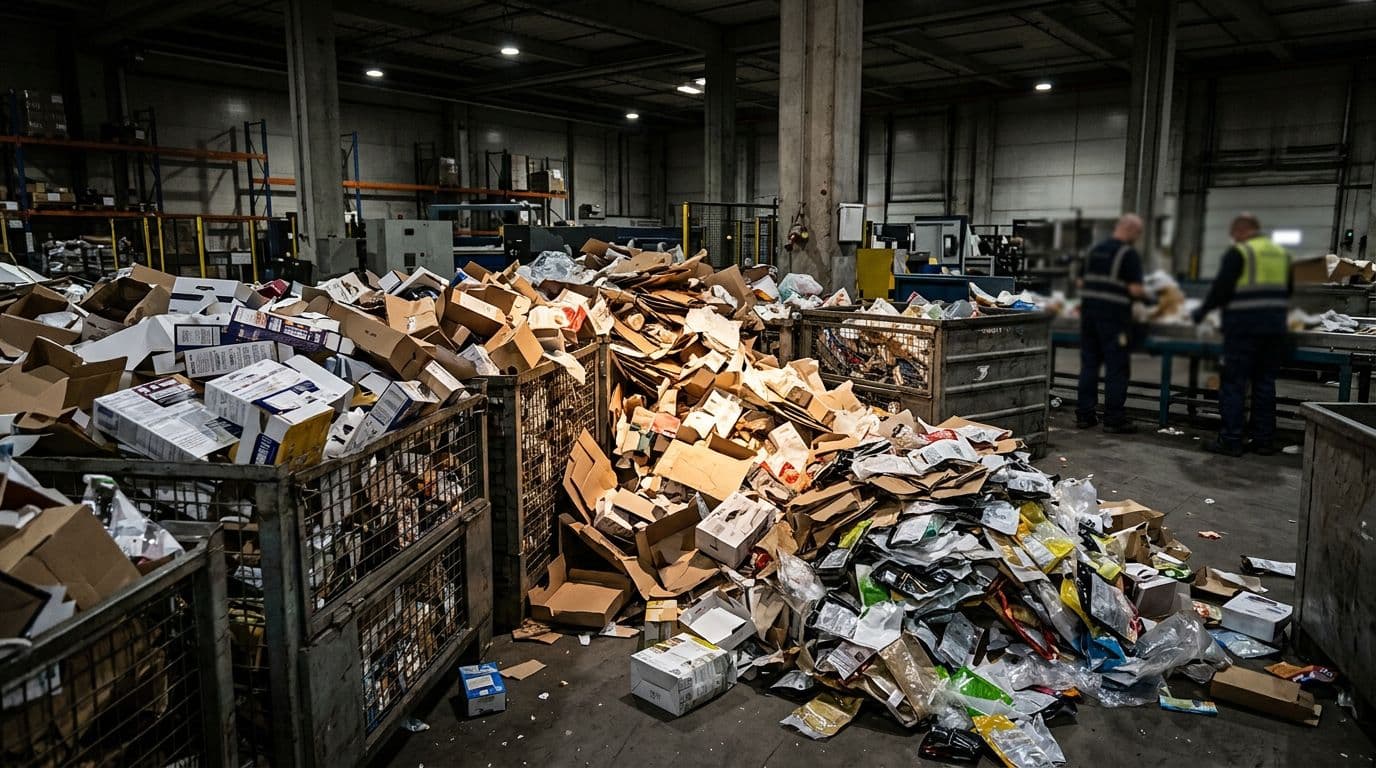
Picture a 1,000,000-unit run with a 1% defect rate. That’s 10,000 units that need to be scrapped, reworked, or sorted. Even if each unit is “cheap,” the pileup isn’t. You pay for the product, packaging components, and line time twice, once to make it, then again to fix or replace it. On top of that, the line slows down during troubleshooting, and schedule slip starts to ripple into shipping windows.
Hidden costs hit hardest because they show up later. Teams spend hours on investigation and documentation, and you may need expedited freight to protect service levels. Retailer chargebacks and returns add another layer, and brand damage is hard to win back once shoppers lose trust.
For a deeper look at how rework and quality-related line items impact total unit cost, see https://msl-indy.com/co-packing-pricing/.
One bad setting can create three problems at once: scrap today, downtime now, and complaints weeks later.
Build Quality Assurance into the process, not just at the end of the line
If you only look for defects at the end, you find them after you have already paid for them. The better approach is to prevent defects while the line runs, using layered checks that start at setup, continue through production, and finish with a final verification.
This works best when Quality Assurance is shared. Operators run checks and document results, maintenance protects machine condition and calibration, engineering locks in repeatable settings, and the quality team sets the standards and escalation rules. Think of it like guardrails, not a net, you want to stay on the road, not crash and hope the net catches you.
Start strong with a repeatable line setup and first-article approval
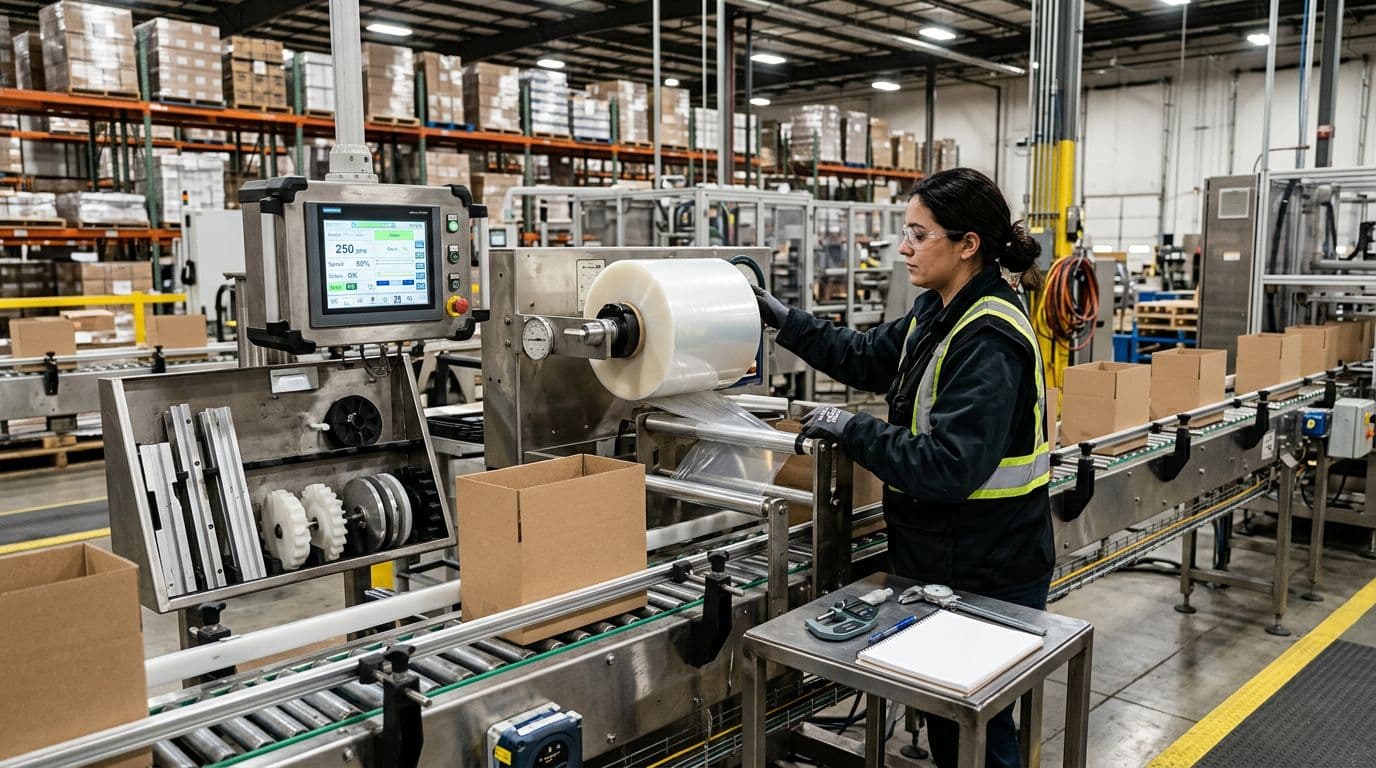
Most high-volume defects start with a small mismatch, the wrong film, the wrong carton, the wrong setting, or the wrong change parts. So before you run at speed, lock in a repeatable setup that any trained team can follow, on any shift.
A practical pre-run check should confirm:
- Correct materials: right film structure and roll direction, correct cartons, correct labels, correct glue or tape, correct case pack materials.
- Approved artwork and print specs: current revision, color targets if required, barcode grade expectations, and placement tolerances.
- Right change parts installed: guides, forming sets, jaws, pockets, and funnels matched to the SKU.
- Correct baseline settings: temperatures, dwell, pressures, vacuum, air, conveyor speed, web tension, and registration marks.
- Calibration status: scales, checkweighers, printers, sensors, and seal test tools within calibration, with due dates confirmed.
- Line clearance: no leftover components, work-in-process, or labels from the last SKU.
Then run a first-article approval like you mean it. Pull a small set of packs at startup, check seal appearance and strength, confirm label placement, verify weight or count, and confirm code date and lot are correct and legible. Only then should you release the line for full-speed production.
To keep it simple, use a one-page checklist with three columns: Check, Pass/Fail, Initials and time. Add a short notes box for anything adjusted. That documentation becomes your best tool for the next shift, because it turns “tribal knowledge” into a repeatable process.
A first-article signoff is more than a quality step, it is a clear handoff from setup mode to production mode.
Use in-process controls to catch drift before it becomes scrap
Setup gets you started, but drift is what hurts you over long runs. Heat cycles, wear, humidity, product variation, and even a new roll of film can push you off target. In-process controls catch those shifts early, while the fix is still small.
Focus on a few checks that directly track your biggest risks:
- Seal checks: visual seal inspection plus seal strength testing (peel, burst, or pull) based on your pack type.
- Leak detection: simple vacuum or pressure decay tests for flexible packs, especially after adjustments.
- Vision checks: label present, label position, print clarity, and barcode scannability where required.
- Weight checks: checkweigher monitoring plus periodic scale verification against a known standard.
- Count verification: for multipacks, kits, or case packs, confirm counts at the pack and case level.
Sampling does not need to be complicated. Pick a frequency that fits the risk and line speed (for example, every 15 to 30 minutes, at roll changes, and after any jam or adjustment). Record the actual numbers, not just “OK”, because trends tell you when you are drifting.
Most importantly, define stop rules in plain language. If a seal test fails, if leak tests fail, if code dating is unreadable, or if weights go out of spec, stop the line, quarantine product back to the last good check, and restart with a documented adjustment and a new first-article review.
Changeovers deserve special attention. Do a full line clearance before introducing new materials, then verify the first packs and cases against the new SKU. Mix-ups are preventable, but only if everyone treats clearance as a hard gate, not a quick sweep.
Automated inspection helps you check more without slowing down
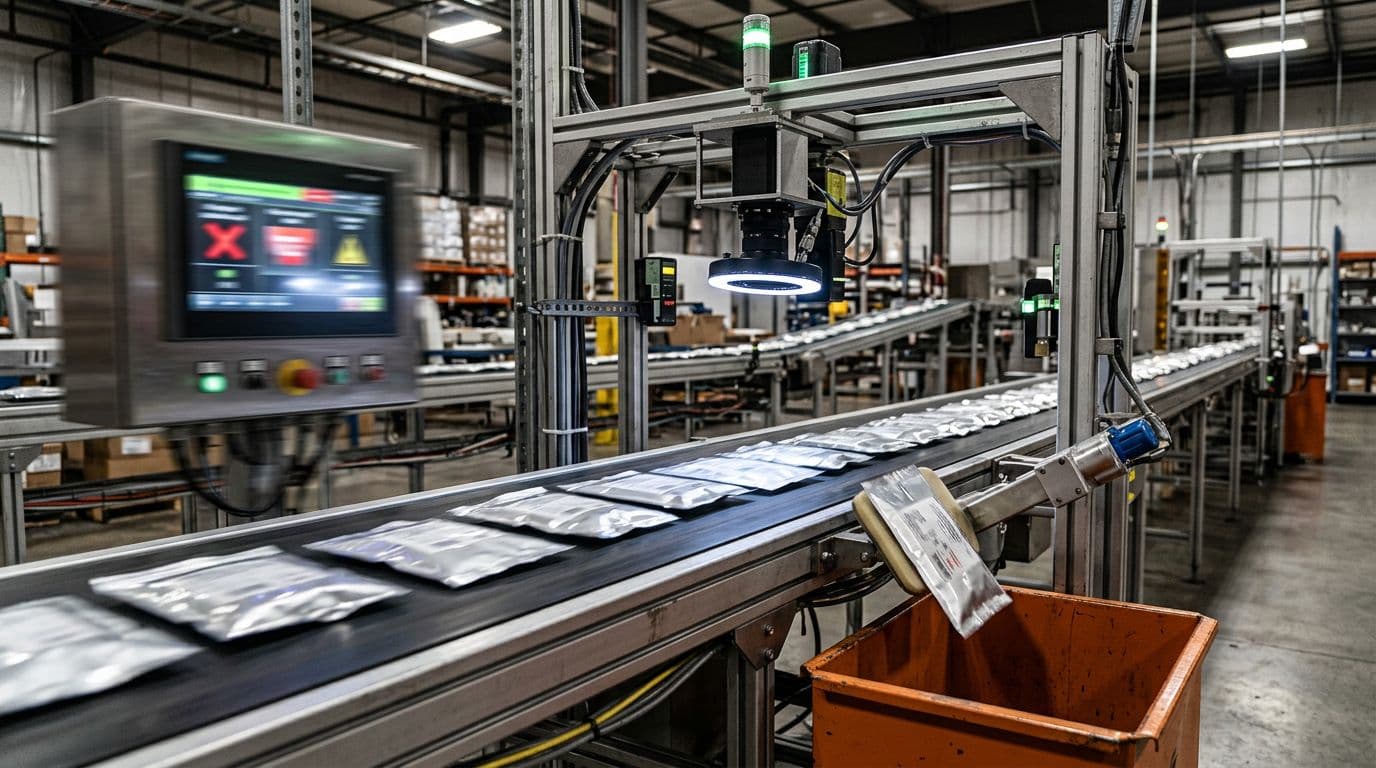
In 2026, automated inspection is less about fancy tech and more about coverage. Cameras and sensors can check every unit, every minute, without fatigue. That matters on high-volume packaging lines where defects can spike in a short window.
Here is what automation often looks like on the floor:
- Vision systems scan packs for label presence, placement, print quality, seal wrinkles, and missing components at line speed.
- Smart sensors track temperature, pressure, vibration, and weight signals in real time, so you see drift before it becomes scrap.
- AI-powered quality control helps spot patterns humans miss, like slow seal degradation or repeat label skew tied to a specific roll change.
- Automated code-dating verification confirms the right date, lot, and format, then flags smears, missing codes, or wrong location instantly.
The real value is what happens next: real-time alerts and automatic rejects. Instead of discovering a problem at pallet audit, the system can trigger an alarm, divert the bad pack, and help you isolate the time window for a targeted hold.
Still, automation only supports people. You still need clear procedures, a solid first-article process, and disciplined documentation. When those pieces work together, inspection stops being a bottleneck and becomes a safety net that runs at full speed.
The QA checkpoints that protect customers and keep production moving
High-volume, high-mix packaging doesn’t fail in one big dramatic moment. It fails in small, repeatable ways, then the line pays for it in jams, scrap, and holds. The smartest Quality Assurance plans use a simple flow: verify what comes in, monitor what you’re making, then confirm what you’re shipping.

Incoming materials checks that prevent problems later
Incoming checks are your first chance to stop defects before they become downtime. When film, trays, cartons, labels, inks, adhesives, and components show up, treat them like puzzle pieces, if one piece is off, the whole picture goes wrong at speed.
Start with identity and traceability. Confirm the item matches the PO and spec, then record supplier, lot ID, and receipt date. Lot tracking matters because it lets you quarantine fast if a print issue, seal issue, or adhesive failure pops up later.
Next, verify the items that cause the most grief on a running line:
- Dimensions and fit: Measure critical sizes (tray flange, carton depth, label width, cap thread, etc.). “Good” looks like repeatable fit with no forced assembly and no rubbing. Even small variation can cause misfeeds and jams.
- Roll direction and unwind (film and labels): Confirm roll orientation, core size, splice quality, and web edge condition. “Good” feeds smoothly, registers consistently, and doesn’t wrinkle or track sideways.
- COAs when needed: For materials where chemistry matters (inks, coatings, adhesives, some films), request and review Certificates of Analysis against your requirements. “Good” matches spec and lot, with no substitutions.
- Storage conditions: Check that materials arrive undamaged and are stored correctly (temperature, humidity, FIFO, and light exposure where relevant). “Good” means inks don’t thicken, labels don’t curl, and adhesives keep their tack.
The payoff is real. Better incoming control means fewer jams, better seals (because film structure and tray surfaces behave as expected), and fewer print issues (because ink, labels, and roll direction match the equipment setup).
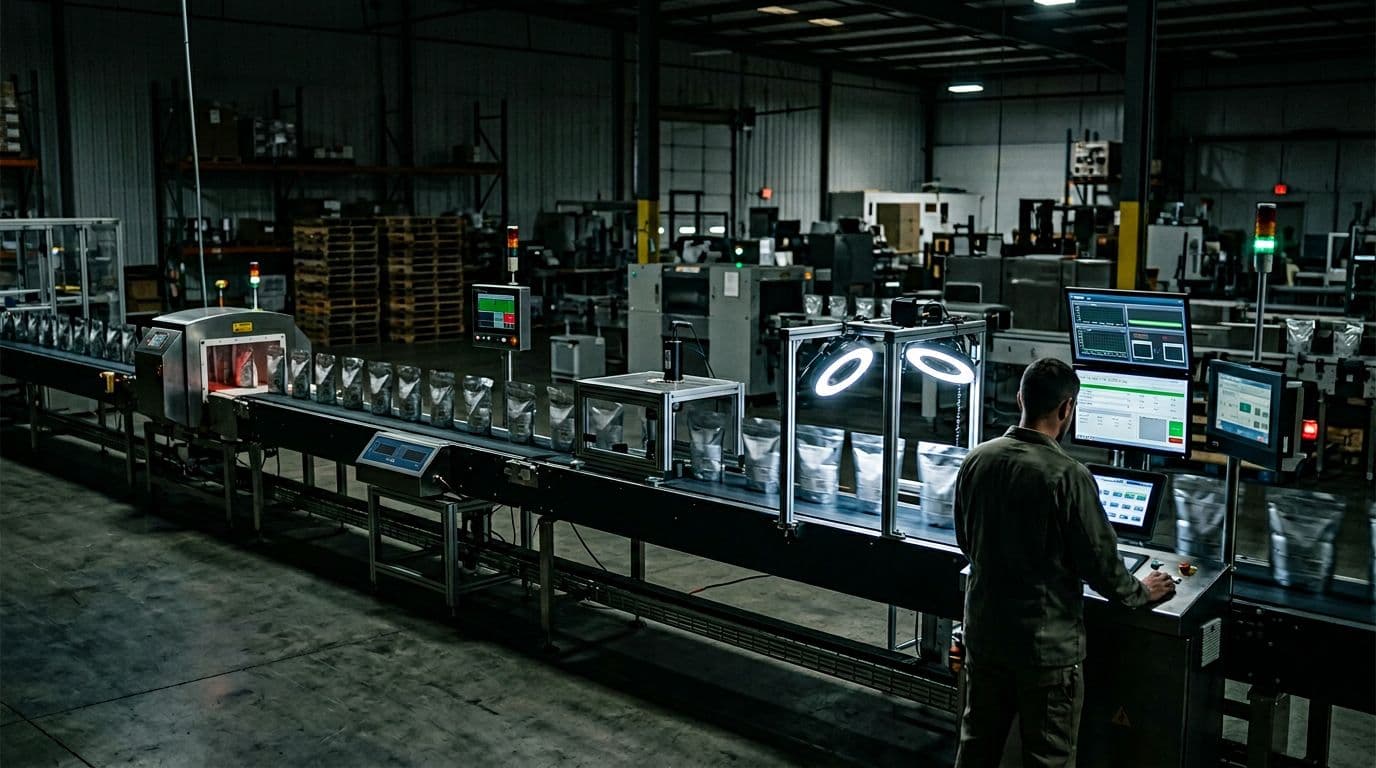
On-line checks for seal integrity, weight, and coding accuracy
Once the line is running, your job shifts from “is it right?” to “is it staying right?” On-line checks catch short defect bursts, especially after roll changes, minor stops, and operator adjustments.
Common tools and what “good” looks like:
- Checkweighers: Every unit stays inside set limits, with rejects separated cleanly. Trend alarms help you catch drift before it becomes a pile.
- Metal detection or X-ray (when applicable): Sensitivity is verified on schedule, test pieces trigger rejects, and the reject device actually works every time.
- Leak testers (vacuum, pressure decay, burst, or other methods): Packs hold pressure or vacuum within limits, and failures don’t cluster after a jaw temp change or film splice.
- Seal inspection (camera or manual visual plus periodic strength tests): Seals look uniform, no wrinkles in the seal area, no “fish mouths,” no burn-through, and strength meets your standard.
- Code readers and barcode verification: Codes are present, legible, in the right location, and scan consistently. Barcodes meet the grade your customers expect.
When a check fails, speed matters, but so does discipline. Use a simple, repeatable response:
- Hold product immediately, don’t “run it out.”
- Isolate the time window from the last known good check to the failure (include any re-starts, jams, or adjustments).
- Investigate the root cause, then correct it (settings drift, worn parts, bad roll, printer fault, changeover error).
- Re-approve with a documented good check before releasing held product.
A failed check is only “handled” when you can explain it, contain it, and prevent it from repeating.

Case packing and pallet checks that reduce shipping damage and chargebacks
End-of-line mistakes are painful because they’re expensive to sort and easy for retailers and carriers to reject. At scale, consistency is the whole point. If one pallet looks different, it’s the one that gets flagged.
“Good” at the case and pallet level is simple and repeatable:
- Case count accuracy: Each case has the right number of units, and the pattern is consistent. Random audits should match the spec every time.
- Case seal quality: Tape or glue has full contact, proper overlap, and clean compression. Cases shouldn’t pop open when lifted by one end.
- Carton label placement: Labels sit in the right zone, lie flat, and scan on the first pass. Misplaced labels slow receiving and trigger relabel work.
- Pallet pattern and stability: The stack stays square, corners align, and height stays within the expected limit. A stable pallet doesn’t shift when pushed lightly.
- Stretch wrap, corner boards, and protection: Wrap has enough containment force, corner boards protect edges, and top sheets (when used) help with dust and moisture.
Retailers want scan-friendly labels and uniform pallets. Carriers want loads that won’t shift, crush, or shed cases. When you hit those expectations every day, you cut damage claims, avoid chargebacks, and keep trucks moving on schedule.
How to measure QA performance in high-volume packaging without drowning in data
When the line runs fast, it’s easy to track everything and understand nothing. The fix is to pick a small set of Quality Assurance metrics that connect to action, then trend them weekly so leaders can see progress without chasing noise.

The few metrics that tell the real story
If you track five things well, you’ll usually find the root of most packaging problems.
- First-pass yield (FPY): Percent of units that ship without rework. This is the cleanest view of process health.
- Defect rate by type: Track the top 3 to 5 defects (seal leaks, label placement, unreadable codes, underweight, contamination). Knowing what failed beats a generic “defect rate.”
- Scrap and rework: Scrap shows what you lost, rework shows what you had to “pay twice” to fix. Keep both in units and minutes.
- Downtime tied to quality stops: Minutes stopped for QA holds, investigations, adjustments, and re-approvals. Put it on the same chart as output.
- Customer complaints and returns: The final scorecard. A low internal defect rate means little if issues show up at receiving or in the field.
OEE (Overall Equipment Effectiveness) is a simple way leadership understands performance. It combines Availability (run time vs. stop time), Performance (speed vs. ideal), and Quality (good units vs. total). QA hits all three. Bad quality increases stops, slows the line, and creates rejects.
One ugly hour happens. A bad trend repeats. Trend weekly and monthly before you rewrite the process.
For simple targets, start with direction and stability: improve FPY quarter over quarter, reduce the top defect type, and cut quality-related downtime. Then tighten specs.
Traceability and lot control, so you can isolate issues fast
High volume turns a small issue into a big hold unless you can narrow the window. Your goal is to trace any finished case back to the exact setup and time it was made.
At minimum, each shipper case should tie to:
- Batch and lot code (finished goods and key components)
- Time stamp or a defined time window (for example, hour blocks)
- Packaging line ID and shift
- Operator or crew ID (even just initials)
When a defect pops up, isolate product from the last known good check to the first failure, plus any restarts or jams. That containment rule keeps the hold small and the investigation fast.
Simple recordkeeping habits help during audits and customer questions:
- Write actual readings, not “OK” (seal temp, checkweigher checks, code verification).
- Log every roll change, splice, and material lot swap with time.
- Keep first-article approval sheets with samples or photos attached when possible.

Root cause and CAPA that actually sticks
Fast fixes feel good, but they don’t always last. A simple root-cause method keeps the team honest.
Use 5 Whys for straightforward failures (like missing codes). Use a fishbone diagram when causes might be spread across machine, material, method, people, and environment (like seal leaks that come and go).
Good corrective actions change the system, not just the symptoms:
- Process change: lock settings, add a check, adjust sampling after restarts.
- Training: retrain to one standard work method, then verify skill.
- Maintenance schedule: replace wear parts before they fail (jaws, rollers, printer heads).
- Supplier fix: stop repeat issues by tightening incoming specs or changing materials.
Finally, verify the fix with data. If the defect type drops, FPY rises, and quality downtime falls for the next few runs, you didn’t just “close” the CAPA, you solved it.
Conclusion
Quality Assurance is what keeps a high-volume run stable when speed, heat, materials, and people all shift across a long day. When QA lives in setup, in-process checks, and clear stop rules, you catch drift early, protect customers, and avoid the costly pileup of scrap, rework, and late shipments. It also matters more now because new materials (especially recyclable options) can behave differently on the line, so consistency has to be tested and proven, not assumed.
Before the next big run, take 30 minutes and pressure-test your QA plan:
- Lock in a repeatable setup and first-article signoff for every SKU
- Focus on a few high-impact in-process checks (seals, weight, codes, labels)
- Set simple stop rules and quarantine windows, then follow them every time
- Trend a small set of metrics (FPY, top defects, scrap, quality downtime)
- Confirm traceability so you can isolate issues fast
If you want a practical framework for planning and executing large packaging work with fewer surprises, review https://msl-indy.com/packaging-and-fulfillment/. Thanks for reading, and if you changed one thing this week to tighten QA, what would give you the fastest payoff?
