

How Contract Packaging Helps E-commerce Brands Scale Faster and Ship Right
Online orders can climb fast, then the real mess starts: packing slips go missing, labels get mixed up, boxes arrive damaged, and your support inbox fills with “wrong item” and “where’s my order?” messages. At that point, growth stops feeling exciting because every extra sale creates more chances to disappoint a customer.
That’s where Contract Packaging comes in. In plain terms, it’s outsourcing packing and related work (like labeling, kitting, and shipment prep) to a partner that does it all day, with trained teams, set workflows, and quality checks. Instead of building your own mini-warehouse, you pay for the capacity you need, when you need it.
This matters even more as e-commerce keeps expanding (global sales entered 2026 at over $6.42 trillion). Speed, cost control, consistency, and the unboxing experience all hit your margins and your reviews, especially when mobile and social spikes bring unpredictable demand.
For example, a small brand might go from 40 orders a day to 2,000 during a creator campaign. Without help, you’re hiring temp labor, buying supplies last-minute, and hoping nothing breaks; with the right co-packer, you can keep shipping on time without losing control of presentation.
In the sections ahead, you’ll see how it works, when it’s a good fit, what to watch out for, and how to get started with fewer surprises (including practical contract packaging for Amazon ecommerce lessons that apply to most online channels).
What contract packaging actually covers for online sellers
Contract Packaging for e-commerce is a menu of services that sits between your product and the customer’s doorstep. It includes fulfillment labor, packaging materials, quality checks, and the small details that keep orders consistent as volume climbs. In other words, it’s rarely just “put it in a box.” It’s the repeatable system that protects your reviews when demand gets noisy, like promos, holiday peaks, and creator-driven spikes.

Pick, pack, and ship support that scales with daily order swings
Order volume doesn’t rise in a straight line. One day you ship 80 orders, then a flash sale hits and you need 1,800 out the door. A Contract Packaging partner can flex staffing, add packing stations, and keep product flowing without your team pulling late nights.
The best setups protect speed with simple controls, like barcode scans at pick, standardized pack steps, and a final check before labels print. That structure matters when you have same-day cutoffs and carrier pickups that won’t wait.
During peak seasons (holidays, big promos, influencer spikes), capacity comes from three places working together: trained labor pools, the right equipment (conveyors, scanners, labelers), and clear work instructions. If one of those is missing, everything slows down. For a closer look at what that end-to-end flow can include, see these pick pack and ship services.
If your fulfillment process depends on a few hero employees, it’s fragile. A partner builds a process that works on a normal Tuesday and on your biggest day.
Kitting and bundling that helps you sell more per order
Kitting means combining multiple items into one ready-to-ship set, so you can sell bundles without building them one order at a time. That includes subscription boxes, multi-packs, gift sets, and promo bundles. Think of it like pre-making the “best seller combo meal” so every order ships fast and looks consistent.
For e-commerce, kitting supports growth goals you can feel quickly:
- Higher average order value because bundles make it easier to add “one more item.”
- Faster launches for seasonal sets and limited drops.
- Fewer in-house touches because you are not assembling boxes on the office floor.
A good partner also tracks components, so you don’t burn through one item and stall the whole bundle. If you want examples of how this works in practice, check out professional kitting services.

Labeling, inserts, and compliance work that keeps orders accurate
Label work is where small mistakes turn into big headaches. Contract Packaging often includes SKU labels, barcodes, lot codes, date codes, country-of-origin labels, and warning labels, depending on your product and channel requirements. This is also where FBA prep, retail ticketing, or other channel-specific stickers may get handled.
Inserts matter too, especially for DTC. Partners can add how-to cards, thank-you notes, samples, or promo inserts without slowing the line down. When this step is controlled, accuracy improves, and that can reduce customer complaints, returns, and chargebacks tied to “wrong item” or “missing parts.”
Packaging design and material choices that survive parcel shipping
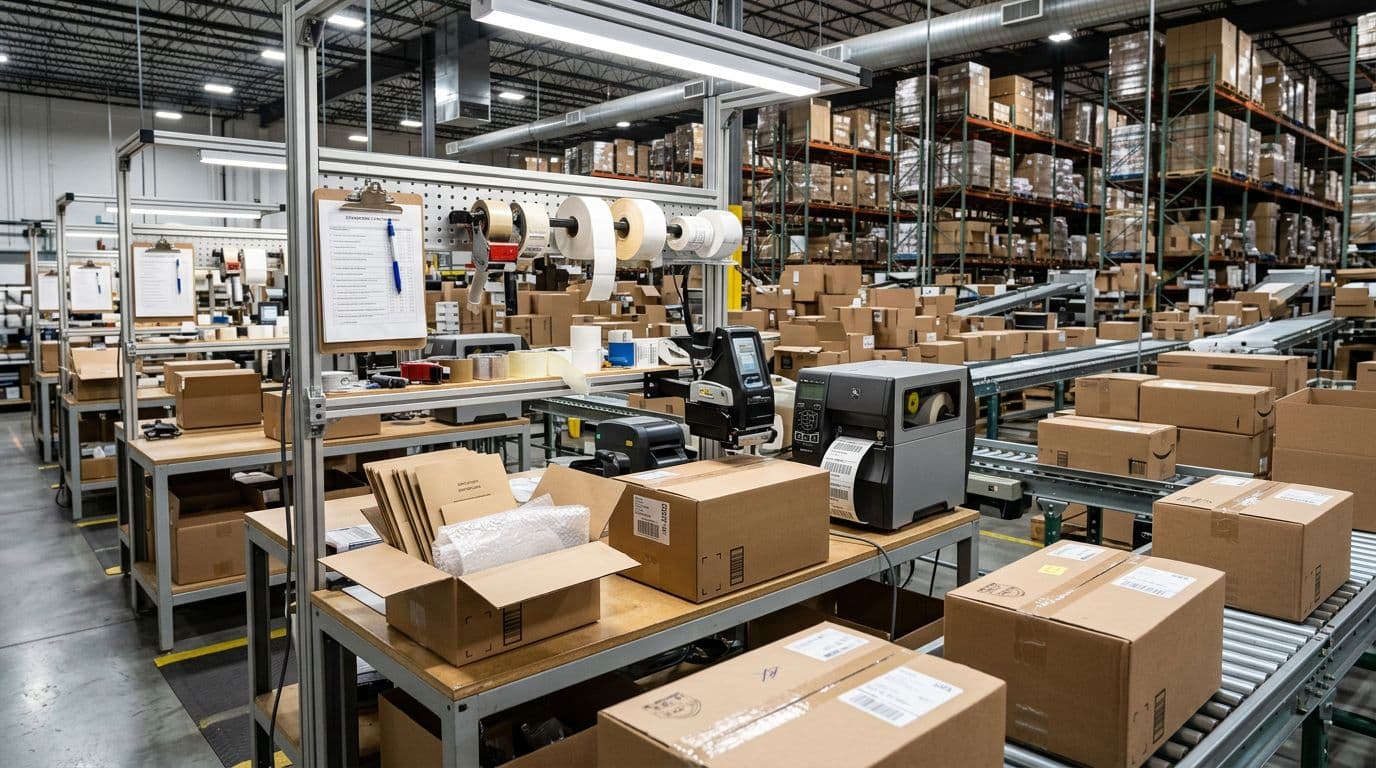
Parcel shipping is rough. Boxes face drops, slides, vibration, and compression from other packages. Contract Packaging support often includes right-sizing (so products don’t rattle), protective packaging selection (void fill, cushioning), and choosing the right corrugate strength and seals for your weight and fragility.
When packaging fits the product, you reduce damage and keep shipping costs in check. It also upgrades the unboxing moment, because nothing kills “premium” like a crushed carton and loose items. Many brands start with a basic shipper, then improve over time using damage feedback and simple pack-out testing.

How contract packaging removes growth limits in cost, speed, and space
Growth usually breaks in the same three places: you run out of cash, you run out of time, or you run out of room. Contract Packaging removes those ceilings by giving you capacity on demand. Instead of building a mini operation inside your business, you plug into a team, space, and process that already exists.
The result is simple. You keep momentum during growth spurts, while protecting margins and customer experience.
Trade fixed costs for flexible costs so you can invest in marketing and inventory
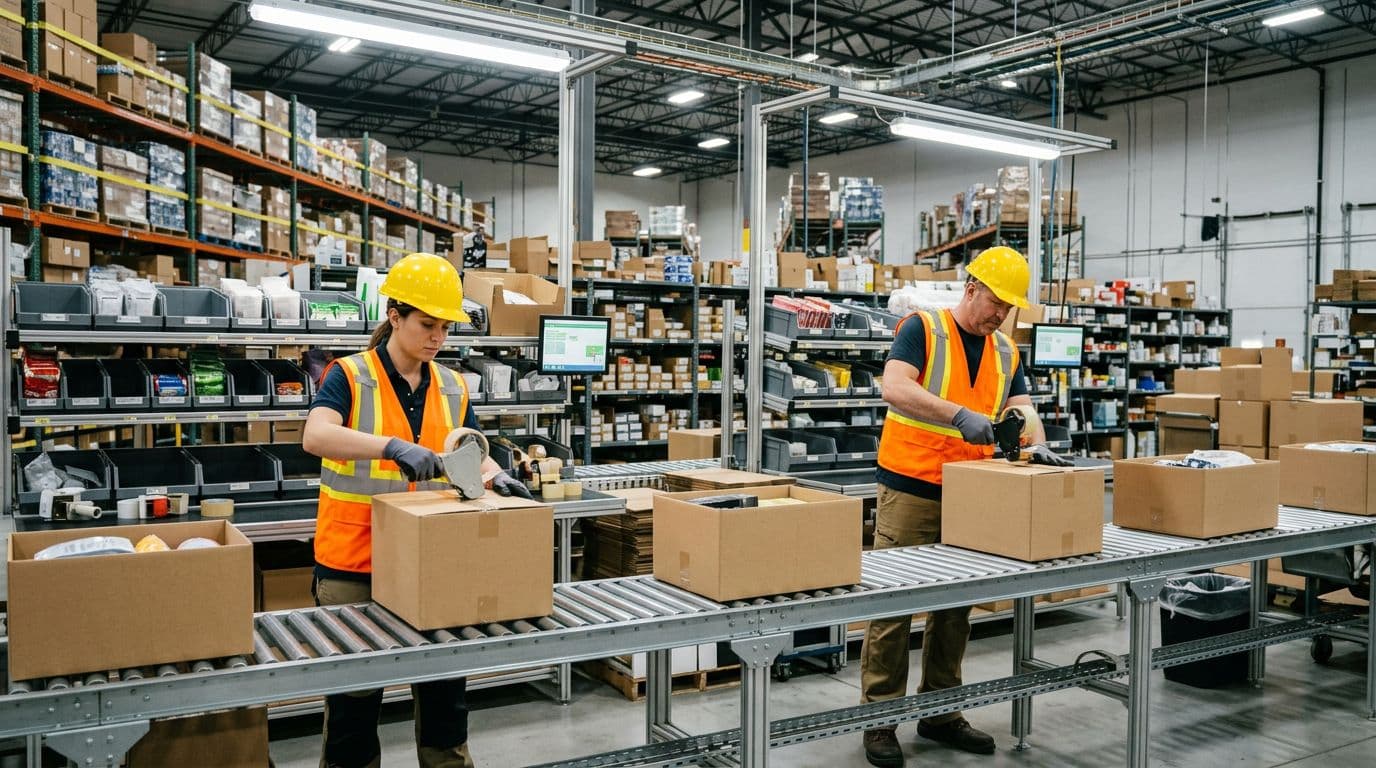
Scaling in-house often starts with a shopping list you did not plan for. You price out a case sealer, printers, scanners, work tables, racking, and safety gear. Then you add the bigger costs: warehouse lease, utilities, insurance, repairs, and a supervisor to keep it all running.
With Contract Packaging, you can shift a lot of that into variable spend. You pay for the packaging work you actually use, so costs track closer to order volume. That makes expansions less risky, especially when demand is spiky.
This model also helps you put money where it earns revenue. Instead of tying up cash in equipment and space, you can fund:
- Inventory buys so you do not stock out during a campaign.
- Marketing tests so you can scale what works and drop what does not.
- Better packaging materials that reduce damage and returns.
If you want a clearer view of what goes into quotes, including common add-ons, this co-packing pricing breakdown helps you compare options without surprises.
Ship faster with repeatable processes that cut errors
Fast shipping is not about moving faster with tired hands. It is about using standard work, the same steps in the same order, every time. Contract packagers build their business around repeatability, because small errors multiply fast at volume.
In a well-run operation, speed comes from control points that prevent mistakes before they reach a customer:
- Scan-based verification at pick and pack so the right SKU goes into the right box.
- Quality checks for count, condition, and required inserts.
- Pack-out standards (photos, instructions, and training) so every station packs the same way.
When accuracy improves, you feel it in three places. Reviews get better because orders arrive right the first time. Customer support tickets drop because fewer people report missing items. Reships shrink because fewer orders need fixing.
Every avoided packing error saves you twice, once in shipping costs, and again in customer trust.
Use right-sized packaging to lower DIM weight and shipping costs
Carriers do not charge only by what a package weighs on a scale. They also charge by how much space it takes up on the truck. That is dimensional weight (often called DIM weight). If your box is big but light, you can still pay a higher rate.
Oversized boxes create a triple hit:
- Higher shipping charges because the package takes more space.
- More packing material to fill empty space.
- More damage risk because products can bounce around inside.
Contract Packaging teams right-size boxes as part of normal operations. That might mean changing carton sizes, adjusting inserts, or using a different void fill. A better fit often reduces waste and lowers freight over time. You also save on materials, because you are not paying to ship extra air.
Handle peak seasons without breaking your team (or your delivery promise)
Peaks are where brands either build loyalty or lose it. The problem is not the demand itself, it is the scramble, running out of cartons, hiring temps late, and hoping training sticks. Contract packaging partners plan for surges by staging supplies, adding labor, and extending shifts when the calendar demands it.
Here is a simple example. Black Friday week hits, and your daily orders double overnight. If your team cannot keep up, shipments go out late, tracking updates lag, and reviews turn sharp. Even one bad week can raise refund requests and support volume for months.
A partner can respond with capacity moves that are hard to do in-house on short notice, like adding pack stations, increasing dock activity, and scheduling overtime without burning out your core staff. For more context on planning around holiday spikes, see the impact of seasonality on e-commerce fulfillment.

Customer experience wins: fewer damages, smoother returns, better unboxing
Customers judge your brand with their hands first. A crushed box, a leaky cap, or missing parts can turn an excited buyer into a refund request in minutes. That is why Contract Packaging is not only about getting orders out the door, it is about protecting the moment the package hits the porch.
When packaging holds up, you save money on replacements and keep reviews cleaner. Just as important, you make it easy for customers to keep the product, or return it without a headache.
Protect products in transit to cut returns and refunds
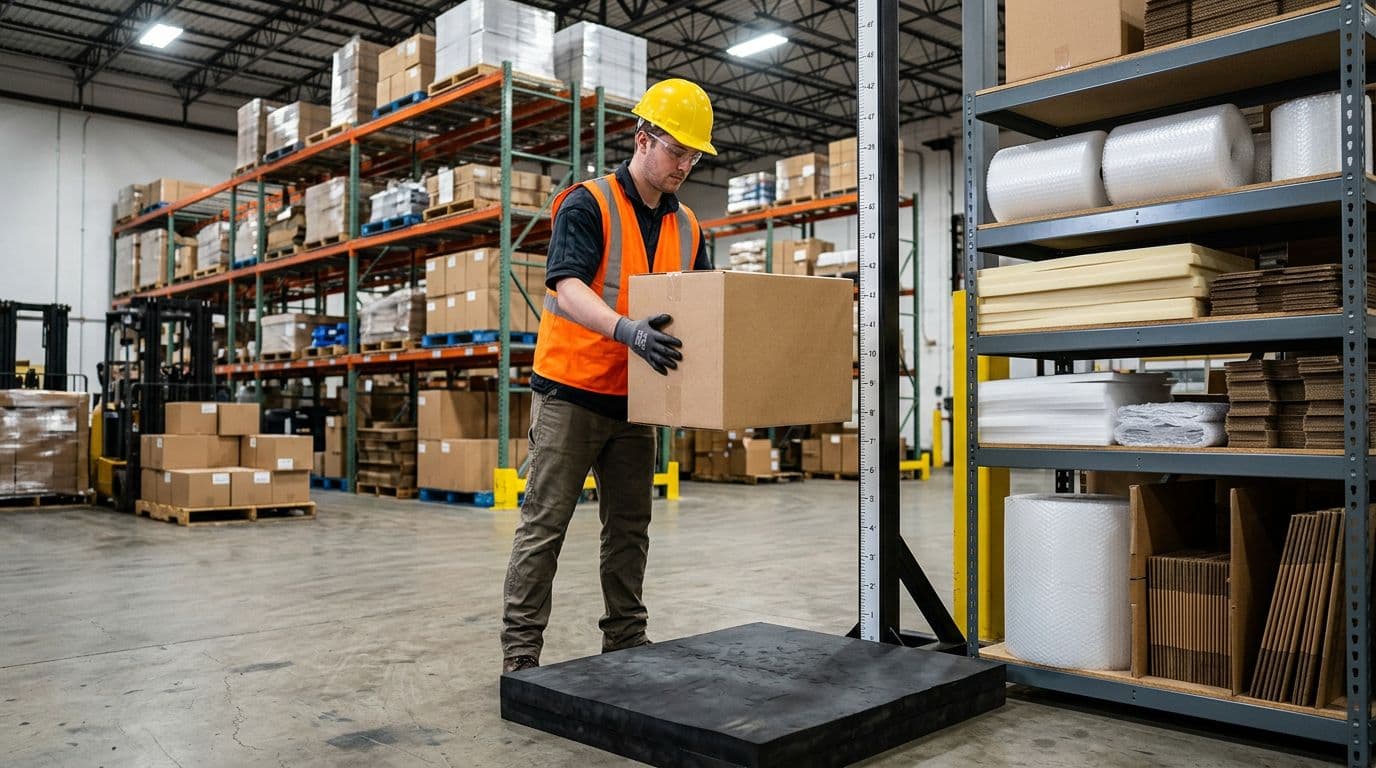
Damage rarely ends with one refund. It often triggers a chain reaction: return shipping, a replacement shipment, extra labor, and a support ticket that eats time. After that, trust slips. Even if you make it right, customers remember the hassle.
A good partner reduces damage by treating packaging like a system, not an afterthought. That starts with basic pack-out testing, such as simple drop resistance checks and vibration awareness. If a box fails once in testing, it will fail many times in the carrier network.
Small upgrades often make a big difference:
- Stronger sealing: Use the right tape width, pressure, and carton closure method, so boxes do not pop open.
- Right-size first: Too much empty space lets products bounce, which creates cracks and scuffs.
- Match protection to the product: Fragile items need cushioning and immobilization, liquids need leak control (liners, neck bands, seal checks), and heavy items need stronger corrugate and reinforced corners.
If you can hear the product move when you shake the box, it is asking for trouble.
Make the unboxing feel on-brand without slowing operations

Unboxing is like a handshake. It should feel consistent, clean, and familiar, even when you ship 200 orders one day and 5,000 the next. The mistake is building a presentation that only works when your best employee packs every box.
Contract packaging teams keep it repeatable by standardizing the “nice” parts:
- Inserts that always go in the same spot, with the same version control.
- Tissue, branded tape, or a simple thank-you card that packs fast.
- Custom cartons only where they matter most (for example, your hero SKU), while other items ship in strong, plain shippers.
In other words, aim for high impact, low complexity. A simple, consistent pack-out beats a fancy one that slows the line and raises error rates.
Build a returns process that customers actually understand
Returns happen, even when you pack perfectly. What customers want is clarity, because confusion feels like you are hiding the ball. A strong returns process sets expectations upfront and then follows them every time.
Many Contract Packaging and fulfillment partners can support the returns workflow, including:
- Return labels and basic instructions that match your policy.
- Inspection on receipt to confirm condition, completeness, and resale eligibility.
- Restocking rules for “new,” “opened,” “damaged,” and “missing parts.”
- Disposition decisions (return to inventory, refurbish, quarantine, or discard) based on your guidelines.
The key is consistency. When customers see the same steps, the same timelines, and the same outcomes, support tickets drop. For a broader look at how outsourced operations tie back to customer satisfaction, see these order fulfillment benefits for customer satisfaction.
Choosing the right contract packaging partner for e-commerce expansion
When you expand e-commerce, your Contract Packaging partner becomes part of your customer experience. If they miss cutoffs, you miss delivery promises. If their counts drift, you oversell. So treat selection like hiring for a role that touches every order, because it does.

Questions to ask about capacity, lead times, and peak-season planning
Capacity sounds simple until the first surge hits. Get specific, and ask for numbers they can defend with schedules, staffing plans, and pickup times.
Here are questions worth asking early:
- Daily order capacity: “What’s your normal daily order capacity for pick, pack, and ship, and what assumptions are behind it (shifts, stations, carrier pickups)?”
- Surge capacity: “If we spike 3x for 7 to 10 days, what changes, how fast can you ramp, and what’s the ceiling before service slips?”
- Cutoff times: “What are your same-day cutoffs by carrier, and what percent of orders typically make cutoff during peak weeks?”
- Turnaround on new kit builds: “If we launch a new bundle, how long to build the first finished kits, and what do you need from us to start?”
- Backup labor plans: “What’s your plan when attendance drops or volume jumps, and do you use cross-trained teams or temps?”
- Preventing missed shipments: “What controls stop orders from sitting unshipped (aging queues, exception dashboards, escalation rules)?”
Red flags: vague answers like “we can handle it,” no written peak plan, or a partner that can’t explain how orders flow from release to carrier scan.
What to look for in quality control and inventory accuracy
Your best marketing can’t out-run packing mistakes. Quality control should be a system with tracking, not a promise someone makes on a sales call.
Ask how they measure and fix errors:
- Error tracking: “How do you log mispicks, wrong labels, missing inserts, and damages, and can we see a sample report?”
- Audits: “How often do you run cycle counts, what’s the typical inventory accuracy rate, and what happens when counts don’t match?”
- Scan verification: “Where do you scan, at pick, at pack, both, and what prevents label swaps?”
- Lot control (if relevant): “Can you track by lot or batch, enforce FIFO or FEFO, and produce traceability reports on request?”
- Damage tracking: “Do you track inbound damage, warehouse damage, and in-transit damage separately so we know what’s causing it?”
- Nonconforming product: “What’s your hold process for suspect items, who approves disposition, and how do you prevent it from shipping?”
Also confirm reporting cadence. Weekly summaries help you catch drift fast, while monthly trends show if fixes stick. Most importantly, ask about root-cause actions: “When accuracy drops, what changes do you make, training, slotting, pack-out steps, or materials?”
A partner that can’t show you how they find errors usually can’t show you how they prevent them.
Tech and integrations that reduce manual work
If you’re emailing spreadsheets to keep inventory straight, you’re one missed update away from stockouts or overselling. The right tech setup reduces back-and-forth and makes order status feel boring, in a good way.
Focus on outcomes, not brand names:
- WMS visibility: You should see on-hand, allocated, and available units, plus inventory by location when needed.
- Real-time inventory: Adjustments should post quickly after receiving, picks, and cycle counts, so your storefront stays honest.
- Order status updates: You want clear milestones, received, in process, packed, shipped, with tracking tied to the order.
- Simple integrations: Ask if they support API connections or standard connectors for shopping carts and marketplaces, so orders flow in and tracking flows back out.
Red flags: “We’ll send a daily spreadsheet,” no clear exception process, or integrations that require constant manual mapping every time you add a SKU.
Pricing models and contract terms that can surprise growing brands
Quotes look similar until you unpack the line items. Compare partners by total cost per order, not just the pick fee or hourly rate.
Common charges to clarify in plain terms:
- Setup and onboarding (system configuration, SOP creation, initial slotting)
- Kitting labor (per kit, per component, or hourly when builds change often)
- Storage (per pallet, per bin, per cubic foot, plus long-term storage rules)
- Minimums (monthly order minimums, labor minimums, or storage minimums)
- Packaging materials (cartons, void fill, tape, inserts, custom packaging procurement fees)
- Rush fees (short-notice builds, weekend work, same-day special pulls)
- Returns handling (inspection, restock, refurb, disposal, and reporting)
Tie pricing to service level expectations. For example, “What on-time ship rate do you commit to, how do you measure it, and what happens when it slips?” If the contract is quiet on performance, you’ll feel it later. For deeper context on terms that should be spelled out, see essential elements of contract packaging agreements.
A simple first 30 to 60 days onboarding plan
A clean onboarding prevents months of small mistakes. Think of it like teaching someone your recipe, not just handing them ingredients.

A simple plan most brands can follow:
- Define SKUs and packaging specs: Finalize SKU list, case packs, dimensions, weights, and any special handling.
- Create pack-out instructions with photos: Show how each SKU and bundle should look when finished, including inserts and label placement.
- Run sample orders and sample kit builds: Start with a controlled batch, then verify counts, presentation, and scan steps.
- Lock QC checks and shipping rules: Decide what gets checked, when, and what triggers a hold, also set shipping methods, cutoffs, and carrier rules.
- Pilot before full cutover: Ship a small percentage of orders first, then scale once results look stable.
Track a few KPIs from day one: on-time ship rate, order accuracy, damage rate, and inventory accuracy. If a partner avoids pilots or won’t commit to KPI definitions, treat that as a warning sign. For a practical prep checklist that supports faster onboarding, review preparing to outsource order fulfillment.
Conclusion
Contract Packaging helps e-commerce brands expand without adding chaos. It gives you flexible labor and space when orders jump, repeatable pack steps that improve speed and accuracy, and smarter carton choices that cut shipping waste. Just as important, it protects the customer experience through fewer damages, more consistent unboxing, and cleaner returns handling.
The best outcomes come from clarity and measurement. That means tight packaging specs (pack-out photos, insert rules, label placement), a short list of KPIs you review often (on-time ship rate, order accuracy, damage rate, inventory accuracy), and a partner that can flex for peaks without changing the basics. When those pieces line up, consistency becomes your advantage, even as volume climbs.
Next step: write down your top pain points (cost, speed, damage, labor), then turn them into partner questions. Ask how they right-size boxes, prevent mis-picks, plan surge staffing, and report errors. If the answers come with real processes and real numbers, you are close to the right fit.
