

How Regional Contract Packaging Partners Speed Up Midwest Delivery Times
Your product’s ready, the promo date is locked, and sales is pushing hard, but shipments keep slipping. Maybe it’s a seasonal rush, a retail reset, or a limited-time bundle, and the packaging line is backed up or stuck waiting on a long-haul pickup. When that happens, every extra day in transit turns into empty shelves, late fees, or unhappy customers.
That’s where Contract Packaging with a regional partner can help. Regional contract packaging partners are local co-packers and fulfillment teams that can assemble, pack, label, and ship your product from a nearby facility, instead of sending it across the country for prep. Because they’re based in the Midwest, you get central shipping lanes, shorter hauls to major markets, and fewer handoffs between trucks, terminals, and warehouses.
In this post, you’ll learn the specific ways regional partners cut days off the clock (from faster kitting and better carton builds to tighter dock schedules and carrier options). You’ll also see how to pick the right fit for your SKUs and channels, plus how to measure results with simple metrics like order cycle time, dock-to-delivery days, damage rates, and on-time performance. If you want a quick baseline on what a partner should handle end to end, start with MSL contract packaging services.
How regional contract packaging cuts days out of the shipping timeline
Speed usually comes from three things: less distance, fewer touches, and less waiting. When Contract Packaging happens close to your Midwest customers, you avoid the slow parts that don’t show up on a packing list, inbound staging, repacking, label fixes, and moving freight between sites. Instead of bouncing product from plant to packager to warehouse to carrier, a regional partner keeps the work and the outbound dock in one tight loop.
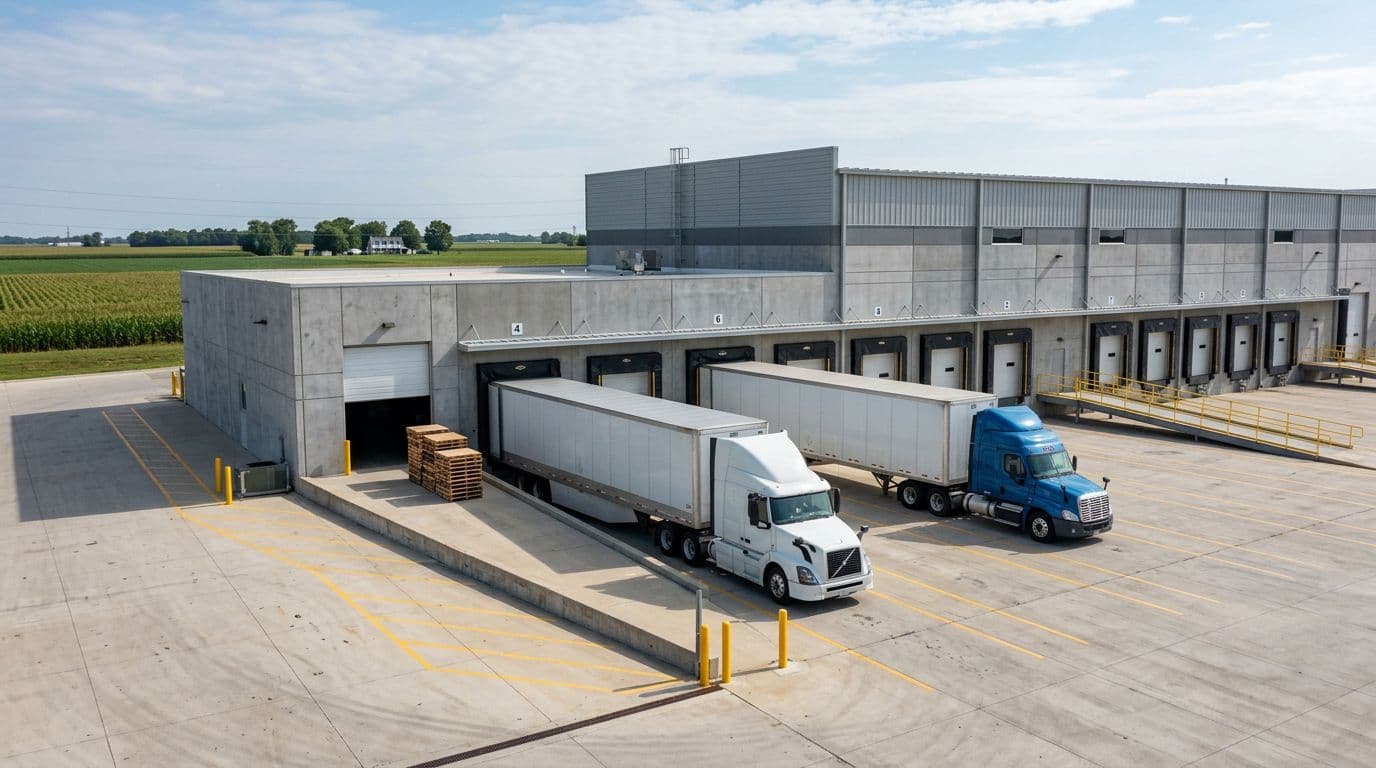
Closer to Midwest customers means shorter, cheaper shipping lanes
A Midwest facility sits within quick reach of dense clusters of retailers and distribution centers. That matters because most late deliveries come from long lanes with more handoffs: more terminals, more chances for a delay, and more weather and traffic risk. When your packaging and ship point is regional, the truck just has fewer miles to mess up.
Here’s a simple way to think about it. If you ship packaged product from a coast, you often need 3 to 4+ days of ground transit to reach many Midwest markets. From a central Midwest ship point, 1 to 2 days is common for a large share of destinations. That’s the difference between arriving before an appointment window and showing up after the dock closes.
A shorter lane also gives you more carrier options. You can choose between local and regional LTL carriers, dedicated short-haul runs, or even last-minute spot capacity. As a result, you’re less likely to miss pickups because one long-haul truck got reassigned or hit a delay upstream.
If you can cut a lane from four days to two, you don’t just save time, you buy back schedule wiggle room when something goes sideways.
One facility for packaging, warehousing, and shipping reduces handoffs
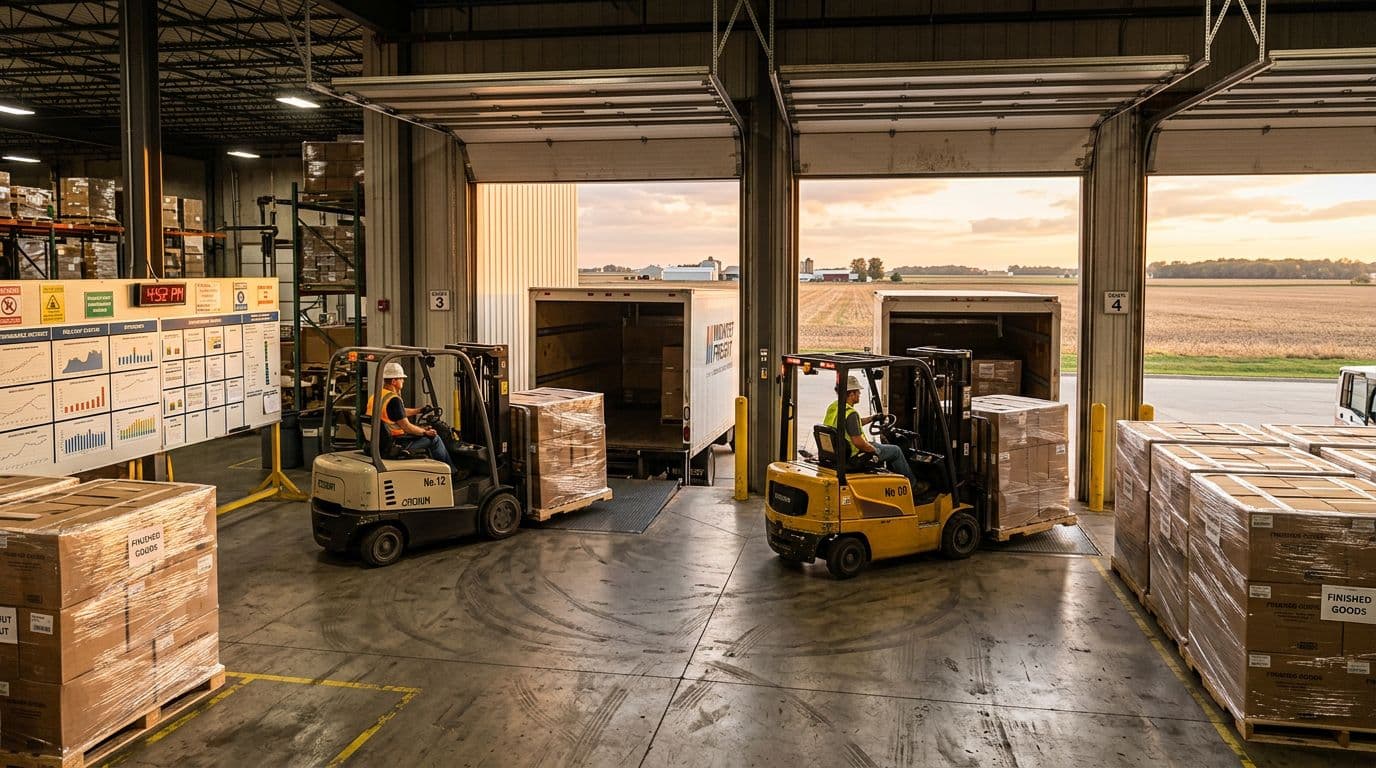
Every handoff is a chance to lose half a day. Product arrives, waits for a dock, gets staged, gets transferred, then sits again while someone books the next move. A regional partner that runs packaging lines, finished goods storage, and outbound shipping in one building removes a whole chain of appointments.
Co-location saves time in practical places, like:
- Inbound staging: Components go straight to the line or a nearby pick slot, not a remote warehouse.
- Paperwork and labeling fixes: If a label needs a correction, it happens on-site, not after a rejected delivery.
- Transfers between sites: You avoid the extra drayage move that turns one shipment into two schedules.
- Damage risk: Fewer forklifts, fewer reloads, fewer chances to crush a case or tear shrink wrap.
You also get faster answers. When packaging and shipping share the same floor, your team can resolve issues in minutes, not days. That keeps orders from getting stuck in a “hold” status while emails bounce between vendors. For a deeper look at how partners structure these handoffs, see this guide on when to use a co-packer.
Just-in-time packaging and late-stage customization keep orders moving
Retail and ecomm don’t wait for perfect forecasts. A buyer changes a case pack, a retailer needs a new sticker, or a promo bundle suddenly doubles in volume. Late-stage work, sometimes called postponement, lets you keep base inventory ready and finish the last mile of packaging close to the ship date.
Common just-in-time tasks include labeling, bundling, and display building. Because these steps happen near the outbound dock, you avoid the worst timeline killer: shipping product out for customization, then shipping it back again. When demand spikes, you can allocate the same base units across different channels without rebuilding your whole plan.
This approach also reduces “label ping-pong.” Instead of discovering a barcode issue after product ships across the country, you catch it locally, correct it, and still make the pickup.
Automation and quick changeovers help you ship on time during surges
Surge weeks expose slow packaging lines fast. Semi-automated equipment for sealing, wrapping, and case packing increases throughput while keeping pack quality consistent. Just as important, trained crews can keep output steady across shifts, so orders don’t pile up waiting for a small team to catch up.
Quick changeovers matter when you run lots of SKUs. Promotions, seasonal flavors, and retail resets often need short runs with tight deadlines. When a line can swap SKUs quickly, you spend less time tearing down and re-setting, and more time producing ship-ready cases.
In other words, you don’t need superhuman effort to hit ship dates. You need the right mix of equipment, standard work, and people who can move from SKU A to SKU B without losing a full day.
Midwest realities that slow delivery, and how the right partner works around them
Midwest shipping looks simple on a map, central lanes and big highways. In day-to-day operations, it can feel like trying to merge onto a packed interstate with a trailer full of deadlines. Chicago congestion, rail timing issues, winter storms, and labor gaps all add small delays that stack up fast.
The right Contract Packaging partner doesn’t “hope for the best.” They build the schedule, staffing, and inventory plan around Midwest realities, so your ship dates don’t depend on perfect conditions.
Planning around congestion, rail delays, and tight pickup windows

The Midwest’s biggest choke points are predictable, which is good news if your partner plans for them. Metro congestion around Chicago can blow up “easy” drayage moves, and yard capacity limits can turn a quick drop into hours of waiting. Rail intermodal adds another clock, cutoffs, container availability, and gate timing all matter, especially when freight funnels through the region’s busiest nodes.
Strong partners protect ship dates with a few practical habits:
- Appointment discipline: They book dock appointments early, confirm them, and build loads to match the exact window, not “sometime after lunch.”
- Carrier diversification: They keep multiple options ready (regional LTL, short-haul, dedicated, and intermodal where it fits), so one carrier hiccup doesn’t stall the week.
- Earlier staging: They pre-stage finished pallets, paperwork, and labels before pickup day, so drivers can hook and go.
If you’re weighing facility placement, this guide on the 3PL location impact on shipping costs explains why proximity to major Midwest lanes helps you avoid long, failure-prone handoffs.
When pickups are tight, speed comes from removing “surprises,” not from asking the dock to move faster.
Weather-proofing winter shipping with smarter inventory placement
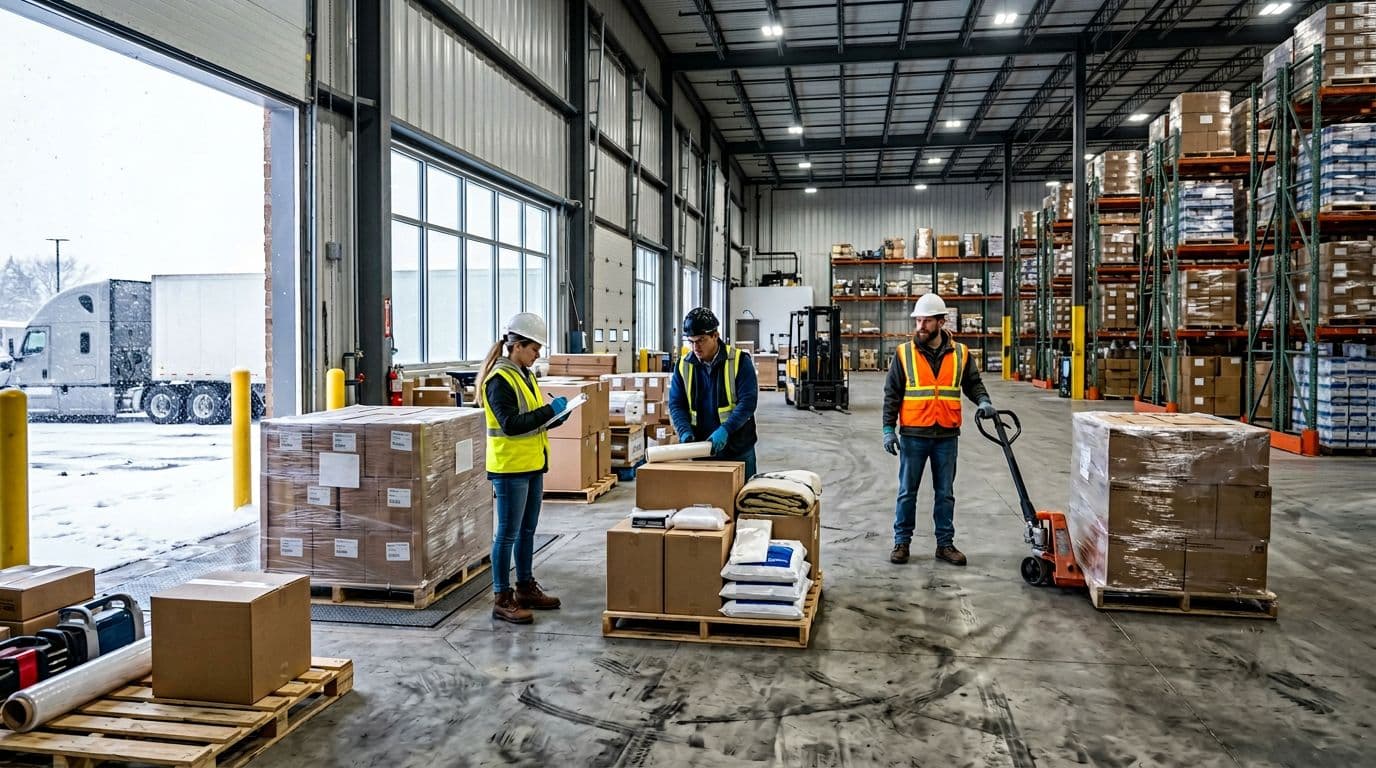
Midwest winter doesn’t need to shut you down, but it does punish thin plans. Snow and ice reduce road speed, shrink available truck capacity, and make “next-day” feel fragile. A good partner responds with calm, repeatable moves that keep customers supplied.
Look for actions like these:
- Buffer stock for top sellers: They hold extra units of your fastest movers in the Midwest, so you can ship through short disruptions.
- Pre-built kits and bundles: They assemble common promo packs ahead of time, so orders don’t wait on last-minute labor during storm weeks.
- Earlier production cutoffs: They set realistic deadlines before major holidays or forecasted storms, then ship earlier on purpose.
- Alternate carriers and modes: They pre-approve backup carriers, and they know when LTL, dedicated, or parcel makes more sense for the week.
The goal is simple: keep service steady, even if transit slows.
Solving labor gaps with standardized work and cross-trained teams
Labor instability hits warehouses and packaging lines hard, especially near major hubs. When staffing fluctuates, output becomes lumpy, changeovers take longer, and quality checks slip. Then you lose time reworking cartons or fixing labels, right when you need speed most.
Reliable partners counter that with standardized work and cross-trained teams. Clear SOPs, visual work instructions, and consistent QC steps keep the line running the same way on Monday morning and Friday night. Cross-training matters just as much, because it lets supervisors shift people where the bottleneck is today (labeling, packing, pallet build, or outbound staging).
The payoff shows up quickly:
- More predictable capacity, so you can commit to ship dates with confidence.
- Fewer quality issues, because the process doesn’t change with every shift.
- Faster recovery, when someone calls off or volume spikes without warning.
That’s how a Midwest partner keeps delivery time from being decided by the weakest link that week.
What to look for in a Midwest contract packaging partner if speed is your top goal
If speed is your north star, pick a Contract Packaging partner that removes steps, not one that just promises fast turns. You want fewer handoffs, fewer “we’ll fix it later” moments, and fewer last-minute carrier scrambles. The checklist below helps you confirm who can actually move product quickly when promos change and deadlines get tight.
Services that remove delays, kitting, labeling, rework, and fulfillment
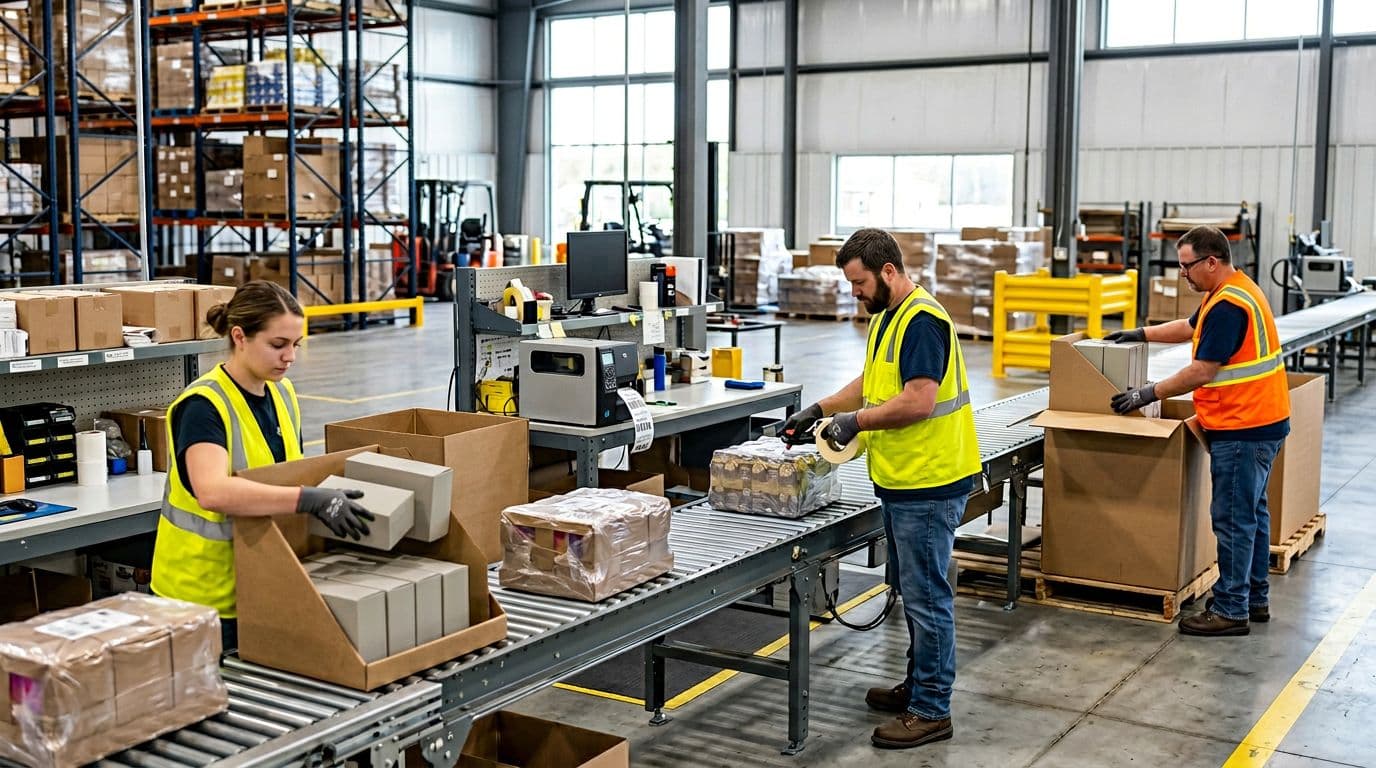
Speed comes from bundling the work under one roof. These services tend to cut cycle time because they prevent “stop and ship somewhere else” detours:
- Kitting and multi-pack bundling: Pre-builds promo sets so orders ship as one SKU, not a pick project. This also reduces warehouse touches. For a service example, see professional kitting services.
- Retail-ready displays (PDQs) and shelf-ready cases: If the partner can build displays, you avoid re-packing at a downstream DC. Stores also stock faster, which protects your promo window.
- Labeling and barcoding (UPC, ITF-14, FNSKU, carton labels): Correct barcodes prevent chargebacks and rejected receipts. Fast partners verify scan quality on the line, not after the truck is loaded.
- Rework for damaged or mislabeled product: Rework capability is a schedule saver when product arrives crushed, shorted, or stickered wrong. Instead of returning loads or holding inventory, the partner sorts, relabels, and re-cases quickly.
- Pick/pack and fulfillment: When the same team can pack and ship, you remove a whole round of staging and transfer time.
Questions to ask:
- Which of these services are in-house today, and which are subcontracted?
- What’s your typical changeover time between SKUs, and what slows it down?
- How do you verify barcode readability, and how often do you check it?
Red flags:
- “We can do that” with no examples, photos, or line walk to back it up.
- Rework is treated as a rare exception, not a planned service with a process.
Site visit confirm:
- Ask to see a live build of a retail-ready display or multi-pack bundle, even a short run.
- Look for staged materials at the line (labels, cartons, inserts) so production does not pause for parts.
If a partner can’t show you where rework happens, it usually happens in your timeline.
Location and carrier access, how to tell if the site really helps delivery
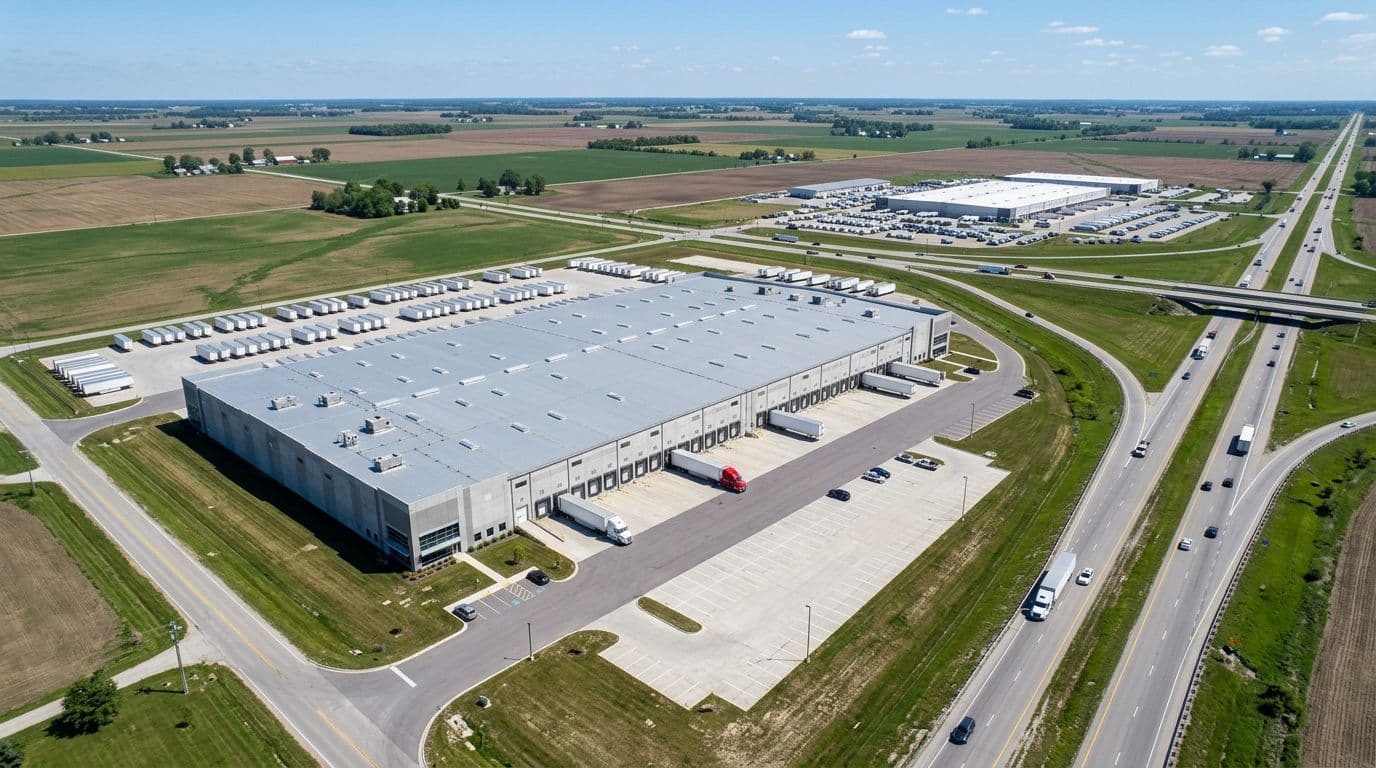
A “good Midwest location” means you can hit key markets quickly with common carrier options. It’s not just a pin on a map. Look for proximity to:
- Major interstates and DC corridors (think consistent access, not back roads).
- Parcel hubs if you ship ecomm or small packs, because late linehauls can ruin next-day promises.
- LTL terminals and regional carriers for faster pickups and fewer missed appointments.
- Your actual customer lanes, not generic “two-day to most places” claims.
Questions to ask:
- Can you share a typical transit map by service level (parcel and LTL)?
- What does your ship-to lane history look like for our top 10 destinations?
- What time are your daily carrier cutoffs, and how often do pickups slip?
Red flags:
- They talk about being central, but can’t name nearby terminals or parcel hubs.
- Pickups depend on “end of day” without a firm cutoff.
Site visit confirm:
- Check the yard and dock flow. Are outbound loads staged early, or built during driver check-in?
- Ask who books appointments and how they handle tight windows.
Systems and visibility that prevent last-minute surprises
Fast shipping needs fast decisions. That requires visibility you can trust, especially when demand spikes and you have to redirect inventory.
Baseline expectations:
- Lot tracking and batch coding tied to inbound receipts and finished goods.
- Scan-based accuracy for picking, kitting, and case labeling.
- Real-time inventory updates (or near real time) that match what’s on the floor.
Questions to ask:
- How quickly does inventory update after receiving, production, and shipment?
- Can we get alerts for low stock, short picks, or holds?
- If we change demand mid-week, how do you reallocate inventory without breaking traceability?
Red flags:
- Inventory is managed in spreadsheets, or updates are “once per day” with no exception handling.
- The partner can’t show a simple audit trail for a lot from receipt to shipment.
Quality and compliance that stop rework from eating your schedule
Quality is a speed tool when it prevents holds, relabeling, and returns. Even basic checks can save days when a retailer rejects a load.
Look for:
- Documented processes (SOPs) for labeling, coding, counts, and seal checks.
- In-process checks that catch errors early, not at the end of the run.
- Compliance readiness that matches your category (food, pharma, medical device), including clean handling and clear records.
Questions to ask:
- What are your most common quality holds, and how fast do you clear them?
- Who signs off on first-article label placement and code readability?
- If something goes wrong, what is your rework path and timeline?
Red flags:
- “We haven’t had issues” with no documented checks.
- Quality is one person at the end of the line, not built into the workflow.
Site visit confirm:
- Ask to see completed batch or lot records, plus a sample of label verification.
- Walk the quarantine or hold area. A messy hold zone often means surprise delays later.
Speed without quality is just rework scheduled for next week, at premium freight rates.
How to measure speed improvements, and prove the partnership is working
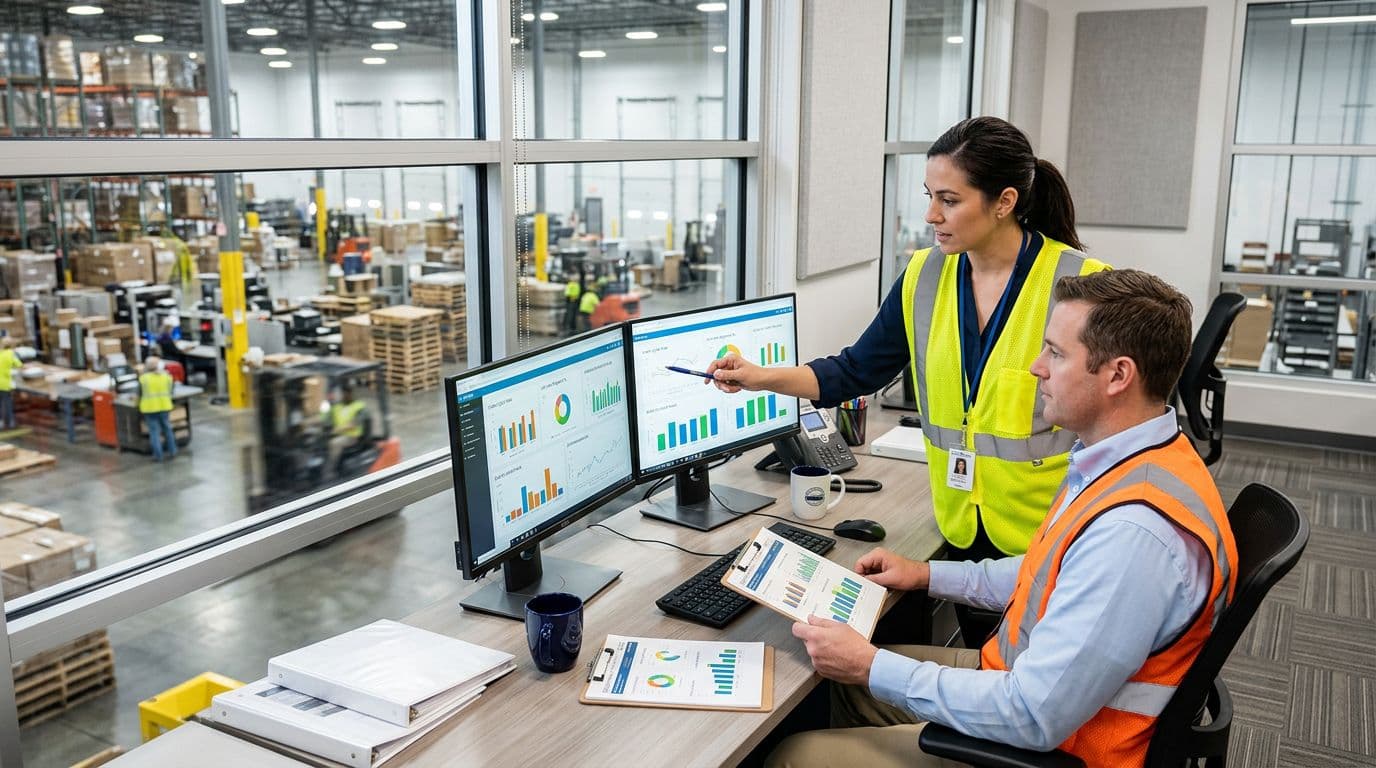
Speed only matters if you can see it in the numbers. A good Contract Packaging partner should help you set a baseline, agree on targets, then report progress in the same format every week. Keep it simple, focus on a few time-based measures, and you will know fast if the change is paying off.
The few metrics that matter most, order cycle time, on-time ship, and dock-to-stock
You can track dozens of KPIs, but three will tell you if speed is real.
Order cycle time is the time from when the order is received (in the WMS, ERP, or via EDI) to when the carrier picks it up. This is usually the clearest indicator because it isolates what your partner controls. Transit time can vary, but “order received to carrier pickup” shows whether the building is moving.
On-time ship is the percent of orders that leave the dock by the promised ship date and cutoff time. Define “on time” in writing, for example, “picked up by 4:00 pm local on the ship date.” Otherwise, teams argue about exceptions.
Dock-to-stock is the time from inbound trailer arrival to inventory being available to pick or to feed the line. If inbound sits, everything downstream slows.
A simple scorecard keeps everyone aligned:
| Metric | Baseline (Before) | 30-Day Target | 60-Day Target | 90-Day Target |
|---|---|---|---|---|
| Order cycle time (order received to carrier pickup) | Record current median | Improve by 10% to 20% | Improve by 20% to 30% | Improve by 30% plus |
| On-time ship % | Record current rate | +3 to +5 points | +5 to +8 points | +8 to +12 points |
| Dock-to-stock (hours) | Record current median | Reduce by 10% to 20% | Reduce by 20% to 30% | Reduce by 30% plus |
The takeaway: use medians, not averages, and report exceptions. One blown week can hide in an average.
If you only track one thing, track order received to carrier pickup. It’s the cleanest view of operational speed.
A simple 30-60-90 day plan to ramp up without missing ship dates
Fast onboarding is possible, but only if you control the details that cause rework. That means artwork, materials, and change control.
Days 1 to 30 (Onboarding and SOPs): Lock requirements and remove ambiguity. Confirm case packs, pallet patterns, labeling rules, and QC checks. Get artwork approvals done early, including barcode grade, label placement, and any retailer-specific callouts. In parallel, stage packaging materials (cartons, labels, inserts, tape, stretch wrap) so the first production week does not pause for parts.
Days 31 to 60 (Pilot runs): Start with a narrow SKU set and realistic order volume. Run first-article checks, then inspect finished cases like a retailer would. Also set a simple change control rule, for example, “no packaging changes without written approval and a version update,” so speed doesn’t create errors.
Days 61 to 90 (Scale): Add shifts, SKUs, and channels in planned waves. By now, the weekly scorecard should show cycle time and on-time ship trending the right way. If not, fix the constraint (inbound timing, line balance, or carrier cutoff) before adding volume.
For more context on keeping speed and accuracy in balance, see balancing speed and accuracy in fulfillment.
Examples of what faster can look like when you outsource the right way
Real improvements often show up first as backlog relief, then as steadier on-time shipping. For example, one Midwest Contract Packaging provider reported helping a manufacturer cut a packaging backlog by 75% in 60 days, while reducing packaging time from over two weeks to about three days, and scaling volume 4X early in the engagement. Results vary, but the pattern is consistent: clear specs, staged materials, and tight scheduling reduce waiting.
Other “faster” outcomes can be less dramatic but still meaningful:
- Backlog reduction through outsourced packaging: Moving kitting and repack work off an internal line frees your plant to focus on production.
- On-time delivery gains after outsourcing kitting and packing: Fewer handoffs and fewer label errors mean fewer holds, fewer missed pickups, and fewer chargeback risks.
- Quick capacity expansion for big programs: A phased 30-60-90 ramp helps add volume without chaos, especially when artwork, materials, and change control are handled upfront.
Conclusion
Regional Contract Packaging partners improve Midwest delivery speed for one simple reason, they take wasted time out of the path. When packaging happens closer to your customers, you cut distance, reduce handoffs, and gain flexible capacity for promos, resets, and surprise demand. Just as important, integrated packaging, warehousing, and shipping keeps orders from stalling between vendors, so you protect pickup windows and arrive inside retail appointment times.
Quick recap checklist:
- Location that matches your top Midwest lanes and carrier cutoffs
- Integrated services (kitting, labeling, displays, rework, fulfillment) under one roof
- Visibility (scan-based inventory, lot tracking, clear scorecards)
- Quality controls that prevent holds, chargebacks, and rework
- Surge capacity with fast changeovers and reliable staffing
Next step: map your top ship-to lanes and identify what can shift to late-stage customization near the dock. Then request a site visit, review their weekly speed metrics, and run a short pilot with a tight SKU set. Thanks for reading, if your delivery dates keep slipping, it’s time to move the work closer to the buy.
