
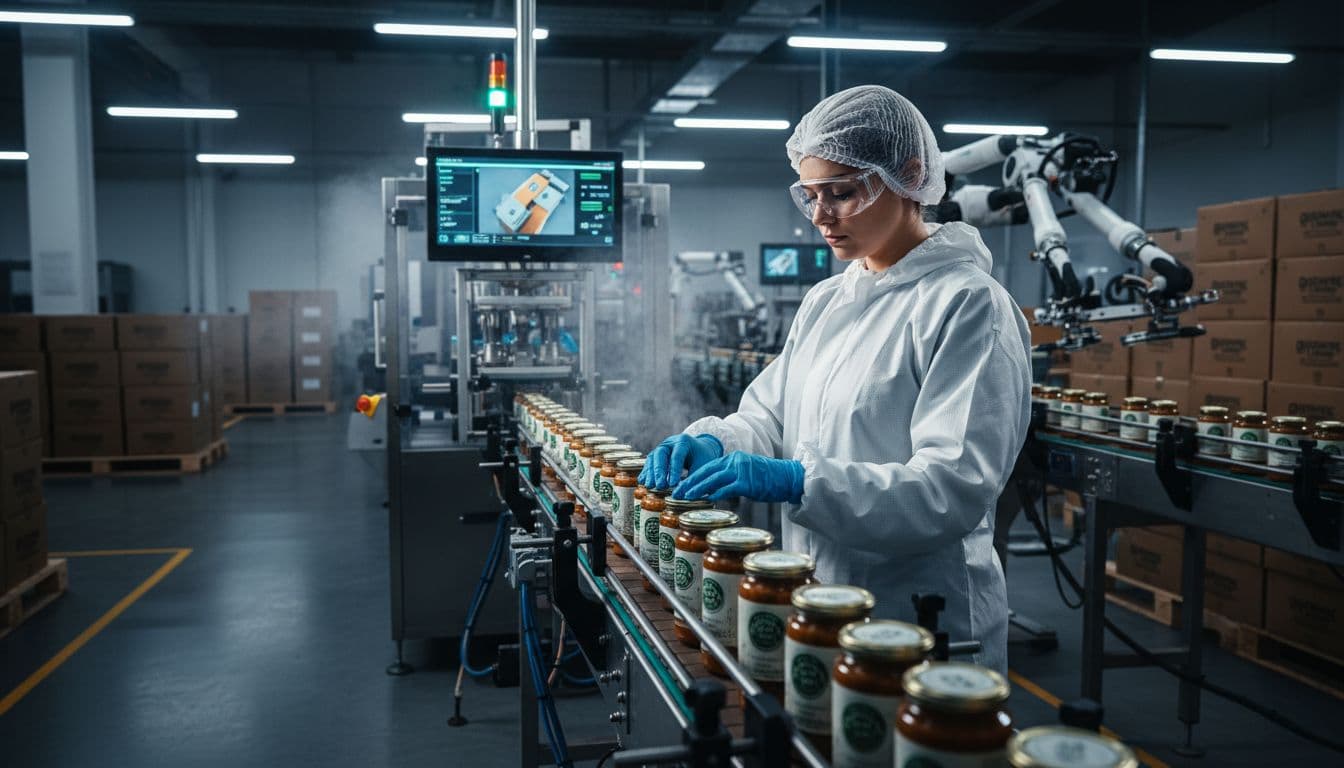
When a Co-Packer Makes Sense for Your Business: Signs, Costs, and Tradeoffs
If orders are growing but production keeps turning into late nights and fire drills, it might be time to rethink how you make and pack your product. For many brands, a Co-Packer makes sense when demand starts to outpace your time, space, equipment, or consistency.
A Co-Packer is a company that makes and or packages your product under your brand. The core choice is simple: keep making it yourself, invest in your own facility, or outsource production and packaging to a partner that already has the people and lines in place.
This is most common for food and beverage brands (think sauces, snacks, drink mixes), but the same math shows up in supplements, beauty, and household products too. If you’re trying to hit retailer deadlines, improve batch-to-batch quality, or free up cash that would’ve gone into equipment, outsourcing can be the right step.
In this post, you’ll learn the signs it’s time, the real benefits and tradeoffs, how to estimate costs, how to pick the right partner, and a simple decision checklist you can use right away. If you want extra context on what to look for in a partner, start with Choosing the right co‑packing partner.
What a Co-Packer actually does, and what you still own

A Co-Packer is your operations partner, not your brand partner. They handle the physical work of turning ingredients and packaging into finished, sellable units, while you keep control of what makes the business yours.
In most cases, a Co-Packer can cover manufacturing, batching, filling, labeling, case packing, palletizing, plus basic warehousing and shipping. Some are full service (they can help source ingredients, improve packaging, or support product development), while others are strictly “bring us the product and components, we’ll pack it.”
Think of it like three common paths:
- Make in-house: You own the equipment, staffing, quality checks, and schedule, plus all the headaches when something breaks.
- Shared kitchen or shared facility: You rent time and space, you still run most of the work, and you work around other people’s calendars and rules.
- Co-Packer: You set the specs and approve what “right” looks like, they run the line, document the work, and ship finished goods.
No matter which option you pick, you still own the brand, the formula (when it’s your formula), and your customer relationships. The Co-Packer owns the facility, labor, and process controls that make repeatable output possible.
Manufacturing vs packing only, know which one you need
Not every Co-Packer “makes” product. Some only package what’s already made.
A simple way to spot the difference is to map your process steps:
- If your product needs cooking, heating, cooling, or a kill step, you’re usually looking for co-manufacturing (manufacturing plus packing).
- If your product is already shelf-stable and just needs portioning, blending, filling, and labeling, packing-only may work.
Two easy examples:
- Sauce that needs cooking and hot fill: You may need kettles, temperature controls, hold times, hot-fill equipment, and cooling. Shelf life can change based on heat process, pH, and how fast the product cools. This is more than “put it in a bottle.”
- Dry spice blend that needs blending and bottling: You may need precise batching, dust control, consistent mixing, and clean changeovers. Packaging might be jars, shakers, pouches, or sachets, with lot codes and seals.
The “right” Co-Packer depends on the steps that can cause quality problems: mixing method, allergen control, sanitation requirements, heating and cooling, metal detection, and shelf-life targets. If those steps are fuzzy, the quote and the outcome will be too.
Common product categories that fit Co-Packers well
These are common fits because the equipment is specialized, compliance matters, and consistency is hard to maintain at scale:
- Sauces, dressings, salsa: controlled batching, fill accuracy, food safety steps
- Jams and spreads: cook process, hot fill, consistent texture
- Beverages: sanitary filling, capping, coding, packaging speed
- Snack foods: portioning, bagging, nitrogen flush (when needed), case packing
- Spice blends and drink mixes: accurate batching, allergen separation, labeling
- Frozen items: cold-chain handling, packing speed, tighter traceability
- Supplements: weight checks, lot control, compliance-driven documentation
- Skincare and personal care: clean handling, fill accuracy, consistent presentation
If you want a practical view of what packaging steps a partner might handle, this list of top contract packaging services for modern businesses helps you match needs to capabilities.
The handoff points that cause problems if you do not define them
Most co-packing pain comes from blurry handoffs. Before you start, get clear answers in writing on these basics:
- Ingredients and packaging: Who buys them, who owns them, and what happens if something shows up late, damaged, or short?
- Specs and approvals: Who writes the product spec, packaging spec, and pack-out spec? Who approves first articles, line trials, and label proofs before anything runs?
- Off-spec product: Who decides if it gets reworked, held, destroyed, or shipped with a deviation? Who pays for rework and extra labor?
- Documentation: Confirm you’ll get batch records (or production records), lot codes, QC checks, and traceability details that connect ingredients to finished cases.
Clear specs prevent surprises. If you can describe “done” in one page, with measurable targets (fill weight, torque, seal strength, label placement, case count, pallet pattern), you avoid the most common mismatches that burn time and money. If pricing questions are next on your list, use this Co‑Packing pricing guide 2026 to understand what quotes usually include and what tends to show up later.
Signs a Co-Packer makes sense for your business (and signs it does not)

A Co-Packer makes the most sense when production becomes the bottleneck, not demand. If you’re selling well but your process can’t keep up, outsourcing can turn chaos into repeatable output. The goal is not “hand it off and hope,” it’s to move from scrappy production to controlled, scalable production with clear specs and predictable results.
Below are the clearest readiness signals, plus a few times when waiting is the smarter move.
You are hitting a production ceiling and turning down sales
When your product is good and people want it, the warning signs show up fast. They usually look less like spreadsheets and more like stress.
Here are practical signs you’ve hit your ceiling:
- You can’t keep up with orders: You sell out, then spend weeks catching up, which slows growth and annoys repeat buyers.
- Lead times keep slipping: “Ships in 3 days” becomes “ships next week,” then becomes silence and refund requests.
- Quality varies when you rush: Fill levels drift, seals fail, labels go on crooked, or batches taste slightly different.
- You’re running out of space: Ingredients stack in the hallway, finished cases block doors, and you can’t stay organized.
- Nights and weekends are now production time: Production is eating the time you need for sales, marketing, and customer care.
At this stage, your business is like a popular restaurant trying to run dinner service with one burner and one cook. Effort can’t replace equipment and process control forever. A Co-Packer brings repeatable line settings, trained labor, and documentation that helps you scale without “hero mode” every week.
Mini scenario (farmers market brand): You sell out every Saturday, and you could easily sell 2 times more, but you spend Sunday and Monday cooking, filling, and labeling. By Thursday you’re behind again. A Co-Packer can take the weekly scramble and turn it into planned production runs so you show up stocked, not exhausted.
Retail or wholesale requires consistency, paperwork, and bigger runs
Selling direct can be flexible. Selling to stores and distributors is less forgiving. Your product has to show up the same way, every time, in the right quantity, with the right info on the package.
What changes when you step into retail or wholesale:
- Steady fill rates: Stores expect you to ship on time and keep shelves stocked.
- Barcodes and labeling rules: Your label has to scan, match the item in the system, and meet basic retailer requirements.
- Lot coding: You need clear lot codes so you can trace product if a case gets damaged or a customer complaint comes in.
- Shelf life expectations: Buyers want confidence that product will hold up through storage and time on shelf.
- Predictable case packs: Retail loves consistency, like 6, 12, or 24 units per case, packed the same way every run.
You don’t need to become a paperwork expert, but you do need reliable systems. Many Co-Packer operations already run with standard checks and documentation, which can make retail and wholesale less stressful.
If your growth is driven by multi-packs, displays, or secondary packaging, it also helps to understand the Outsourcing secondary packaging benefits before you commit to doing it in-house.
The numbers favor outsourcing more than buying your own equipment
This decision often comes down to a simple question: are you paying too much to make product yourself, once you count everything?
When you produce in-house, you carry fixed costs, even when you are slow:
- Rent and utilities
- Equipment payments and repairs
- Labor, training, and overtime
- Insurance, waste, and rework
A Co-Packer shifts a lot of that into per-unit cost, meaning you pay more directly based on how much you run. In plain terms, break-even is the point where buying equipment and hiring staff becomes cheaper than paying a partner per unit.
Co-Packers can also lower unit costs because they may:
- Buy materials in bulk
- Run faster, more efficient lines
- Reduce waste through better controls
But there’s a catch: those savings usually show up when you can sell the volume. If your demand is sporadic, you might pay for capacity you don’t use, either through higher per-unit pricing or minimum run expectations.
When a Co-Packer may not be the right move yet
Outsourcing is not always the next step. Sometimes it adds cost, complexity, and lead time before you’re ready.
A Co-Packer may not be the best move yet if:
- You’re still changing the recipe weekly or tweaking packaging every run.
- Demand is not steady, and you can’t forecast even 60 to 90 days out.
- Margins are thin, and a per-unit fee would wipe out profit.
- You can’t meet typical MOQs (minimum order quantities), or you’d be stuck holding too much inventory.
- Your product is extremely custom, with hands-on steps that don’t fit a production line.
Mini scenario (small online brand): You get a burst of orders from a post, then it goes quiet. Repeat order rate is low, and you’re still testing flavors and bundle ideas. A Co-Packer might force you into larger runs that sit in storage. In this phase, keeping it in-house can protect cash and help you learn faster.
A solid middle path is often best:
- Keep small-batch production in-house, but tighten planning (batch days, checklists, simple QC).
- Use a shared facility until demand and the formula settle.
- Outsource only the parts that slow you down most, like labeling, bundling, or case packing, through a partner that specializes in contract packaging services.
Benefits and tradeoffs to expect before you sign a Co-Packer agreement

Signing with a Co-Packer is less like hiring extra hands and more like handing part of your operations to a specialist shop. Done right, you get reliable supply and consistent quality, so you can stop living run to run. Done poorly, you can end up boxed in by schedules, minimums, and unclear expectations.
Before you sign, look at the upsides and tradeoffs in plain terms, then tighten the basics (specs, samples, and quality rules) so the relationship runs smoothly.
The biggest benefits: faster scaling, fewer headaches, and better consistency
The biggest win with a Co-Packer is capacity you don’t have to build yourself. You’re not buying equipment, training a crew, or figuring out maintenance, you’re paying for output.
Here’s what that typically looks like day to day:
- Access to equipment and trained staff: The work moves faster because the line already exists, and the team runs it every day. That experience shows up in fewer slowdowns and fewer preventable mistakes.
- Better repeatability: When line settings, checklists, and checks are standard, you get fewer “this batch looks different” issues. Consistency protects your reviews, returns, and retailer relationships.
- Help with compliance systems: Many Co-Packers already operate with documented processes (production records, sanitation logs, basic QC checks). You still own your brand and what goes on the label, but you benefit from a facility that runs with structure.
- Faster launches and changeovers: If you’re ready with components and specs, a Co-Packer can often get you from “approved” to “produced” faster than building in-house capacity from scratch.
- More time for sales and marketing: When production stops eating nights and weekends, you can focus on what grows the business, selling, merchandising, distributor outreach, and customer support.
Quick example: A brand making 200 units a week in-house (and constantly behind) shifts to a Co-Packer and starts running planned production. With a real line, staffing, and pack-out process, 2,000 units a week becomes realistic, without hiring a team or leasing space.
One important mindset shift: the goal isn’t “cheaper.” The goal is reliable supply and consistent quality that supports growth.
The biggest tradeoffs: less day-to-day control, MOQs, and dependency
A Co-Packer relationship is a partnership, but it’s not your building, your schedule, or your line. That comes with real constraints.
Common tradeoffs to plan for:
- Less flexibility: Want to tweak the fill level, swap a cap, or change a label placement? You can do it, but you’ll likely need approvals, new materials, and sometimes added cost.
- Change fees and setup time: Many changes trigger line trials, extra labor, or downtime. That’s normal, but it’s easy to underestimate.
- Minimum order quantities (MOQs): Co-Packers need run sizes that make sense for their lines. If demand is lumpy, you might carry more inventory than you’d like.
- Lead times and scheduling are real constraints: You often have to book production slots weeks out. If a component shows up late, you can lose your slot and slide to the next opening.
- Operational dependency: If the Co-Packer has a shutdown (maintenance, staffing, a facility issue), your production pauses too. This isn’t a reason to panic, it’s a reason to plan.
A strong agreement reduces confusion about who owns what, how changes work, and what happens when something goes off-spec. If you want a practical checklist of what to lock down, review the key components of a contract packaging agreement.
How to lower risk with specs, samples, and a simple quality plan
Most Co-Packer problems come from vague expectations. You lower risk by making “good” measurable, and by agreeing on what happens when output misses the target.
Start with a simple, written package of basics:
- Written product specs: What matters most (weights, dimensions, fill range, torque, seal strength, sensory notes when relevant). Include what counts as a defect.
- Packaging specs: Approved materials, artwork versions, label placement tolerances, case pack counts, pallet pattern, and shipping requirements.
- Pre-production samples: A first-article or line-trial sample that you approve before a full run. This prevents “we assumed” misunderstandings.
- Retention samples: Keep dated samples from each lot (you and or the Co-Packer) so you can investigate issues later.
- Clear acceptance rules: Define pass/fail checks and what happens if a batch fails (hold, rework, scrap, or ship with written deviation approval).
- A basic recall plan: It doesn’t need to be complex, but it must be written, practiced, and tied to traceability.
For most categories, lot coding and traceability are non-negotiable. You should be able to connect finished cases back to ingredient lots, packaging lots, and the production date, quickly and accurately. That’s how you handle retailer questions, customer complaints, and returns without guessing.
How to choose the right Co-Packer and avoid common mistakes

Picking a Co-Packer is like picking a long-term kitchen for your brand. The wrong fit can lead to missed ship dates, inconsistent product, and surprise fees. The right fit makes production feel predictable.
Use a simple process so you do not get stuck comparing apples to oranges: shortlist, capability check, quote comparison, pilot run, then ongoing communication. Keep key terms in writing, even if it is just an email recap.
Start with fit: product type, packaging format, and capacity
Start by building a shortlist of 3 to 5 Co-Packers that already run products like yours. You want a partner who is set up for your process and your pack style, not one who is learning on your dime.
Capability check (what to confirm early):
- Product type: liquid, dry, frozen, high-acid, allergen-heavy, fragile, dusty, sticky, or chunky. Each one needs different handling.
- Packaging format: pouching, bottling, canning, jars, tubs, sachets, shrink bundles, club packs. If they do not run your format often, expect slower runs and more issues.
- Line details that matter: fillers, sealers, labelers, coding (lot and date), metal detection (when needed), checkweighers (when needed).
- Materials reality: some films, caps, labels, and bottles behave badly at speed. Ask what packaging materials they have seen fail.
A common mistake is choosing a Co-Packer that is too small or too big.
- Too small can mean fewer controls, weaker documentation, and more “we will figure it out.”
- Too large can mean you get pushed back when bigger accounts need the line.
You want a capacity match where your program matters, but the plant still runs with discipline.
Questions to ask about capacity and scheduling:
- What is your typical lead time from PO to production?
- How far out do you schedule production slots?
- What causes a slot to get bumped (late ingredients, late packaging, change requests)?
- Do you run fixed production days, or do you schedule by line availability?
- What is your typical changeover time between products?
Ask them to explain scheduling in plain terms. A good Co-Packer will tell you how they plan the week, how they confirm materials are on-site, and when you will get a production date.
If you want more selection pointers, use this guide on key factors for choosing a co‑packer.
Red flags to watch:
- They cannot describe your product flow without guessing.
- They push you toward a format you do not want, just because it fits their line.
- Lead times are vague, with no clear steps or checkpoints.
Ask about food safety and quality systems in plain language
You do not need to be a food scientist to ask good questions. You just need proof that the Co-Packer runs clean, controlled processes every day, not only when an audit is coming.
You will hear terms like GMP and HACCP. In simple terms:
- GMP (Good Manufacturing Practices) means they follow basic rules to keep products clean and consistent.
- HACCP (Hazard Analysis and Critical Control Points) means they have a written plan for what can go wrong, and how they control it.
Documents to request (keep it simple):
- A summary of their sanitation and cleaning program (what they clean, how often, how they verify it).
- An allergen control overview (how they prevent cross-contact, and how they clean between allergen and non-allergen runs).
- A sample traceability record (how they track ingredients and packaging into finished lots).
- A copy of their most recent third-party audit report or certificate (or at least the score and scope).
- A sample batch record or production record with QC checks.
Questions that reveal the truth fast:
- How do you stop allergen mix-ups from happening?
- If a customer complaint comes in, how fast can you trace it to ingredients and dates?
- What tests do you run each batch or each run (and what tests are done outside labs)?
- What happens when something fails a check, and who gets notified?
Red flags to watch:
- “We have never had a problem” instead of “Here is our process.”
- They cannot explain how they separate allergens.
- They avoid sharing basic examples of records (with sensitive data removed).
Compare quotes the right way, not just price per unit
A cheap per-unit quote can still turn into an expensive relationship. Quotes vary because Co-Packers include different things, and they charge for different triggers.
When you compare, ask for pricing in the same units:
- Per unit (per bottle, pouch, jar)
- Per run (a full production day or a set batch size)
That helps you see the true cost of a “small run” versus a “normal run.”
Cost buckets to check on every quote:
- Ingredients sourcing (who buys, markups, and supplier choices)
- Packaging (bottles, caps, films, labels, cartons, cases, pallets)
- Setup fees and line trials
- Testing and QA holds (and outside lab fees)
- Storage (raw materials and finished goods)
- Pick and pack (if they ship direct to customers or retailers)
- Freight and fuel surcharges
- Rework and scrap rules (who pays, when it applies)
- Changeovers (especially if you have multiple flavors or SKUs)
Ask one blunt question: “What is included, and what triggers extra charges?”
Also request a simple assumption sheet. It should list run size, target line speed, expected yield, and the number of changeovers.
Red flags to watch:
- A quote that looks short and “too clean.”
- No mention of setup, changeovers, or holds.
- No yield assumptions (yield swings can quietly raise your real cost).
For background on what contract packaging often includes, see what is contract packaging?.
Do a pilot run and stress-test communication before you scale
Before you commit to big volumes, run a small pilot. It is the fastest way to learn the real story: lead times, yields, defect rates, and how the team acts when something goes wrong.
A pilot run shows you what the quote cannot:
- How long it takes to schedule once materials arrive
- How often the line stops, and why
- What your true yield looks like after start-up waste and changeovers
- What defects show up (seal issues, label skew, coding errors, dents, leaks)
What to watch during the pilot:
- Issue handling: Do they pause, diagnose, and document, or do they push through?
- Response speed: Do you get answers the same day, or do messages sit?
- Change control: If you approve a tweak, do they record it and confirm the new spec?
- Pack-out consistency: Are case counts, pallet patterns, and labels correct?
Set the relationship up for clean communication from day one:
- Ask for one point of contact (plus a backup).
- Schedule regular check-ins (weekly during launch, then monthly).
- After each run, request a short run summary: quantities made, yields, holds, defects, and lot codes.
Red flags to watch:
- No written run summary, even after you ask.
- Problems repeat, but nobody updates the process.
- You keep chasing basic answers like ship dates and counts.
A Co-Packer does not need to be perfect. They do need to be consistent, transparent, and organized.
A simple decision checklist and next steps to get started

If you’re on the fence, don’t overthink it. A Co-Packer conversation goes well when you can describe your product clearly, forecast demand without guessing, and pay for the first run without choking cash flow. Use the checklist below to decide if you’re ready, then spend the next 30 days getting your basics organized so quotes are accurate and calls stay focused.
Quick checklist: are you ready to talk to a Co-Packer?
You don’t need a perfect operation, but you do need a stable starting point. If you can say “yes” to most of these, it’s time to reach out.
- Your recipe or formula is stable (no weekly tweaks), and you know what “good” tastes and looks like.
- You have written specs, even if simple: target weight or fill, acceptable variation, packaging materials, and what counts as a defect.
- You can answer demand prompts without hand-waving: current demand, target volume (next 3 to 6 months), and how often you want to run production.
- You know your target margins and the highest per-unit cost you can absorb while staying profitable.
- You have a clear packaging choice (bottle, pouch, jar, sachet) and you understand it drives line fit and MOQs.
- You have a budget for deposit and packaging (many projects stall because labels, cartons, or containers are not paid for yet).
- You have a plan for storage and shipping, including where finished pallets will go and who books freight.
- You can explain shelf life needs (how long it must last, and where it will sit: warehouse, retail shelf, or hot delivery trucks).
- You know the cash needed for MOQs (ingredients, packaging, and the run itself), and you can carry inventory after production.
If you’re still deciding between models, a quick comparison helps: Co‑Packing vs Private Label: Choosing the Right Model.
Next 30 days: what to prepare before outreach
Treat this like packing for a trip. If you forget essentials, you pay for it later in delays and re-quotes.
- Ingredient list (with suppliers if known) and any must-use items.
- Allergen info and cross-contact concerns (spell it out).
- Target pack sizes and case pack goals (single units, 6-pack, 12-pack).
- Label files (editable plus print-ready PDFs), barcode, and panel text.
- A simple forecast: best case, expected case, and minimum run you can afford.
- Photos or samples of your current product and packaging, plus any competitor examples you want to match.
Before you book calls, make a one-page brief that includes: product overview, shelf life needs, packaging choice, current demand, target volume, target margins, and cash available for MOQs. That one page keeps every conversation on track.
Takeaway: a Co-Packer makes sense when demand is real, the product is stable, and you need consistent scale.
Conclusion
A Co-Packer is a growth tool, not a shortcut. It makes sense when you have steady demand, you have hit a real capacity limit, and production is blocking sales, ship dates, or quality. It also fits when retail or wholesale is on the table and you need repeatable output, lot coding, and clean paperwork. If scaling in-house means buying expensive equipment, adding shifts, or signing a bigger lease, outsourcing can be the smarter move.
The tradeoffs are real. Expect MOQs, longer lead times, and less day-to-day control. You will also need tighter specs, better forecasting, and the cash to fund packaging and inventory. The goal is consistency, not perfection, and not the lowest unit cost at all costs.
If you’re close to ready, take a practical next step. Build a shortlist, share a one-page brief, and ask direct questions about scheduling, changeovers, quality checks, and how off-spec product gets handled. Then start with a pilot run before you commit volume. For a clear process you can follow, use https://msl-indy.com/contract-packaging-outsourcing/.
