

Lot Tracking and Traceability in Contract Packaging: A Practical Guide
A small packaging mistake can turn into a big problem fast. Maybe the wrong label gets applied to a run, a kit gets the wrong component, or a test flags a possible contamination. Suddenly you need answers, and you need them today, not after a week of digging through spreadsheets.
That’s where traceability comes in. In plain terms, it’s the paper trail (often digital) that connects what came in, what happened on the line, and what shipped out. With Lot Tracking, you can identify what changed, which finished units share the same inputs or line time, and exactly where those cases went, so you can hold or pull the right product without freezing everything.
Co-packers handle products for many brands, often on shared lines, so clean records protect both the brand and the co-packer. When something goes wrong, strong traceability limits scope, reduces waste, and keeps customer trust intact.
In this guide, you’ll learn what to track (ingredients, components, labels, and cases), how traceability works on a co-packing line, what systems help (scanning, WMS, and shop-floor tools like the lot code traceability technology at MSL), and how to choose a partner that can prove it with real documentation.
Lot tracking vs traceability, what they mean on a real co-packing line
On a co-packing floor, Lot Tracking is the naming system, it assigns an ID to what you received, what you used, and what you shipped. Traceability is the full story tied to that ID, so you can answer two questions fast: backward trace (where did the materials come from?) and forward trace (where did the finished goods go?).
This goes beyond inventory counts. Inventory tells you how many you have. Traceability proves which exact inputs went into which exact finished cases, and where those cases ended up, especially when multiple clients share lines, warehouses, and changeovers.
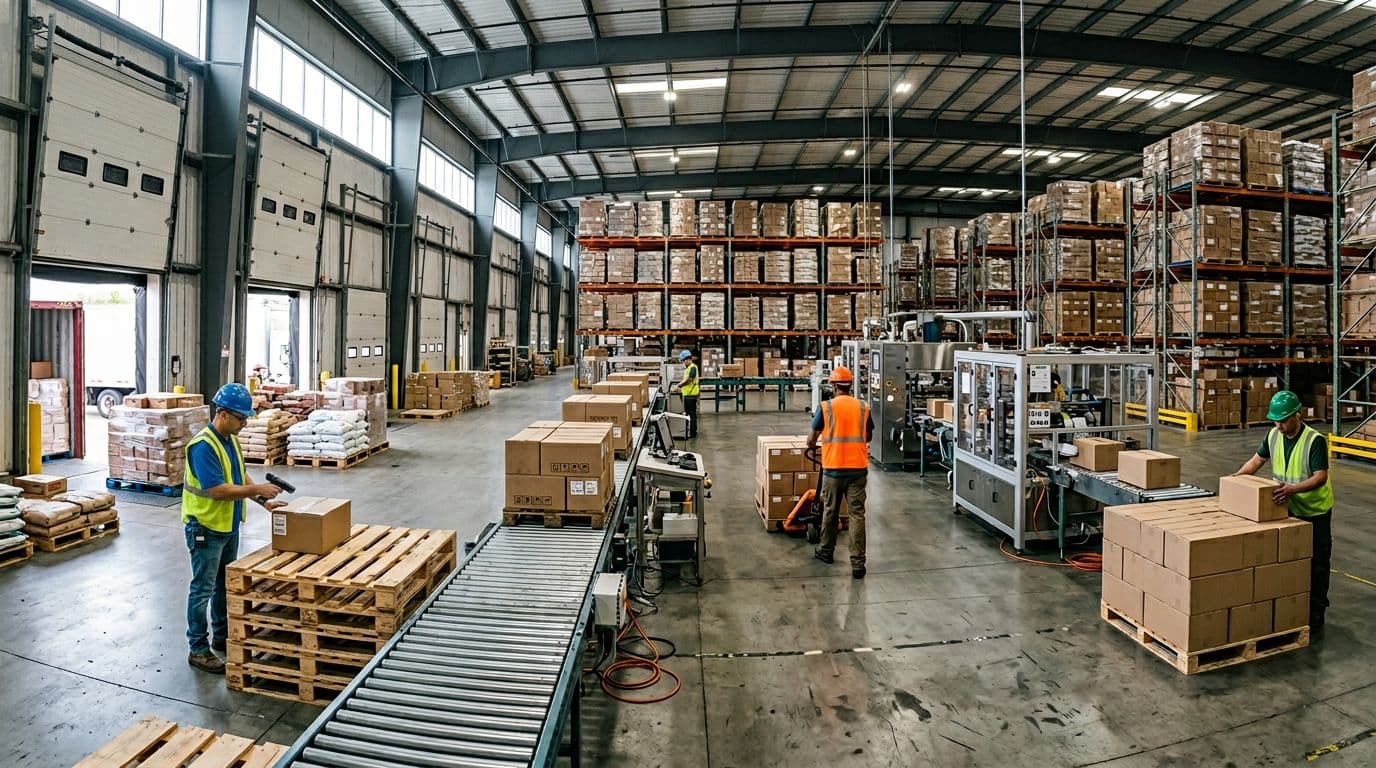
What counts as a lot in contract packaging (and why it is not always obvious)
A lot is a defined slice of product that shares the same inputs and process window. The problem is that “same” depends on who set the rules. On a real line, a lot can mean different things at different handoff points.
Common lot definitions you will see include:
- Supplier lot: The lot number on ingredients or components from the vendor. This is your starting point for backward trace.
- Internal production lot: The co-packer’s assigned lot for what was made or packed during a controlled window.
- Shift lot or run lot: Everything produced on Line 2, 1st shift, during a specific run. This helps when staffing and line conditions matter.
- Date code lot: Grouping by best-by or production date code. It is simple, but it can hide changes within the day.
- Customer-defined lot rules: The brand might require lot breaks based on allergen change, label revision, country of origin, retailer, or even pallet pattern.
Edge cases cause most arguments later. Rework can split or merge lots if you do not keep the original IDs attached. Repacks (damaged cases rebuilt) can quietly mix lots. Partial pallets are another trap, because they often get moved, restacked, and relabeled.
If the lot definition is not written into the SOP and the customer agreement, two teams will label the “same” product two different ways.
The minimum data you should capture every time a product changes hands
Good traceability comes from small, consistent captures at the right moments. Record it at receiving, at each major step on the line, and at shipping, not at the end of the week.
At minimum, a practical record should tie together:
- Supplier name, inbound PO, and receiving date
- Lot or batch ID from the supplier (and any internal lot you assign)
- Expiration or best-by date (and any manufacturing date you rely on)
- Quantity received, used, scrapped, and returned to stock
- Storage location (rack, bay, zone), plus any moves
- Line and run ID, including start and stop times
- Operator or team on the run
- QC checks performed (and pass, fail, hold status)
- Packaging material lots (labels, film, cartons, corrugate, inserts)
- Label version or artwork revision used
- Shipping details: customer, ship date, carrier, and what lot-coded pallets shipped
Quick example: one ingredient lot of seasoning arrives, then gets used across two separate packaging runs (different case packs). That is one input lot turning into multiple finished lots. The only way to prove scope is with run records that show exactly when that seasoning lot was issued to the line.
Where traceability breaks down most often during co-packing
Most failures are not dramatic. They are small gaps that snap the chain when pressure hits.
The repeat offenders include handwritten lot numbers, mixed pallets in staging, and label roll swaps that are not logged. In addition, undocumented line clearance can leave old components on the line. “One-off” spreadsheets also cause trouble, because they drift from the system everyone else uses. Rework is another big one, if the team removes product from cases and loses the original lot link. Last-minute component substitutions can finish the job if no one records the change.
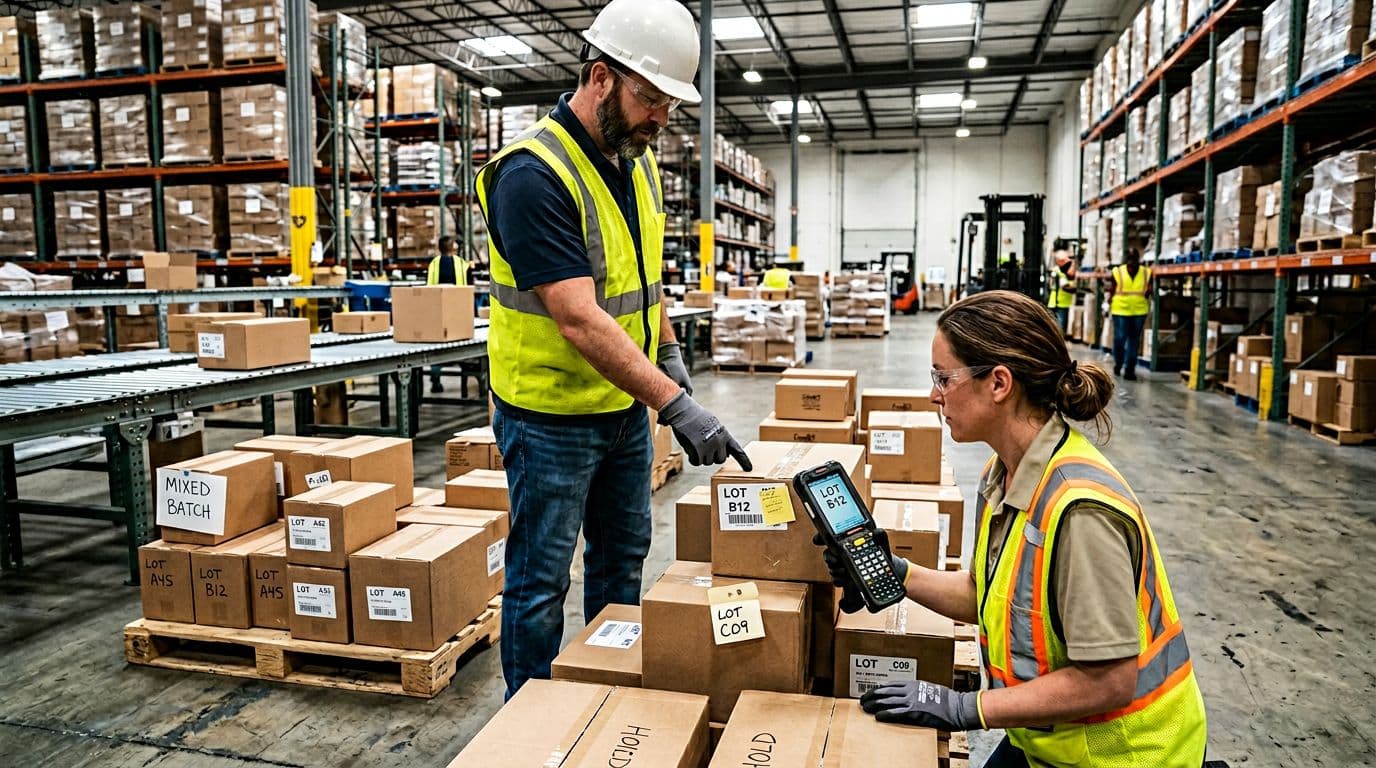
A few prevention habits pay off fast:
- Scan to confirm at receiving, issue-to-line, and pallet wrap, so the system stops mismatches in real time.
- Use segregation and clear staging rules, especially for partial pallets and returns from the line.
- Enforce hold-and-release and change control, so substitutions, rework, and label changes get documented before product ships.
When an incident hits, a “good record” should answer these questions in under two minutes:
- Which finished lots are affected?
- Which ingredient and component lots were used (backward trace)?
- Which customers, orders, and carriers received affected pallets (forward trace)?
- What line, date, and team produced the units?
- What QC results and disposition (released, held, reworked) are on file?
Building a traceable packaging process, step by step from receiving to shipping
Lot Tracking works best when you treat it like a relay race. Every handoff, receiving, storage, staging, packaging, and shipping, must pass the baton cleanly. If one step gets sloppy, you can still finish the race, but you will not trust the result.
The goal is simple: at any moment, you should be able to point to a case or pallet and prove (1) what supplier lots went into it, (2) what happened during the run, and (3) which customer received it. Use this section as a practical audit guide for a co-packer’s process, including contract packaging services.
Receiving and quarantine, how to keep supplier lots clean from the start
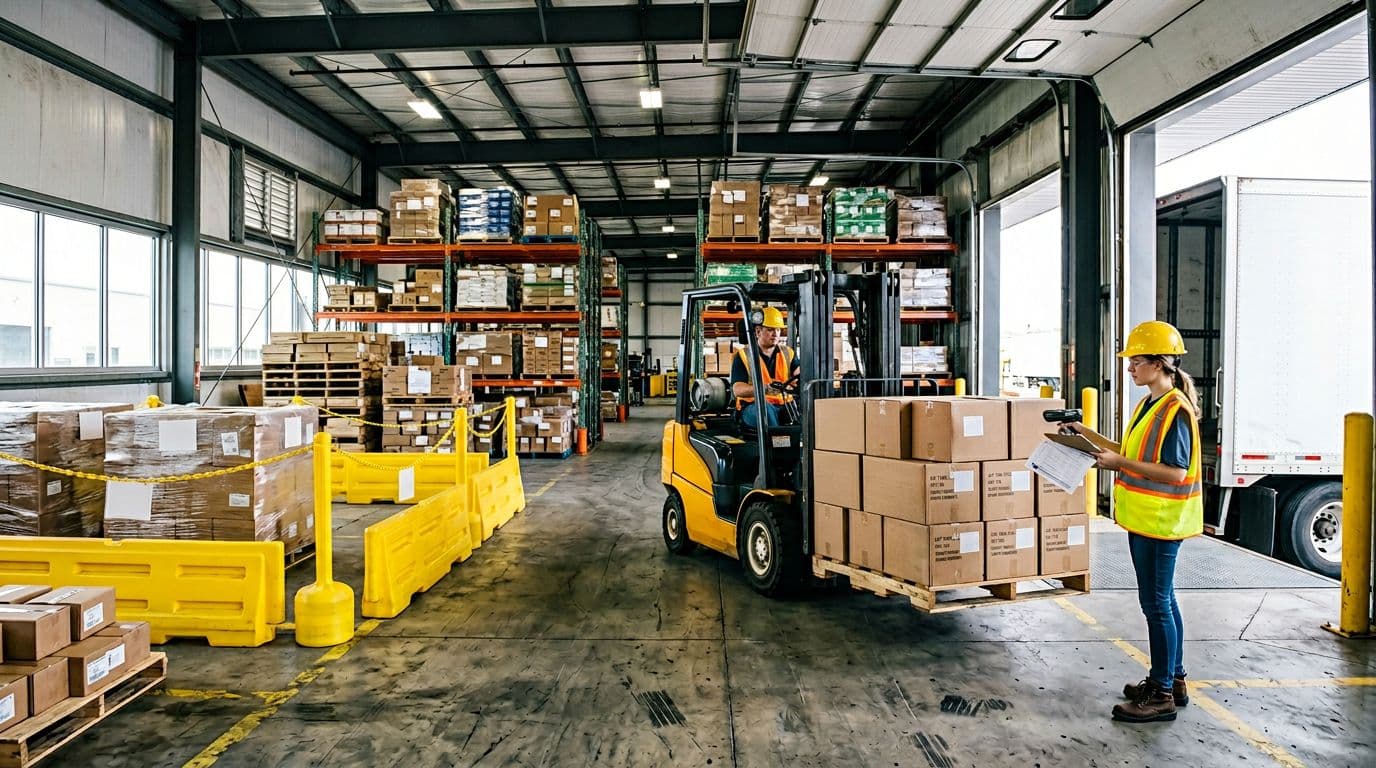
Start Lot Tracking at the dock, not after product hits the rack. On receipt, scan or record the PO, item code, supplier lot, quantity, and any date data (manufacture, best-by, expiration). If your program requires it, verify COA/COC against the spec before the load can move forward.
Next, count and inspect with purpose. Look for crushed corners, wet cartons, broken seals, or mixed lots on a single pallet. Then label every case or pallet with a scannable ID that keeps the original supplier lot intact. Some co-packers also assign an internal receiving ID to control moves and status (hold vs released) without overwriting supplier data.
Quarantine is your safety catch. Until QA releases the lot, store it in a physically separated area and in a system hold status. For dated goods, set picking rules early, FEFO (first-expired, first-out) for expiration-driven items, or FIFO for non-dated goods. That decision controls what gets staged to the line later.
Damaged cartons need special care because they often trigger reboxing and relabeling. Keep the trail by (1) taking the damaged case out of circulation, (2) salvaging units into a new case, and (3) applying a new label that references the same supplier lot plus a reason code or rebox record. Never “clean up” labels by removing lot info, that is how investigations turn into guesswork.
Line clearance and label control, the simplest way to prevent wrong-lot mistakes
Most wrong-lot events start at setup, not during production. Before staging materials to the line, scan the storage location move (rack to staging) and record which lots were pulled and who pulled them. This creates a clean link between warehousing and the work order.
Then run a line clearance that’s boring on purpose. Use a repeatable routine:
- Remove all prior run materials from the line, hoppers, tables, printers, and floor area.
- Check waste bins and rework totes, then empty or label them to the correct run.
- Verify the line is clean, dry, and free of stray components.
- Set the new work order at the line, with the approved BOM and specs.
Label control is where simple discipline pays off. Keep approved artwork revisions tied to the work order, and only issue label rolls from controlled stock. When the roll hits the line, scan and record the label item, revision, and roll ID. If you print on demand, verify the printer template and the lot code format before the first unit runs.
Before the line starts, your team should be able to answer “do these three match?”:
- Work order: correct SKU, pack count, and lot rules.
- Materials staged: correct component lots (and correct FEFO/FIFO pick).
- Labels and inserts: correct version, correct language, correct barcode.
If labels can be swapped without a record, you do not have traceability, you have hope.
In-process checks that make recalls smaller and investigations faster
Once packaging begins, traceability lives in small, time-stamped checks. Record the run start time, line ID, and the exact component lots “issued to line.” If a lot changes mid-run, log the change time and the new lot ID, that is what creates clean lot breaks.
In-process checks should match your risk. Practical examples to watch and record include count verification, seal checks, weight checks, correct inserts, correct language label, barcode scan verification, torque checks for caps, and kit contents confirmation. The “why” is straightforward: each check proves the product stayed within spec while that lot was on the line.
When something fails, treat it like a controlled traffic stop. Document the failure, isolate the suspect window, and stop it from blending into good product. A clean hold process includes:
- Put product on QA hold with a clear status in the system and physical tags.
- Segregate by pallet or tote, never mix with released goods.
- Record the suspect range, for example time window, case numbers, or pallet IDs.
Rework is where a lot trail often breaks. If you open cases, swap components, or relabel, you need a rework record that links (1) the original finished lot, (2) the component lots involved, (3) the reason for rework, and (4) the final disposition (released, scrapped, or returned to stock). That link is what makes your recall scope tight instead of wide.
Shipping records that let you trace forward in minutes, not days
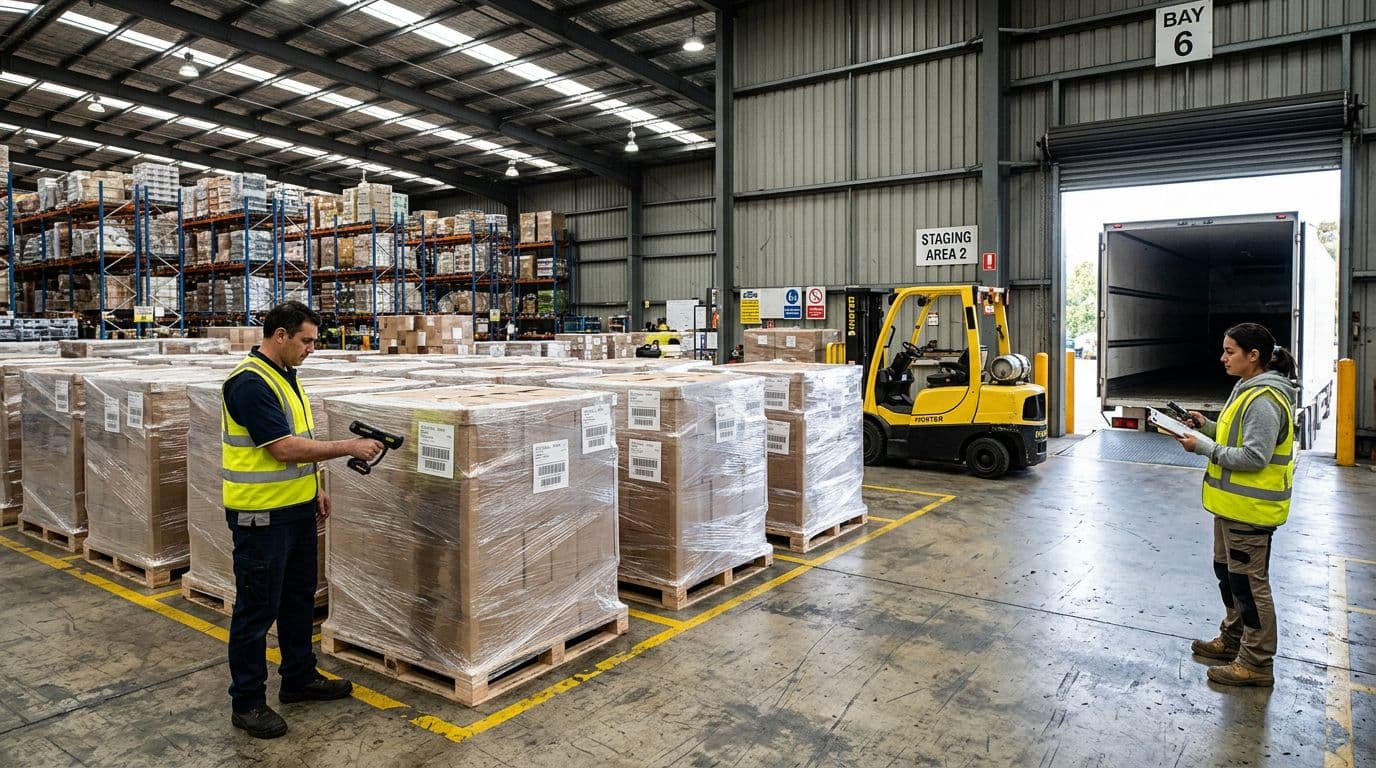
Finished goods should become traceable again at palletizing, not just at the dock door. As pallets are built, assign a pallet ID (or SSCC if used) and record which finished lot and case count sit on that pallet. When pallets move into warehousing, scan the location move so you can prove where each lot lived before shipment.
At pick and pack, confirm with scans, not memory. The picker scans the pallet ID, confirms the order, and the system should prevent cross-lot substitutions unless approved. This matters most when you ship partial pallets or split shipments, because those are the moments lots get mixed.
Finally, tie outbound lots to the shipment record. Your forward trace should link pallet IDs and finished lots to ship-to, ship date, carrier, and BOL. Customer portals or EDI can help, but the basics still win: if you can’t point to the exact customers who received a lot (even when the lot shipped across multiple orders), your response time will suffer when it counts.
Tools that make lot tracking reliable, from barcodes to connected software
Paper logs and spreadsheets can work when volumes are low and moves are simple. The problem is that they depend on perfect handwriting, perfect copy-paste, and perfect timing. Under real co-pack pressure, they turn into “close enough,” and that’s when Lot Tracking breaks.
Scanning and connected systems change the feel of the work. Instead of trusting memory, the operator proves each handoff. Instead of chasing files, you pull one record set that ties receiving, the line, and shipping together. That’s also why these tools matter in busy markets like contract packaging in Indianapolis, where frequent changeovers and shared space make mix-ups easier.
Barcode scanning, the best starting point for most co-pack projects
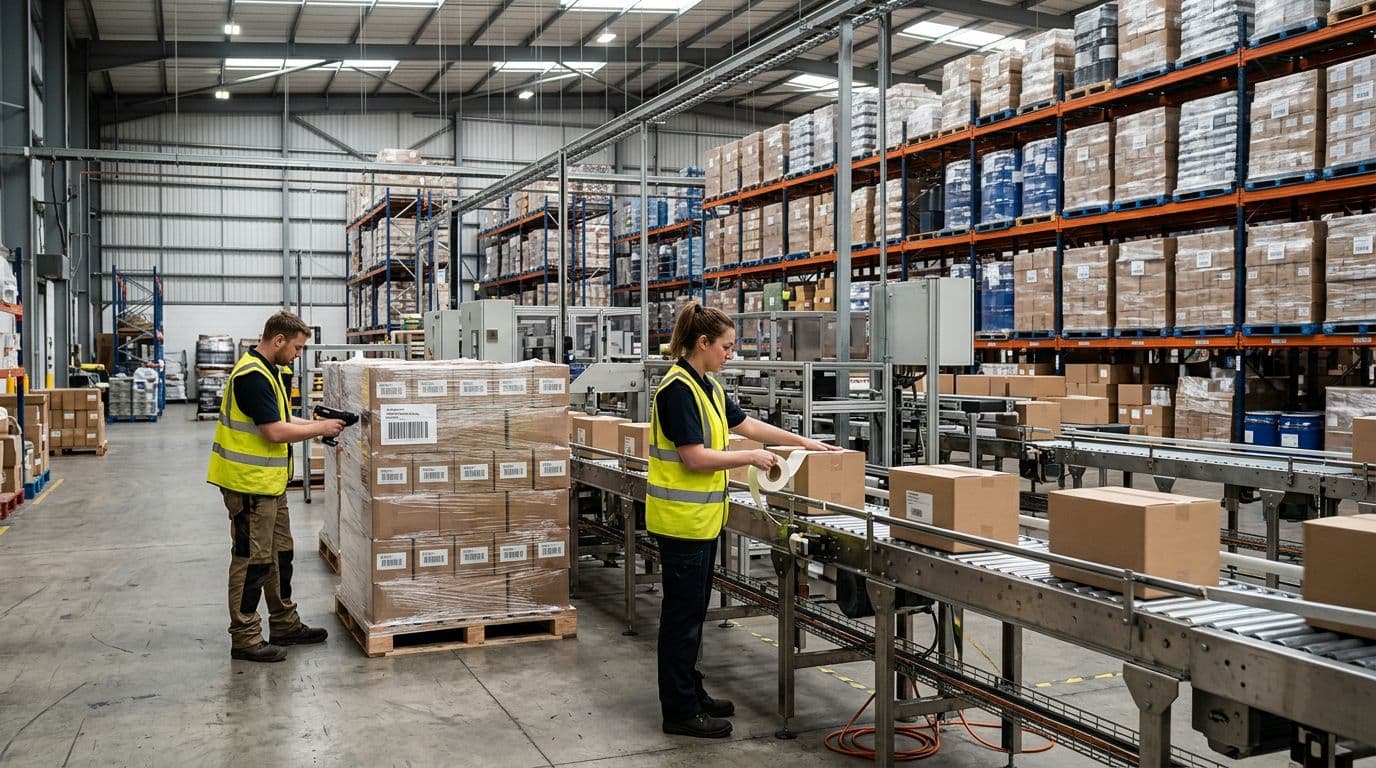
Barcodes reduce errors because they remove typing from the process. A scan either matches the work order or it doesn’t. In other words, the system can block the wrong ingredient lot, wrong label roll, or wrong pallet before it turns into finished product.
To get real value, place scans at the “truth moments,” not just at the end of the shift:
- Receiving: scan PO, item, supplier lot, quantity, and date fields.
- Put-away and moves: scan location changes so you can prove where a lot sat.
- Issue-to-line: scan each component lot as it hits staging or the line.
- Pack-out and pallet wrap: scan finished lot, pallet ID, and case count.
- Shipping: scan pick confirmation so the right lot goes to the right order.
Your labels should do two jobs at once: help people and help systems. A solid case or pallet label usually includes human-readable lot, a barcode for that same ID, and key dates (manufacture date, best-by, or expiration, based on your rules). Keep the format consistent across inbound, WIP, and finished goods so teams don’t “translate” data under stress.
Two details make or break barcode success. First, set up printers correctly (darkness, speed, label stock, and placement) so codes scan every time. Second, use barcode verification on new templates and new printers, because a code can look fine and still fail at the scanner. Done right, scanning also speeds up counts and makes changeovers safer, since the line can confirm “new run, new lots” in seconds.
A barcode system doesn’t just record what happened, it helps stop the wrong thing from happening.
RFID and other automation, when it is worth the extra cost
RFID earns its keep when scanning each touch becomes the bottleneck. Since tags can be read without line-of-sight, it’s a good fit for high volume, many internal moves, or fast warehouse reads where people and forklifts move constantly.
Common good-fit use cases include closed-loop packaging like reusable totes, lots of repeated moves between zones, and high-value goods where you want tighter control with less manual handling. Some sites also use RFID to confirm that a tote, pallet, or cart entered or left a specific area at a specific time.
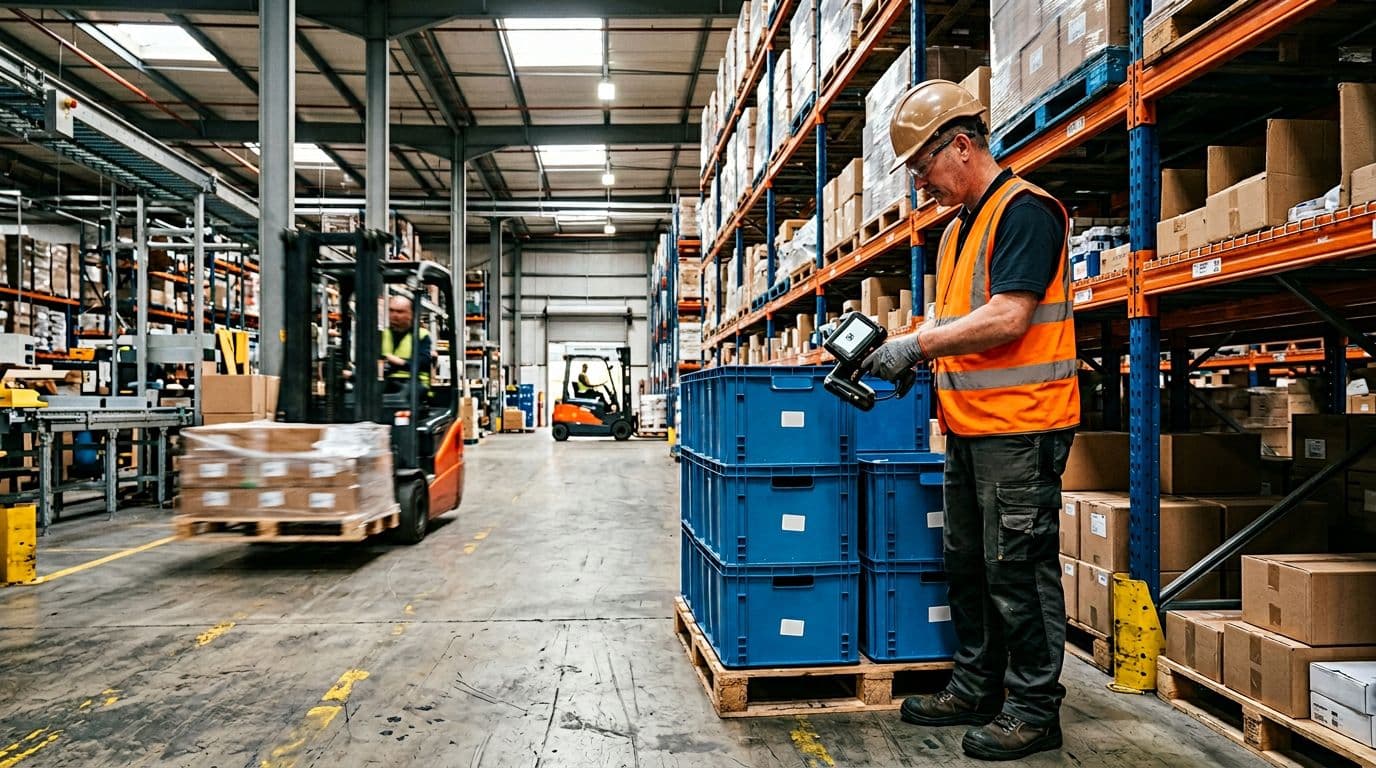
Still, RFID is not a magic fix. Tag and reader costs add up, some environments create interference (metal racks, liquids, tight portals), and the biggest hurdle is often change management. If the team doesn’t trust the reads, they’ll work around it. That’s why many co-pack operations start with barcodes, then add RFID only where it removes real friction.
Connected systems and clean data, the difference between “we have logs” and “we can trace”
Logs alone don’t equal traceability. If receiving uses one spreadsheet, production uses paper batch sheets, and shipping uses an email trail, you have records, but you don’t have one story. A connected system creates a single source of truth, so each scan and status change lands in one place with the same naming rules.
Look for basics that protect the chain:
- Role-based access so only the right people can edit, release, or scrap lots.
- Time stamps and audit trails so you can see who changed what, and when.
- Standardized naming for SKUs, lots, locations, and label revisions.
Integrations matter, too, as long as they stay simple. A packaging execution system (for example, Nulogy) can sit between the shop floor and your ERP. Meanwhile, WMS tools manage locations and moves, and QMS tools manage holds, deviations, and releases. When they connect, a backward or forward trace becomes a report, not a scavenger hunt.

Finally, set clear expectations for data retention and response time. During an audit or an incident, you should be able to produce receiving, production, and shipping records quickly, ideally in minutes. Tools help, but clean processes make them trustworthy.
Compliance and customer trust, what traceability needs to cover in regulated products
In regulated products, Lot Tracking is more than inventory control. It’s how you prove what happened, using records that connect receiving, packaging, QC release, and shipping. When a complaint hits, or an audit starts, people won’t accept “we always do it that way.” They want evidence you can pull quickly.
Traceability should also cover the controls around the work, not just the lot numbers. That means clear SOPs, training, change control, and documented QC release. In other words, the trail needs to show both the product story and the process discipline behind it.

What auditors and brand QA teams usually ask for (and how to be ready)
Auditors and brand QA teams tend to ask for the same core proof points, just in different formats. They want to follow one finished lot backward to inputs, and then forward to every shipment. They also want to see that your process stays controlled when something changes.
Here are common requests you should expect in a co-packer setting:
- Lot genealogy: The full chain from supplier lots to WIP to finished lots, including lot breaks and rework links.
- Receiving records: PO, supplier lot, quantity, condition checks, quarantine status, and release decision.
- COA or COC links: Proof the received lot met spec, tied to the exact lot used on the run.
- Training records: Who ran the job, and proof they were trained on the SOPs that matter.
- Calibration and verification logs: Scales, checkweighers, barcode verifiers, vision systems, and any critical measurement tools.
- Line clearance forms: Proof the line was cleared, labels controlled, and prior materials removed.
- Deviation and CAPA records: What went wrong, how you contained it, root cause, and actions to prevent repeat issues.
- Shipping history: Pallet IDs, ship dates, BOLs, carriers, and ship-to customers for forward trace.
The unwritten rule is “show me, don’t tell me.” If you can’t pull records quickly, it raises a second concern: maybe the process isn’t stable. Retrieval speed matters because some programs (like FDA food traceability requests for certain foods) expect electronic records fast, often within a day.
Medical, food, and cosmetics, how traceability expectations differ
Traceability isn’t one-size-fits-all. The right plan matches the product risk, the customer spec, and how the product fails in real life.
A few practical differences:
- Food: Traceability often centers on ingredient lots, allergen controls, and date coding. For example, you need to prove which seasoning lot and which label revision went into a run, and that the allergen statement matched. You also need strong date and expiration control (FIFO or FEFO), because expired ingredients can quietly become a quality event.
- Medical devices (including kits): The focus shifts to component and packaging control, plus trace-to-ship documentation. If a kit includes multiple parts, you must show each component lot, assembly checks, and where each finished unit shipped. Many device programs also require UDI controls, so IDs stay accurate through relabeling, repacks, and returns.
- Cosmetics and personal care: Expect attention on microbial risk, cleanliness, and stability related dates. You may need to show preservative system checks, correct container and closure lots, and how you controlled holds while QC reviewed results.
- Pharma-like workflows: Even when you’re “just packing,” customers may require strict batch record style documentation, line-by-line sign-offs, and documented QA release before shipment.
The takeaway: align your traceability plan to the product and the customer’s written requirements, then train to it. A great system still fails if the crew treats it like paperwork.
Recall readiness, how lot tracking helps you act fast and protect your brand
A recall is like a fire drill. The best time to find missing exits is not during the fire. Strong Lot Tracking shrinks scope, speeds decisions, and helps you communicate with confidence.
A simple mock recall usually follows these steps:
- Identify the affected lot (finished lot, input lot, label revision, or time window).
- Quarantine on-hand inventory immediately, both in the system and physically (hold tags, segregated area).
- Trace forward to customers using shipping history, pallet IDs, and order records.
- Document actions taken, including who approved holds, notifications, and disposition.
- Close out with lessons learned, then update SOPs, training, and controls if needed.
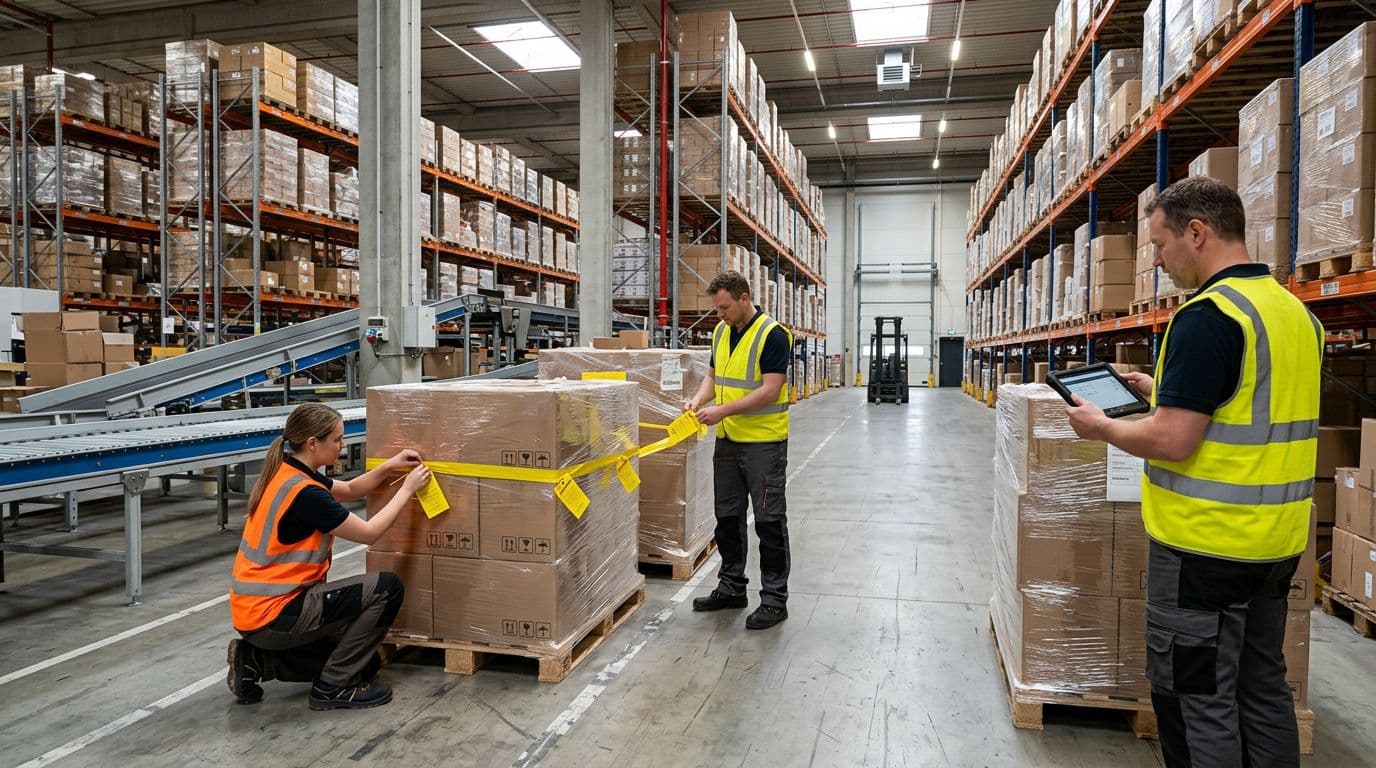
Set a clear goal time for trace exercises (for example, “can we identify all ship-tos in under X hours?”), then run mock recalls on a schedule. Each test builds muscle memory, so when a real complaint or regulator question arrives, you’re ready to respond with facts, not panic.
How to evaluate a contract packager’s lot tracking before you sign

Before you sign, treat Lot Tracking like a safety system, not a feature. Under normal days, almost any process looks fine. The real test is whether they can keep lots clean during changeovers, rework, and last-minute fixes.
Ask for proof you can touch. Better yet, ask them to show you one real example from a recent job (with customer info removed). You want to see how the story holds together from receiving to ship.
Questions to ask about process, people, and proof
Start with how they capture data. If they “scan sometimes,” the chain will break later.
Here are questions that get straight answers:
- Where do you scan? Ask for scan points at receiving, put-away, issue-to-line, label issuance, pallet build, and shipping.
- How do you prevent mixed lots in WIP? Look for clear staging rules, tote or pallet IDs, and time-stamped lot breaks.
- How do you control labels? Ask where labels live, how revisions get approved, and how they stop the wrong roll from reaching the line.
- How is rework handled? Good answers include a rework record that links original lot, reason, who approved, and final disposition.
- How do you handle deviations? You want a hold process, an investigation owner, and documented QA release.
- How fast can you produce a lot genealogy report? Minutes to hours is the goal, not days.
- Can you run a mock recall with us? A confident co-packer welcomes it and already has a routine trace test schedule.
Also ask about the humans. Who trains operators on lot rules? Who supervises line clearance? Finally, who in QA signs off before anything ships?
Red flags that usually mean traceability will fail under pressure
Some warning signs look small, but they cause big scope during a complaint or recall.
- “We track it in spreadsheets.” Spreadsheets don’t stop mistakes in real time, and version control breaks fast.
- Unlabeled WIP (totes, partial cases, open cartons). If it’s not labeled, it will get mixed.
- No formal line clearance. Old labels or components stick around, then show up on the next run.
- Shared label storage. If multiple SKUs share a shelf, wrong-label risk goes up.
- No segregation for holds. A “hold” that sits next to released goods is not a hold.
- Unclear ownership between brand and co-packer. If no one owns investigations, problems linger and records stay incomplete.
- No routine trace tests. If they never practice, their first real test becomes your emergency.
A trace system that only works when everyone is calm will fail when you need it most.
What to agree on in the SOW so lot tracking stays consistent over time
A strong SOW turns “how we do it today” into “how we do it every time.” This matters most when you onboard a new SKU or add a label change.
Lock in these items:
- Lot format and lot breaks: define what triggers a new lot (time window, shift, ingredient lot change, label revision, rework).
- Required data fields: inbound lots, component lots, label revision, run times, pallet IDs, ship-to, and QA disposition.
- Record retention: how long they keep records, and how you can access them.
- Reporting cadence: what you get after each run (pack report, scrap, holds, genealogy on request).
- Change control: who approves changes to materials, labels, and suppliers before the next run.
- Investigations and costs: who leads deviations, who approves release, and how labor and downtime get billed during holds or recalls.
- Single point of contact on both sides: one owner for daily questions and one owner for QA issues.
For extra context on partner fit, use this guide on choosing the right co-packing partner.
Copyable lot tracking scorecard (1 to 5)
Use this quick scorecard to compare sites:
- Scanning at every handoff: 1 2 3 4 5
- WIP labeling and segregation: 1 2 3 4 5
- Label control and line clearance: 1 2 3 4 5
- Rework, holds, and deviation control: 1 2 3 4 5
- Genealogy report speed and mock recall readiness: 1 2 3 4 5
Conclusion
Strong Lot Tracking in contract packaging is simple on purpose. It starts with clear lot rules everyone follows, then it holds up through disciplined scanning, tight label control, and connected records that tie receiving, the line, and shipping into one story. Add routine testing, like mock recalls and trace drills, and you stop learning lessons during a real incident.
The best setups also match today’s expectations for faster trace requests and cleaner electronic records, especially for food programs influenced by FSMA Rule 204. Still, a basic, repeatable process beats a complex system nobody uses when the line gets busy. If you can’t keep WIP labeled, manage rework links, and log mid-run lot breaks, more software won’t fix it.
Next, run a mini traceability audit of your current co-pack process, from dock to shipment. Then use the questions from the evaluation section to close the biggest gaps, one control at a time.
