
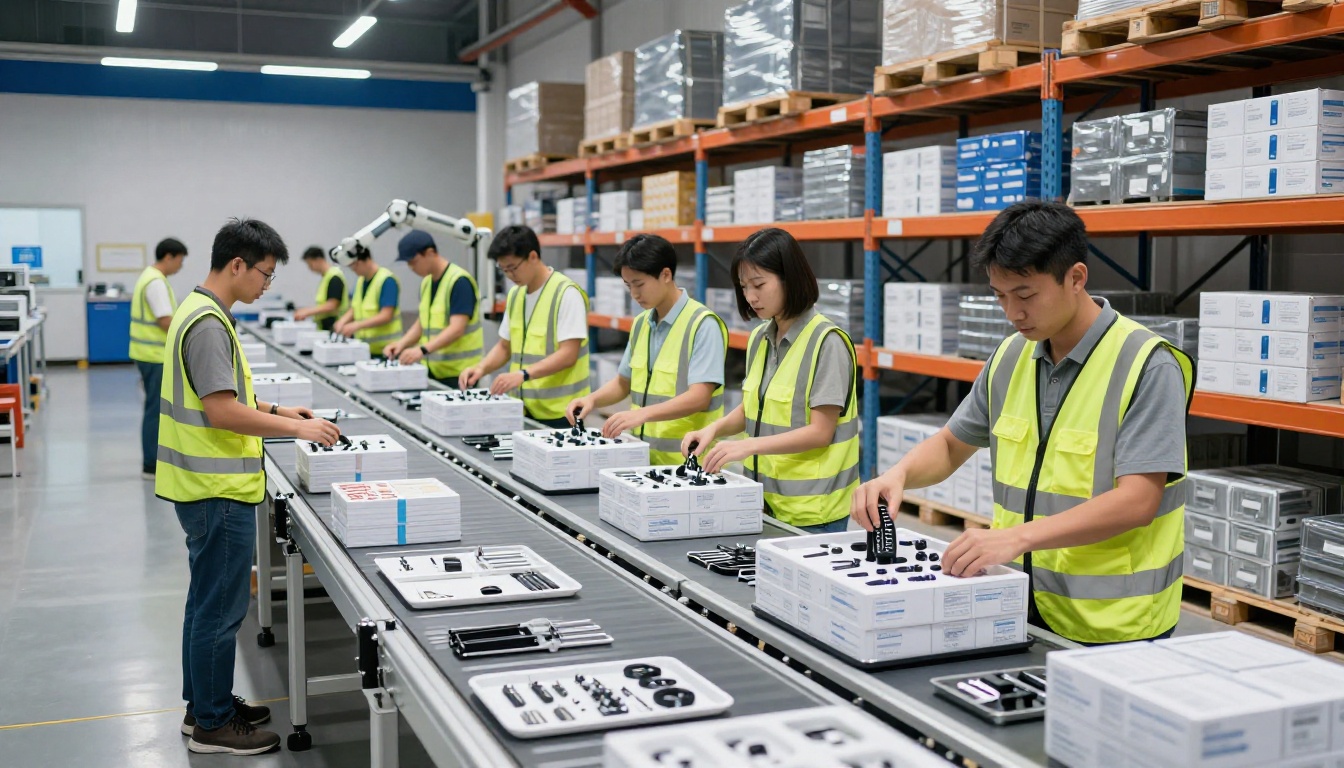
How Kitting and Assembly Services Improve Supply Chain Efficiency
If your team is juggling dozens of parts for one order, the work can feel like cooking dinner while someone keeps moving the pantry. Pickers walk more, packers re-check more, and the line still waits for “one last item.” Every handoff adds another chance for mistakes.
Kitting and Assembly Services reduce that chaos by doing the organizing work earlier, in a controlled setting. Instead of shipping or staging loose parts, you move a single, verified kit or a pre-built sub-assembly. The payoff is practical: faster order fulfillment, fewer picking errors, less inventory confusion, better use of labor, and production plans you can trust.
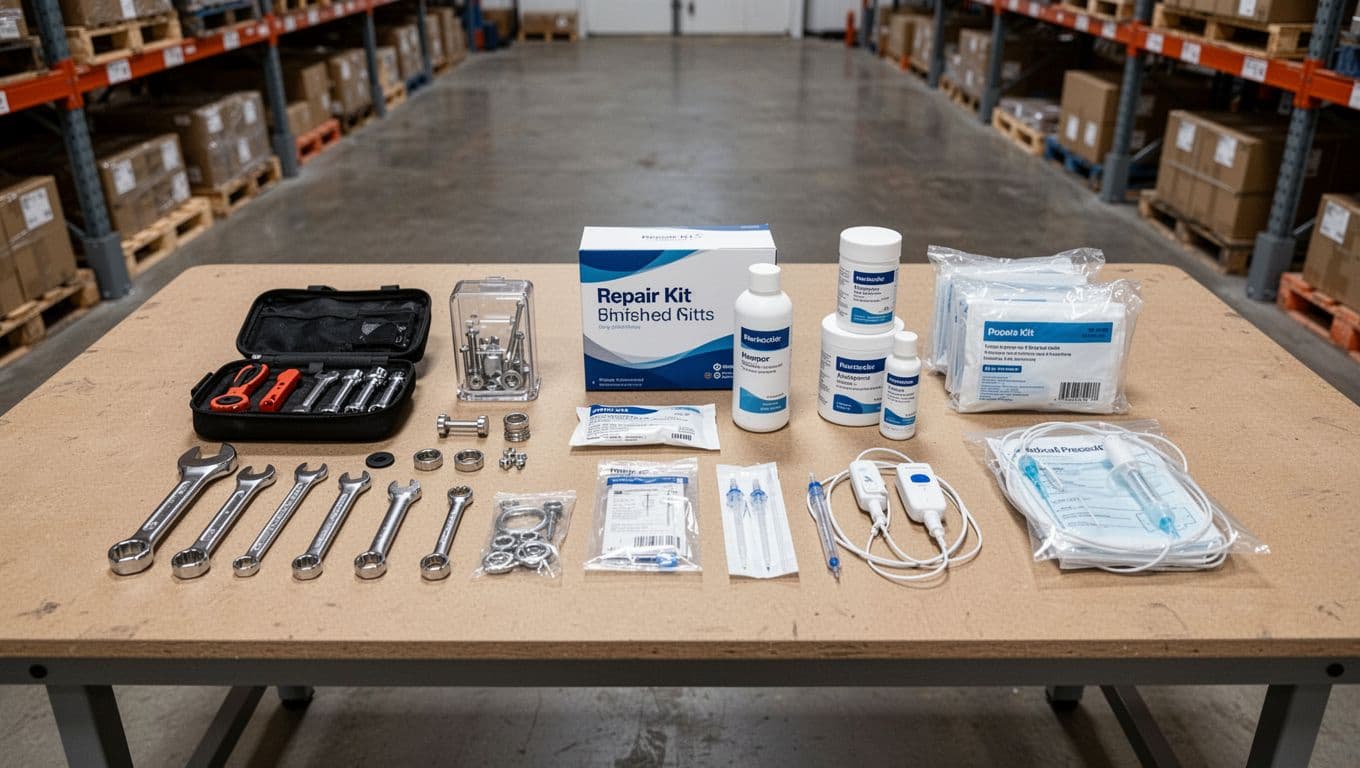
Think of a common repair kit. When a technician opens the box, everything is there, counted, labeled, and ready. That same idea works inside your warehouse and across your supply chain.
What kitting and assembly services actually do, in plain English
Kitting and assembly sit in the middle of the flow, after receiving and before shipping or the production line. They don’t replace your supply chain, they remove friction from it.
To keep this simple, use one example: a field-service pump repair kit used by technicians. Each job needs the same mix of gaskets, O-rings, bolts, a tube of sealant, and a printed instruction card. If those items stay as separate SKUs, every order becomes a mini scavenger hunt.
With kitting, those items become one unit your team can store, pick, count, and ship. With assembly, some tasks can happen before the kit leaves the warehouse, like pre-mounting a bracket or applying a compliance label. The result is fewer moving pieces during the busiest part of the day.
For a deeper baseline definition, this kitting in manufacturing guide explains how kits support production work without adding extra line steps.
Kitting, turning many parts into one ready-to-use kit
Kitting means grouping multiple items into one “grab-and-go” package. A good kitting process counts each component, confirms the right revision, then seals and labels the kit so it’s easy to identify later.
For the pump repair kit, a kitting station might:
- Pull the exact gasket size, bolt count, and sealant type
- Verify quantities once (not three times downstream)
- Add a simple label, batch info, and an internal part number
- Pack everything in a way that prevents damage in transit
That single kit reduces walking, searching, and double-checking. It also shortens pick lists, since the picker pulls one kit instead of eight items.
Assembly, doing the hands-on build work before it reaches your team or customer
Assembly is the hands-on work of putting parts together. Sometimes it’s “light assembly,” like fastening, inserting, applying labels, or bagging a sub-set. Other times it’s more complete, like building a finished unit and packaging it for shipment.
Using the same repair kit example, assembly might include pre-attaching a bracket to a small housing, torque-checking fasteners, or doing a basic functional test before packing. You can also treat assembly as a pre-line step, so your production team starts with a ready sub-assembly instead of a pile of components.
The big shift is timing. You move build steps to a controlled station where checks are repeatable, instead of doing them under pressure at the end.
Where the efficiency gains come from across the supply chain
Efficiency gains show up in small, daily moments. A picker takes fewer steps. A packer scans fewer items. A supervisor deals with fewer “missing part” fires. Over a month, those minutes turn into capacity.
It also matches what many teams are seeing in 2026: more multi-item orders, more bundle variety, and tighter delivery windows. Recent market reports estimate the kitting and assembly services market at roughly $8 billion today, with steady growth ahead, largely because businesses want faster, more accurate fulfillment for complex orders.
In practice, you’ll feel the benefits in metrics you already track: pick time, error rate, cycle time, on-time shipping, and inventory accuracy.
Faster picking, fewer touches, and less time wasted looking for parts
A kit turns many pick lines into one. That reduces travel time, scanning time, and the “where is it?” problem when one part sits in an overflow location.
Fewer touches matter because each touch costs labor and attention. With kits, you often cut:
- Trips between aisles for related items
- Partial picks that require later consolidation
- Packing station confusion when multiple orders share similar components
During peak season, this helps even more. When volume spikes, long pick lists slow training and raise error rates. Kits keep the process simple, so temporary labor can perform well sooner.
If you’re comparing approaches, this look at kitting vs traditional inventory management is a helpful way to think about when bundling beats item-by-item picking.
Fewer errors and stronger quality control when parts are checked once, the right way
Kitting supports quality because it standardizes what “complete” looks like. Instead of trusting that every order gets counted correctly at the last second, you build in checks at the kitting station.
That might be a simple checklist, a two-person verification for higher-risk kits, or a weight check for small parts. When needed, kits can also carry basic traceability, such as lot numbers, date codes, or serial tracking for a key component.
Catching a missing part at the kitting table costs minutes. Catching it on the production line costs hours.
Once you stop line stoppages caused by missing parts, cycle time improves. Rework drops too, because teams don’t build products around the wrong component.
When does it make sense to use kitting and assembly services, and when it does not
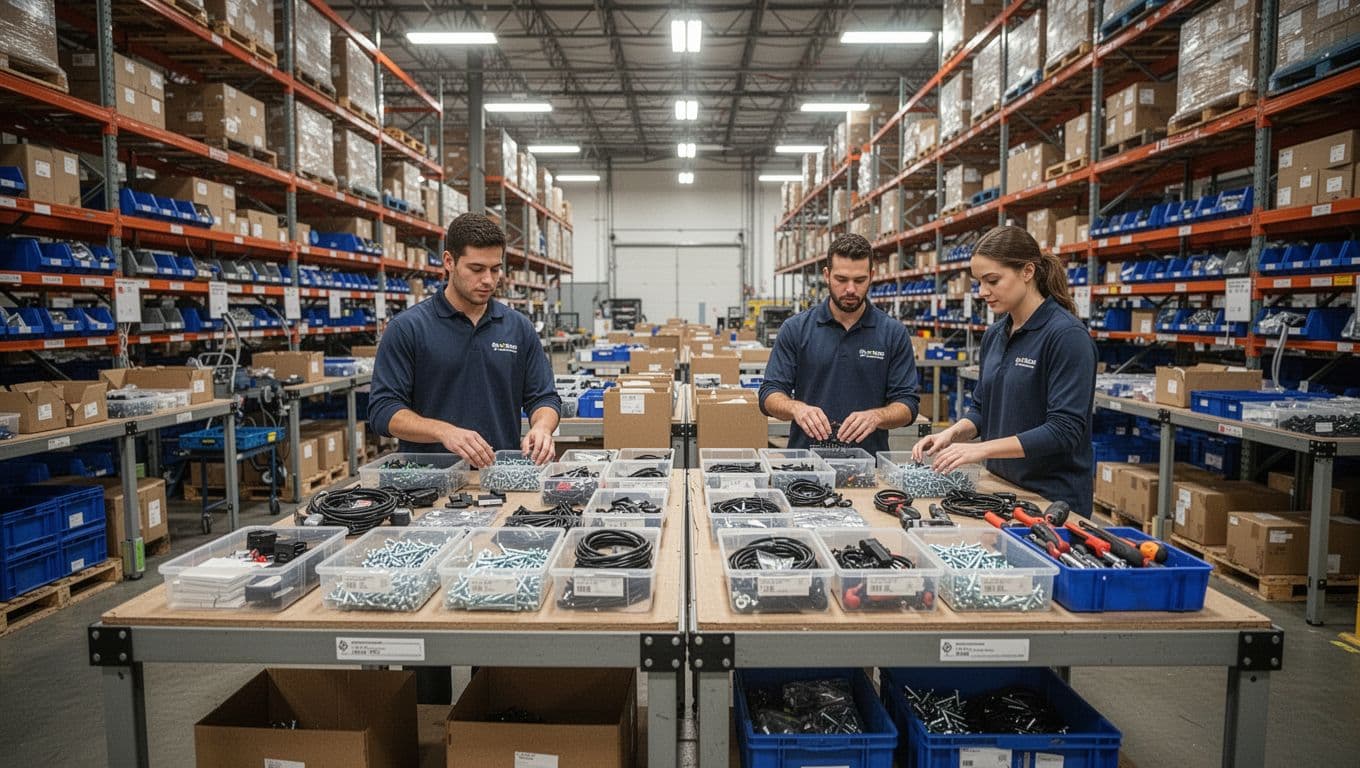
Kitting isn’t “always.” It’s a tool, and it works best when it reduces repeated work. Assembly services follow the same rule. If every order is a custom one-off, pre-building kits can create waste.
A good rule of thumb: if your team repeats the same multi-part pick over and over, you’re a candidate. If orders change daily and parts churn often, start smaller.
In many operations, the best approach is selective. Kit the top movers and the most error-prone builds first, then expand when the numbers support it.
Strong fit scenarios: repeatable builds, busy warehouses, and customers who want bundles fast
Kitting and Assembly Services usually make sense when complexity is predictable. Here are a few common fits:
- Medical procedure kits (with added verification steps and traceability needs)
- Electronics or computer builds, where sub-assemblies prevent line delays
- Furniture or hardware packs, where missing fasteners create returns
- Maintenance and repair kits for field teams, so trucks carry ready sets
- Subscription bundles and promotional packs that must look consistent
- New product launches, when you need quick scale without reworking your whole warehouse
A shared theme runs through all of these: pre-grouped parts reduce searching and sorting. Pre-assembly reduces the time spent doing fine motor tasks under shipping deadlines.
This warehouse kitting services guide offers more examples of how warehousing teams apply kits to reduce pick complexity.
Common pitfalls to avoid: bad forecasts, too many kit versions, and unclear ownership
Kitting can backfire if you build too early or change too often. The most common issues are simple, and they’re fixable.
Bad forecasts lead to kits that sit, get revised, or get scrapped. Too many kit versions create confusion, especially if labels don’t clearly mark revision levels. Unclear ownership causes stockouts because nobody owns replenishment triggers.
A few practical fixes help:
Start with your top-volume kit and run a small pilot. Lock version control so engineering changes don’t silently break the kit. Agree on labeling and QA steps before the first run. Finally, decide who owns replenishment signals, whether that’s purchasing, production, or the kitting partner.
If you can’t answer “who rebuilds the kit when one part changes,” you’ll feel pain later.
How to get started, choose a partner, and measure results in the first 60 days
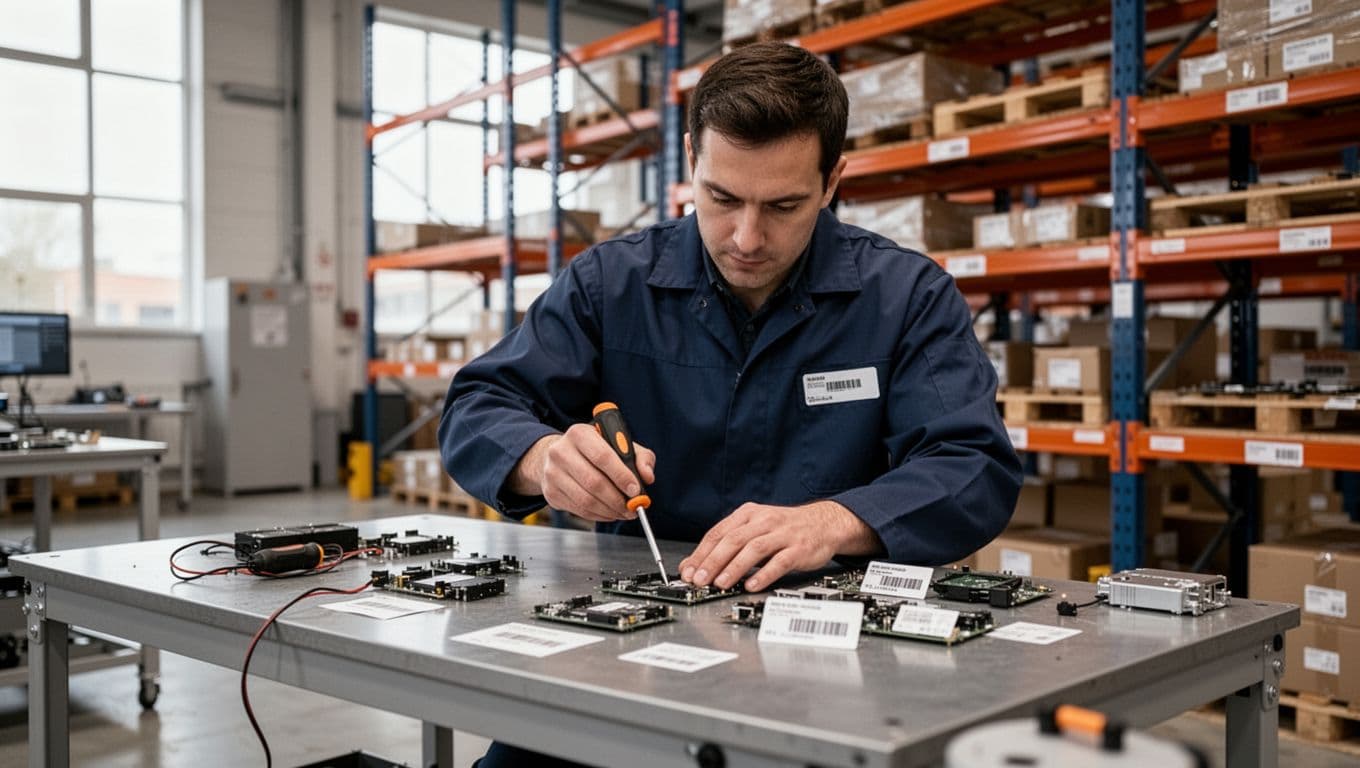
A good pilot doesn’t require a full system overhaul. It needs clarity, a small scope, and clean measurement.
Before you begin, gather your basics: a bill of materials (BOM), pack specs (bag, box, dividers), expected weekly volumes, label rules, and QC requirements. If you have channel needs (retail vs e-commerce), note them early because pack-out rules change.
If you’re evaluating providers, look for clear process control, documented QA, and the ability to scale volume without changing the work method. This page on professional kitting services is a good reference for what a formal kitting program typically covers.
A simple rollout plan: pilot, document, scale
Keep the first 60 days focused. A practical rollout often looks like this:
- Pick one product family with repeat demand and frequent multi-part picks.
- Define kit contents, acceptable substitutes, and revision control.
- Set packing rules (orientation, protection, inner bags) and label standards.
- Establish QC checkpoints (count check, visual check, traceability needs).
- Run a pilot build and ship it through normal channels.
- Review issues weekly and adjust the work instructions.
- Scale to the next kit only after the first kit stabilizes.
Communication matters here. Purchasing, warehouse, and production must agree on who triggers replenishment, so the kit doesn’t become the new bottleneck.
Scorecard basics: the numbers that prove supply chain efficiency improved
Measure a baseline for 2 to 4 weeks, then compare after the pilot. Keep the scorecard tight, so the results stay believable.
Here’s a simple KPI set many teams can pull quickly:
| KPI | What to compare | Why it matters |
|---|---|---|
| Order cycle time | Before vs after kitting | Shows faster fulfillment end to end |
| Pick and pack time | Minutes per order or per kit | Captures labor savings |
| Picking error rate | Mis-picks, shorts, wrong items | Shows accuracy improvements |
| Line stoppages | Stops tied to missing parts | Connects kits to uptime |
| Inventory adjustments | Counts, write-offs, corrections | Signals cleaner inventory control |
| On-time ship rate | % shipped on promised date | Proves customer-facing impact |
A successful pilot usually shows fewer touches, fewer errors, and a noticeable drop in “parts chasing.” Once that happens, scaling is a safer bet.
Conclusion
When a supply chain feels messy, it’s often because too much work happens too late. Kitting and Assembly Services move that work earlier, where it’s easier to control. As a result, you cut touches, reduce errors, speed up fulfillment, and keep production running without constant interruptions.
The biggest wins come from standard kits, clear labeling, and QA that’s consistent every time. Start small: pick one high-volume, multi-part item that causes the most picking time or the most mistakes. Define what success looks like, run a pilot, then expand only when the data proves it’s working.
