
Corrugated vs. Paperboard: Key Differences and Best Uses
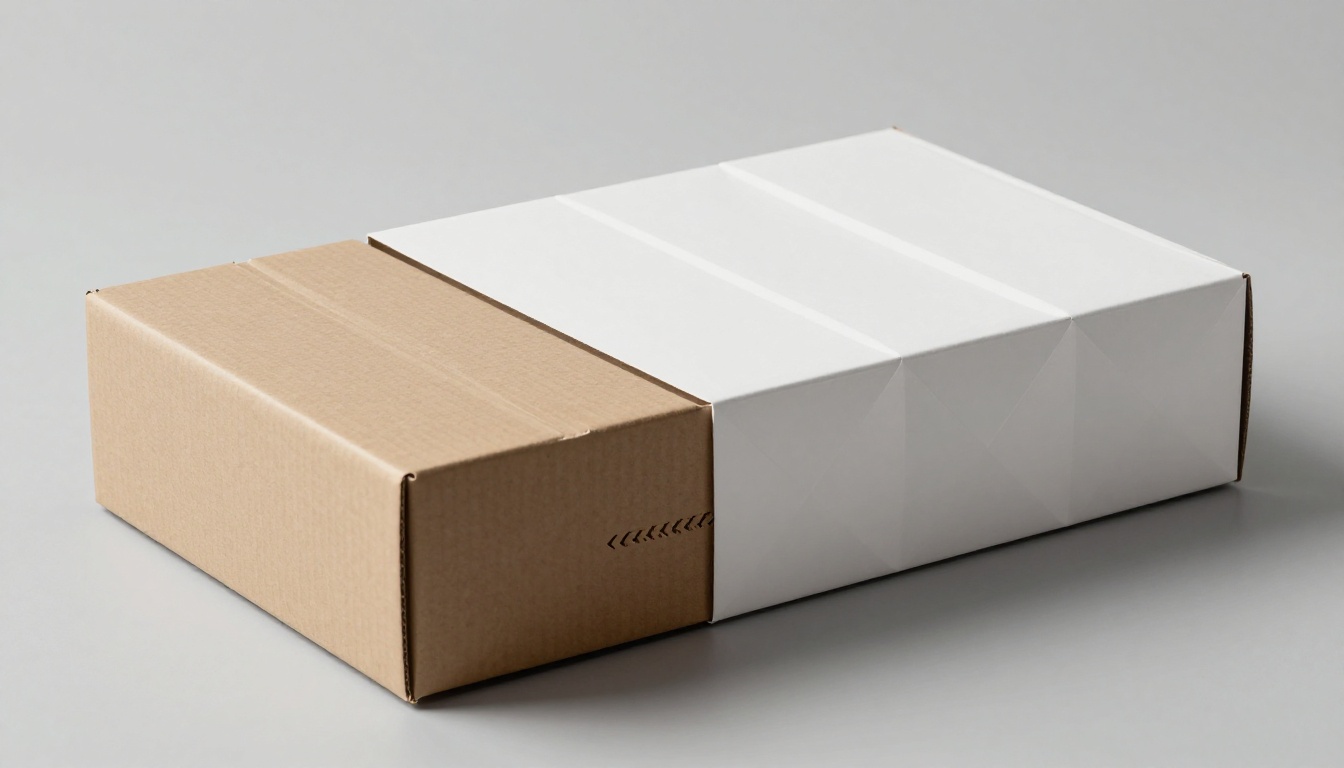
Corrugated boxes and paperboard cartons are both paper-based, but they’re built for different jobs. Corrugated has a fluted inner layer that adds structure and helps protect products during shipping, while flat paperboard is often chosen for folding cartons and retail presentation.
That difference affects how a package handles stacking, transit, and shelf display. Your product’s weight and fragility, along with how it’ll be shipped or sold, help determine which format fits; for retail products, explore retail packaging services.
Here’s how their construction, protection, and appearance compare, and what to consider when choosing a package for your product.
Key Takeaways
- Corrugated board combines flat liners with a fluted middle layer, adding structure and cushioning for shipping and stacking.
- Paperboard folding cartons use a smooth, single-ply sheet, making them a strong fit for printed retail packaging such as cosmetics or cereal boxes.
- Choose corrugated for heavier, fragile, or stacked products; consider paperboard when shelf presentation and compact storage matter more.
- For delicate items, pair the right box with fitted inserts or partitions. Explore custom corrugated boxes for shipping needs.
- Compare the full package cost, product protection, and local recycling options, since coatings and contamination can affect paper recovery.
What Is the Difference Between Corrugated vs Paperboard?
Corrugated board and paperboard differ mainly in construction and typical use. Corrugated board has a fluted inner layer between flat sheets, while paperboard usually refers to a solid, flat sheet used for cartons and other packaging. The terms aren’t true opposites: corrugated board is also made from paper-based materials, and its components belong to the broader containerboard family.
How corrugated board gets its strength from flutes and liners
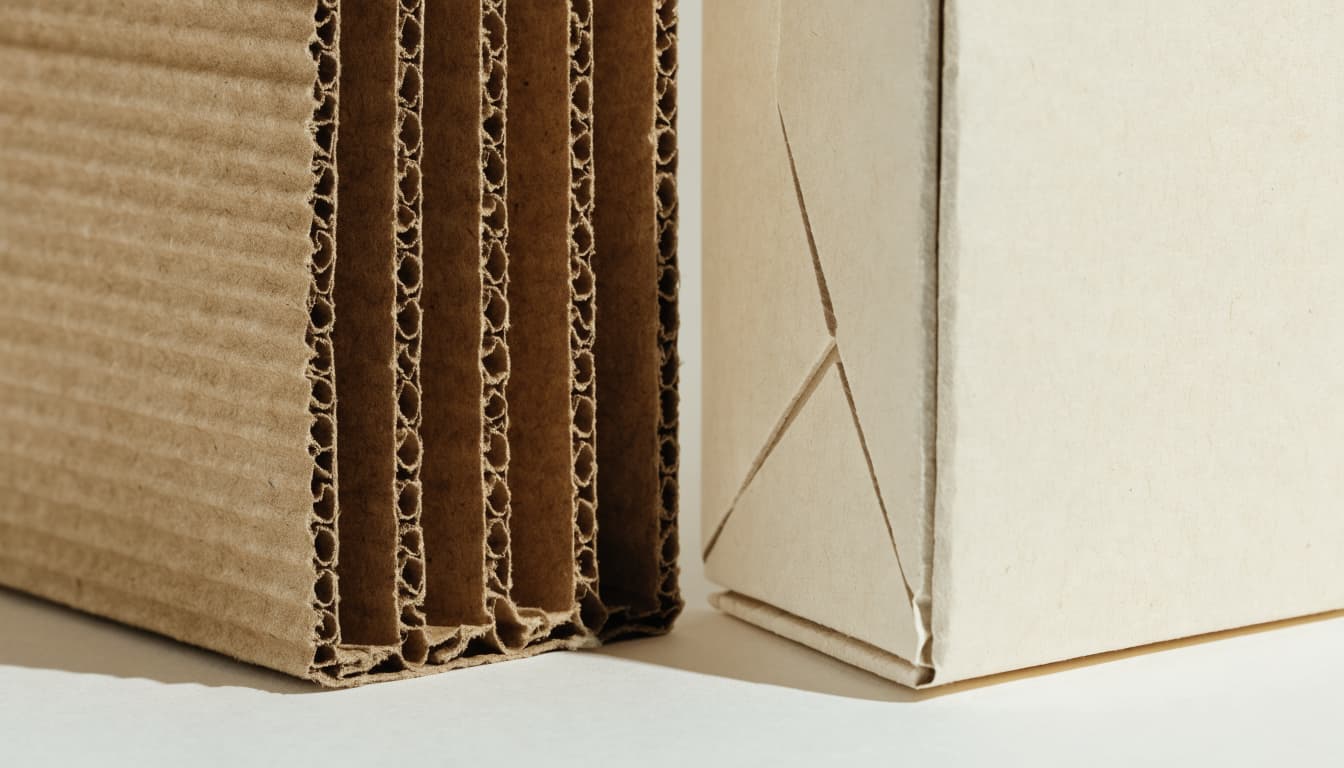
Corrugated board combines a wavy layer, called the fluted medium, with flat sheets known as linerboards. The flutes form arches between the liners, adding stiffness and creating small air spaces that help cushion impacts. The liners provide smooth outer surfaces and help the board resist pressure.
The exact construction affects how a corrugated package performs. A single-wall board has one fluted layer between two liners; a double-wall board has two fluted layers and three liners. Flute size, paper grades, and the number of layers all influence strength, cushioning, print surface, and stacking performance. So, the word “corrugated” alone doesn’t specify how much weight a box can handle.
| Material | Basic construction | Common packaging role |
|---|---|---|
| Corrugated board | Fluted medium bonded to flat linerboards | Shipping boxes, partitions, and protective packaging |
| Solid paperboard | A dense, flat sheet without a fluted core | Folding cartons, sleeves, and retail packs |
What paperboard means in cartons and other packaging
Paperboard is a broad category of thick, stiff paper-based material. Many paperboard packages use a solid sheet without the wavy core found in corrugated board. Folding cartons for cosmetics, cereal, and other retail products are familiar examples. Paperboard also appears in sleeves, trays, and specialty packs, where brands may value a clean print surface and a compact folded shape.
Paperboard includes different grades, and they don’t all look or perform the same. Some prioritize a bright surface for printing, while others contain more recycled fiber. In contrast, corrugated board uses containerboard for its linerboards and fluted medium. A blister pack, for example, may pair a paperboard backing card with a formed plastic cavity, as in paperboard-card blister packaging.
People often use “cardboard” casually for both shipping boxes and cartons. In packaging specifications, however, that word can leave room for guesswork. Name the exact material and structure instead, such as solid paperboard with a specified grade or corrugated board with its wall construction and flute type. For each component, record the material, dimensions, finish, and performance requirements. Clear specifications help teams compare quotes and produce the intended package.
How Corrugated and Paperboard Compare in Strength, Cost, and Finish
Corrugated and paperboard solve different packaging problems. Corrugated is built for shipping strength and cushioning, while paperboard often suits lighter products that need a tidy shape and polished retail presentation. The right choice depends on the product, package design, shipping conditions, and what happens to the package after use.
Protection, cushioning, and stacking strength
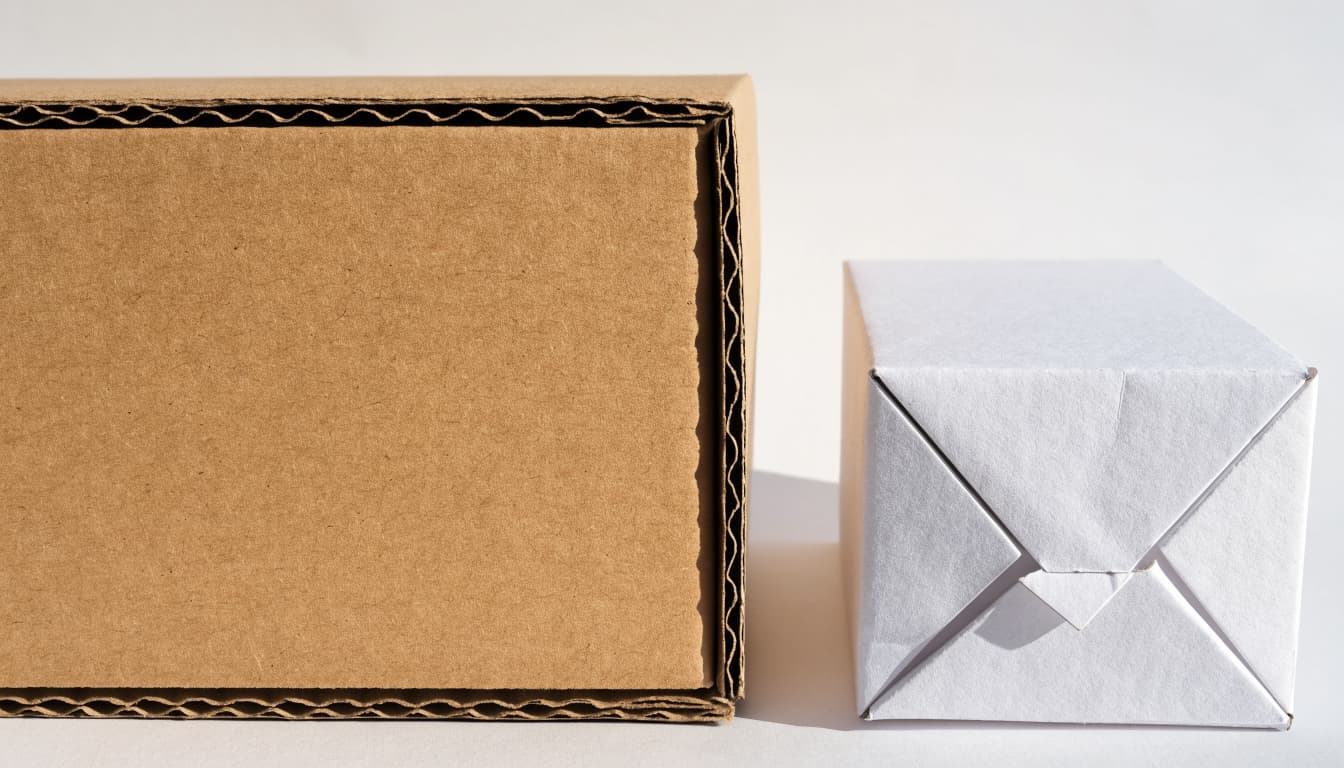
Corrugated is a common choice for shipping because its fluted core adds stiffness and helps absorb some impact. The structure also helps boxes resist compression when stacked. Paperboard cartons usually work better as a product’s primary package, holding and organizing lighter items on a shelf rather than protecting them through demanding transit.
However, the word “corrugated” alone doesn’t guarantee a certain level of protection. Flute profile, board grade, package size, and load all affect performance. A large box with heavy contents may need a stronger grade or added dividers, while an oversized, weakly packed carton can still crush or let products shift. The Fibre Box Association describes Edge Crush Test (ECT) and Box Compression Test (BCT) as measures used to assess board and box compression performance.
When products are fragile or orders include multiple items, the outer box may need fitted inserts or partitions to control movement. Explore this guide to protective packaging materials when comparing inserts and other ways to reduce shipping damage.
Print quality, package weight, and total cost
Many paperboard grades have broad, smooth surfaces that support sharp graphics, fine details, and retail finishes. Corrugated can also carry print, but the package must balance its appearance with a fluted structure designed for protection. For some applications, brands print directly on the outer liner; others use a printed label or a separate sleeve.
Paperboard cartons are often lighter and fold flat for storage, which can help when a product needs an organized, shelf-ready package. Corrugated is generally thicker and may add weight or take up more space, though its protective structure can prevent damage in transit.
Compare more than the unit price. Material grade, printing, coatings, custom sizing, and order volume affect the purchase cost. Packing labor, storage footprint, freight charges, damage claims, and returns affect the cost of getting a saleable product to its destination. A lower-cost carton may be a poor value if it slows packing or allows products to break. Likewise, extra corrugated strength adds little value if the shipment doesn’t need it.
Recycling and environmental tradeoffs
Both corrugated and paperboard may be recyclable when clean and accepted by local programs. Still, a paper-based package isn’t automatically recoverable everywhere. Coatings, laminates, plastic windows, adhesives, foil, and food residue can complicate sorting or processing.
Check local guidance for the specific package, especially when it includes mixed materials or food contact. A clean, uncoated carton may have a different recovery path from one with a bonded barrier layer. Product protection also matters: preventing breakage or spoilage can avoid waste beyond the package itself.
The better option is the design that meets the product’s needs with minimal material and a realistic recovery route. For help comparing custom packaging solutions, consider the package’s performance and end-of-life requirements together.
Where corrugated boxes and paperboard cartons work best
In the corrugated vs. paperboard choice, the deciding factor is the package’s job. Corrugated handles shipping and stacking; paperboard gives many consumer products a compact, printable retail carton. Some products need both.
Choose corrugated for shipping, storage, and heavier products
Corrugated boxes suit ecommerce orders, wholesale cartons, and cases that will be stacked in a warehouse or on a pallet. Their fluted structure adds stiffness, while the outer box helps shield products from impacts and handling. For glass, ceramics, kitchenware, or electronics, add partitions, foam, or fitted inserts to keep items from colliding. Screens, ports, corners, and polished surfaces may need extra protection.
Single-wall corrugated often fits lighter shipments and routine handling. Double-wall or stronger constructions may be appropriate for heavier products, stacked cases, or longer and more demanding routes. However, ply count alone can’t predict performance. Box size, board grade, stacking height, storage time, humidity, and pallet pattern also affect how a carton holds up. Ask about compression performance, such as ECT or box compression testing, when stacking is a concern.
Match the box and its inserts to the product and shipping route. A compact fit with enough cushioning can protect better than a stronger, oversized carton that lets items shift. For fragile or multi-item orders, protective packaging materials and best practices can help guide insert and divider choices.
Choose paperboard for retail cartons and product presentation
Paperboard is a practical choice for cereal boxes, cosmetics, medicine cartons, books, and many other consumer goods. It folds into neat shapes, stores flat before assembly, and offers a smooth surface for product information and shelf graphics. That makes it useful when customers need to recognize a product, compare options, or read directions at the point of sale.
The carton still needs to fit the product and production process. A close fit helps limit movement, while suitable board and coatings can support the product’s handling and storage needs. Food packaging also requires appropriate food-grade materials and, where needed, barriers against moisture, grease, oxygen, or light.
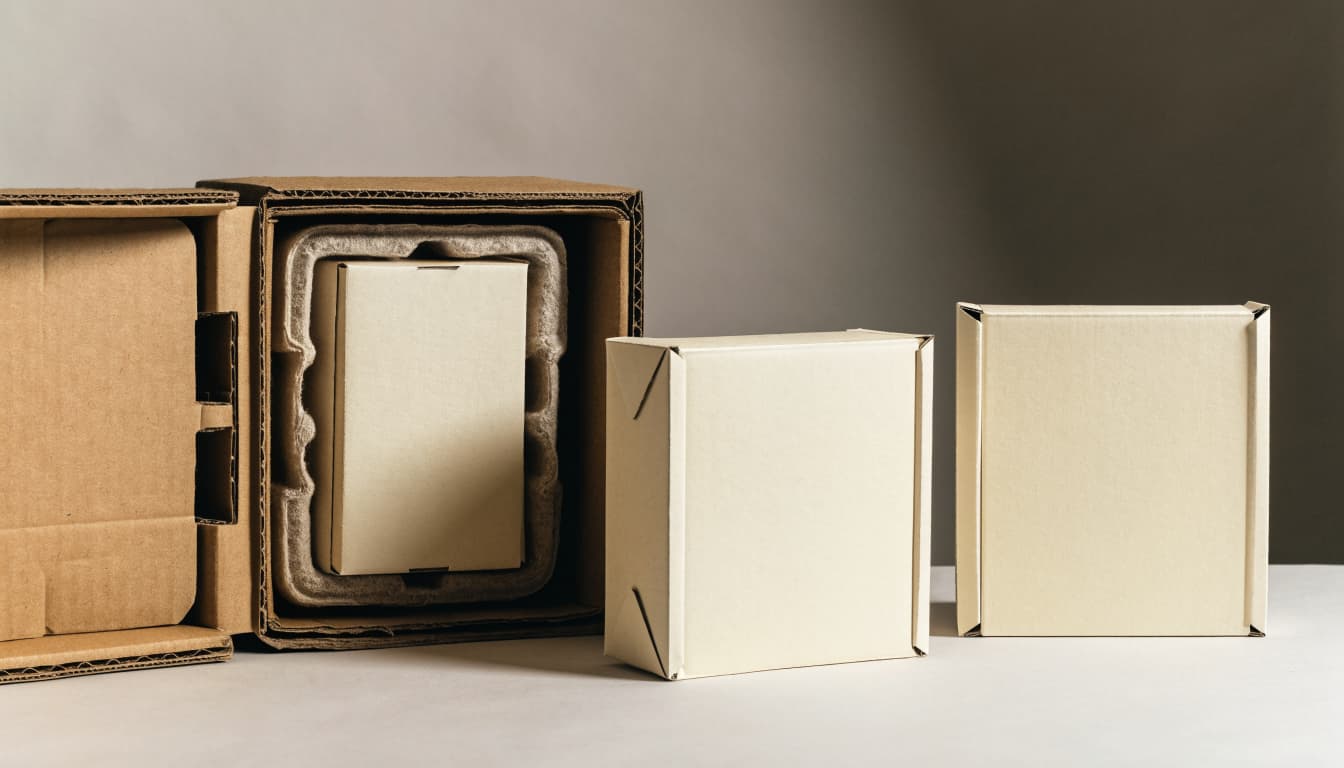
A retail carton may not provide enough protection for parcel delivery or bulk distribution. In that case, place it inside a corrugated shipping box, with cushioning or dividers where needed. The paperboard carton presents the product; the corrugated case protects it through transit.
Know when a specialized or combined package makes sense
Some products need a purpose-built format. Liquid packaging board, for example, is designed for liquid packages such as beverage cartons. It isn’t the same as a standard corrugated shipping box, and its suitability depends on the product, barrier needs, and filling process.
A layered package can solve different problems at once. A paperboard carton may hold and present a consumer product, while a corrugated outer case protects multiple cartons during wholesale or ecommerce shipping. Dividers can separate bottles, jars, or other breakable items; inserts can secure an unusual shape. Choose each layer for its role, then check that the finished pack protects the contents and meets the needs of its sales channel.
How to choose the right board for your product and supply chain
Choose packaging by working through the job in order: define the protection required, match the package to its shipping and sales channel, then compare print needs, operating costs, and end-of-life options. In a corrugated vs. paperboard decision, the board name is only a starting point; the finished pack-out determines how well the product arrives.
Start with weight, fragility, and shipping conditions
Begin with the product’s weight, breakage risk, dimensions, and sensitivity to moisture, then consider how it will move. A lightweight retail carton may work well inside a store-ready case, but parcel shipments face drops and repeated handling. Pallet loads add stacking pressure, while long routes can mean more transfers and changing humidity.
Fragile glassware or several products packed together may need cushioning, fitted inserts, or partitions to prevent movement and contact. Heavy products or high stacking loads may call for a stronger corrugated structure. Right-size the outer box, too: excess space can let items shift and increase dimensional weight.
Match the grade and design to the job
Paperboard grades differ in surface, fiber content, and intended use. SBS, or solid bleached sulfate, has a bright, clean surface suited to detailed retail printing. Recycled grades such as CRB (coated recycled board) and CCNB (coated news back) can suit many economical folding cartons, depending on the product and print requirements. Liquid packaging board is a specialized option for certain beverage and food cartons, where the package needs to meet product and filling requirements.
Corrugated offers design choices that affect strength and material use. Flute profile changes cushioning and stiffness, while single-wall and double-wall constructions provide different levels of structure. Select based on the package’s size, load, and stacking demands, not on ply count alone. Ask suppliers for specifications that identify the grade and construction clearly.
Channel and presentation matter as well. A shelf carton may need a smooth printable surface and precise graphics; an ecommerce shipper needs protective structure and a practical pack-out. A paperboard carton inside a corrugated case can handle both jobs.
Test performance and compare the full operating cost
Before ordering at scale, test complete pack-outs with the actual product, inserts, seals, and shipping configuration. Include realistic handling and storage conditions. Drop and vibration trials reveal impact and movement risks; compression checks help assess stacking; humidity exposure can show when board strength may fall. Also track packing speed, material use, freight, storage space, damage claims, and returns.

For corrugated, ECT measures edgewise compression resistance of the board, while a box compression test evaluates the finished box under load. These measures can help compare options, but they don’t replace testing the full pack-out. For additional guidance on packaging testing for shipping risks, include the conditions your products actually face.
Finally, compare the total operating cost, not just the price per carton. Include material, labor, freight, storage, damage, and returns. Check local recovery options for the finished package, including coatings or mixed materials. A short pilot using real orders can show whether a design protects products, runs efficiently, and fits your supply chain.
Frequently Asked Questions
These answers address common details that can affect a corrugated vs. paperboard choice, especially when you specify, ship, or dispose of a package. The right option depends on the package’s construction and job, not just its name.

Is corrugated board a type of paperboard?
Corrugated board is made from paper-based components, including linerboard and fluted medium, so it belongs to the broader family of fiber-based packaging materials. However, its layered construction makes it different from solid paperboard used for many folding cartons. When ordering or writing a specification, name the construction and grade rather than relying on a general term like “paperboard.”
Are corrugated and cardboard the same thing?
People often say “cardboard” when they mean a corrugated shipping box. The word is informal, though, and can also refer broadly to stiff paper-based board, including some cartons. Because it doesn’t identify a precise material or structure, use terms such as “single-wall corrugated” or “folding carton paperboard” when comparing packaging or requesting a quote.
Can paperboard packaging protect products during shipping?
Paperboard can protect lightweight goods when the package fits well and the shipment faces modest handling. It can also hold or organize a product inside a corrugated outer carton. For parcel delivery, protection depends on the product’s fragility, package design, cushioning, and shipping conditions. If the item can break or crush, test the complete pack-out or review ways to protect fragile products in transit.
What do flute letters mean on a corrugated box?
Flute letters identify corrugated profiles, which vary in thickness and affect cushioning, stiffness, and print surface. For example, E flute is relatively fine, while A flute is thicker. These letters are not a universal strength ranking: paper grade, box dimensions, construction, and design also affect performance. Compare the full board specification and the box’s intended use.
Can paperboard cartons be recycled with corrugated boxes?
Some communities collect both materials, but local recycling rules determine what belongs in the same bin. Clean, dry paperboard is more likely to be accepted than cartons with food residue, wax, plastic film, or foil. Beverage cartons and other lined packages may need a separate collection route. Check your local program’s guidance before making disposal claims on a package.
How can I tell whether a corrugated box is strong enough?
Start with the box specification, including its board grade and Edge Crush Test (ECT) rating when available. ECT measures the board’s resistance to edgewise compression; Box Compression Test (BCT) measures the finished box under load. Neither number alone predicts every shipment outcome, since box size, product weight, stacking, and handling conditions matter. Test a packed sample under realistic shipping conditions before approving the design.
Conclusion
Corrugated and paperboard serve different packaging roles. Corrugated’s fluted structure usually suits shipping and stacking, while solid paperboard often fits lighter retail cartons where product presentation matters.
Choose based on the product’s tested protection needs and the conditions it will face in storage and transit. Then weigh the full operating cost and check whether local recycling programs accept the finished package. When packaging, fulfillment, and distribution need to work together, explore contract packaging and co-packing services.
