
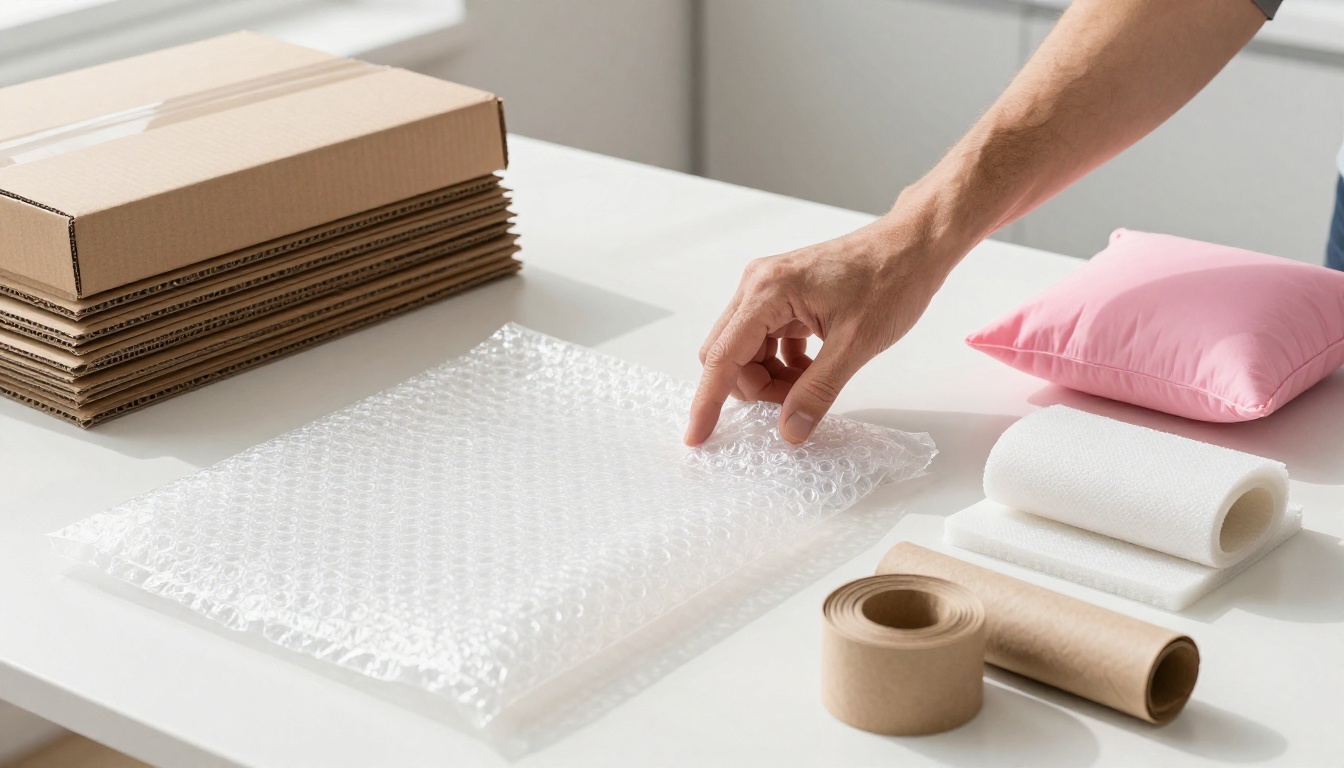
Protective Packaging Materials Compared: Cost, Cushioning, and Best Uses
The wrong protective packaging material can turn a routine shipment into a damaged product, a higher freight bill, slower packing, and another return to process. For manufacturers, ecommerce brands, retailers, and 3PL operations, the best choice must protect the product without adding unnecessary weight, cube, labor, or disposal costs.
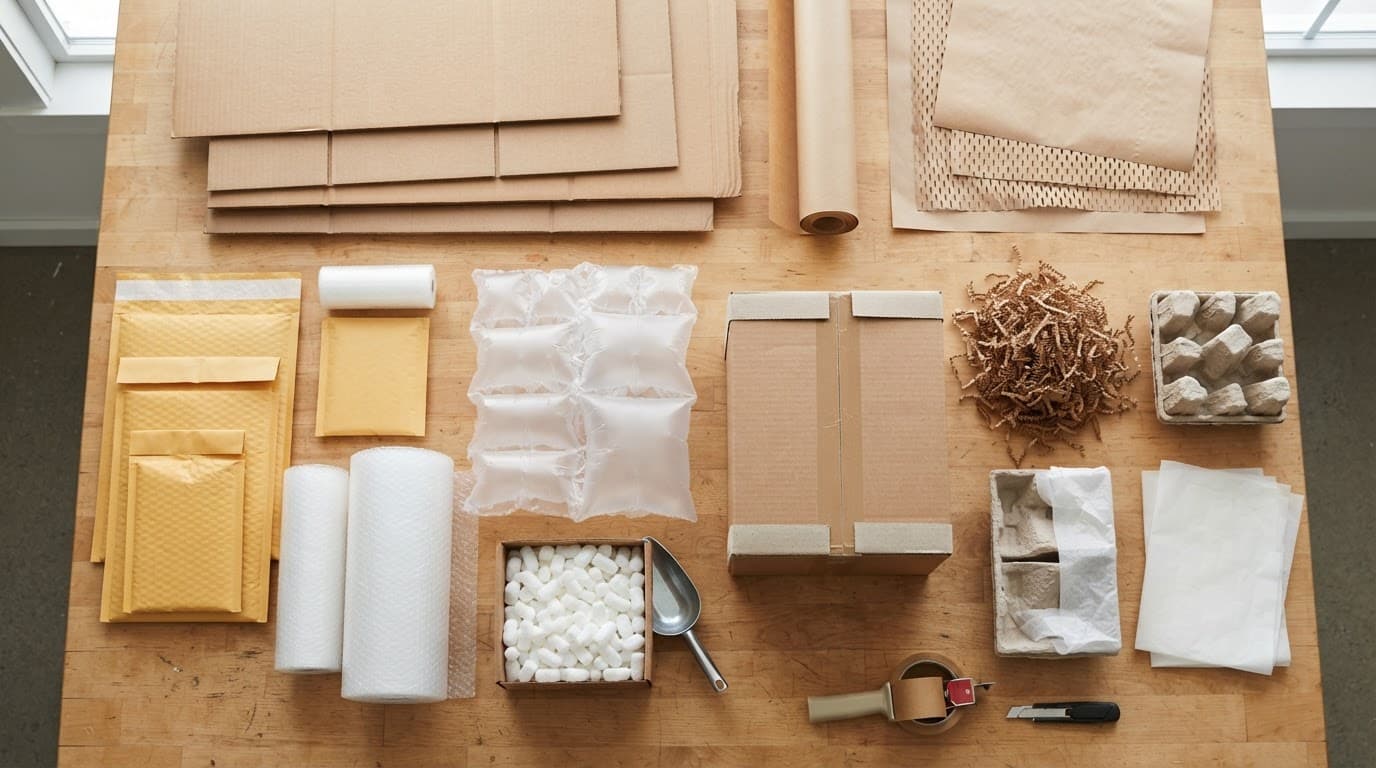
This guide compares corrugated boxes, poly and bubble mailers, kraft paper, bubble wrap, foam, molded pulp, air pillows, and specialty materials by protection, cost, weight, sustainability, packing speed, and best use case. You’ll also see how right-sizing and reliable packaging and fulfillment processes can reduce movement in transit while keeping high-volume operations on schedule. First, we’ll compare the core materials and where each one fits.
Key Takeaways
- Corrugated boxes provide dependable structure and value, while kraft paper, air pillows, and bubble wrap fill empty space and limit product movement.
- Foam and molded pulp offer stronger cushioning for fragile or high-value items, but they usually cost more and require closer size matching.
- The lowest material price isn’t the full cost. Include shipping weight, package volume, packing labor, storage, damage claims, and disposal.
- Choose materials by product fragility, shipping conditions, order volume, and sustainability goals. Review these packaging material choices before standardizing.
- Right-sizing the package often improves protection and reduces freight expense at the same time.
Protective Packaging Materials Compared: What Each Option Does Best
Protective packaging is the material that keeps a product safe during handling, stacking, vibration, and delivery. The right choice depends on whether you need an outer shell, internal cushioning, void fill, or specialty protection such as anti-static or moisture resistance.
No single material fits every order. Compare protection, weight, flexibility, cost, recyclability, and packing speed before you standardize a packaging method. The options below show where each material performs best.
| Material | Protection level | Cost range | Sustainability considerations | Best use |
|---|---|---|---|---|
| Corrugated carton | High structural protection | Low to medium | Widely recyclable | Heavy, stacked, or breakable products |
| Poly mailer | Low crush protection | Low | Plastic recycling varies by location | Clothing and soft goods |
| Bubble mailer | Light to medium cushioning | Low to medium | Plastic film may need special recycling | Small, moderately fragile items |
| Kraft paper | Light cushioning and void fill | Low | Recyclable and often compostable | Filling gaps and wrapping products |
| Foam or molded pulp | Medium to high cushioning | Medium to high | Depends on material and local recycling | Fragile, shaped, or high-value goods |
### Corrugated Boxes Provide the Strongest General-Purpose Base
Corrugated cartons are the standard outer packaging for electronics, kitchenware, glass, ceramics, and mixed-SKU orders because they combine rigidity, stacking strength, and reasonable cost. The box creates a protective shell, while partitions, inserts, and void fill stop products from colliding inside it.
A three-ply carton is lighter and usually suits smaller, nonfragile products. A five-ply carton adds thicker construction and better resistance to compression, making it a better fit for heavier goods, fragile items, or shipments that face stacking pressure.
Regular slotted container (RSC) cartons work well for common shipping applications because they fold quickly and seal efficiently. Partitions separate bottles, glasses, or ceramic pieces. Die-cut cartons provide a closer fit for unusual shapes and can reduce movement without requiring excessive filler.
Box size matters as much as board strength. An oversized carton needs more void fill, occupies more trailer or warehouse space, and may increase dimensional shipping charges. A carton that fits closely, with enough room for cushioning, often protects better than a stronger box that leaves products moving freely.
Review these protective packaging best practices when selecting carton styles for different products and shipping channels.
Mailers Save Weight When Products Do Not Need Rigid Support
Poly mailers are lightweight, inexpensive, moisture-resistant, and quick to seal. They work well for clothing, books, linens, and other soft goods that won’t crack or lose value when compressed. Their flexible design also reduces storage space and can speed up fulfillment for high-volume orders.
Bubble mailers and padded envelopes add a thin cushioning layer for items such as small accessories, cosmetics, or compact devices. They still lack the crush resistance of a carton, however. Glass, heavy products, ceramics, and anything with delicate corners should go in a box.
Mailers can provide tamper-evident seals, but recyclability requires attention. Poly film and bubble layers may not belong in curbside recycling, and local drop-off rules vary. Use mailers when their lower material use and faster packing outweigh the need for rigid support.
Paper-Based Protection Balances Cost, Cushioning, and Sustainability
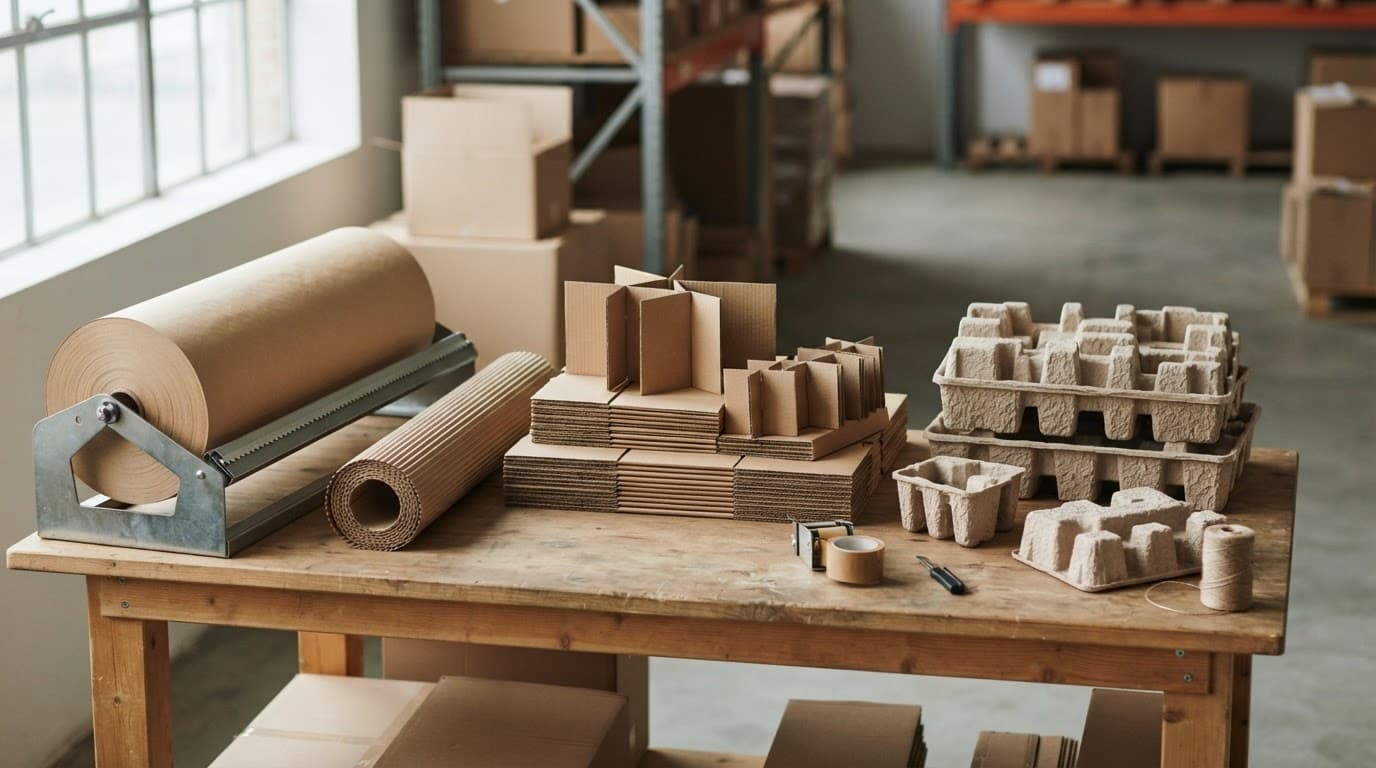
Paper-based materials cover several packaging jobs, and each one protects products differently. Wrapping cushions a surface, void fill limits movement, and inserts hold items in a fixed position. Choosing the right combination can lower material cost while supporting recycling goals, but heavy or highly fragile products still require testing.
When Kraft Paper and Corrugated Inserts Work Best
Kraft paper is a practical choice for wrapping small fragile items, such as glass accessories, cosmetics, ceramics, and finished components. Wrap the product first, then add crumpled kraft paper around it to fill empty space inside the carton. The wrap helps prevent scuffs and light contact damage, while the crumpled paper absorbs some movement during handling.
Crumpled kraft paper is inexpensive, lightweight, and widely recyclable. However, it provides moderate cushioning rather than high-impact protection. It can also take up storage space in loose or expanded form, and paper dust may become a concern around clean products, food packaging, or precision components.
Honeycomb paper adds more structure than plain kraft paper. Its expanded cells create a flexible layer around products and can replace some plastic cushioning in lighter-duty applications. Still, moisture reduces paper’s performance, so shipments exposed to rain, condensation, or refrigeration need additional protection.
Corrugated partitions and inserts are better when products must remain separated. They work well for multiple bottles, jars, glasses, candles, or small components because each divider creates a dedicated space. The structure prevents items from touching and reduces side-to-side movement inside the carton.
Corrugated partitions should fit closely enough to control movement, but not so tightly that they press against delicate surfaces or create pressure points.
A useful low-cost combination is a corrugated partition with crumpled kraft paper. The partition provides separation, while the paper fills small gaps around each wrapped item. This approach often delivers stronger protection than loose paper alone, with relatively low material cost and good recyclability.
How Molded Pulp Compares With Plastic Cushioning
Molded pulp uses formed fiber to create trays, corner supports, and product-specific cavities. Its shaped support helps hold bottles, electronics, cosmetics, and other products in place without relying on large amounts of loose filler. Many products use recycled paper fiber, and molded pulp can go into curbside recycling in many areas, although local rules and coatings should be checked.
Compared with foam and bubble wrap, molded pulp usually offers a cleaner retail presentation and better shaped support. Foam often provides stronger shock absorption and moisture resistance, while bubble wrap is flexible, easy to store, and quick to apply. Molded pulp needs more storage space than flat film, and custom designs require tooling that can raise initial costs.
Molded pulp may also need an outer carton for crush protection. It isn’t automatically suitable for wet environments or products facing severe impact. Test the complete package under expected drop, vibration, stacking, and moisture conditions before switching from plastic cushioning.
## Bubble Wrap, Foam, and Air Pillows Protect in Different Ways
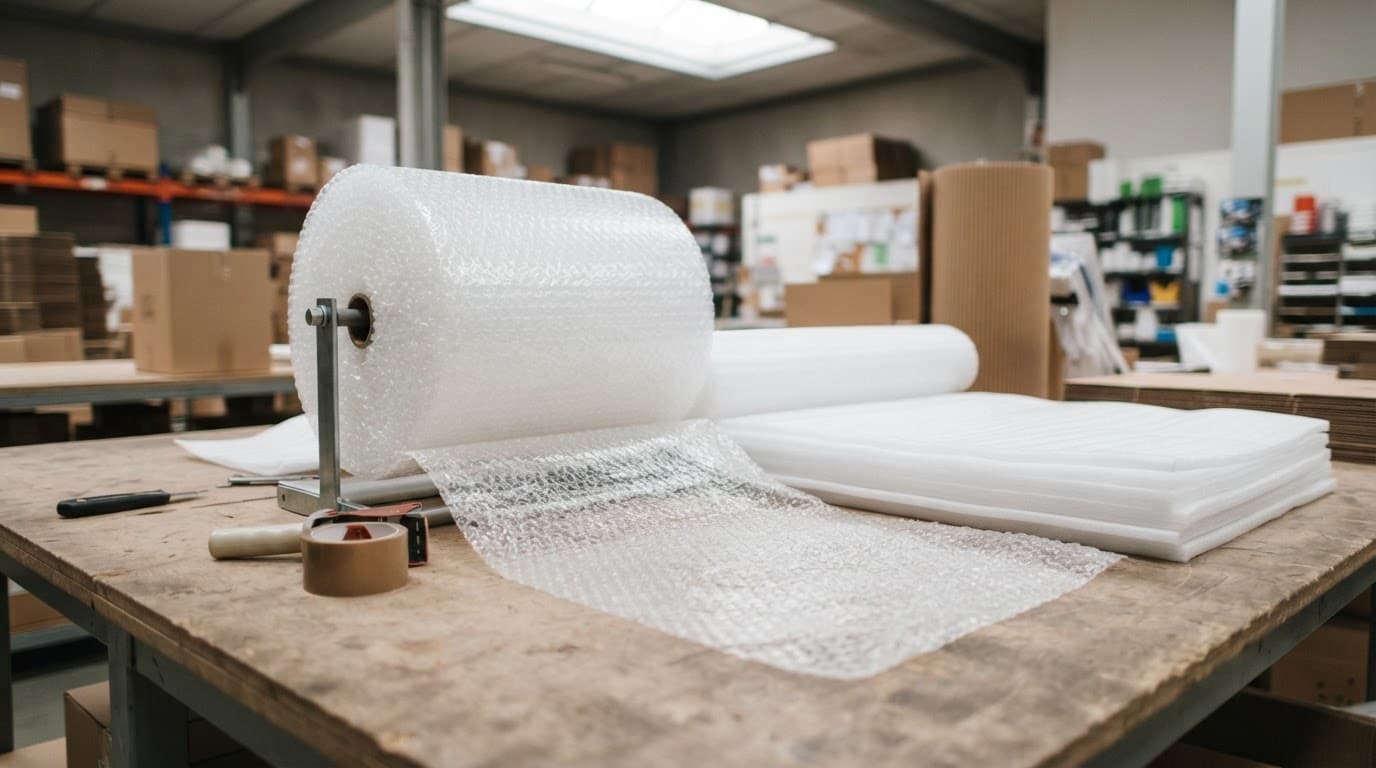
Flexible cushioning materials reduce impact, surface damage, and product movement, but they don’t perform the same job. Bubble wrap cushions individual items, foam creates a closer protective layer, and air pillows fill empty space around lightweight products. Your best choice depends on the product’s weight, edges, finish, shipping conditions, and packing workflow.
Bubble Wrap Adds Flexible Cushioning for Small Fragile Products
Bubble wrap is available in rolls and pre-cut sheets, so packers can wrap individual products or cover several items at once. Small bubbles suit jewelry, stationery, documents, small home goods, and light glass items because they add a thin layer without taking much space. Large bubbles provide more cushioning for products that may face drops or vibration.
Wrap the item with enough overlap to cover every surface. Pay close attention to corners, handles, lids, and other exposed points. Secure the wrap with tape, but don’t place adhesive directly on the product. After wrapping, center the item inside a properly sized carton and add kraft paper, foam, or another filler around it. The product should not touch the carton walls, where impact transfers more directly.
Bubble wrap absorbs shock as its air pockets compress, and its smooth surface helps prevent scratches and scuffs. However, it doesn’t provide much structural strength. A heavy item can crush the bubbles, while an oversized box can still allow the product to shift during stacking. Bubble wrap alone may protect a surface but fail to stop compression damage.
Its biggest operational advantage is speed. A packer can cut a section from a roll, wrap an unusual shape, and finish the order quickly. The tradeoffs include higher material use for thick wrapping, puncture risk around sharp edges, and plastic-film recycling challenges. Reusing clean bubble wrap can lower waste, provided the bubbles remain intact.
### Foam and Air Pillows Fit Different Fulfillment Needs
Foam sheets and rolls provide close-fitting surface protection for electronics, polished surfaces, painted items, and products that may chip or abrade. Low-density polyethylene foam works well as a separator or wrap for lighter goods. Thicker foam sheets, corners, and custom inserts offer stronger support for electronics, precision components, and high-value products.
Unlike loose void fill, foam stays between contact surfaces during vibration and short drops. It also resists compression better than bubble wrap in many heavier-duty applications. Still, thicker foam costs more, occupies more storage space, and may require product-specific cutting or inserts.
Air pillows are mainly void fill. They work best around lightweight items in a properly sized carton, where they limit movement without adding much shipping weight. A dispenser produces them quickly at the pack station, while compact rolls take less storage space than pre-expanded materials.
Sharp edges can puncture air pillows, and heavy products can compress them during stacking. Their protection also declines after a leak, puncture, or extended compression. Replacing damaged pillows adds material cost and slows fulfillment, especially when packers must inspect the carton before sealing.
Air pillows fill space efficiently, but they cannot replace structural cushioning around heavy or highly fragile products.
For high-volume fulfillment, compare the full workflow: dispenser equipment, roll storage, packing speed, material replacement, and damage claims. Foam is often the safer choice for abrasion and repeated impact, while air pillows are better for fast, lightweight void fill.
Specialty Protective Packaging Solves High-Risk Shipping Problems
General cushioning handles ordinary movement, but some shipments face hazards that require purpose-built materials. Electronics, metal components, pharmaceuticals, food, and high-value goods can suffer damage that bubble wrap or kraft paper cannot prevent.
Specialty packaging often costs more per order. However, the added expense can be small compared with a failed circuit board, spoiled product, corrosion claim, or stolen shipment.
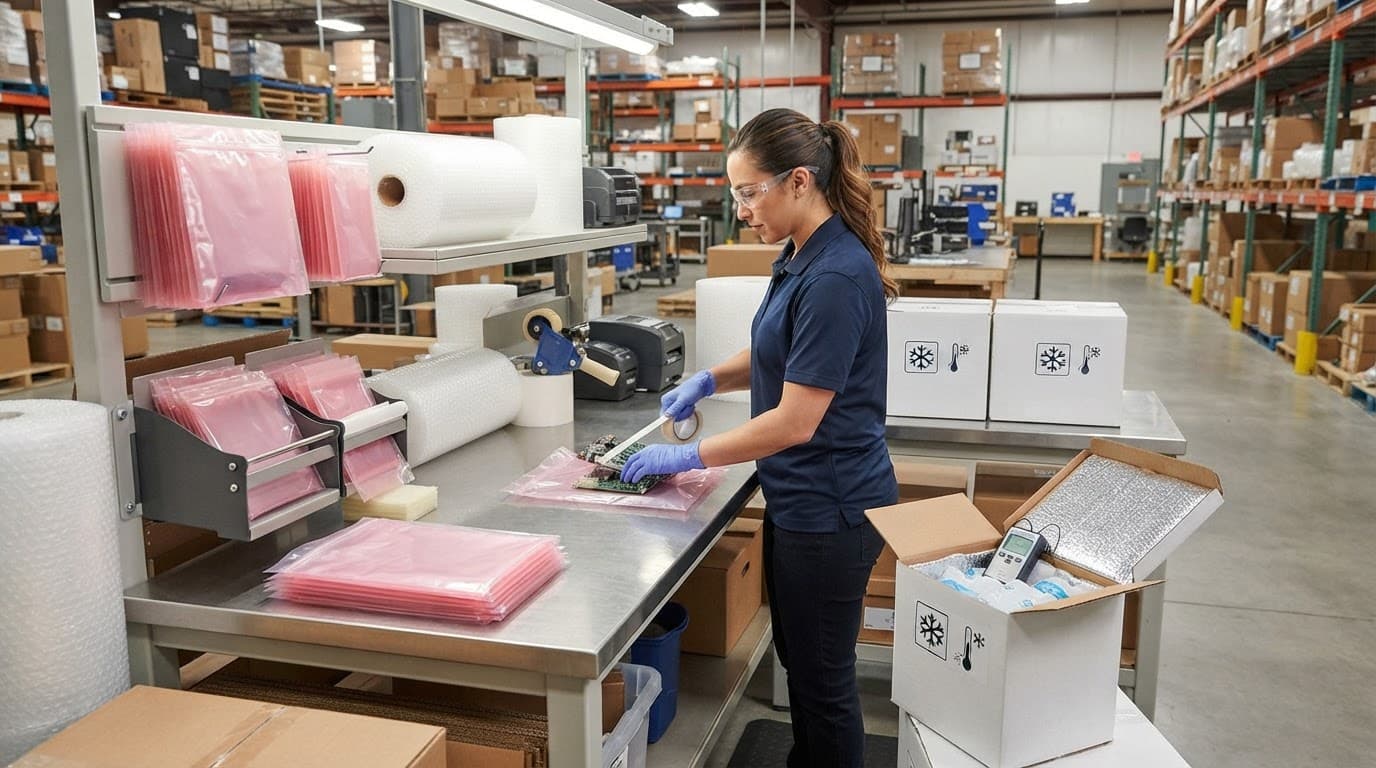
### Match the Material to the Main Shipping Hazard
Start with the hazard, then select the material category that addresses it. Each option has limits, so specialty protection usually works as part of a complete package rather than as a single layer.
- Impact: Foam corners, engineered foam inserts, molded pulp, and instant foam protect fragile products during drops. Foam can add cost and volume, while molded pulp may need custom tooling. Instant foam fits unusual shapes closely, but packers need training and the material may be difficult to recycle.
- Crushing: A strong corrugated carton, internal dividers, and rigid inserts resist compression. The outer box still needs the correct board strength and stacking design. No carton can protect a product that carries excessive weight on a weak or oversized package.
- Vibration: Close-fitting foam, molded inserts, and controlled void fill reduce repeated movement. Loose paper or air pillows may shift during long transport, especially around heavy products.
- Abrasion: Foam sheets, nonwoven separators, and protective films prevent scratches on painted, polished, or finished surfaces. These layers may protect the finish but provide little crush or drop protection.
- Moisture: Poly bags, barrier films, sealed liners, and desiccants limit exposure to rain and humidity. They don’t correct condensation problems inside a sealed package, so products must be dry before packing.
- Static electricity: Anti-static bags and anti-static foam protect computers, circuit boards, sensors, and other electronic components from electrostatic discharge. They require proper grounding and handling procedures, and standard plastic bags can increase the risk.
- Corrosion: VCI bags, paper, and emitters release corrosion-inhibiting vapor around clean, dry metal parts. VCI protection declines when moisture enters the package, so seal quality and humidity control matter.
- Temperature: Insulated shippers, gel packs, dry ice, and qualified temperature-monitoring materials protect food, pharmaceuticals, and heat-sensitive goods. Packs must be tested for the required temperature range and transit duration, not chosen by insulation thickness alone.
- Theft: Tamper-evident cartons, security tape, serialized seals, and opaque polybags make interference easier to detect. Warning labels can support handling instructions, but they shouldn’t reveal valuable contents to anyone outside the supply chain.
Dunnage bags stabilize large or heavy freight by filling gaps between pallets or container walls. They control shifting during braking, vibration, and cornering, but they aren’t designed to carry vertical loads.
Test the complete package at its actual parcel size and product weight, using the carrier network and handling conditions you expect.
A typical solution may combine a corrugated box, divider, anti-static bag, foam insert, VCI layer, and controlled void fill. Validate that system with drop, vibration, compression, moisture, and temperature testing before making it the standard pack-out. Also confirm product specifications, carrier rules, warning-label requirements, and applicable regulations.
How to Choose the Right Protective Packaging for Your Product
The right packaging choice starts with the product, not the material price. Review the product’s dimensions, weight, fragility, shape, surface finish, value, shelf life, and sensitivity to moisture, static, heat, or cold. Then match that profile to the expected shipping conditions and your packing operation.
Next, consider shipping distance, carrier handling, stacking pressure, climate, return rates, storage space, packing labor, available equipment, and order volume. A lightweight package may reduce freight costs, but a stronger carton may lower damage claims and replacement shipments. Your goal is the lowest total cost, including materials, labor, dimensional weight, storage, returns, and customer dissatisfaction.
Businesses managing several pack-out formats can benefit from a connected packaging and fulfillment workflow. It helps align packaging decisions with inventory, labor, and shipping requirements.
Use Product-to-Package Examples Before Buying in Bulk
Product-to-package examples can narrow your options, but they shouldn’t replace testing. Soft, lightweight products such as clothing, linens, and some accessories may fit a poly mailer or three-ply carton because they don’t need much crush protection.
Small electronics often need a die-cut carton or RSC carton with foam, especially when screens, ports, corners, or polished surfaces could suffer damage. Kitchenware may benefit from a five-ply carton with partitions when items are heavy or shipped together. Glass and ceramics usually need individual bubble wrap, partitions, and a stronger outer carton to prevent contact and absorb impact.
Food products require suitable food-grade packaging. Depending on the product, you may also need moisture, oxygen, grease, light, or temperature barriers. Packaging must protect the contents without compromising food safety or shelf life.
Use this quick guide as a starting point:
- Soft and light products may use poly mailers.
- Small fragile goods may need bubble mailers or a carton with cushioning.
- Heavy or breakable goods usually need corrugated boxes with inserts or foam.
- Multi-item orders need partitions and controlled void fill.
- Specialized goods may require anti-static materials, VCI protection, or temperature control.
Product dimensions, total weight, shape, and carrier rules still determine the final choice. A mailer that works for one accessory may fail when the same item ships with additional products. Measure the packed product, not just the item, before standardizing a carton.
Test Packaging Before You Optimize the Cost
Test the complete package in its final shipping configuration. A drop test checks corners, edges, and faces. Vibration testing reveals movement and abrasion, while compression or stacking checks show whether cartons withstand warehouse and carrier pressure. Also perform seal checks, plus temperature or moisture trials when the product faces those conditions.
Record more than visible damage. Track damage rates, packing time, material usage, dimensional weight, customer complaints, and the condition of returned products. A slightly more expensive insert may cost less overall if it reduces breakage, repacking labor, replacement shipping, and refunds.
Start with a pilot run before placing a large material order. For businesses with many products, create SKU-level packaging standards that specify the carton, cushioning, sealing method, and inspection points for each item. Review those standards when damage or return data changes.
Build a Faster, Lower-Waste Packaging Operation
Material selection only improves results when your team can use each option consistently. Standard carton sizes, clear pack instructions, and well-organized workstations help reduce packing time, material waste, shipping cube, and avoidable damage.
Start with a limited carton range that covers most orders. Then add right-sized boxes for products that suffer from excessive movement or dimensional-weight charges. Each SKU should have a documented pack-out that identifies the carton, cushioning material, sealing method, label location, and final inspection points.
A SKU-specific workstation can place the correct box, kraft paper, bubble wrap, foam, or air pillows within easy reach. Paper is simple to dispense and usually needs little equipment. Bubble wrap may require roll holders or cutters, while foam often needs pre-cut pieces or a dedicated storage area. Air pillows require a dispenser, electrical access, film rolls, and a process for replacing punctured material.
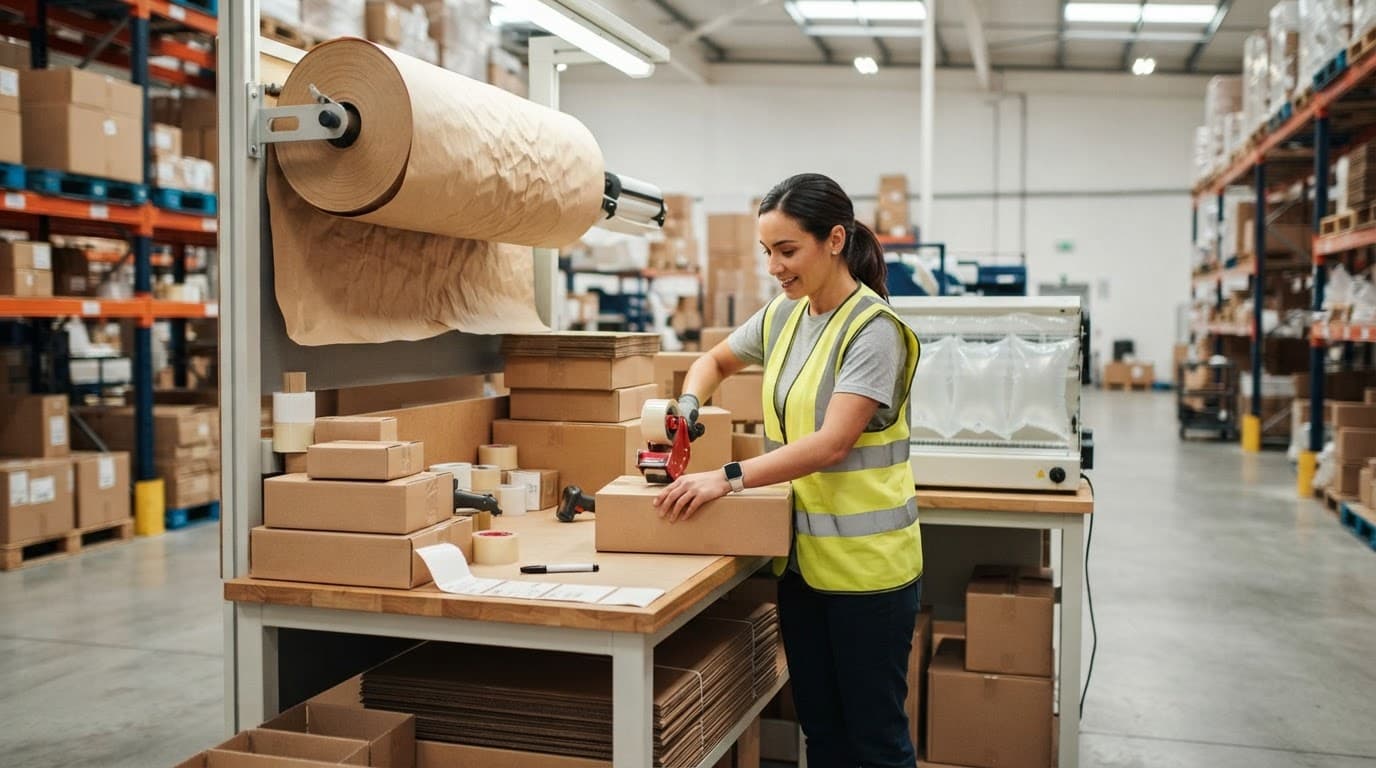
Replenishment also affects pack speed. Keep reserve stock near the packing area, set minimum quantities for high-use materials, and assign ownership for daily restocking. A packer who must search for the right carton loses time and may substitute a larger box that uses more filler.
Track performance with a small set of useful measures:
- Damage rate and return condition show whether the pack-out protects products through delivery.
- Packaging cost per order and material usage reveal the true cost of each format.
- Pack time and on-time shipment rate show whether materials support daily volume.
- Cube utilization shows how much space the packed product occupies compared with the carton.
- Label accuracy, missing components, and repackaging frequency identify process errors.
Make Sustainability Claims That Match Real Disposal Options
Recyclability depends on more than the material name. Local collection systems, food or product contamination, coatings, adhesives, and mixed-material construction can determine whether a package is actually accepted.
Corrugated boxes and clean paper are widely recyclable in many communities. Plastic bubble wrap, foam, air pillows, and poly mailers often require store drop-off or specialized film collection, and some areas do not accept them at all. A paper mailer with a plastic lining may not follow the same disposal route as plain kraft paper.
A package can contain recyclable material and still fail local recycling rules when layers, residue, or adhesives prevent processing.
Reuse can change the result. Clean bubble wrap, cartons, and air pillows may have a longer useful life, while supplier take-back programs can recover materials that customers cannot recycle locally. Reduce empty space first, use fewer material types, select recycled content when performance allows, and print clear disposal guidance on the package or order confirmation.
Avoid claims such as “fully green” or “zero waste” unless testing and recovery data support them. Businesses that need help managing variable packaging demand can use contract packaging services for kitting, repackaging, labeling, retail-ready packs, ecommerce fulfillment, and transportation coordination. That flexibility helps maintain dependable execution when order volume, product mix, or packaging requirements change.
Frequently Asked Questions
Choosing protective packaging involves more than comparing the price of paper, plastic, or foam. Product weight, fragility, shipping conditions, packing labor, and return rates all affect the result. These answers address common decisions that arise after comparing packaging materials and testing different pack-out methods.
What Is the Cheapest Protective Packaging Material?
Crumpled kraft paper, basic poly mailers, and standard corrugated cartons are often among the lowest-cost options, depending on the product. Kraft paper works well for wrapping and light void fill, while poly mailers suit soft goods that don’t need crush protection. Standard corrugated cartons offer better structure for a modest material cost.
The lowest purchase price doesn’t always create the lowest total cost. Damage claims, replacement shipping, packing labor, storage space, dimensional weight, and returns can quickly outweigh small material savings. Compare the complete cost per delivered order, not just the price of one mailer or sheet of paper.
Is Bubble Wrap Better Than Packing Paper?
Bubble wrap generally provides more flexible cushioning for fragile products, especially when the item may experience drops or vibration. It wraps around irregular shapes and adds surface protection, but sharp edges can puncture it and plastic-film recycling may be limited locally.
Packing paper is easier to recycle in many communities and works well for wrapping, separation, and void fill. Choose based on the product’s fragility, finish, box size, and how much movement remains after packing. For example, paper may suit a sturdy ceramic item with controlled movement, while bubble wrap offers extra protection for a delicate glass surface.
What Packaging Works Best for Heavy or Fragile Items?
Use a strong corrugated carton sized to the product, then add protection that controls both impact and movement. Dividers, molded pulp, foam corners, or a fitted insert can keep the item away from the carton walls and prevent product-to-product contact.
A thin mailer cannot resist crushing, and loose void fill may shift around a heavy product during transit. For multiple fragile items, partitions create separate compartments, while a fitted insert supports the product at key points. Test the complete package at its actual weight and size before approving the pack-out.
### Are Air Pillows Good for Shipping?
Air pillows are useful for filling empty space around lightweight products in a properly sized carton. They weigh little, store efficiently before expansion, and can improve packing speed at high-volume workstations.
However, sharp edges may puncture them, while heavy items can compress them under stacking pressure. Paper is often a better choice when edges are rough or the package needs denser void fill. A fitted insert is safer when the product is heavy, highly fragile, or must remain fixed during long transport.
How Can a Business Reduce Packaging Waste?
Start by right-sizing cartons and removing unnecessary layers that don’t improve protection. Use recyclable or reusable materials where the product and shipping conditions allow, improve inserts so they hold items securely, and measure material use per shipment.
Track packaging cost, material weight, package cube, damage rates, and returns together. A damaged product creates additional packaging, transportation, labor, and disposal waste, so damage prevention belongs in any sustainability calculation. Businesses that need flexible labor and fulfillment capacity can also review distribution and fulfillment services.
When Should a Business Use Specialty Packaging?
Use specialty packaging when a product faces a known hazard that standard cushioning cannot address. Anti-static bags protect sensitive electronics, VCI materials help limit corrosion, insulated packaging controls temperature, and tamper-evident materials make interference easier to identify.
Before choosing one, confirm the product’s technical specifications, transport conditions, handling procedures, and regulatory requirements. Specialty materials should solve a documented risk, not add cost without a clear protective purpose.
Conclusion
The best protective packaging material depends on product risk, shipping conditions, labor requirements, total cost, and disposal options. Corrugated boxes and paper-based materials provide strong general-purpose protection, while mailers suit soft goods that do not need rigid support. Bubble wrap and foam add cushioning for fragile items, and specialty materials address hazards such as static, moisture, corrosion, or temperature.
Material price alone doesn’t show the true cost of a pack-out. Review damage claims, freight, packing time, returns, storage, and waste before choosing a standard.
Start by auditing a few high-volume or high-damage SKUs. Test two or three packaging combinations, then track protection, cost, packing speed, and material waste. Standardize the option that delivers reliable protection with the lowest practical total cost.
