

Amazon FBA Prep Indianapolis: Choosing the Right Partner
Amazon’s U.S. FBA prep and item-labeling services ended on January 1, 2026, so sellers must now send inventory to Amazon already prepared, labeled, and ready for receiving. That requirement applies to shipments sent directly to FBA and to inventory that moves through Amazon Warehousing and Distribution (AWD) before entering FBA.
For sellers in the Midwest, Indianapolis offers a practical location for product preparation, storage, freight coordination, and ecommerce fulfillment. The right partner can manage tasks such as labeling, polybagging, kitting, bundling, and carton preparation while helping you maintain inventory accuracy and avoid preventable receiving issues. Review these Amazon FBA prep services in Indianapolis alongside each provider’s costs, compliance controls, service scope, technology, and ability to support changing order volumes. Next, we’ll examine what to look for in an FBA prep partner and the questions to ask before you commit.
Key Takeaways
- Amazon ended U.S. FBA prep and item-labeling services on January 1, 2026, so sellers must prepare inventory before shipment.
- The right Indianapolis partner should handle labeling, polybagging, bundling, carton checks, inventory control, and shipment documentation.
- Review Amazon FBA packaging requirements before comparing providers, pricing, and quality controls.
- Ask how each company verifies barcodes, tracks inventory, manages exceptions, and reports accuracy.
- Compare total costs, including receiving, storage, materials, rework, freight coordination, rush fees, and seasonal labor.
What Amazon FBA Prep Includes Before Inventory Reaches Amazon
Amazon FBA prep is the work required to make inventory sellable, scannable, and ready for inbound receiving. It differs from ordinary warehousing or order fulfillment because the provider prepares units before Amazon takes custody of them.
An Indianapolis FBA prep partner may receive cartons, count units, inspect condition, apply FNSKU labels, polybag or bubble-wrap products, create sets, pack cartons, apply shipment labels, and forward inventory to Amazon. Since Amazon ended U.S. FBA prep and item-labeling services on January 1, 2026, upstream accuracy now matters even more. Requirements can vary by product type, condition, category, and shipment, so confirm current rules in Seller Central before approving a prep checklist.
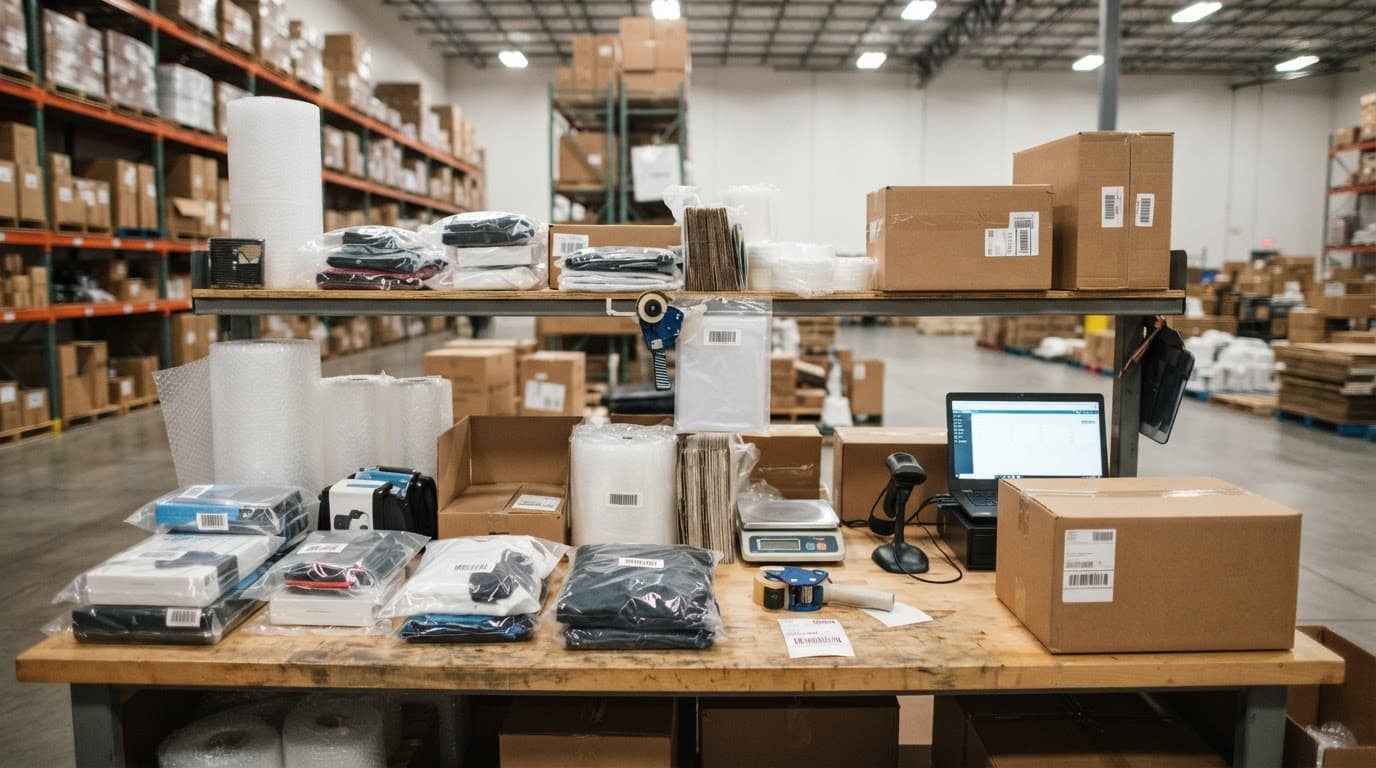
Labeling, polybagging, and fragile-item protection
Scannable labels connect each unit to the correct seller account, listing, and inventory record. A prep team should place the FNSKU label on a flat, visible surface and cover or remove conflicting barcodes when required. The final label must remain readable after bagging, wrapping, or boxing.
Transparent protective bags keep products clean and contain spills or loose parts. Amazon guidance generally requires poly bags to fully enclose the item, remain sealed, and meet minimum thickness rules. If the opening measures 5 inches or more when laid flat, the bag also needs a prominent suffocation warning attached to the bag itself. Sellers handling liquids can review these Amazon liquid bagging requirements before selecting materials.
Breakable goods may need bubble wrap, a bubble bag, partitions, fitted inserts, or an overbox. The goal is to prevent contact, movement, and impact during handling. A low-cost bag can tear, while loose void fill can shift and leave products exposed. Materials and methods should match the item’s weight, shape, surface, and risk of leakage or breakage.
Kitting, bundling, and multi-SKU preparation
Kitting combines accessories, promotional materials, or several SKUs into one sellable unit. The partner may add inserts, assemble components, follow pack-out instructions, and apply one identifying label to the finished set.
Set creation needs tighter controls than simple labeling. Staff should verify the correct product versions, count every component, include required instructions, and prevent outdated inserts or accessories from entering the kit. A missing cable, sample, or instruction sheet can trigger complaints, returns, or stranded inventory.
Ask whether the provider records component counts and performs a final scan or visual check. Version-controlled work instructions also help ensure that every bundle follows the same approved configuration as order volume changes.
Inbound quality checks and shipment readiness
Good receiving checks compare expected and actual quantities, confirm SKU identity, inspect item condition, and record shortages or damage. Before shipment, the provider should also verify carton contents, carton labels, shipment records, and the correct Amazon destination.
Ask how the company handles damaged, unidentifiable, or nonconforming inventory. Reliable controls place suspect units on hold, document the issue, and require an approved disposition before anything ships. That process protects inventory accuracy and keeps a bad label or incomplete carton from reaching Amazon.
Why Indianapolis Works Well for FBA Prep and Midwest Distribution
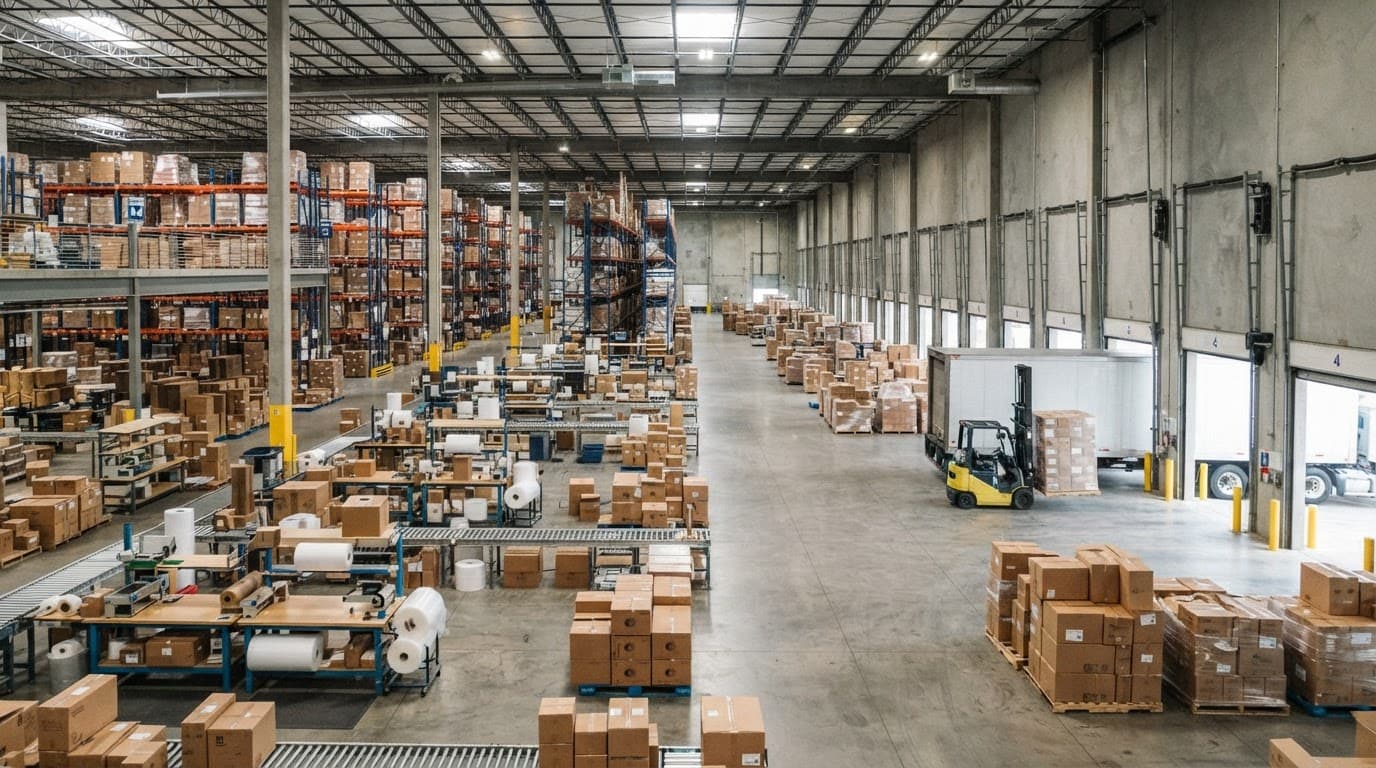
Indianapolis gives Amazon sellers a central Midwest base for preparing inventory and serving several sales channels. The city sits near I-65, I-69, I-70, I-74, and the I-465 loop, creating practical options for truckload, LTL, and parcel movement. Indianapolis International Airport, FedEx Express, UPS, and nearby rail infrastructure add more transportation choices.
The region also includes Amazon facilities near Indianapolis, Whitestown, Plainfield, Greenwood, and Whiteland. That network doesn’t guarantee the shortest lane for every shipment, but it can simplify replenishment planning when Amazon assigns nearby fulfillment destinations. Inland warehouse markets may also offer more manageable operating costs than some coastal locations, although rates vary by facility, labor needs, storage conditions, and contract terms.
When a local prep center can lower supply chain friction
A nearby FBA prep partner can reduce the number of handoffs between your supplier, warehouse, carrier, and sales channels. Local access matters when inventory needs attention quickly, rather than sitting in a distant facility while a small issue delays the next shipment.
For example, an Indianapolis partner may help with:
- Coordinating inbound freight appointments and receiving schedules.
- Transferring inventory between storage, prep, retail, wholesale, and fulfillment operations.
- Relabeling units when packaging or barcode requirements change.
- Handling seasonal overflow without forcing you to expand your own space.
- Resolving shortages, damaged cartons, or incorrect configurations through direct communication.
This flexibility is especially useful for sellers with frequent inventory discrepancies, retail programs, promotional bundles, or changing packaging requirements. A stable product line with predictable cartons and few exceptions may gain less from local access. In that case, a lower-cost provider farther away could still meet the service requirement.
Look for a partner that can support more than FBA when your orders also move to retailers, wholesalers, or direct customers. Indianapolis distribution and fulfillment services can bring packaging, inventory handling, B2B distribution, and DTC fulfillment into one operation.
When Indianapolis may not be the best fit
Indianapolis isn’t automatically the right warehouse location. Sellers that source inventory near Los Angeles, Long Beach, Savannah, or another major port may spend more on the inland move before prep even begins. Products requiring specialized compliance, climate control, hazmat handling, or other controlled processes may also need a facility built for those requirements.
West Coast-focused sellers should compare whether an Indianapolis operation improves their customer and FBA lanes or adds unnecessary repositioning. Use actual shipment data rather than choosing based on the city name.
Compare each option using:
- Freight from suppliers to the prep center.
- Storage, receiving, materials, and handling charges.
- Prep, rework, relabeling, and forwarding fees.
- Freight from the warehouse to Amazon and other customers.
- Parcel rates, accessorials, rush charges, and seasonal costs.
The best location depends on supplier origins, Amazon routing, customer geography, service requirements, and negotiated freight rates. Compare those lanes beside the provider’s capabilities, not by warehouse location alone.
How to Compare Amazon FBA Prep Partners in Indianapolis
Comparing Amazon FBA prep Indianapolis providers requires more than reviewing a price per unit. Ask every company to quote the same SKU list, volume forecast, packaging specifications, prep steps, and service expectations. Then compare FBA experience, accuracy controls, turnaround times, capacity, technology, communication, and support for other sales channels.
Use the same information when evaluating MSL COPACK + ECOMM alongside other Indianapolis-area providers. A fair comparison shows whether a lower quote reflects real savings or excludes receiving, inspection, materials, storage, rework, freight coordination, or rush charges.

Questions to ask about compliance and quality control
Amazon requires sellers to send inventory prepared and labeled before it reaches its facilities for shipments created after January 1, 2026. Ask how the provider checks current Amazon requirements for labels, packaging, expiration dates, sets, box limits, and shipment details.
A dependable provider should explain its scan points and verification process. Ask:
- Do employees scan products during receiving, prep, packing, or all three stages?
- Can you approve samples before full production begins?
- How often do you inspect work, and who signs off on final checks?
- Can you track lots or batches, apply FIFO or FEFO, and produce records when needed?
- What happens when a unit has a mislabel, missing component, damage, or unclear barcode?
- Are suspect units quarantined until an authorized person approves rework, return, scrap, or release?
- How are corrective actions documented and verified?
- Will you receive regular accuracy, exception, inventory, and shipment reports?
Ask to see sample records with sensitive information removed. Documentation should show what happened, when it happened, which SKU was affected, and how the issue was resolved. Contract packaging services can be useful for brands that need documented packaging, assembly, warehousing, and fulfillment processes under one operating plan.
Questions to ask about capacity, speed, and technology
Request average receiving and prep turnaround times, then ask how those numbers change during Prime Day, the fourth quarter, or a product launch. Confirm whether the provider accepts rush work, how it staffs peak periods, and what fees apply when the timeline changes.
Barcode scanning should connect physical inventory with the correct SKU and shipment record. Ask whether you receive live inventory visibility, scheduled shipment updates, API connectivity, or structured spreadsheet files. Also identify the escalation contact for shortages, damaged cartons, missed cutoffs, and system outages.
A provider may handle a small pilot well but lack labor, floor space, or equipment for a holiday surge. That gap can delay replenishment when Amazon demand is highest. Ask for capacity limits, backup labor plans, typical peak volumes, and the notice required for forecast changes.
Questions to ask about broader fulfillment support
If your brand sells through multiple channels, one partner may support FBA replenishment, B2B orders, direct-to-consumer fulfillment, retail distribution, returns, repackaging, and transportation coordination. That arrangement can reduce handoffs and keep packaging, inventory, and shipping information connected.
MSL’s broader transportation and fulfillment support may fit brands that move goods between suppliers, packaging operations, retailers, and customers. However, broader capability only helps when the agreement defines the details.
Confirm who owns inventory at each stage, which service levels apply, how charges are calculated, and which system holds the official inventory record. Put order cutoffs, reporting, returns handling, rework approvals, and change procedures in writing. A wide service menu matters only when the operating rules are clear.
Amazon FBA Prep Costs in Indianapolis: How Quotes Really Work
Public Indianapolis rate cards for FBA prep are not consistently available. Most providers quote from your product mix, monthly volume, packaging instructions, storage needs, and shipping plan. That makes a low per-unit number difficult to compare without the rest of the scope.
A useful quote should show each cost clearly, including what triggers it and whether the fee is fixed, volume-based, or tied to a change in requirements. Review contract packaging services in Indianapolis when comparing packaging labor, materials, storage, and fulfillment under one operating plan.
The charges that can change the final price
Common pricing models include per-unit prep, per-SKU or per-order handling, labor plus materials, storage by pallet or location, receiving, carton processing, forwarding, and outbound freight. Some providers combine several services into one unit price, while others separate every activity on the invoice.
Ask about these items before accepting a quote:
- Minimum order quantities and setup charges.
- Receiving, counting, and inspection fees.
- Storage by pallet, bin, location, square foot, or cubic foot.
- Material markups for labels, bags, cartons, inserts, and protective packaging.
- Order changes, rework, disposal, and special labels.
- Freight accessorials, appointment fees, fuel charges, and residential or limited-access delivery.
- Rush work and seasonal labor during launches or peak periods.
- Packaging redesign, validation failures, replacement samples, and unused materials.
- Scope changes caused by new SKUs, revised pack-outs, promotions, or Amazon requirements.

A provider may quote 30 cents per unit for labeling, but that figure doesn’t reveal whether receiving, storage, materials, forwarding, or exceptions cost extra. Compare total landed cost, not the lowest prep fee.
How to model payback and cash flow
Build a 12-month baseline using monthly units instead of dividing annual volume evenly. Include seasonality, promotions, new SKUs, product launches, and peak periods. Then compare the same product mix in-house and outsourced, including bundles and special packaging in both models.
For example, assume a fictional brand processes 100,000 units during its first year. Outsourcing reduces recurring labor, overtime, damage, and quality costs by $42,000. The move also requires $18,000 for freight, samples, setup, training, and temporary dual operations.
Report these measures separately:
- Payback period.
- First-year cash flow.
- Recurring operating savings.
- Quality-related savings.
- Avoided overtime.
- Reduced damage and rework.
- Working-capital effects.
You can allocate the $18,000 transition cost across the analysis period for ROI reporting. However, show the full amount as an upfront cash requirement. Otherwise, the project may look profitable while creating a short-term cash shortfall.
Why a pilot is better than relying on a spreadsheet
Use a 60- to 90-day pilot, limited SKU transfer, or defined production run before moving all inventory. Track receiving accuracy, prep defects, turnaround time, inventory variance, damage, shipment acceptance, communication speed, and actual invoice charges.
The pilot should test the quote under normal work conditions, including exceptions and order changes. Update the business case with those results before expanding the relationship. A spreadsheet estimates the outcome, but a controlled run shows what the operation actually costs.
A Practical Process for Selecting and Launching the Right Partner
Choosing an Amazon FBA prep partner in Indianapolis works best as a controlled operating project, not a quick price comparison. Start with your internal requirements, then use the same information to evaluate providers, test their work, and set rules for ongoing performance.
Build a scope sheet that prevents quote confusion
Document your operation before requesting proposals. Record product types, total SKU count, expected monthly units, inbound suppliers, Amazon channels, peak demand, current pain points, and any inventory already in transit. Include each activity by SKU, such as receiving, inspection, label application, bagging, wrapping, bundling, carton packing, storage, shipping, returns, rework, and disposal.
Add the details that change labor and material costs:
- Unit and carton dimensions, weights, case quantities, and pallet patterns.
- Packaging materials, inserts, warning labels, and protective requirements.
- Service windows for receiving, prep, replenishment, and urgent orders.
- Lot, batch, expiration, serial number, or country-of-origin controls.
- Expected monthly volumes, launch spikes, seasonal demand, and forecast changes.
- Amazon shipment destinations and any retail, wholesale, or direct-to-consumer orders.
This gives every provider the same operating picture. It also makes exclusions easier to spot, such as storage, material markups, damaged-unit handling, or freight accessorials. A clear RFP should request an itemized quote, implementation timeline, facility details, references, and sample reports. This guide to contract packaging outsourcing can help structure the request.
Set measurable service levels before the first shipment
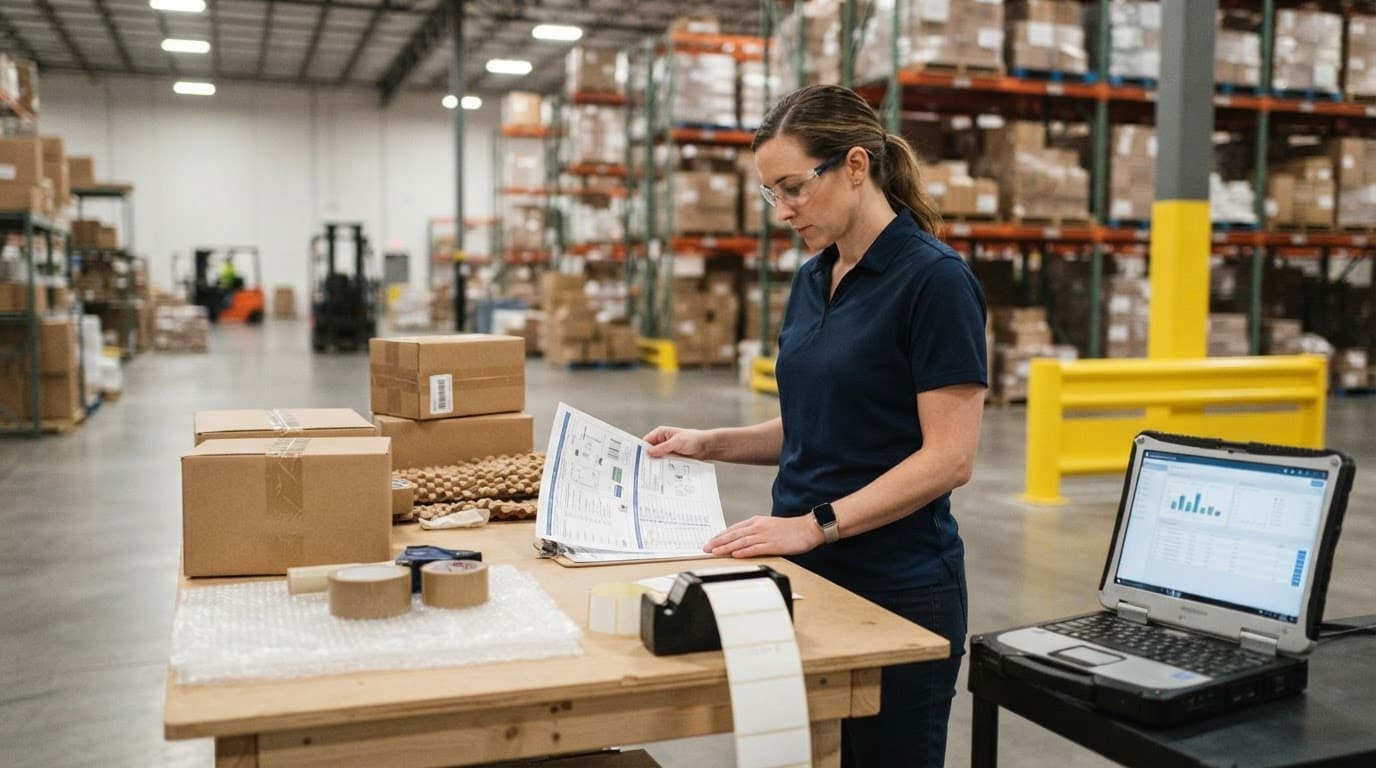
Put service targets in the agreement before inventory moves. Useful measures include inventory accuracy, label scan success, prep defect rate, receiving time, order turnaround, shipment accuracy, damage rates, reporting frequency, and issue response time.
For example, you might require receiving within two business days, same-day response to critical issues, a defined prep turnaround, and documented scan verification on every unit. Set the reporting cadence as well. Weekly exception summaries can expose drift early, while monthly trend reviews show whether corrective actions worked.
Define the response when performance falls short. The procedure should cover investigation, root-cause documentation, corrective action, rework responsibility, credits where appropriate, and product holds. Suspect inventory should stay separate from shippable stock until an authorized person approves rework, relabeling, return, disposal, or release.
Plan the handoff without disrupting sales
Create a transition schedule that assigns ownership for old inventory, new receipts, exceptions, and urgent replenishment. Plan freight to the provider, inventory transfers, packaging redesign, sample approval, system setup, and data exchange before the first shipment leaves your current site.
Use approved SKU files, pack-out instructions, label data, shipment templates, and inventory reports. If packaging changes, test samples before full production. Keep both locations operating during a defined overlap period, then reconcile quantities and open exceptions before closing the old process.
Start with a limited SKU group or 60- to 90-day pilot. During that run, compare actual charges and results against the quote. After approval, finalize work instructions, escalation contacts, cutoff times, and change controls. Schedule regular performance reviews so the relationship remains accountable after launch.
Common FBA Prep Mistakes That Cost Sellers Time and Margin
Avoidable prep errors can create problems well beyond the warehouse. A mislabeled unit or inaccurate carton count may delay an inbound shipment, strand inventory, trigger customer returns, or force emergency freight. Sellers choosing Amazon FBA prep in Indianapolis should review the operating details behind each quote, not only the advertised unit price.
Why the cheapest prep quote may be the most expensive option
A low base rate can hide receiving fees, inspection charges, storage, material markups, minimums, and freight accessorials. Rework, disposal, rush labor, and seasonal surcharges can raise the final invoice after the work begins. Packaging redesign, failed validation, replacement samples, and unused materials may create additional one-time costs when product requirements change.
Request an itemized comparison that separates recurring charges from one-time fees. Ask whether each charge is fixed, volume-based, or triggered by a scope change. Your comparison should include:
- Receiving, counting, inspection, and storage.
- Labels, bags, cartons, inserts, and protective materials.
- Rework, relabeling, disposal, and order changes.
- Freight coordination, accessorials, rush work, and peak-season labor.
- Setup, samples, testing, redesign, and minimum order charges.
A quote that looks higher may still cost less when it reduces rework and shipment delays. Compare the total cost of preparing and forwarding sellable inventory, not just the price per label or unit.
How weak inventory accuracy creates downstream problems
Incomplete product data often starts the trouble. Missing dimensions, incorrect case counts, outdated pack-out instructions, or unclear SKU ownership can lead to mispicks and label swaps. Poor packaging fit creates another risk. An oversized carton may increase storage and freight costs, while an undersized or weak carton can cause damage and returns.
Inventory errors also distort replenishment decisions. A miscount may create a stockout, while an inflated system balance encourages excess safety stock and ties up cash. Incorrect box content information can delay receiving when the physical shipment does not match the records.
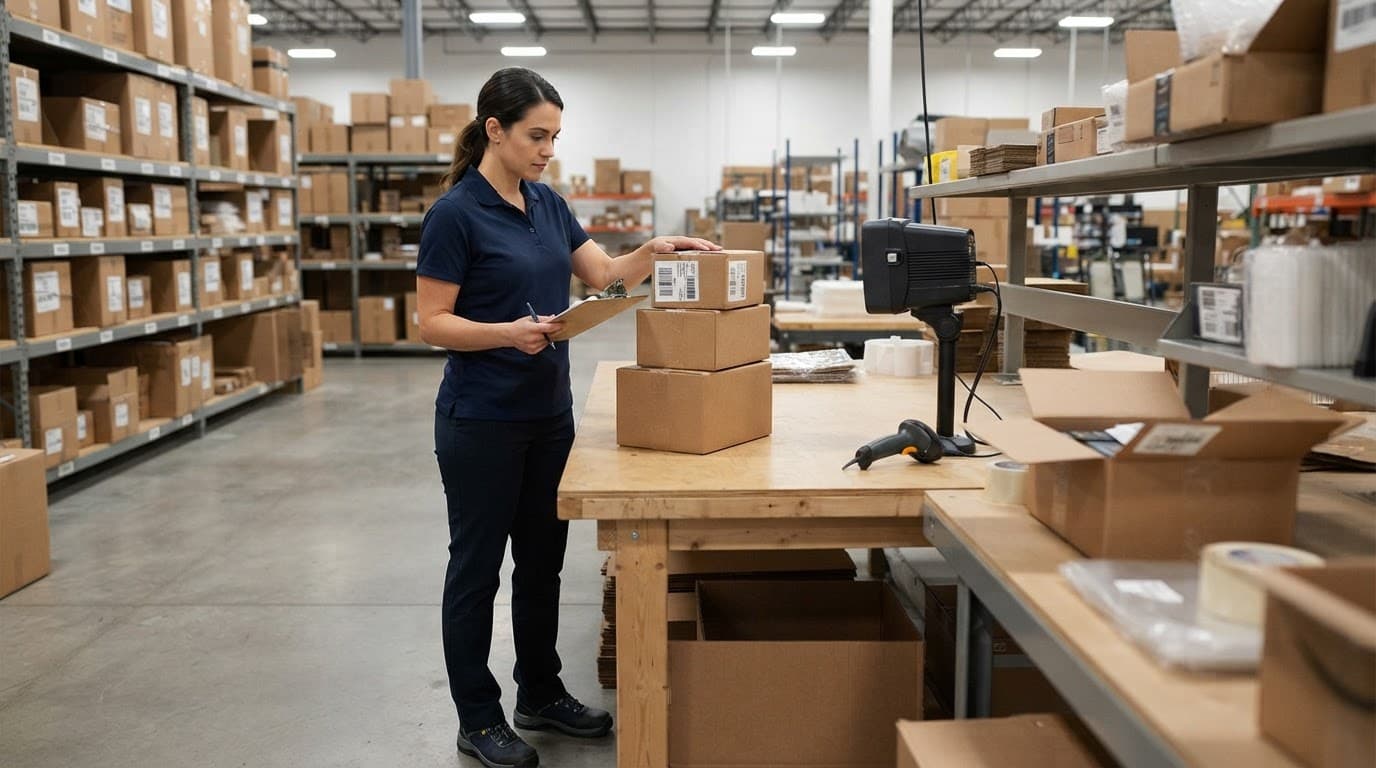
The provider should use barcode scans at key handoffs, scheduled cycle counts, discrepancy logs, and root-cause reviews. A documented inventory receiving and quality control process helps separate receiving errors from storage, picking, packing, or transportation problems.
Why a written exception process protects the brand
Your agreement should explain what happens when goods fail inspection or arrive incomplete. Covered events may include damaged units, missing components, incorrect labels, customer returns, product holds, recalls, and packaging failures.
The contract should state:
- Who investigates and how evidence is recorded.
- Who pays for correction, replacement, freight, or disposal.
- Who can approve rework, release, return, scrap, or recall action.
- How long the provider has to report an exception.
- Which records the seller receives for audit and traceability.
Keep nonconforming inventory separate from shippable stock until an authorized person approves its disposition. Clear service levels and escalation rules protect your brand when a small warehouse mistake could otherwise become a chargeback, delayed replenishment, or customer complaint.
Frequently Asked Questions
Selecting an Amazon FBA prep partner in Indianapolis involves more than comparing unit prices. These answers address practical questions about responsibility, timing, product handling, capacity, and ongoing account management.

Who is responsible for FBA prep after Amazon’s policy change?
For U.S. FBA shipments, the seller or an appointed third-party prep center must complete required preparation and labeling before inventory reaches Amazon. The provider should apply a visible, scannable barcode and follow the correct requirements for the product, such as bagging, bubble wrap, sealing, or set creation.
Can an Indianapolis prep center handle batteries, liquids, or fragile products?
Some can, but you must confirm the facility’s product-specific capabilities before sending inventory. Ask about anti-static materials, leak protection, special warnings, breakage controls, storage conditions, and documented procedures for products that need extra handling.
How far in advance should I send inventory to a prep partner?
Allow time for inbound transportation, receiving, inspection, prep, shipment creation, and forwarding to Amazon. A stable SKU may move quickly, while a new bundle, packaging change, or damaged shipment needs more time for samples and approvals. Build extra capacity into launch and holiday schedules.
Can a prep partner work with Amazon capacity limits?
Yes, a capable partner can coordinate receiving and replenishment with the storage limits shown in Seller Central. Confirm that the operation can hold prepared inventory, separate sellable and pending stock, and provide accurate counts when Amazon limits the amount you can send.
Should I choose an FBA prep provider that also offers 3PL services?
That depends on your sales channels and inventory flow. If you also sell through retail, wholesale, or your own website, 3PL services for Amazon sellers may reduce handoffs by keeping storage, prep, fulfillment, and transportation with one provider.
What should I monitor after the first shipment reaches Amazon?
Review shipment discrepancies, receiving delays, label issues, and prep-related defects in Seller Central. Compare those results with your provider’s inventory and exception reports, then address recurring problems through documented corrective actions rather than treating each error as an isolated event.
