

Contract Packaging Solutions for Health & Beauty Brands
Health and beauty brands must do more than make products look polished. Packaging needs to protect bottles, tubes, and kits, meet retail requirements, and arrive accurately across store shelves and ecommerce orders, even when volume or product mixes change.
That work often goes beyond placing finished products in boxes. Contract packaging may include assembly, labeling, shrink wrapping, promotional and multi-SKU kitting, fulfillment, retail distribution, and transportation coordination. MSL COPACK + ECOMM, an Indianapolis-based provider established in 2003, brings more than 20 years of experience to these operational demands. Its contract packaging for health and beauty brands supports both retail and direct-to-consumer channels.
With the right processes in place, you can reduce pressure on internal teams while improving pack consistency, inventory control, and delivery performance. MSL can connect packaging, warehousing, fulfillment, and transportation support so fewer handoffs create fewer opportunities for delays and errors. Next, we’ll look at the contract packaging services that help health and beauty brands keep products retail-ready and ready to ship.
Key Takeaways
- Contract packaging helps health and beauty brands manage assembly, labeling, shrink wrapping, kitting, and retail-ready preparation.
- MSL COPACK + ECOMM supports salons, specialty retailers, mass-market brands, and direct-to-consumer sellers.
- Quality controls help protect product appearance, packaging accuracy, and customer expectations across every shipment.
- GMP-certified processes support careful handling, inspection, relabeling, repackaging, and product testing when needed.
- Integrated distribution and fulfillment services connect packaging with warehousing, retail orders, ecommerce fulfillment, and transportation coordination.
Why Health and Beauty Brands Turn to Contract Packaging
Packaging becomes harder to manage as a health and beauty brand grows. A launch may begin with one bottle or tube, then expand into multiple sizes, scents, shades, bundles, subscription boxes, and seasonal kits. Each variation adds another pack-out instruction for your team to follow.
That complexity affects more than the packing station. It can slow launches, tie up warehouse space, and create errors across retail and direct-to-consumer orders.
Growth Creates More Packaging Pressure
A beauty brand with 30 foundation shades must keep similar products separate and easy to identify. The same challenge appears with different fragrances, sizes, formulas, and kit versions. Without clear locations, barcode checks, and written procedures, workers can select the wrong item or combine components incorrectly.
Promotional campaigns create another layer of work. A retailer may need a display-ready case, while an ecommerce customer expects a branded bundle with inserts and protective packaging. Subscription orders add recurring deadlines, and seasonal launches create narrow windows for assembly and shipment.
Common problems include:
- Limited internal labor for repetitive assembly and pack-outs.
- Inconsistent kits, missing inserts, or incorrect product combinations.
- Labeling and barcode errors that create returns or retailer compliance issues.
- Damaged bottles, pumps, cartons, and applicators during handling or transit.
- Slow launches caused by setup time, staffing gaps, or limited line capacity.
- Excess seasonal inventory when demand changes after packaging materials are committed.
- Difficulty serving wholesale and direct-to-consumer orders from the same operation.
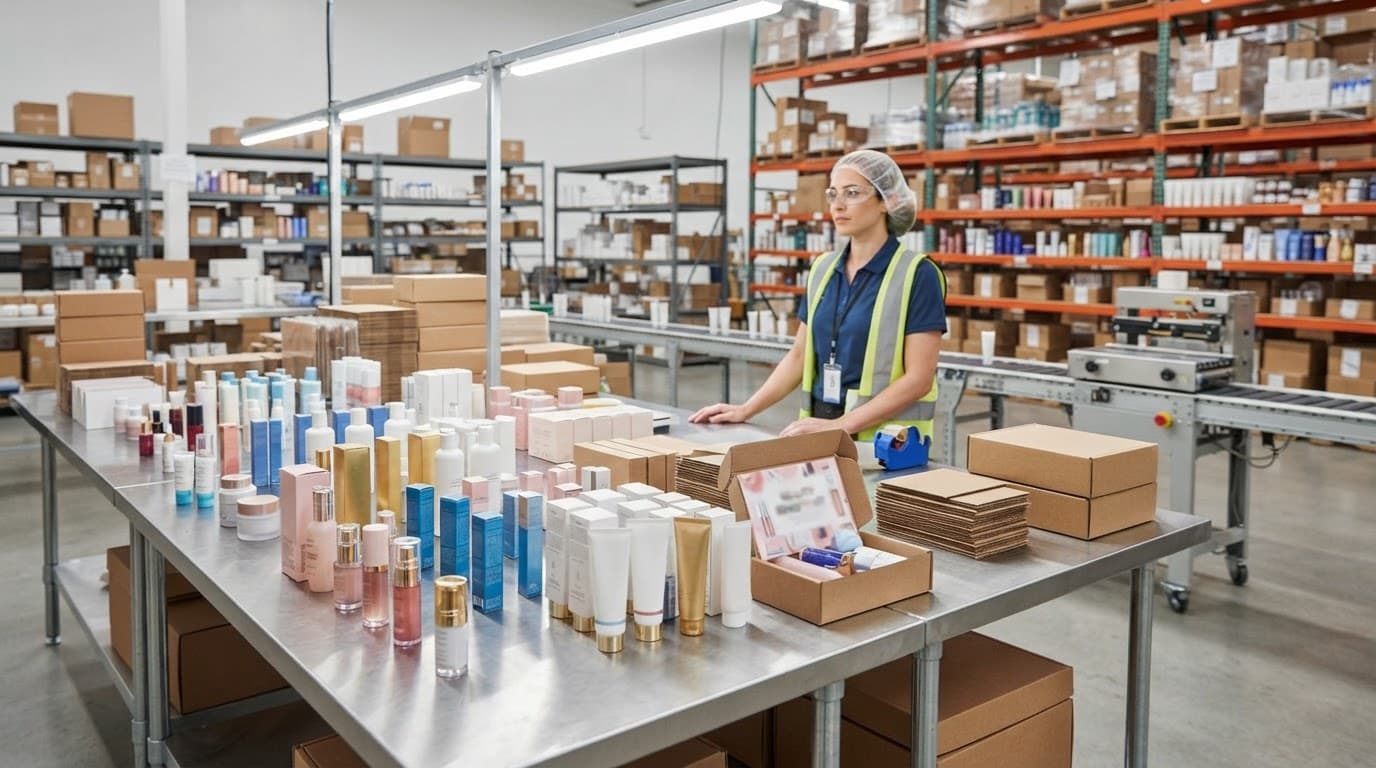
A contract packaging partner can support these requirements through custom contract packaging solutions, including labeling, shrink wrapping, kitting, retail displays, and ecommerce-ready preparation.
Outsourcing Adds Capacity Without Heavy Overhead
Building every capability in-house requires more than hiring temporary packers. You may need supervisors, training programs, specialized equipment, quality procedures, warehouse space, staging areas, and systems for inventory control. Those investments can sit underused during slower months, then prove inadequate when a launch or promotion drives demand.
Outsourcing gives you access to trained labor and established processes without requiring you to build the entire operation. A provider can assign capacity to short-term projects, recurring subscription work, retail resets, or peak-season demand. Specialized equipment also supports consistent labeling, sealing, shrink packaging, and multi-SKU assembly.
Choose More Than the Lowest Unit Price
Price matters, but a low per-unit rate does not help if the operation creates rework, damaged goods, stock discrepancies, or missed ship dates. Evaluate a partner’s quality controls, inventory accuracy, service levels, reporting, and capacity plans alongside its quote.
Ask how the provider verifies labels, controls components, handles nonconforming products, tracks inventory, and reports performance. The right partner should help you grow without forcing every volume increase back onto your internal team.
Contact Packaging Solutions By MSL for Health & Beauty Brands
MSL COPACK + ECOMM is an Indianapolis provider for health and beauty brands that need packaging, assembly, fulfillment, and logistics under one operating partner. Services can match your product type, sales channel, order volume, and launch schedule, whether you need recurring retail packs or a short-run promotion.
The relationship may include receiving packaging materials, following approved work instructions, assembling finished packs, applying labels, inspecting output, managing inventory, and preparing orders for retail or ecommerce shipment. MSL’s contract packaging services give brands one point of coordination for secondary packaging work and related distribution needs.

Shrink Packaging, Labeling, and Repackaging for Retail-Ready Products
Shrink packaging can group bottles, tubes, cartons, or promotional items into a stable sale-ready pack. Depending on the product and film, it can protect surfaces from dust and handling, make tampering easier to spot, and keep multiple units together during shipping. Multi-format shrink work may support two-item promotions, larger retail packs, sample groups, or case-level protection.
Label application adds control when product information changes after the original package is produced. Over-labeling may support updated product details, retailer requirements, promotional messages, or market-specific information without discarding usable inventory. However, every label project needs approved artwork, correct placement instructions, and barcode verification before production begins.
Repackaging can also give existing inventory a practical second use. A provider may update outdated packaging, create a new pack size, add inserts or dividers for better shipping protection, or divide bulk goods into individual retail units. Sample approval and defined inspection points help confirm that the revised pack looks correct and withstands normal handling.
A sound packaging process accounts for unused materials before production starts, not after the project ends.
Ask how obsolete labels, rejected components, excess film, and unused cartons are identified, segregated, documented, and dispositioned. Clear handling prevents old materials from returning to active inventory or appearing in a later production run.
Kits, Multipacks, and Promotional Bundles That Sell Together
A kit combines related products for a defined use, such as a morning skincare routine, shampoo and conditioner set, travel toiletry kit, or gift box. A multipack or bundle groups products for sale together, which may include identical units, a buy-one promotion, seasonal packaging, or a limited-time offer.
Health and beauty brands also use kitting for sample programs, subscription assortments, launch boxes, and retailer-specific combinations. Each format requires a written bill of materials, accurate component counts, and clear instructions for inserts, labels, cartons, and seals. Lot or batch control may matter when formulas, supplements, or other traceable products are included.
MSL’s kitting services can support assembly and fulfillment requirements in the same workflow. Final pack verification should confirm the right products, quantities, inserts, labels, and packaging before release.
That discipline reduces missing-item complaints and gives customers a consistent experience across retail shelves, promotional orders, and ecommerce deliveries.
Blister, Club-Store, and Point-of-Sale Packaging Options
Blister packaging can suit small health and beauty products that need visibility, protection, and hanging retail display compatibility. The format may work for accessories, applicators, sample items, or other compact products, but the product shape, materials, seal requirements, and opening experience should guide the decision.
Club-store packaging often requires larger quantities, durable construction, clearly stated unit counts, and efficient case handling. A format that works for a specialty retailer may create excessive size or material use in a warehouse club, so pack dimensions and handling requirements need review early.
POS and POP assembly covers counter displays, promotional units, retail trays, and other in-store merchandising programs. MSL’s POS and POP assembly services can connect display assembly with product loading and delivery preparation. Final verification should check display quantities, graphics, components, and shipping configuration before the units leave the facility.
How MSL Connects Packaging, Fulfillment, and Transportation
Packaging decisions affect every step that follows. A retail-ready case, a subscription kit, and an individual ecommerce order may all use the same products, but they need different pack-outs, labels, quantities, and delivery schedules.
A connected process keeps those requirements in one operating plan. MSL’s packaging and fulfillment process can link receiving, packaging, inventory storage, order preparation, shipping, and transportation coordination, with exact services confirmed for each project.
Supporting Retail, Wholesale, and Direct-to-Consumer Channels
The workflow starts when products, cartons, labels, inserts, and other packaging materials arrive. Teams check counts and condition, record receipts, and move approved inventory into assigned storage locations. Materials then become available for assembly, repackaging, labeling, kitting, or other approved work.
Next, the work area is prepared with the correct components and instructions. A retail shelf pack may require individual units, a barcode, and a defined case quantity. A wholesale order may need case packing, pallet labels, and retailer-specific documentation. Club stores often need larger multipacks or durable cases, while subscription orders may combine several SKUs with inserts. Individual ecommerce shipments usually need protective cartons, shipping labels, and customer-specific order contents.
After assembly, finished goods receive inspection before they enter available inventory. The operation can then pick the right format for each order instead of treating every channel the same. Retail distribution, B2B orders, D2C ecommerce fulfillment, and marketplace orders may all run through one facility, but their requirements remain distinct.
MSL lists Veracore WMS for inventory management, along with retail EDI and SPS Commerce capabilities for connected wholesale workflows. Shopping cart API connections can support online orders, while marketplace or CommerceHub integrations may support additional order sources. These capabilities should be confirmed against the brand’s platforms, retailer requirements, product types, and expected volume.
Transportation coordination completes the flow. Once orders are packed, the team can schedule retailer deliveries, parcel shipments, freight movements, or other approved delivery arrangements. MSL also lists local private fleet transportation, but brands should confirm availability, service area, shipment size, and timing during project planning.
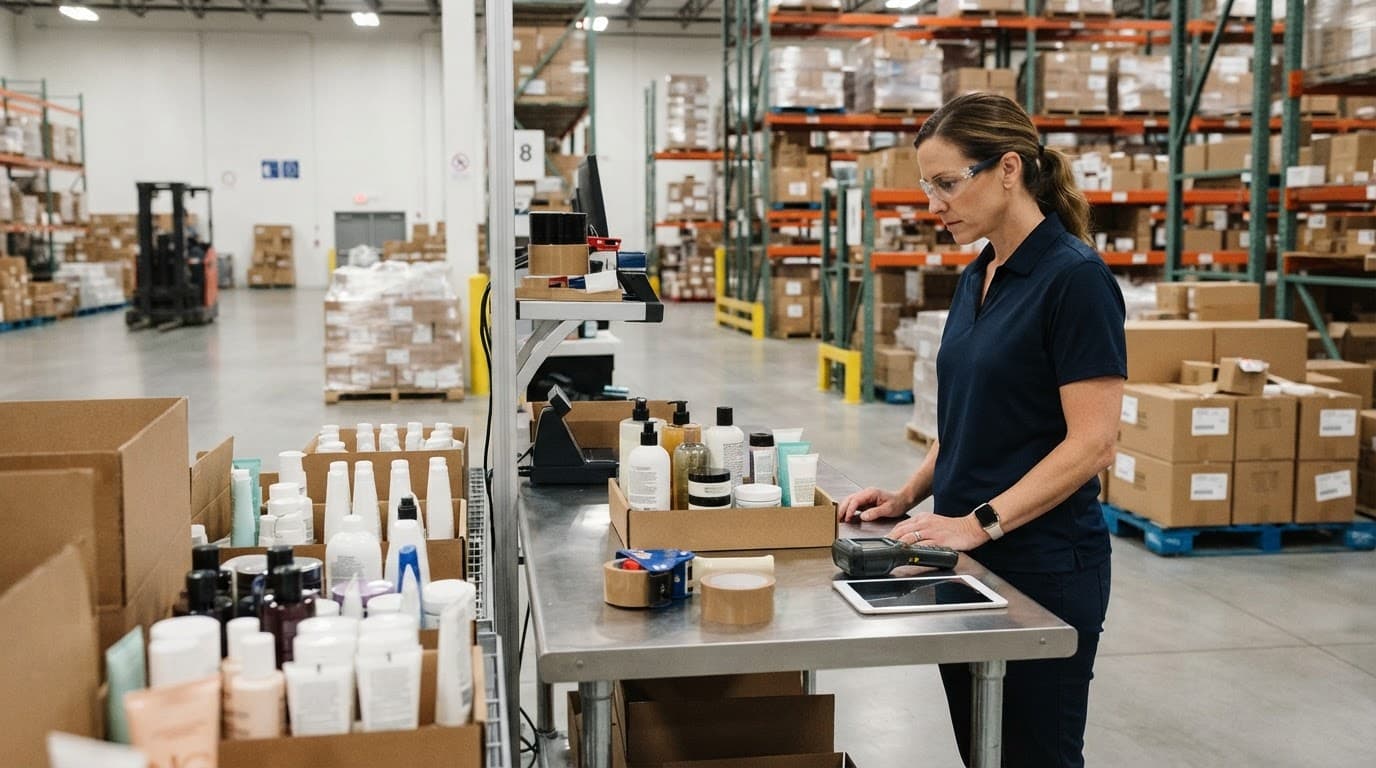
When packaging and fulfillment share inventory records, work instructions, and ship dates, fewer handoffs separate the finished pack from the customer. That improves visibility when demand changes or an order needs attention.
Inventory Accuracy and Reporting That Help Prevent Costly Errors
Accurate records begin at receiving and continue through every movement. Ask how a provider records packaging components, product usage, finished goods, damages, shortages, mispicks, wrong labels, missing inserts, and rework.
Strong controls should include:
- Scan verification during picking and packing.
- Cycle counts for priority and high-volume items.
- Lot or batch tracking when the product requires traceability.
- A formal hold process for damaged or nonconforming inventory.
- Records that show the item, quantity, location, issue, disposition, and follow-up action.
A held product should remain separate from shippable inventory until an authorized person approves release, relabeling, rework, return, or disposal. This prevents questionable goods from reaching a retailer or consumer.
Weekly summaries help teams correct shortages, picking errors, or label problems quickly. Monthly trend reports show whether corrective actions are working over time. Better records support replenishment decisions, reduce avoidable stockouts, clarify returns handling, and give retailers more reliable answers when questions arise.
How to Choose the Right Health and Beauty Packaging Partner
The right partner should fit your products, sales channels, quality standards, and growth plans. Compare MSL or another provider using documented capabilities, not only a polished facility tour or low unit price.
Before requesting a quote, prepare:
- Product dimensions, weights, fragility, and special handling requirements.
- SKU counts, expected volumes, order frequency, and seasonal peaks.
- Bottles, tubes, cartons, labels, inserts, shrink film, and other packaging materials.
- Artwork files, labeling rules, barcode requirements, and retailer specifications.
- Storage needs, inbound material flows, outbound order channels, and launch dates.
- Expected growth, promotional schedules, and any planned product variations.
A detailed project brief gives each provider the same information. It also reduces surprise charges after production begins.

Questions to Ask Before You Approve a Project
Ask whether the provider has handled products similar to yours, including liquids, supplements, cosmetics, fragile containers, and multi-SKU kits. Confirm experience with the packaging formats you need, such as shrink packaging, blister packs, club-store packs, retail displays, labeling, repackaging, or subscription boxes.
Quality questions should be just as detailed:
- How does MSL verify labels, barcodes, artwork versions, and component counts?
- What inspection criteria apply at receiving, during assembly, and before release?
- How are damaged, expired, missing, or suspect goods placed on hold?
- Who approves rework, relabeling, disposal, or return to inventory?
- How does the team control artwork changes and prevent obsolete labels from use?
- How is confidential product, pricing, formula, and launch information protected?
- Can the provider show sample work instructions, inspection records, and inventory reports?
- How often will you receive cycle-count results, production updates, and exception reports?
- What capacity is available during promotions, seasonal peaks, and sudden demand increases?
- What happens when a shipment misses its target or a service issue remains unresolved?
MSL describes controls such as barcode verification, in-process inspections, final checks, traceability, and inventory tracking by location and status. Still, ask how those controls will apply to your specific products. You should also confirm turnaround times, Indianapolis facility capacity, transportation options, retailer EDI needs, and ecommerce integrations.
A written scope protects both sides. Record ownership for materials, artwork approval, quality release, inventory discrepancies, freight, waste, and customer returns. The agreement should also define pricing, service-level expectations, escalation contacts, and how amendments receive approval.
For a broader evaluation framework, use this contract packaging partner checklist before signing a statement of work.
When Outsourcing Makes Financial and Operational Sense
Outsourcing should be judged by the full cost of completing the work, not the quoted per-unit rate. Compare the provider’s price with internal labor, supervision, equipment, maintenance, floor space, utilities, materials, quality work, inventory handling, waste, rework, overtime, expedited freight, returns, chargebacks, and management time.
Setup, transition, testing, storage, disposal, and change-order fees also belong in the comparison. A cheaper quote can lose its advantage if it excludes receiving, inspection, special labeling, rush work, or damaged-goods handling.
Build three scenarios:
- Best case, using realistic high-volume efficiency.
- Expected case, based on normal demand and staffing.
- Downside case, including lower volume, rework, delays, or a demand spike.
Then check payback and first-year cash flow. Released capacity can create value when it supports profitable production, faster launches, stronger service, or avoided equipment spending. However, count that benefit only when your team can use the freed labor, space, or equipment. MSL may improve capacity and control without producing a guaranteed return, so calculate the result from your own costs and operating plans.
Frequently Asked Questions
Choosing contract packaging for health and beauty products often raises practical questions about product fit, sales channels, seasonal demand, pricing, and communication. The answers below clarify how MSL COPACK + ECOMM may support your project and what information helps define the right scope.
What types of health and beauty products can MSL package?
MSL may support personal care products, skincare sets, cosmetics, promotional bundles, samples, and retail-ready multipacks. The right scope depends on the product itself, packaging materials, handling requirements, labeling instructions, production volume, and sales channel.
For example, a skincare kit may need component counting, inserts, carton assembly, and final inspection. A multipack may require shrink wrapping, barcode placement, and retailer-specific case quantities. Product compatibility should be confirmed before work begins, since handling needs can vary among liquids, fragile containers, applicators, supplements, and other health and beauty items.
Can MSL support both retail and ecommerce orders?
Yes. MSL’s published capabilities include retail distribution, B2B fulfillment, retail EDI, D2C and B2C ecommerce fulfillment, and transportation support. That combination can help a brand manage store orders, wholesale shipments, marketplace sales, and direct customer deliveries within a coordinated operation.
However, each project still requires planning. Confirm the needed shopping cart or marketplace integrations, order volumes, retailer packaging rules, labeling requirements, shipping destinations, and service levels before approving the scope. A retail case pack and an individual ecommerce order may use the same products, but they rarely follow the same pack-out instructions.
For related details, review MSL’s Indianapolis copacking and ecommerce fulfillment capabilities.
Can MSL help with a seasonal beauty promotion or gift set?
MSL may support limited-time promotions through kitting, shrink wrapping, labeling, inserts, display assembly, and temporary packaging capacity. These services can help brands prepare holiday gift sets, launch boxes, sample programs, subscription assortments, and retailer-specific offers.

Share component forecasts, approved artwork deadlines, launch dates, and expected order spikes early. That information gives the packaging team time to plan labor, materials, staging space, quality checks, and outbound transportation around the promotion.
How should a brand prepare for a packaging quote?
Provide enough detail for the provider to price the actual work, not a general description of the finished product. Include:
- SKU details, product measurements, weights, and fragility.
- Packaging specifications, materials, artwork, labels, and barcode rules.
- Assembly steps, component counts, inserts, seals, and inspection standards.
- Monthly and annual volumes, seasonal peaks, and growth forecasts.
- Storage needs, inbound materials, shipping destinations, and order channels.
- Retailer requirements, EDI needs, quality standards, and expected service levels.
Complete information helps define labor, equipment, storage, material handling, setup, rework, and transportation needs. It also reduces surprise charges caused by missing specifications or late scope changes.
Where can health and beauty brands contact MSL?
MSL COPACK + ECOMM lists its address as 3333 Pagosa Ct, Indianapolis, IN 46226. Brands can call (888) 675-4639 or email info@msl-indy.com to discuss a potential project.
The published business hours are Monday through Friday, 7:30 AM to 4:00 PM. You can also contact MSL to discuss product requirements, expected volumes, launch timelines, packaging formats, and retail or ecommerce fulfillment needs.
Conclusion
Health and beauty brands need packaging support that protects products while keeping every kit, label, multipack, and retail display consistent. MSL COPACK + ECOMM can help manage specialized packaging work, accurate kitting and labeling, retail-ready presentation, connected fulfillment, inventory visibility, and flexible capacity for changing demand. These services help reduce the pressure on internal teams while keeping retail and direct-to-consumer orders aligned.
The strongest packaging program starts with a clear scope. Define the required pack-out steps, realistic volumes, quality standards, inspection points, service expectations, and reporting cadence before work begins. That shared plan gives both teams a practical way to measure accuracy, identify issues, manage inventory, and support reliable order fulfillment. For additional planning guidance, review MSL’s copackaging solutions for health and beauty brands.
Contact MSL COPACK + ECOMM at (888) 675-4639 or info@msl-indy.com to discuss a custom packaging and fulfillment plan for your health and beauty products. The right scope and operating standards can turn packaging from an internal burden into a dependable part of your supply chain.
