

Contract Packaging Solutions for Nutraceutical Brands
As nutraceutical brands grow, packaging pressure grows with them: more orders, more formats, tighter retail requirements, and less room for errors. Managing every step in-house can stretch your team thin, especially when production also involves filling, labeling, kitting, blister packing, shrink wrapping, and order preparation.
Contract packaging solutions let you outsource this labor-intensive work to a specialized partner while keeping product quality and customer expectations on track. The right provider can help you increase speed, handle volume changes, prepare products for retail or ecommerce, and expand fulfillment capacity without adding the same level of equipment, labor, and floor space. For example, contract packaging services for vitamins and supplements can support packaging work that requires consistent handling and dependable quality controls.
The sections ahead examine common nutraceutical packaging formats, how the packaging workflow operates, quality and compliance requirements, cost factors, provider selection, and the performance measures that show whether the partnership is working. You’ll see how outsourcing can protect product quality while giving your brand more flexibility, faster turnaround, and stronger fulfillment support.
What Contract Packaging Solutions for Nutraceutical Brands Actually Include
Contract packaging means an outside partner handles some or all packaging steps for a supplement or wellness brand. That work may begin with bulk product and end with retail-ready units, palletized shipments, or individual ecommerce orders.
Contract packaging differs from contract manufacturing, which covers making the supplement itself, such as blending ingredients, compressing tablets, or producing gummies. Some providers support both services, but brands can also hire a packaging specialist after manufacturing is complete. The right scope depends on the product, sales channel, order volume, and capabilities your team already has.
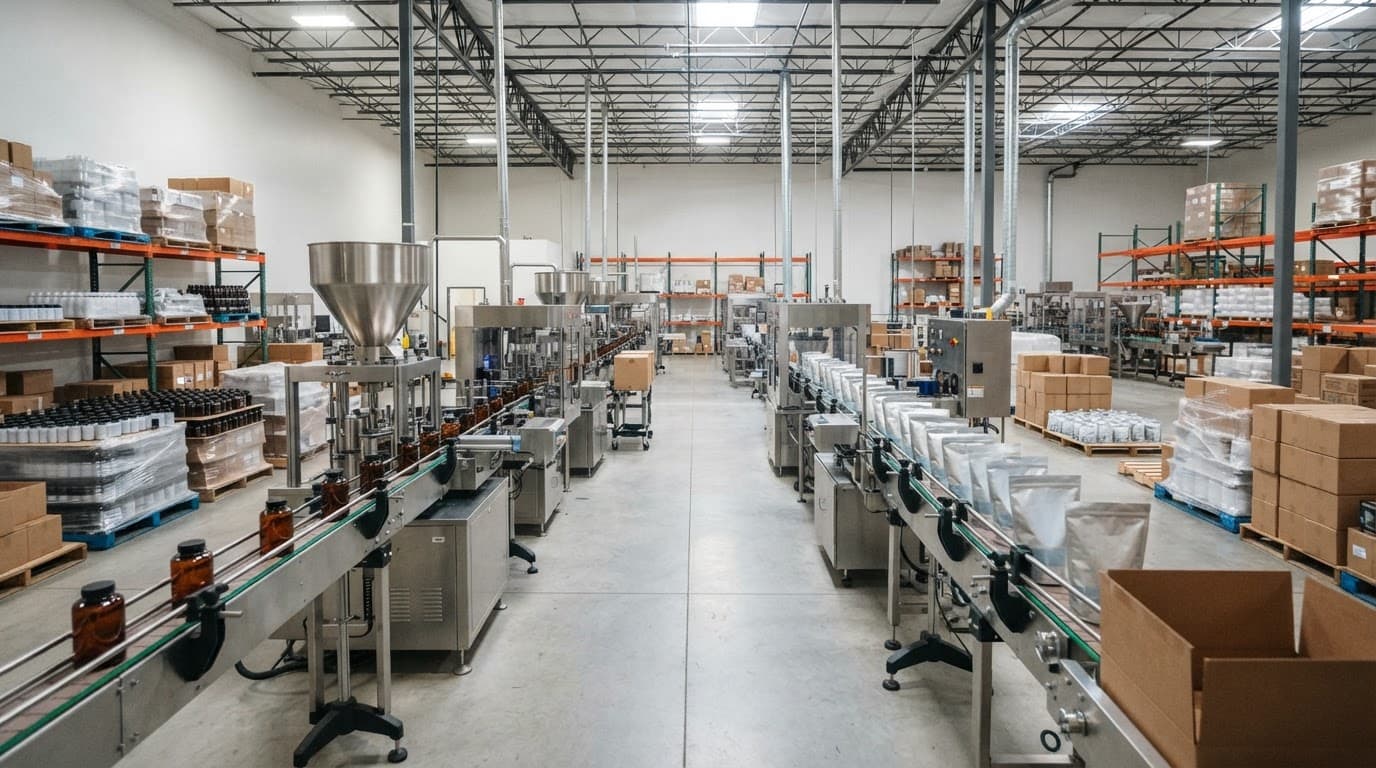
### Packaging tasks brands commonly outsource
Primary packaging directly touches or holds the product. Common formats include bottles with screw-top, flip-top, or child-resistant closures, as well as pouches, stick packs, sachets, and blister cards. A packaging partner may fill these formats, apply seals, add tamper evidence, and check that each unit has the correct lot and expiration code.
Secondary packaging protects or groups primary packages. It can include cartons, sleeves, shrink packaging, bundles, retail multipacks, and display-ready cases. Tertiary packaging prepares finished goods for transportation, with pallet building, stretch wrapping, labeling, and shipping documentation included when needed.
The scope may also cover repackaging, label application, insert placement, and retail display assembly. Kitting combines several products into one finished offer, such as a subscription box with multiple SKUs, a trial set for a product launch, a promotional pack, or a club-store bundle. These projects require accurate counting and scan checks because one missing item can make an entire kit unsellable.
A provider may also connect packaging with packaging and fulfillment options, allowing the same operation to prepare wholesale cases and direct-to-consumer orders. For more background on the service category, nutraceutical contract packaging commonly includes packaging, labeling, kitting, and distribution preparation.
When outsourcing makes operational sense
Outsourcing often makes sense when packaging has become a constraint rather than a core strength. Practical warning signs include:
- Recurring labor shortages or heavy reliance on temporary workers.
- Seasonal demand that overwhelms your normal packaging capacity.
- A new retail launch with strict delivery and presentation requirements.
- A growing SKU count that creates more changeovers and opportunities for mix-ups.
- Limited warehouse space for equipment, materials, staging, or finished goods.
- Inconsistent manual work, including wrong labels, missing inserts, or uneven bundles.
- A need to ship both wholesale orders and direct-to-consumer packages.
The decision isn’t limited to large brands. A flexible partner may support a pilot run, a limited promotional kit, or controlled growth before volume justifies new equipment. Outsourcing can also help you avoid buying specialized machinery, hiring a large temporary workforce, or coordinating several separate vendors.
Packaging errors create rework, shipment delays, damaged goods, and lost sales. Treating the partner as part of your operating team encourages shared specifications, clear quality checks, accurate reporting, and faster issue resolution.
Choose a Nutraceutical Packaging Format That Protects the Product
Packaging selection should begin with the formula, dose format, customer use, shipping conditions, shelf presentation, and total cost. Moisture, oxygen, light, heat, odor transfer, contamination, and physical impact can reduce product quality before it reaches the customer. A format that looks attractive on a shelf still fails if it cannot protect the product or run reliably at production speed.
The right contract packaging partner can compare these tradeoffs while checking fill accuracy, seal integrity, labeling, changeover time, and shipping performance. See how professional contract packaging services can support different formats and retail requirements.
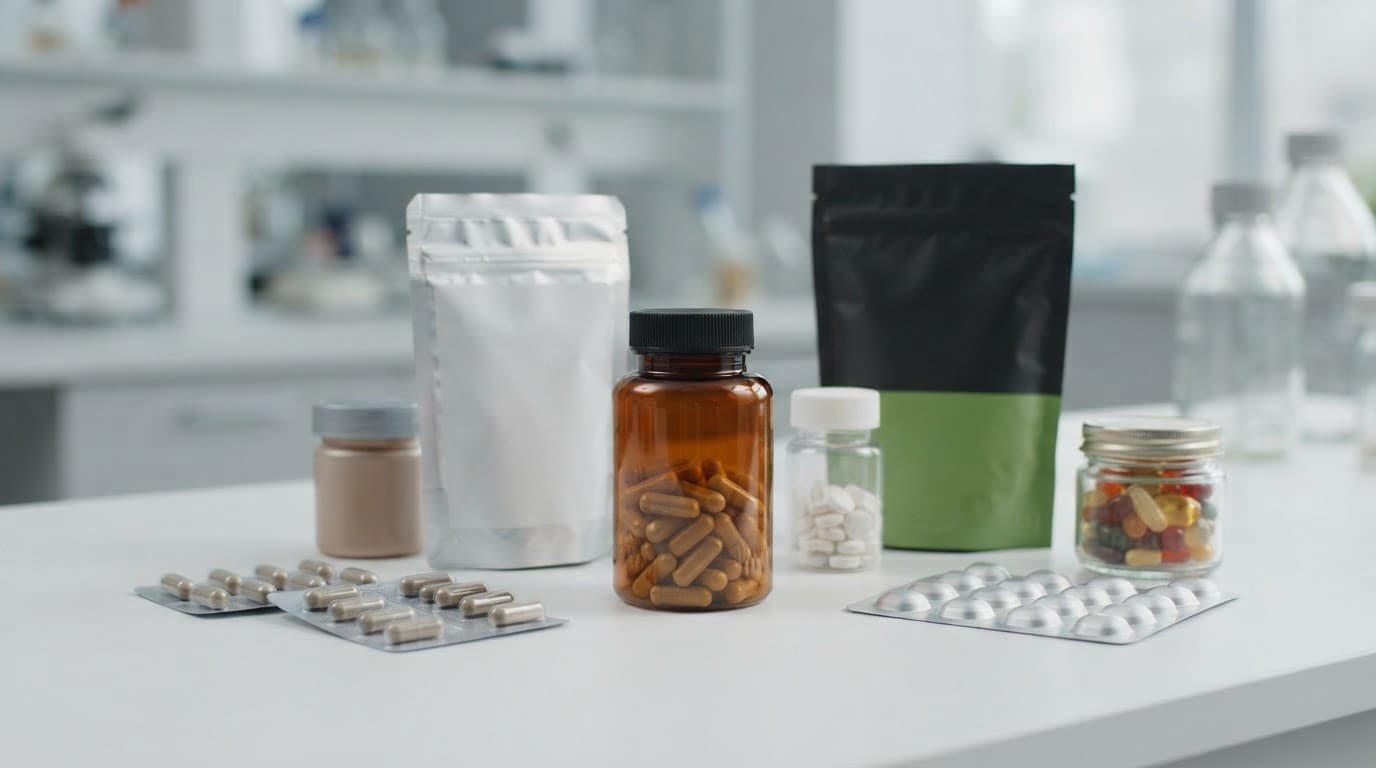
### Bottles, jars, and closures for everyday supplements
Round HDPE bottles with screw-top closures remain a cost-efficient choice for tablets, capsules, and many powders. PET bottles offer clarity and a polished appearance, although PET alone may not provide enough protection for every oxygen- or moisture-sensitive formula. Glass jars provide strong barrier performance and a premium feel, but they add weight and can raise breakage and shipping costs.
Desiccants help control moisture inside a bottle, while induction seals create a tamper-evident barrier beneath the cap. Liners also support seal performance and reduce leakage. Common closures include continuous-thread caps, flip-top caps, dispensing caps, and child-resistant designs.
A child-resistant closure may be appropriate when ingredients create an access concern or when the product could pose a risk if a child consumes too much. The decision should consider the formula, serving concentration, intended users, and applicable packaging requirements.
Bottle selection also affects operations. The container must hold the correct count without excessive empty space, leave enough label area for required information, and fit the capper, labeler, and filling equipment. A familiar round bottle often runs faster than a custom injection-molded shape. Custom tooling can also require higher minimum orders and a larger upfront investment.
Pouches, stick packs, and single-serve formats
Flexible packaging works well for powders, drink mixes, gummies, and travel products because it reduces bulk and shipping weight. Stand-up pouches offer shelf presence and can include resealable zippers. Tear packets and stick packs provide pre-measured doses that suit subscriptions, gym bags, samples, and on-the-go use.
These formats can improve convenience while reducing material and freight costs. However, the film structure must match the formula. Moisture-sensitive powders may need high-barrier layers, while oxygen-sensitive ingredients may require stronger oxygen protection. Seal quality matters just as much as film selection because a weak seal can compromise freshness.
Blister packs, cartons, and premium presentation
A blister pack places each dose in a formed cavity sealed to a backing. This format supports unit-dose control, product visibility, and physical separation between tablets or capsules. Aluminum-backed blisters add protection for light-sensitive products and can improve portability.
Cartons and sleeves provide secondary protection, additional label space, and a larger branded surface. Premium finishes such as foil, tactile coatings, metallic effects, and unusual shapes can strengthen shelf appeal. Still, visual upgrades should never weaken pack integrity or slow the line with difficult folding, alignment, or inspection steps.
Sustainable and refillable packaging choices
PCR bottles, recyclable or mono-material pouches, FSC-certified paper cartons, glass, and reduced secondary packaging can lower material impact. Yet sustainability claims must match the material and the disposal systems available to customers. A package is not meaningfully recyclable if local facilities cannot process it.
Refill systems pair a durable primary vessel with lighter refills, which can work well for subscription products. Every sustainable format still needs barrier, seal, durability, contamination, and shipping tests. Product protection comes first, then the brand can reduce material without sacrificing shelf life or customer use.
How the Contract Packaging Process Works From Product Specs to Shipment
A reliable contract packaging process starts before materials reach the production floor. The brand, packager, warehouse, and fulfillment teams should agree on product requirements, quality checks, timing, and shipping channels before scheduling the run.

### Start with a packaging and production brief
The first discussion should cover the product, sales plan, and launch deadline. Bring the product dimensions, unit weight, dosage, shelf life, storage conditions, current packaging, approved artwork, sales forecast, SKU count, case-pack needs, order profile, and destination requirements.
The packager also needs to understand how the product will move through the supply chain. Will it ship to a retailer distribution center, a marketplace, a subscription customer, or several channels? Each option can change carton specifications, labeling, pallet configuration, order quantities, and delivery cutoffs.
Discuss risk factors early. Ask whether the product is sensitive to temperature, humidity, oxygen, or light. Review breakage risks, tamper-evident requirements, child-resistant closures, seal expectations, and any special handling instructions. Artwork should include the correct regulatory information, lot and expiration coding areas, barcode placement, and space for required warnings. Packaging and label controls must also align with 21 CFR Part 111 requirements.
Test samples before committing to a full production run
A sample build gives your team a practical test of the proposed packaging system. Confirm that the product fits correctly, the seal closes consistently, and the label sits straight without covering required information. Scan every barcode and verify that the correct SKU produces the correct result.
Testing should also include drop and vibration checks, moisture or oxygen protection reviews, case packing, pallet stability, and line-speed trials. Use real product, real cartons, and realistic shipping conditions whenever possible. A package that looks fine on a worktable may shift inside a case, crush under pallet weight, or fail after repeated carrier handling.
Small runs can reveal poor fit, weak seals, label problems, slow manual steps, and damage risks before the brand orders high material volumes. Document the results, record defects by type, and assign corrective actions. The team should approve the sample and updated specifications before production scheduling begins.
Coordinate packaging with storage and fulfillment
After packaging, finished goods must be received, counted, lot tracked, stored, picked, packed, and shipped according to the order profile. Inventory records should match physical quantities, while cycle counts and scan verification help catch mispicks, label swaps, and missing components.
Use FIFO or FEFO when product age or expiration dates matter. Retail shipments may require routing-guide compliance, retailer-specific carton labels, pallet labels, appointment scheduling, and strict case quantities. Ecommerce orders need accurate unit picks, protective shipping cartons, branded inserts when requested, and carrier-ready labels. B2B orders often need full-case handling, while subscriptions may require recurring kitting and scheduled releases.
When one partner manages packaging, warehousing, and distribution and fulfillment services, fewer handoffs separate production from shipment. That arrangement can reduce data errors, shorten launch timelines, and give the brand one operating team for inventory, order status, transportation coordination, and exception handling.
Quality, Compliance, and Traceability Cannot Be Afterthoughts
Nutraceutical packaging must protect the product, communicate accurate information, and leave a reliable record of what happened during each run. Quality includes appearance and function. A label can look correct but scan poorly, a closure can appear secure but fail to seal, and a missing lot code can complicate a customer complaint or recall.
Requirements vary by product, ingredients, claims, market, and sales channel. Confirm the rules that apply to your products with qualified regulatory experts. In the United States, FDA’s dietary supplement compliance guide provides useful background, but it doesn’t replace product-specific review.

### Control labels, codes, and approved artwork
Version control keeps outdated labels away from the production line. The packager should work from one approved artwork file, with revision history, approval status, and access controls that prevent accidental use of an old version. Printed components should also be checked during receiving before they reach staging.
Before a run begins, compare the approved specification with the materials and work order. Review the product name, serving information, allergen statements, net contents, directions, warnings, ingredient information, barcodes, and retailer-specific requirements. Confirm that the lot code and expiration date format are correct, readable, and placed where warehouse staff and customers can find them.
Line clearance provides another important safeguard. Remove labels, cartons, inserts, product remnants, and coding materials from the previous job before setup. Then document the inspection and obtain sign-off from the responsible personnel. After the run, reconcile unused materials, inspect finished units, and record final approval. These steps reduce the chance of a label mix-up spreading across an entire batch.
Tamper-evident seals, approved packaging materials, sanitation procedures, and documented work instructions also belong in the same quality system. A label check cannot compensate for a leaking seal or contaminated work surface. Incoming materials, equipment condition, cleaning activities, in-process inspections, and deviations should all produce records that someone can review later.
Build traceability into every production run
Traceability connects the product’s history across the operation. Receiving records identify suppliers, quantities, dates, and material lot numbers. Production records connect those materials to the packaging line, work order, operators, inspection results, and finished-goods count. Shipment records then show which customers or distribution points received each lot.
When available, scan-based inventory systems reduce manual entry and support verification at receiving, staging, packaging, putaway, picking, and shipping. For a closer look at the record structure, this lot tracking guide for co-packers explains how receiving, packaging, quality release, and shipment records can connect into one trail.
A complete chain of custody helps teams investigate complaints faster, isolate questionable inventory, avoid unnecessary holds, and respond to recalls with less disruption. It also exposes inventory surprises sooner because physical counts, system records, and shipment data can be compared.
Train people and measure safety as part of quality
Employee training supports both safe work and consistent output. Track training completion, incident rate, near-miss rate, and lost-time injury rate to see whether the operation protects people while maintaining production.
Near-miss reporting helps identify hazards before an injury occurs. Meanwhile, incident and lost-time rates show whether existing controls are working. An incident can trigger cleanup, paperwork, schedule changes, retraining, and downtime, so safety performance affects customer service as well as employees.
Regular training, clear procedures, inspection records, and follow-up on corrective actions keep quality practices active on every shift. A packaging partner should also maintain complaint and recall procedures, including product holds, investigation steps, disposition approval, and communication responsibilities. That preparation turns scattered production records into practical protection when a problem reaches the market.
What Contract Nutraceutical Packaging Costs and How to Compare Quotes
Contract nutraceutical packaging costs vary because each project combines different materials, labor, equipment, quality checks, and logistics. A quote for standard bottles and one SKU cannot fairly compare with a quote for custom blisters, several labels, and frequent small runs.
Compare the full landed cost, not just the per-unit packaging fee. A detailed contract packaging quote breakdown should show what you pay once, what recurs on every run, and which expenses pass through at cost.

### The cost drivers that change a packaging quote
The product format sets the starting point. Bottles, pouches, stick packs, sachets, and blisters require different equipment, speeds, seals, and inspection methods. Standard bottles often reduce material and tooling costs because the packager can source them in volume and run them on established equipment. Custom shapes, special finishes, printed cartons, foil effects, and blister tooling raise setup costs.
Material grade also matters. A basic container may work for a stable tablet, while a moisture- or oxygen-sensitive formula may need a higher-barrier structure, desiccant, foil, or specialized seal. Artwork preparation, label application, coding, barcode verification, and print inspection add labor and quality-control time.
Run size affects the price in two ways. Larger runs spread line setup, testing, and administration across more sellable units. Small runs usually carry a higher unit cost, especially when the project includes many SKUs. Each SKU may require separate staging, label reconciliation, line clearance, documentation, and changeover time.
Labor content and automation affect the quote as well. Manual kitting, inserts, multipacks, retail displays, and complex pick-and-pack work take more time than a high-speed bottle line. Frequent changeovers can reduce productive line hours, while rush work may require overtime, expedited materials, or schedule disruption.
Storage days, inbound receiving, freight, shipping destinations, returns, and technology requirements also belong in the calculation. Scan verification, lot tracking, inventory reporting, and retailer-specific labeling may add service fees, but they can prevent costly errors later.
A low unit price can become expensive when it requires a large minimum order and leaves you holding slow-moving bottles, labels, cartons, or inserts.
Ask the provider to separate:
- One-time charges, such as tooling, artwork setup, sampling, and line qualification.
- Recurring charges, such as labor, packaging materials, storage, quality checks, and order handling.
- Pass-through costs, such as freight, expedited shipping, duties, purchased components, and carrier accessorials.
Review co-packing pricing models to see how per-unit, hourly, setup, storage, and blended rates can produce different totals.
Questions to ask before signing an agreement
Before approving a quote, request a sample statement of work. It should define the exact scope, including filling or repacking, labeling, kitting, testing, storage, pick-and-pack, shipping, returns, and rework.
Ask about production lead times, service-level targets, minimum and maximum volumes, rush-order rules, and late-delivery penalties. Clarify who purchases packaging materials, who owns unused inventory, and who pays when components arrive late, damaged, or short.
Your agreement should also explain quality responsibilities, compliance support, inspection standards, damaged goods, rejected units, returns, confidentiality, insurance, and payment timing. Confirm whether the provider can support your reporting and technology needs, including lot tracking, inventory visibility, barcode scans, and shipment updates.
Finally, define how specification changes work. A new label version, container, case pack, or customer requirement may trigger a change order, new tooling, testing, or obsolete-material charges. Put approval rules, volume commitments, termination rights, and final inventory handling in writing before the first production run.
How to Select the Right Contract Packaging Partner for Your Brand
The lowest quote rarely tells you whether a contract packaging partner will support your brand well. Evaluate the full fit: nutraceutical experience, packaging formats, sales channels, quality systems, labor, technology, location, and growth capacity. A provider should handle today’s launch without becoming a bottleneck when orders increase.
Ask for site visits, customer references, sample reviews, and clear answers about service levels. A practical contract packaging partner should also explain how it manages exceptions when materials arrive late, demand changes, or a retailer moves a delivery date.

### Match capabilities to your product and sales channels
Start with a format and channel checklist. Confirm that the provider has recent experience with:
- Bottles, jars, capsules, powders, gummies, and single-serve products.
- Blister packs, cartons, pouches, labels, shrink wrapping, and tamper-evident seals.
- Retail displays, promotional kits, multi-SKU bundles, and subscription boxes.
- Wholesale case packs, club-store orders, marketplace shipments, and ecommerce orders.
Experience with adjacent health products can help, but ask for examples involving similar fill formats, handling requirements, and quality controls. A provider that packages food or personal care products may have useful equipment, yet nutraceutical work still demands accurate lot control, label checks, clean work areas, and reliable traceability.
Sales channels matter just as much. Retail shipments may require routing-guide compliance, appointment scheduling, retailer carton labels, pallet patterns, and exact case quantities. Marketplace orders can require specific shipping labels, carton rules, and scannable barcodes. Meanwhile, direct-to-consumer orders depend on correct item picks, inserts, protective packaging, and order accuracy.
Ask whether the team can build promotional kits, replenish displays, and switch between full-case wholesale work and individual ecommerce orders. Indianapolis-based brands, or companies shipping through the Midwest, may value central distribution access and convenient transportation connections. Still, location should support the network, not excuse weak service.
Check systems, capacity, and communication
A strong operation needs more than suitable machinery. Ask how the provider manages forecasts, purchase orders, inventory counts, lot tracking, production status, quality holds, and urgent changes. Request a sample report that shows exceptions, corrective actions, and order status.
Review equipment redundancy, preventive maintenance, backup labor, cross-training, and peak-season planning. A single machine failure or staffing gap should not stop a critical launch without a recovery plan. Also ask how the provider tracks training completion, near misses, incidents, and lost-time injuries. Safe, trained teams are more likely to protect output and maintain steady service.
Name the escalation contacts before production begins. Weekly reporting can reveal drift early, while monthly trends show whether fixes worked. Clear communication often matters as much as line speed because small issues become expensive when nobody raises them promptly.
Use a pilot run to prove the relationship
Begin with one limited SKU, seasonal kit, or controlled production run. Set measurable targets for throughput, defect rate, order accuracy, on-time completion, material waste, and response time.
Use approved materials and realistic orders during the pilot. Test receiving, staging, line clearance, lot coding, packing, inventory updates, shipping labels, and exception handling. Review samples before release, then compare the results with the agreed targets.
A pilot exposes the provider’s real process, not just its sales presentation. If problems appear, require root-cause analysis and a corrective plan before expanding the relationship. That evidence gives you a sound basis for larger volumes, additional SKUs, and a longer contract.
Track the KPIs That Show Whether Packaging Is Working
A contract packaging partner should be measured by more than units completed. The strongest KPI framework connects packaging work to quality, cost, service, safety, and customer experience. Set a baseline before launch, agree on targets and reporting frequency, then review the results with your provider during regular business reviews.

### Quality and service metrics to review each month
Track on-time production, order accuracy, packaging defects, rework, material waste, changeover time, and throughput together. Each metric points to a different operating issue. A high defect rate may indicate poor materials, equipment problems, or weak inspection controls. High rework often points to training gaps, setup errors, unclear work instructions, or inconsistent line checks.
Late production may come from material shortages, poor forecasting, labor gaps, or changeover delays. Meanwhile, low order accuracy can reveal picking, scanning, kitting, or final verification problems. Inventory accuracy helps confirm that system records match physical stock, while fill rate shows whether orders ship complete and on time.
Damage rate and return rate connect packaging performance to the customer experience. A rising damage rate may indicate weak cartons, poor pallet patterns, or inadequate protective materials. Complaint rate adds another view by showing whether customers notice labeling, count, appearance, seal, or product-condition problems.
Agree on thresholds before the first run. For example, define the acceptable defect rate, minimum order accuracy, maximum rework level, and required on-time completion rate. When a result misses the threshold, assign an owner, document the root cause, and set a corrective-action deadline. Barcode-guided receiving and KPI reporting can also improve inventory accuracy and reduce manual entry, as described in contract packaging ERP systems.
Safety and workforce measures that protect output
Training completion should show whether employees have finished the task and safety training required before working independently. Proper training helps workers follow packaging instructions, handle equipment correctly, complete scans, and recognize conditions that could interrupt production.
Track incident rate, near-miss rate, and lost-time injury rate as part of the same review. Incident rate shows how often recordable injuries occur. Near-miss reporting reveals hazards before they cause harm, while lost-time injury rate shows when an injury removes someone from the job.
These measures should support prevention and transparency, not blame. A recurring near miss around a pallet wrapper, dock, or packing station may justify a layout change, guard, procedure update, or refresher training. Fewer incidents also mean less cleanup, paperwork, retraining, schedule disruption, and turnover.
Turn KPI reviews into better packaging decisions
Use trends to guide practical changes. A high damage rate may support a better-fitting carton. Excessive labor touches may justify a revised case pack or simpler kit. Frequent stockouts can point to adjusted reorder points, while scan errors may require new barcode placement or an added verification step.
A long changeover time may support moving from a complex custom format to a more standard package. However, compare cost savings with customer impact before approving the change. Review product protection, shelf appearance, ease of use, return rate, complaint rate, material cost, and labor requirements.
Review results daily for exceptions, weekly for trends, and monthly for targets, staffing, layout, and capital decisions. One poor result needs investigation, but a repeated pattern deserves a process change. When every KPI has a clear owner and corrective-action plan, regular business reviews produce better packaging decisions instead of another unused report.
Conclusion
The best contract packaging solution protects the product, meets quality and compliance requirements, fits the customer experience, and supports dependable fulfillment at a sensible total cost. Packaging format should match the formula’s moisture, oxygen, light, handling, and dosage risks, while labels, lot codes, seals, and records must support accurate production and traceability.
Before scaling, test the package with real product, materials, shipping conditions, and realistic orders. Review the contract carefully, including pricing, minimum volumes, storage, quality responsibilities, service levels, change orders, rejected goods, and unused packaging materials. Choose a partner with proven nutraceutical capabilities, strong inventory and quality systems, measurable performance targets, and clear communication when issues arise.
Your next step is to prepare a packaging brief with product details, formats, volumes, SKUs, sales channels, target dates, storage needs, and current pain points. Use that brief to compare capable providers on total cost, production capacity, testing, fulfillment support, traceability, and communication. The right partner should make growth easier to manage without compromising product protection or customer trust.
