

Top Packaging Challenges Brands Face, And How to Solve Them
A label gets approved, then someone spots a barcode issue after 10,000 units print. A carton order slips a week, and the launch date starts to wobble. Or a “recyclable” claim gets questioned, and suddenly your team is hunting for proof that should’ve been filed months ago.
That’s what Packaging Challenges look like in real life. They usually come down to cost, speed, compliance, sustainability, supply reliability, damage, and teamwork. None of these problems live in a vacuum, they stack on top of each other.
Below are the biggest packaging problems brands face in 2026, plus practical fixes you can use this quarter. No giant rebuild required, just clearer decisions, tighter specs, and fewer surprises.
When packaging work is scattered, mistakes and delays pile up

Fragmented workflows happen quietly. A dieline lives in someone’s email. The “latest” artwork is in a shared drive, but so are five older versions. Legal feedback arrives in a chat thread, while the spec sheet sits in a spreadsheet that only one person updates. Then add multiple vendors, each with different templates and print limits, and it becomes easy to lose the thread.
In 2026, small teams manage more SKUs than ever. Limited editions, retailer-specific packs, and e-commerce variations multiply review rounds. Each round adds risk because comments arrive out of order, and the loudest feedback often wins, even when it’s late or off-brief.
The impact shows up fast:
- Missed launches when approvals drift and production slots get booked by someone else.
- Wrong claims when marketing copy changes, but regulatory text doesn’t.
- Color drift when printers match an outdated reference or a different substrate.
- Costly reprints when “final” wasn’t really final.
The fix is less about new tools and more about clarity. Think of packaging like a relay race. When handoffs are sloppy, even good runners drop the baton.
If your team can’t answer “Which file is final?” in 10 seconds, you’re paying a hidden tax in rework.
What good looks like is simple: one source of truth, clear owners, fewer review rounds, and faster sign-off. If you’re coordinating outside partners, guidance like this on efficient contract packaging strategies can help you set expectations early.
Build one simple approval path so everyone knows what “final” means
You don’t need fancy software to cut chaos. You need one path that everyone follows, every time.
Start with four rules:
- One master location for working files (and only one).
- Version naming that can’t be misunderstood (for example, SKU-Date-V03).
- One decision maker (a DRI) who calls “approved” or “needs changes.”
- A pre-sign-off checklist that must be cleared before anyone hits print.
Here’s a short checklist that prevents most expensive mistakes:
- Nutrition facts (format, serving size, allergens if applicable)
- Barcode (size, quiet zones, scan test)
- Required legal and regulatory claims
- Dielines and dimensions (including glue areas)
- Bleed and safe zones
- Color notes (spot colors, targets, substrate callout)
- Pack counts (case pack, inner pack, shipper quantity)
To reduce review rounds, set due dates per function (brand, sales, legal, quality). Also, limit “drive-by” feedback by routing comments through the DRI after the first full review. That way, changes stay consistent and controlled.
Standardize specs early to stop vendor back-and-forth
Many delays start before artwork, during quoting and feasibility. If specs are loose, vendors fill gaps with assumptions. Then your team reviews a proof and discovers the “standard” finish you expected isn’t included, or the ink coverage pushes cost up.
Standardize what you can at the start:
Materials, finishes, ink limits, tolerances, ship pack, pallet patterns, and any drop test needs. This gets even more important when you’re dealing with secondary packaging and retail-ready formats. A useful refresher on the basics is this guide to understanding secondary packaging, since small design choices can affect handling and damage rates.
A practical tip: keep a one-page spec sheet per component, not per product. Create one for the primary pack, one for the carton, and one for the shipper. When a new SKU launches, you reuse proven building blocks instead of starting from scratch. As a result, quotes come back cleaner and production starts with fewer “wait, what did you mean?” emails.
Sustainability pressure is rising, and the rules are getting harder to follow
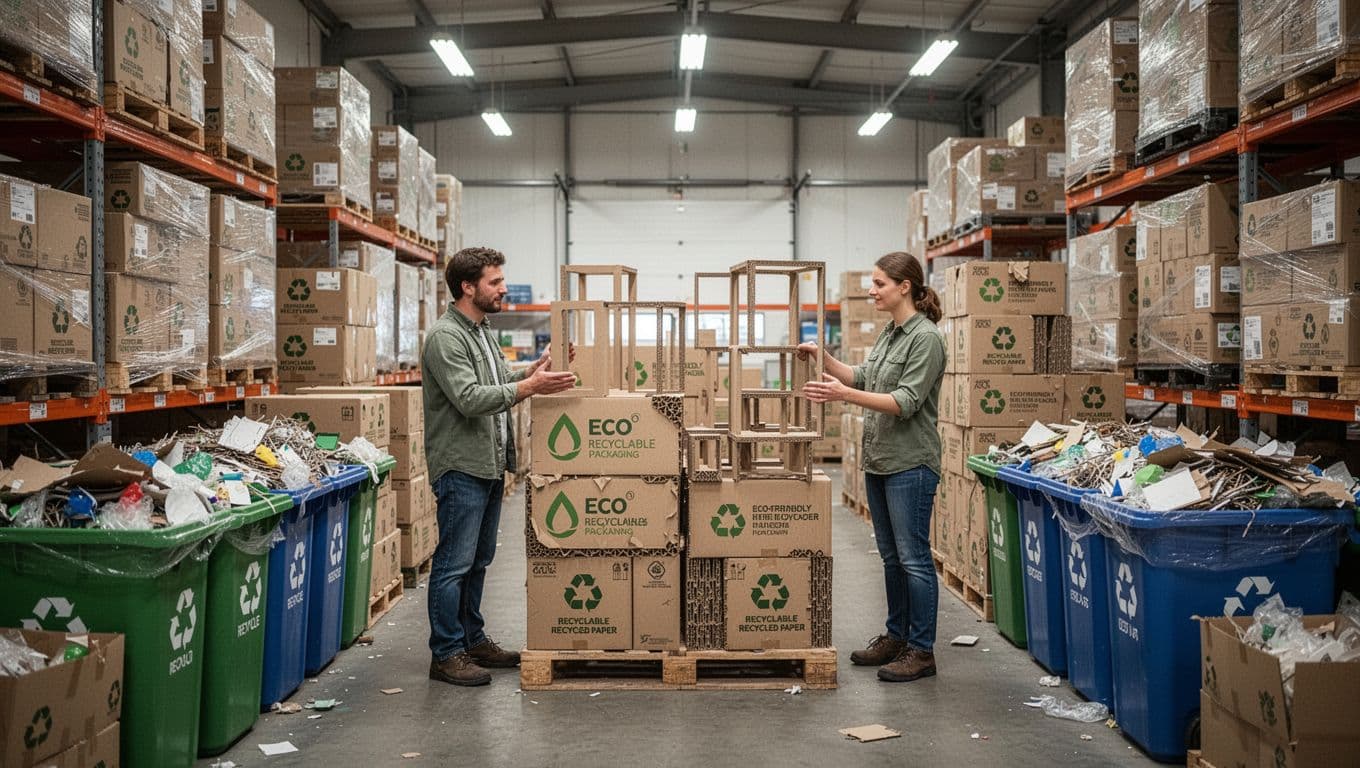
Sustainability feels like a simple request until you try to prove it. Customers want “less plastic” and “recyclable,” while regulators and retailers want documentation. Meanwhile, rules like Extended Producer Responsibility (EPR) continue to expand, which adds fees and reporting requirements in some markets.
A major trap is vague language. “Eco-friendly” sounds good, but it’s hard to defend. Another trap is switching materials without testing. A thinner board might lower weight, but if it increases damage in transit, your footprint and costs can climb. There’s also the recycling reality problem: a package can be technically recyclable, yet still end up as trash if local systems can’t process it.
Trust matters here. Recent consumer research shows skepticism is common, with about 66% of shoppers doubting whether brands’ green efforts are honest. That means the bar is higher than a nice-looking icon.
Low-risk moves that often work across categories include:
Lightweighting, right-sizing, adding recycled content where feasible, simplifying structures (fewer layers and mixed materials), and printing clear disposal guidance. These steps also connect directly to shipping emissions, especially when packaging size and weight inflate freight. For more context, see how sustainable packaging reduces shipping impact through smarter material and design choices.
Choose changes you can measure, not just market
Sustainability goals stick when you can track them with plain numbers. Otherwise, they turn into debates and redesign loops.
Pick improvements you can verify, such as:
- Weight reduction per unit (grams saved per pack)
- Recycled content documentation from suppliers
- Fewer components (for example, removing a plastic window)
- Lower damage and return rates after the change
A simple scorecard keeps teams aligned. Track four fields for each packaging revision: material weight, damage rate, cost per shipped unit, and end-of-life path (recycle, compost where accepted, landfill likely).
Be careful with bold claims unless you can back them up. Supplier letters help, but testing often matters more. If you’re considering biodegradable options, remember performance and end-of-life conditions vary widely. This guide on biodegradable packaging benefits and limitations is a good reminder that “breaks down” depends on where it ends up.
Design for real-world recycling and reuse, not best-case scenarios
Designing for best-case recycling is like packing for perfect weather. It feels optimistic, but it rarely matches reality.
Instead, aim for choices that make sorting and processing easier:
Use fewer mixed materials, choose labels that peel cleanly, and avoid hard-to-separate laminations when you can. If resin IDs or material markers fit your format, keep them clear and unobtrusive. For some products, refill or concentrate packs can reduce material use, but only if the customer experience stays simple.
QR codes can help, especially for disposal instructions that vary by location. Keep the on-pack message short, then let the QR code carry the details (how to recycle, what the materials are, and where to learn more). That approach reduces clutter while giving careful shoppers the transparency they want.
Supply chain surprises and rising costs can break a packaging plan overnight

Even the best packaging plan can collapse when materials do not arrive. In 2026, disruption comes from lead time swings, shifting trade rules, tariffs, minimum order quantities, freight volatility, and sudden demand spikes (especially for e-commerce protective packaging) that quickly expose the contract packaging bottlenecks hidden in your line.
Recent trade surveys show tariff changes are a top headache, with about 72% of trade professionals calling them the biggest source of disruption. On top of that, freight costs rose roughly 3.5% in 2025 and are expected to keep moving up. Packaging also sits in the crossfire of sustainability demand, because some “preferred” materials can be harder to source at stable prices.
The business risks are blunt:
Stockouts when you can’t get cartons or labels, overbuying when you panic and place huge orders, cash tied up in slow-moving packaging, and last-minute substitutions that cause damage or quality complaints. When teams scramble, they also make compliance mistakes, like using outdated labels or incorrect country-of-origin statements.
A workable approach has three parts: visibility, backups, and forecasting based on real demand. If you use bundling and stabilization methods, it also helps to understand options like shrink packaging for supply chain efficiency, since better load stability can reduce damage and rework.
Get cost clarity per unit, then cut the waste you cannot see
Packaging cost is not just the invoice for boxes. The true cost per shipped unit includes:
Materials, labor to pack, damage and returns, freight impact from size and weight, and storage space. When you measure only material cost, you might “save” a cent and lose a dollar elsewhere.
Start with one product line for 30 days. Track the real numbers, then look for waste hiding in plain sight. Common quick wins include:
- Right-sizing shippers to reduce dimensional weight charges
- Reducing void fill by changing box sizes or inserts
- Adjusting case counts to improve pallet density and stability
These changes are boring in the best way. They don’t require a new brand look, yet they often cut freight and damage at the same time.
Reduce risk with dual sourcing and smarter inventory triggers
Single sourcing feels efficient until it isn’t. Dual sourcing adds a little admin work, but it can save a launch.
Keep it simple:
Qualify a second supplier for your most critical components (usually labels, cartons, and key films). Lock critical specs so both vendors build to the same targets, then run small pilot orders before an emergency forces a rushed change.
Next, shift from “push” ordering (guessing) to “pull” signals. Set reorder points tied to sales and lead times, and review them monthly. Safety stock should live where it protects revenue, not where it makes someone feel better. For slow movers, consider smaller, more frequent orders if pricing and MOQs allow.
Conclusion
Most Packaging Challenges in 2026 trace back to three themes: how work moves across teams, whether sustainability claims are provable, and how flexible your supply plan is when costs jump or materials disappear. Fixing them doesn’t require a perfect system, it requires clearer decisions and fewer handoff mistakes.
This week, keep it simple:
- Map your packaging workflow and name one decision maker.
- Create one spec sheet for a top-selling component.
- Calculate true cost per shipped unit for one product line.
- Pick one sustainability metric to track (weight per pack is a good start).
Small changes compound. Over time, you’ll see fewer errors, lower costs, and faster launches, which is the kind of progress everyone can feel. Consistency beats chaos, every quarter of the year.
