
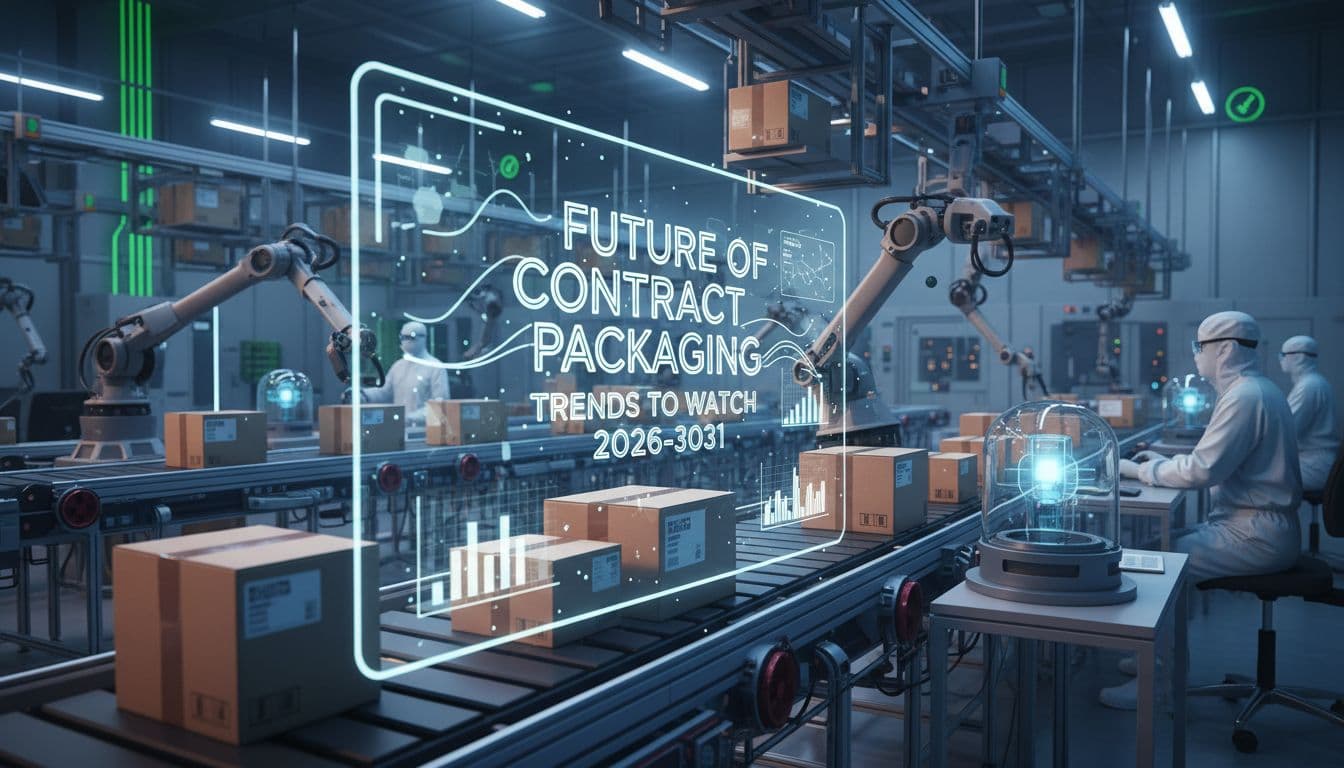
Future of Contract Packaging: Trends to Watch From 2026 to 2031
If you’re planning product launches for the next few years, packaging might feel like the part that should be “easy.” Pick a box, print a label, ship it out. In 2026, that mindset breaks fast.
Retailers want proof of sustainability, customers expect fewer damages and better unboxing, and budgets don’t leave room for rework. At the same time, labeling rules and traceability expectations keep tightening across industries.
That’s why Contract Packaging is getting more strategic. It’s not just an outside partner that packs products. It can also kit, label, assemble, re-pack, and prep goods for retail and e-commerce.
This article looks ahead to 2031 with practical trends and plain-language advice. You’ll see what’s changing on packaging lines, what to ask partners, and how to prepare without overbuilding or overspending.
Sustainability moves from a nice-to-have to a must-have
Sustainability used to be a marketing bonus. From 2026 to 2031, it’s becoming a requirement with receipts. Retailers and major marketplaces are asking for clearer material specs, recyclability claims, and packaging reductions. Regulators are also moving in the same direction, which raises the cost of guessing wrong.
For brands, the shift is simple: “We’re trying” won’t pass procurement reviews anymore. Buyers want measurable changes such as lower material weight, higher recycled content, and fewer mixed materials. Co-packers feel this pressure too. They need approved suppliers, validated material substitutions, and documented handling practices so sustainable packs perform like the old ones.
Day to day, this changes how a packaging facility runs. Teams track materials more closely, store films and papers to protect quality, and tighten change control when switching substrates. You’ll also see more collaboration early in the project, because the best sustainability wins often come from design choices, not last-minute swaps.
A “greener” package that fails in transit isn’t greener. Damage, returns, and re-ships can erase the gain.
Packaging materials will get simpler, lighter, and easier to recycle
Expect more right-sizing, downgauging (thinner films), and mono-material structures that recycle more easily. Paper and paperboard formats keep growing, partly because they feel familiar to consumers and often fit curbside programs. At the same time, barrier needs still matter. A snack pouch that loses crunch, or a beauty product that leaks, becomes expensive fast.
Compostable options will keep a place, but usually in narrow use cases where compost access exists and the product fit is strong. Many brands will prioritize “recyclable in real life” over “compostable in theory.”
Tradeoffs will drive smarter conversations. A lighter pack can raise puncture risk. A mono-material film might need a different seal setting. A paper replacement may need coatings that affect recyclability. That’s why testing and clear specs matter more than promises.
Here’s a quick checklist of questions to ask a packager before changing materials:
- Performance: What drop, compression, and seal tests support this material choice?
- Shelf life: How does this structure affect barrier protection (oxygen, moisture, oils)?
- Sourcing: Are there dual suppliers, and what’s the lead time risk?
- Recycling reality: How will you describe end-of-life clearly, without risky claims?
- Run-ability: What line settings change, and what scrap increase should we expect at first?
If you need a refresher on service types and where material decisions get made, start with this overview: what is contract packaging.
Sustainability will also mean less waste inside the packaging line
Material choices are only half the story. Facilities will face growing pressure to reduce waste created during production, not just after a customer opens the box.
The biggest gains often come from unglamorous work: fewer changeover rejects, tighter forecasting to avoid obsolete labels, and better control of rework. Many co-packers are already tracking scrap by reason code (startup waste, changeover loss, mislabels, damaged product). From 2026 on, brands will ask for that data in plain terms.
Look for reporting that a non-engineer can read, such as:
- Scrap rate (percent of materials wasted)
- Yield (good units produced versus total input)
- On-time delivery (because late orders create last-minute air shipments)
Even case packing choices matter. Smarter pack-outs can reduce corrugate use, cut void fill, and improve pallet density. Less empty space is both a cost win and a sustainability win, because you ship more sellable product per truck.
Automation and smart data will reshape how co-packers run lines

Automation is no longer only about speed. Between 2026 and 2031, it’s about repeatability, labor stability, and quality you can prove. SKU counts keep rising, which makes quick changeovers and consistent checks more valuable than raw line rate.
The most practical automation shows up where fatigue and repetition cause mistakes: pick-and-place, case packing, palletizing, and long kitting runs. Vision systems and scanning also play a bigger role, because they prevent errors instead of catching them after the fact.
Some industries will push adoption faster. Pharma and medical packaging, for example, have strong traceability needs, and they often require tighter verification and documentation. Food and beauty follow closely because recalls and online reviews punish small errors.
A useful way to think about automation is this: machines protect consistency, while people protect adaptability. The best operations combine both, then use data to spot problems early.
Robots and cobots will take on repetitive work, people will shift to higher-skill roles
Robots work best when the task repeats with small variation. Case packing, palletizing, and carton loading fit well. Cobots can also help with assisted kitting, tote loading, and repetitive pick motions where human flexibility still helps.
Humans still win at complex hand assembly, troubleshooting, and new product setups. When a promo kit changes every month, people can adjust faster than hard tooling. That won’t change by 2031. What will change is the skill mix. More team members will run multiple stations, adjust settings, and verify quality.
Training becomes part of the automation plan, not an afterthought. Safety matters too, especially where cobots and people share space. Good partners will map safe zones, set clear escalation rules, and schedule pilot runs during lower-risk windows.
To avoid service disruption, automation rollouts work best when they follow three rules: start with one stable SKU, keep a manual fallback option, and measure success using simple metrics (throughput, downtime, defects).
If you’re evaluating outside support, this breakdown of top contract packaging services can help you match capabilities to your project type.
Better tracking and quality checks will catch issues sooner
From 2026 to 2031, “quality” will look less like final inspection and more like constant verification. Vision inspection checks label placement and presence. Checkweighers confirm pack counts. Barcode verification ensures the right label matches the right SKU. Batch and lot tracking tighten recall readiness.
The payoff is speed. When an issue appears, the team can pinpoint when it started, which lots are affected, and how to stop it. That beats broad holds and messy rework.
A simple example shows why this matters. Imagine a label roll gets loaded with a look-alike SKU, and the artwork difference is subtle. Without scanning, you might pack thousands before anyone notices. With barcode verification at the labeler and a camera checking match rules, the line stops after a few units. You save product, labor, and customer trust.
Digital records also make reporting cleaner. Brands can get quick summaries of exceptions, holds, and corrective actions, without waiting for a long email chain.
E-commerce, retail-ready, and subscription boxes will drive new packaging demands
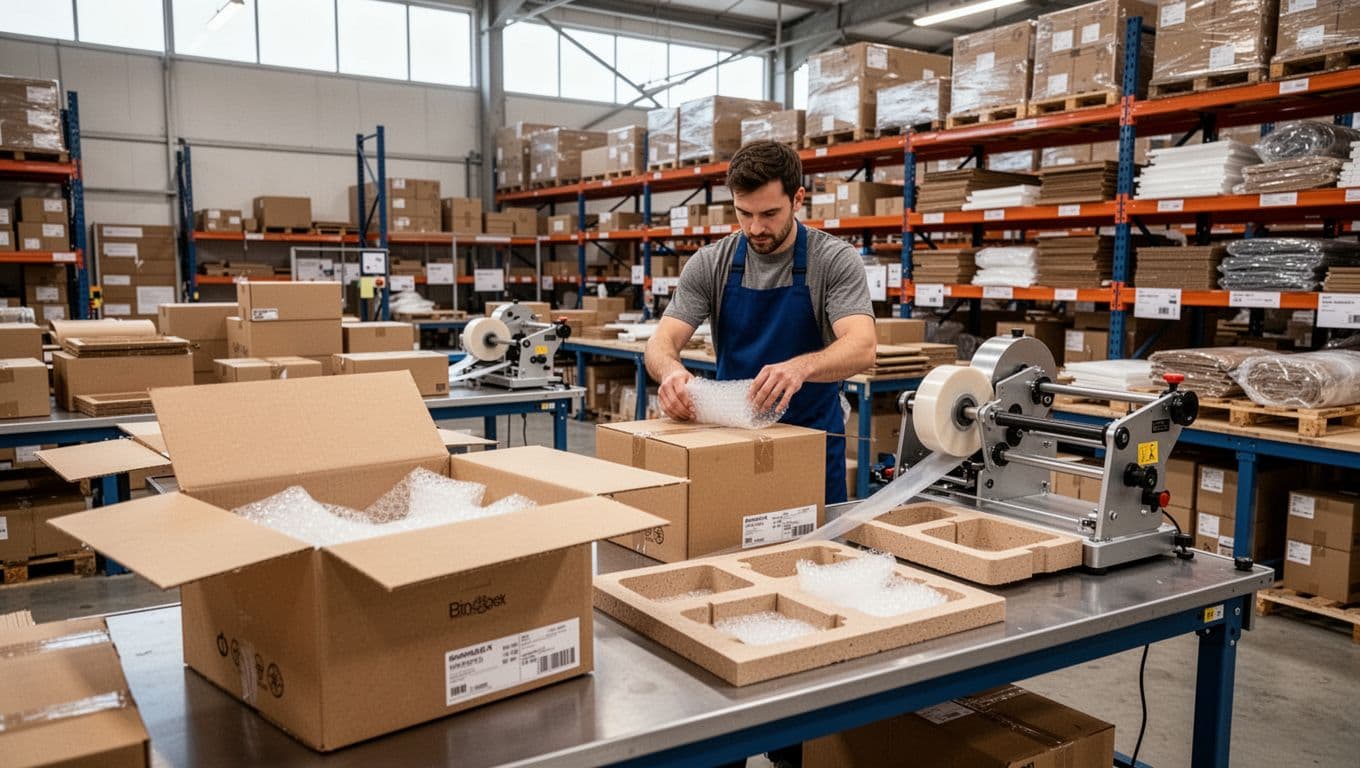
Shipping changes everything. A retail shelf is controlled, but a parcel network is not. Boxes drop, slide, stack, and sit in hot trucks. As a result, packaging has to protect the product through more handling steps, often with less margin for error.
At the same time, the unboxing moment still matters. Subscription brands and premium consumer goods rely on that first impression. The challenge is balancing protection, presentation, and material reduction, all at once.
Contract packagers are in a good spot here because they can handle mixed-format projects. One line might build a retail-ready tray, while another creates an e-commerce shipper with inserts and promotional materials. As online promotions keep speeding up, partners that can switch quickly will win more business.
Packaging will need to survive shipping without using a ton of extra material
More protection does not have to mean more waste. The best approach is smarter design. Right-sized boxes reduce void fill. Inserts hold items in place, which cuts scuffing and leaks. Better seals and tape patterns prevent pop-open failures. Stronger corrugate choices can also allow smaller boxes, which helps cube efficiency.
Testing becomes part of normal operations. Even basic drop testing, done consistently, can reveal weak points. If damage rates fall, you also reduce returns, replacements, and reverse logistics. That’s a sustainability story customers can feel, because fewer boxes show up twice.
A practical metric to watch is “damage per 1,000 shipments.” Pair it with pack-out time per unit. When both improve, you usually found a real design win, not a trade.
Short runs and fast promotions will become the norm
Limited editions, regional compliance changes, influencer bundles, and seasonal kits are pushing more projects into short runs. That trend is likely to keep growing through 2031. It’s also one reason the global co-packing market is projected to expand sharply by 2031, with estimates ranging roughly from the low $100 billions to near $200 billions depending on how it’s measured.
Short runs can be profitable, but only if the handoffs are tight. Flexible lines, digital print labels, and smart inventory planning help. Still, the biggest risk is confusion, not capacity.
To brief a packaging partner for short runs without costly mistakes, keep it simple:
- Clear specs: Bill of materials, pack-out pattern, counts, and ship labels.
- Approved samples: One “golden sample” kit that everyone signs off on.
- Change control: A single owner for artwork and spec changes, with dated approvals.
- Inventory rules: What can substitute, what can’t, and how leftovers get handled.
If you’re building a process for handing projects to an outside team, this guide on outsourcing contract packaging lays out a clean step-by-step approach.
How to pick a contract packaging partner that is ready for 2031

Trends are only useful if they change how you choose partners. A co-packer that’s “good today” can become a bottleneck by 2031 if they can’t prove sustainability progress, manage SKU complexity, or support fast promotions.
A simple evaluation framework keeps the decision grounded. Before the plant tour, align your team on what matters most. Then score partners the same way, even if the sales pitch feels different.
Here’s a quick way to structure the review:
| Area | What “ready for 2031” looks like | Proof to request |
|---|---|---|
| People | Cross-trained crews, strong supervisors, clear training plans | Training matrix, turnover trends, safety record |
| Process | Documented work instructions, controlled changeovers, clear scheduling | SOP examples, changeover checklist, production plan view |
| Equipment | Flexible lines, automation where it fits, maintained assets | Maintenance logs, uptime trends, line capabilities list |
| Quality | Verification built into the line, lot and label control, clean audits | Audit history, deviation logs, traceability demo |
| Communication | Fast answers, clear escalation, simple reporting | Sample KPI report, issue escalation flow |
The takeaway: pick the partner whose proof matches your risk profile, not the one with the prettiest slide deck.
If you’re weighing the business case, this article on the 7 advantages of contract packing is a helpful lens for cost, speed, and flexibility.
Questions to ask about capacity, flexibility, and risk
Ask these early, because they reveal how a facility behaves under stress:
- How do you handle demand spikes without dropping other customers?
- How fast can you add a new SKU, including label verification setup?
- What’s your backup plan for labor gaps and equipment downtime?
- How do you manage raw material swings and supplier constraints?
- How do you separate and protect customer inventory on site?
- Which KPIs will you report every week during launch?
Good answers sound specific. “We’ll figure it out” is a risk signal.
What good quality and compliance looks like, even outside of pharma
Quality systems shouldn’t slow you down. When they work, they prevent confusion and protect speed. Even if you’re not in pharma, the basics still apply across food, beauty, and consumer goods.
Look for documented processes, controlled label handling, and lot control that can trace inputs to finished goods. For food, sanitation and allergen control matter, even in secondary packaging environments. For any category, labeling checks should be routine, not optional.
Strong partners also welcome audits and handle corrective actions clearly. They don’t hide problems, they show what changed afterward. In practice, that transparency is what lets you move faster with less risk, because you’re not guessing what happened on the floor.
Conclusion
From 2026 to 2031, the future of co-packing comes down to four shifts: sustainability that’s measurable, automation paired with better data, packaging designed for shipping and unboxing, and smarter partner selection.
None of this requires guessing. It requires asking better questions and demanding clearer proof. When you treat packaging like part of the product experience, your launches get smoother, not harder.
This week, take one simple step: list your top three packaging pain points (damage, label errors, slow changeovers, high scrap). Then write your must-have capabilities for a partner and schedule a capability review. The brands that win by 2031 will treat contract packaging as a performance system, not just a last step before shipping.
