
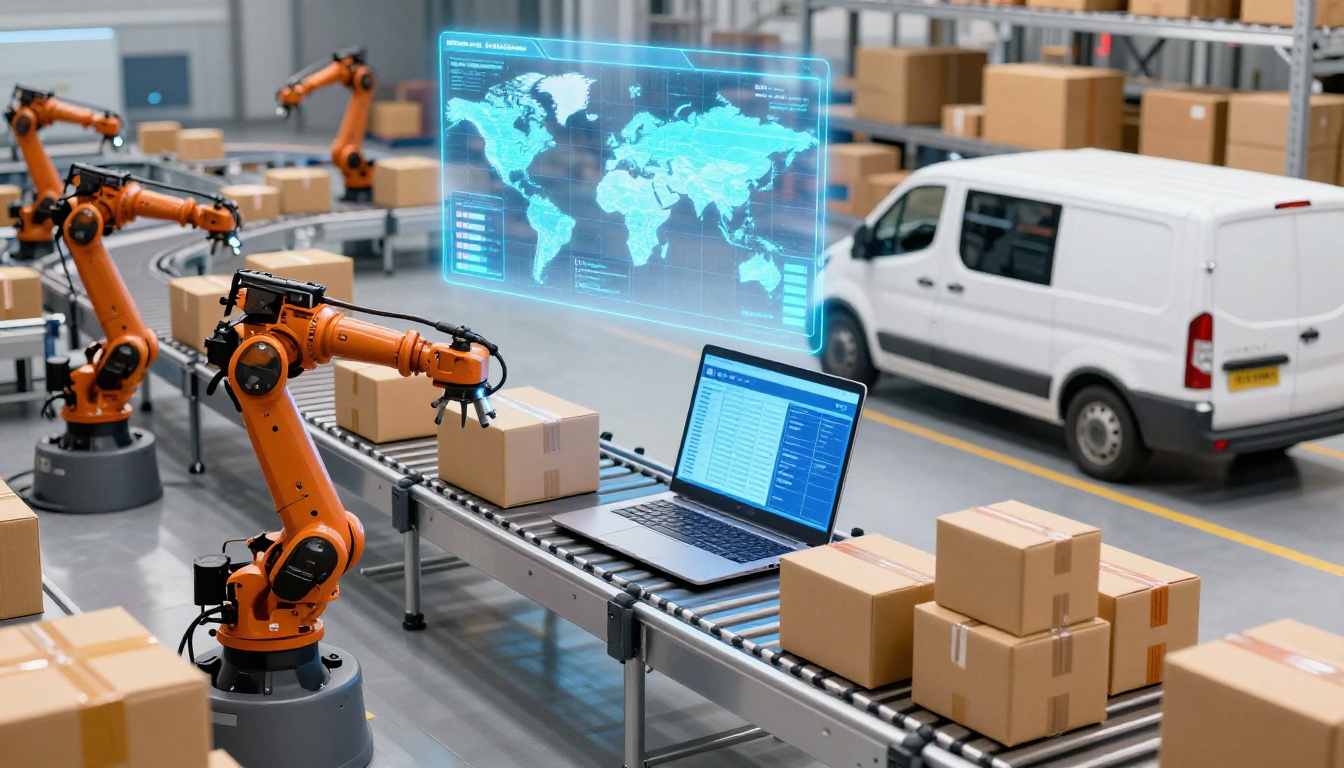
How E-commerce Growth Is Driving Packaging and Fulfillment Demand
Online shopping keeps climbing in 2025 and 2026, and the numbers are hard to ignore. Global e-commerce sales are expected to reach about $6.42 trillion in 2025 and roughly $6.88 trillion in 2026. In the US, online sales are also projected to rise, from about $1.47 trillion to $1.62 trillion.
That growth means more than higher order counts. Every online purchase creates packaging and fulfillment work, from choosing the right materials to protect the product, to picking, packing, and shipping it on time. As a result, brands need systems that can keep up without driving up errors, damage, or delays.
At the same time, customer expectations keep rising. People want fast delivery, accurate orders, low damage rates, and a better unboxing experience, all at once. That’s why integrated packaging and fulfillment solutions matter more as e-commerce grows.
This shift isn’t just about volume. It’s changing what brands need from packaging partners and fulfillment providers, especially when speed, flexibility, and consistency all affect the customer experience.
More online orders mean more packaging decisions for every shipment
When online sales rise, packaging demand rises with them. More orders mean more corrugate, mailers, labels, inserts, tape, and protective materials moving through the operation every day. It also means more pack decisions at the item level, because e-commerce orders are rarely one-size-fits-all.
That’s the key shift. Shipping a pallet to one retail location is a very different job than shipping hundreds of single orders to homes. Each parcel needs the right pack design, the right materials, and the right presentation. For brands scaling online, packaging stops being a background task and becomes part of cost control, damage prevention, and customer satisfaction.
E-commerce packaging has to protect products through a tougher shipping journey
Retail shipments usually move in bulk. A brand might send a full pallet of cases to one store or distribution center, wrapped, stacked, and handled as a unit. In that setup, the product packaging often gets support from the pallet, the master case, and a more controlled freight path.
Direct-to-consumer shipping is rougher. A single item may move through conveyor systems, sort hubs, vans, porches, and changing weather before it reaches the buyer. That product no longer has the safety of palletized shipping. Instead, the shipping pack has to do the heavy lifting.

This is why retail packaging and e-commerce packaging often can’t be the same. A carton that looks great on a shelf may not survive parcel handling on its own. If the pack is weak, the risks stack up fast:
- More damage: Products shift, crush, leak, or break in transit.
- More returns: Even small cosmetic damage can trigger a refund request.
- More complaints: Customers blame the brand, not the carrier.
- More replacement costs: A bad pack often creates a second shipment and extra labor.
In practical terms, growing e-commerce volume increases demand for packaging that can absorb shock and stay secure from dock to doorstep. That usually includes cushioning, tamper-evident features, right-sized cartons, durable mailers when appropriate, and strong sealing that won’t pop open midway through the trip.
A simple rule helps here: the more touchpoints in the shipping path, the more important packaging design becomes. That’s one reason many brands turn to contract packaging for e-commerce growth when order counts start climbing and packaging errors become more expensive.
In e-commerce, the package is not just a container. It’s the product’s armor for the last mile.
Right-sizing and lightweight materials help control shipping costs
As parcel volume grows, shipping cost gets harder to ignore. A few cents of waste per order may seem small, but across thousands of shipments, it turns into a real margin problem. That’s why packaging decisions affect freight spend just as much as material spend.
Oversized boxes are a common issue. They take up more space in trucks, invite higher dimensional weight charges, and require extra filler to keep products from rattling around. In other words, you pay more to ship air. You also spend more on corrugate, void fill, and labor.

Right-sizing fixes a lot of that. When the box or mailer fits the product better, brands can reduce wasted cube, lower filler use, and improve pack consistency. The package feels tighter, cleaner, and usually travels better because the item has less room to move.
Smarter pack design often includes:
- Right-sized cartons for common order profiles
- Lightweight materials that cut weight without losing strength
- Flexible packaging for soft goods or non-fragile products
- Better insert design so products stay in place with less filler
- Mailer options that replace boxes where protection needs are lower
The goal isn’t to use the least packaging possible. The goal is to use the right packaging for the actual shipment. A fragile glass item needs a different answer than apparel, books, or bagged consumer goods. When brands match material choice to product risk, they can lower freight costs without inviting more damage.
For teams trying to balance shipping spend and protection, a strong 3PL packaging services guide can help clarify where packaging choices save money and where cutting too far creates problems.
Packaging now plays a bigger role in the customer experience
In e-commerce, the box is often the first physical touchpoint a customer has with the brand. Before they try the product, they judge the delivery. Was it crushed? Was it hard to open? Did it feel messy or well thought out? Those details shape trust fast.
Good e-commerce packaging doesn’t need to be flashy. It needs to feel intentional. That can mean an easy-open tear strip, a neat product presentation, a branded insert, or a return flow that doesn’t create friction. Clean execution matters more than excess.

A few packaging choices tend to have an outsized effect on customer perception:
- Easy opening: Customers notice when a box opens cleanly and safely.
- Order presentation: A tidy layout makes the product feel more premium.
- Useful inserts: Simple branded inserts or instructions add clarity.
- Simple returns: Re-close features or clear return packing help reduce frustration.
Social sharing also plays a role, but it doesn’t have to be overhyped. If packaging looks clean and arrives in good shape, some customers will post it. More importantly, they are more likely to order again. That’s the real value. Packaging influences repeat purchase behavior because it affects how reliable the brand feels after the sale.
Put simply, e-commerce growth creates more than shipping volume. It creates more moments where packaging shapes the outcome, from freight cost to damage rates to whether the customer wants to come back.
Customer expectations are raising the bar for fulfillment operations
As e-commerce grows, fulfillment is no longer a back-room task that customers never think about. It shapes the buying experience in real time. If an order ships late, arrives wrong, or disappears in tracking, the customer blames the brand, not the warehouse.
That shift changes the job. Brands now need fulfillment that is fast, accurate, and visible from the moment an order is placed to the moment it lands at the door. In other words, fulfillment has become part of brand reputation, and weak execution shows up fast in reviews, support tickets, and lost repeat sales.
Fast shipping expectations leave less room for error
Many shoppers now expect quick delivery as the baseline. Same-day or next-day shipping used to feel premium. Now, for many products, it feels normal. Buyers also want narrow delivery windows and real-time updates, so they know when a package is moving, when it is delayed, and when it will arrive.
That puts pressure on every part of the operation. Orders have to move from click to carrier handoff with very little wasted time. A slow pick path, poor warehouse layout, or late carrier pickup can throw the whole promise off. What looks like a small delay inside the building often turns into a missed delivery outside it.

Fast shipping depends on a few operational basics working together:
- Order processing speed: Orders need to drop, release, and reach the floor quickly.
- Warehouse layout: Popular items should sit where pickers can reach them fast.
- Labor planning: Teams must match staffing to order volume by hour, not just by day.
- Carrier coordination: Pickup times, label creation, and service selection all matter.
Recent market signals make this pressure hard to ignore. Shoppers increasingly expect same-day or next-day options, clear tracking, and pickup flexibility during busy periods. When those expectations are missed, trust drops quickly. A late package is not just a logistics problem. To the customer, it feels like a broken promise.
That is why many brands look for reliable online order fulfillment when order counts rise. Speed is no longer just an efficiency metric. It is part of how customers judge whether your business feels dependable.
Fast delivery wins attention, but reliable delivery keeps trust.
Order accuracy matters just as much as speed
Shipping fast does not help much if the box contains the wrong item. A wrong size, wrong color, wrong quantity, or wrong shipping label creates an instant problem. Then the brand pays twice, once to fix the order and again in customer frustration.
At low volume, a small error rate can hide in the background. At high volume, it becomes expensive fast. Even a 1% error rate turns into a steady stream of returns, reships, refund requests, and poor reviews when hundreds or thousands of orders move each week. That is why e-commerce scale raises the value of accuracy so sharply.
The most common fulfillment mistakes sound simple, but the ripple effect is not:
- Wrong item picked: The customer cannot use the order, so a return or replacement follows.
- Wrong quantity packed: Missing units create complaints, while extra units eat margin.
- Wrong label applied: Parcels get misrouted, delayed, or delivered to the wrong person.
Accuracy matters because it protects both cost and reputation. When the floor team scans items, confirms counts, and checks labels before shipment, the business avoids preventable waste. It also keeps customer service from turning into a cleanup crew.
This is where strong process matters more than speed alone. Clear slotting, barcode scanning, quality checks, and live inventory data help teams catch mistakes before the box leaves the dock. Brands that need tighter control often benefit from end-to-end fulfillment services because one partner can own the flow from receiving to shipping and reporting.
For the customer, the standard is simple. The order should arrive fast, complete, and correct. If it does not, the brand feels careless, even when the mistake was small.
Peak seasons and promotions test how scalable a fulfillment partner really is
A normal week does not tell you much about true fulfillment strength. The real test comes when order volume jumps without much warning. That happens during holiday peaks, product launches, flash sales, and influencer mentions that suddenly drive traffic. What felt stable at 200 orders a day can break at 2,000.
When volume surges, small weaknesses show up fast. Picking slows down, pack stations back up, carrier cutoffs get missed, and inventory counts drift. Then delays pile up all at once. Customers do not grade on a curve during peak season, though. They still expect fast shipping, accurate orders, and clear updates.

Scalability usually comes down to three things:
- Flexible labor: Teams need a plan to add trained support when volume spikes.
- Inventory visibility: Real-time counts help prevent oversells and stock confusion.
- Strong processes: Standard work keeps quality from slipping when speed increases.
The stakes are high during peak periods. Online holiday sales continue to set records, and those spikes put real strain on fulfillment operations. If a partner cannot absorb sudden demand without service breakdowns, the brand feels the impact right away in late shipments, canceled orders, and support volume.
That is one of the biggest reasons companies turn to outside fulfillment support. A scalable partner gives brands more room to handle demand swings without rebuilding the whole operation every time sales jump. When growth is unpredictable, extra capacity is not a luxury. It is part of protecting the customer experience.
Why brands are turning to specialized packaging and fulfillment partners
As e-commerce grows, many brands hit a wall. Order mix changes fast, packouts get more complex, and the work behind each shipment starts to sprawl. What worked for a simple SKU line often breaks down when bundles, promos, retail compliance, and direct-to-consumer orders all collide.
That is why more companies outsource to specialized partners. The goal is simple, reduce moving parts, speed up execution, and keep service levels steady while the business grows.
Co-packing and kitting help brands move faster with more complex orders
E-commerce rarely stays simple for long. A brand may need single-item orders one week, gift bundles the next, then a seasonal promo pack or subscription run right after that. Add retail display builds or club-store packouts, and in-house teams can get stretched fast.
Specialized partners make this easier because they are built for changing pack configurations. With co-packing support and partner selection guidance, brands can handle multi-SKU bundles, short-run promotions, and mixed channel needs without rebuilding their operation every time the offer changes.

Kitting also helps control chaos. Instead of picking separate items for every order, teams can pre-build common sets and move them faster. That matters during holidays, launches, and limited-time offers, when speed and accuracy can slip at the same time.
When order complexity rises, the right packaging setup saves more than labor, it protects accuracy and timing too.
Integrated warehousing, fulfillment, and transportation can reduce handoff delays
Every extra handoff creates another chance for delay. If storage sits in one place, packaging in another, and shipping coordination somewhere else, small slowdowns stack up quickly. Inventory gets harder to track, communication gets slower, and response time suffers when volume spikes.
When those services work together under one roof, brands gain tighter control. Fewer touchpoints usually mean fewer errors, cleaner inventory visibility, and faster movement from receipt to shipment. For companies that need that kind of coordination, distribution and fulfillment services can support both speed and day-to-day visibility.

This setup also helps when demand swings. A partner that sees inventory, packaging status, and outbound shipping in one flow can react faster than a chain of separate vendors passing updates back and forth.
The right partner helps brands balance cost, quality, and service
Outsourcing only works when the provider can protect the customer experience. Low cost means little if orders ship late, arrive damaged, or inventory counts drift. That is why brands should look for a partner with strong basics and room to grow. To judge that tradeoff honestly, it helps to calculate contract packaging ROI by comparing your fully loaded in-house cost against the full outsourced cost.
A good provider usually stands out in a few areas: inventory accuracy, on-time shipping, consistent packaging quality, and the ability to support both retail and D2C orders. It also helps to have clear reporting, solid system integration, and enough labor and space to scale during busy periods.
In short, the best partner is not just a warehouse or pack line. It is an operational extension of the brand, one that helps reduce complexity without lowering standards.
The biggest trends shaping packaging and fulfillment in 2026
E-commerce growth is still the main force behind packaging and fulfillment change in 2026. More orders mean more packs, more picks, more returns, and far less room for waste or delay. As a result, the most important trends are not flashy extras. They are practical shifts that help brands ship faster, reduce cost, and keep customers happy after the buy button is pressed.
Sustainable packaging is moving from a nice-to-have to a business need
Sustainable packaging is no longer just a brand statement. It’s becoming part of day-to-day e-commerce operations because shoppers expect less waste, and rules around packaging claims, recycling, and producer responsibility are getting tighter.
Brands are responding with changes that work in the real world. That includes recyclable paper mailers, higher recycled content, lighter packs, and right-sized boxes that use less material without giving up protection. Instead of shipping empty space, teams are designing packs that fit the product more closely and move through parcel networks with less damage.
Those choices matter for a few simple reasons:
- Lower waste: Less filler, fewer extra layers, and smaller boxes mean less trash at the doorstep.
- Better brand trust: Customers notice when packaging feels thoughtful instead of excessive.
- Easier compliance: Simpler materials and clearer disposal paths reduce risk as packaging rules get stricter.
- Lower shipping cost: Lighter, tighter packs often cut dimensional weight and material spend at the same time.
Not every “green” option works equally well, though. In e-commerce, recyclable formats often beat harder-to-process materials because they are easier for customers to deal with after unboxing. For brands trying to make practical changes without overpromising, this guide to sustainable packaging best practices 2026 is a useful next step.
Automation and AI are helping teams keep up with rising order volume
As order counts rise, manual processes start to crack. A few extra minutes per order may not sound serious, but across hundreds or thousands of shipments, that drag adds up fast. That’s why automation and AI are moving deeper into fulfillment, especially in the parts of the job that repeat all day.
On the floor, automation helps with picking, sorting, scanning, and packing. In planning, AI helps teams see inventory more clearly, forecast demand, and decide where labor and materials should go next. The goal is not to replace people. It’s to help people make faster, better decisions when volume climbs.
A practical example is packaging choice. Instead of defaulting to one box size, systems can recommend the best pack for the item, based on size, fragility, and shipping cost. That reduces material waste and keeps pack stations moving. The same logic helps with replenishment, so fast-selling SKUs do not run out at the worst time.
A few areas are seeing the biggest payoff:
- Inventory visibility: Real-time stock data helps prevent oversells and stock confusion.
- Demand forecasting: Teams can plan ahead for spikes tied to promos, seasonality, or new launches.
- Picking and packing accuracy: Scanning and guided workflows reduce common order mistakes.
- Real-time tracking: Better shipment visibility cuts support tickets and keeps customers informed.
This is less about hype and more about control. When workflows are smarter, warehouses can handle more volume without turning every sales spike into a fire drill. For a closer look at where this is heading, Innovations in E-Commerce Fulfillment offers a useful view of current fulfillment technology trends.
In 2026, the strongest fulfillment operations are not the ones doing the most by hand. They are the ones removing guesswork.
Smart packaging and easier returns are becoming part of the post-purchase experience
The package now does more after delivery than it used to. In 2026, smart packaging features are showing up in simple, customer-friendly ways, especially through QR codes, better tracking tools, and basic authentication features that help confirm the product is real.
For shoppers, this can mean scanning a code to see care instructions, recycling guidance, product details, or order support information. For brands, it creates a cleaner link between the physical box and the digital customer experience. That matters because the post-purchase phase is where trust either grows or slips.
Returns are part of that same picture. More brands are using packaging that makes returns easier, such as re-close mailers, built-in return strips, and clearer instructions inside the pack. A smooth return is not exciting, but it is memorable. If sending something back feels simple, customers are more likely to buy again.
The best return-friendly packaging usually does three things well:
- It opens without damage or frustration.
- It can be resealed quickly for the trip back.
- It gives the customer clear next steps.
That reduces friction for both sides. Customers waste less time, and brands get cleaner reverse-logistics flow with fewer repacking problems. If returns are becoming a larger part of your operation, this article on reverse logistics in e-commerce adds helpful context around packaging design and return handling.
Taken together, these trends point in one direction. Packaging and fulfillment are no longer separate back-end tasks. In 2026, they are tightly tied to cost, compliance, customer trust, and repeat sales.
Conclusion
E-commerce growth keeps raising the stakes for both packaging and fulfillment. More orders create more pressure to protect products, ship faster, stay accurate, cut waste, and handle spikes without losing control. At the same time, social commerce, higher return volume, and rising delivery expectations are pushing brands to build systems that can scale without driving up damage, delays, or costs.
That means packaging can’t be treated as an afterthought, and fulfillment can’t run on patchwork processes. Brands need the right box or mailer, strong packing standards, clear inventory visibility, and enough operational capacity to keep service levels steady. In other words, scalability now depends on how well packaging strategy and fulfillment execution work together.
If growth is on the horizon, now is the time to review whether your current setup can support it. For teams that need more flexibility as demand rises, efficient contract packaging for business growth can help close the gap between rising order volume and reliable execution. The brands that win won’t just ship more, they’ll ship smarter.
