
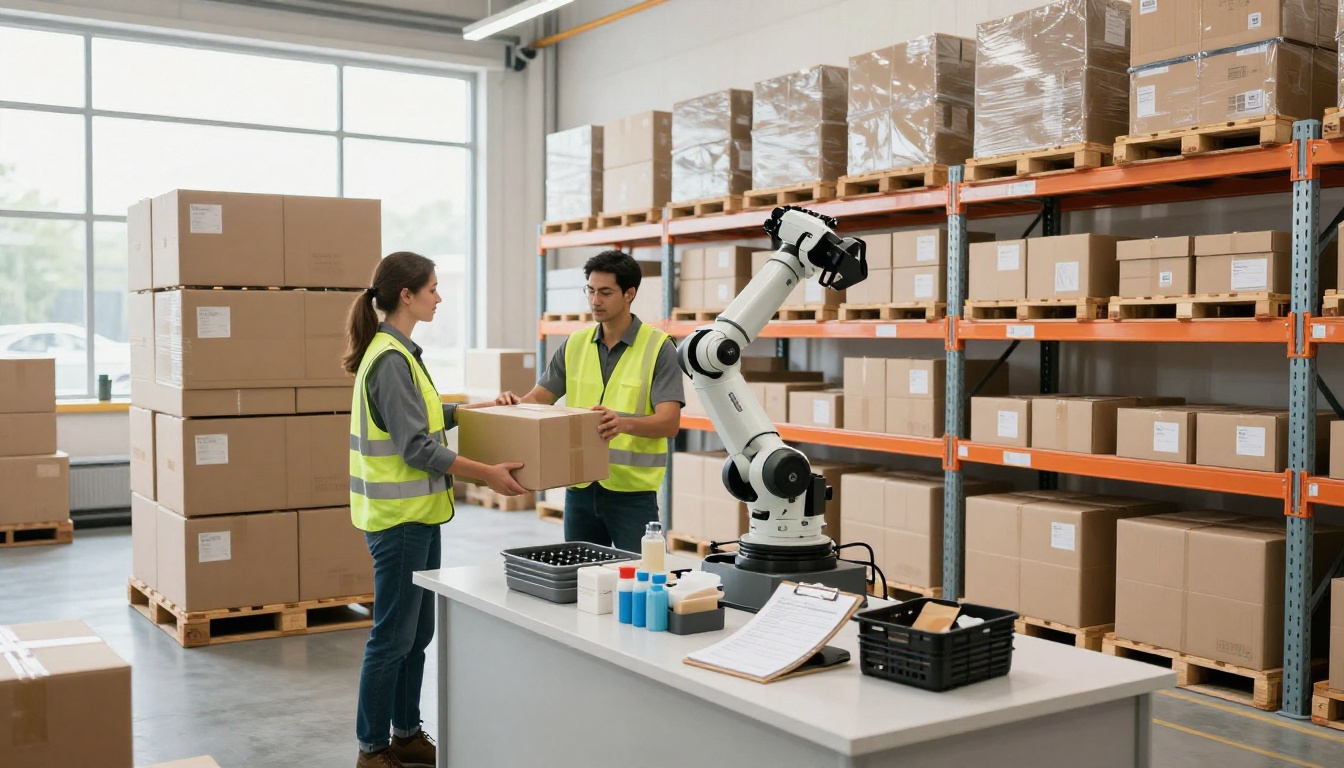
When Should You Outsource Your Packaging Operations? A Practical Decision Guide
Packaging rarely breaks a business overnight. It usually squeezes it slowly, with late nights, missed ship dates, and “just this once” quality slips that start showing up in returns.
Outsourcing packaging operations means hiring a contract packaging partner to handle work like packing, kitting, labeling, display builds, light assembly, and sometimes storage or fulfillment. You still own the product, the brand, and the standards. A partner runs the repeatable work at scale.
If you’re considering whether to Outsource Your Packaging Operations, this guide keeps it simple. You’ll see clear signs it’s time, when it’s smarter to keep packaging in-house, and how to test a partner without betting your whole operation on day one.
Clear signs your in house packaging is holding you back
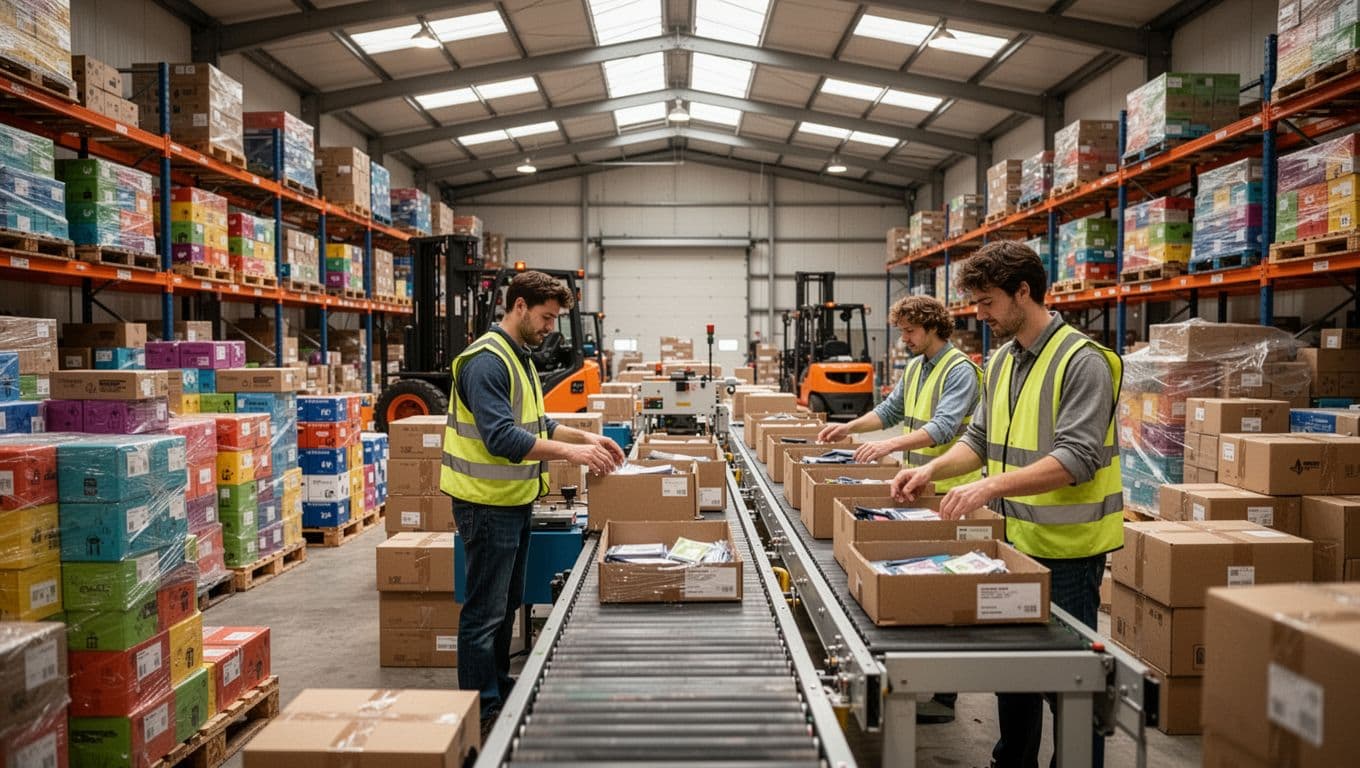
Most teams don’t wake up and decide to outsource. They get pushed there by real friction. Packaging becomes the narrow part of the funnel, even when sales and production are healthy.
A quick gut-check helps: if packaging work regularly steals time from sales, planning, and product development, you’re paying a hidden tax. The same goes for teams that keep “making it work” through overtime, temp labor, and rushed checks.
If you want a broader set of signals and tradeoffs, this resource on when to use a co-packer is a helpful companion to the decision points below.
If packaging is the reason orders ship late, you don’t have a packaging problem. You have a growth ceiling.
Your demand is spiky, unpredictable, or growing faster than your team can hire
Some demand patterns punish in-house packaging. Seasonal spikes are the obvious one, but there are others: retailer resets, influencer shout-outs, flash sales, and new SKU launches that hit harder than forecast.
When volume jumps, your options shrink fast. You add overtime, borrow people from other areas, or bring in temps who don’t know the work. Then quality checks get faster and looser because everyone is chasing the dock schedule. That’s how you end up with mixed lots, wrong labels, missing inserts, or case counts that don’t match.
Outsourcing helps because a packaging partner can scale labor and lines faster than most brands can hire, train, and supervise. You’re not building a bigger team for two hot months. You’re buying capacity for the window that matters.
The best fit is usually “variable work”: promo kits, variety packs, subscription builds, club packs, and short-run projects. Those jobs eat time because they change often, and every change raises the chance of mistakes.
You are running out of space, time, or the right equipment
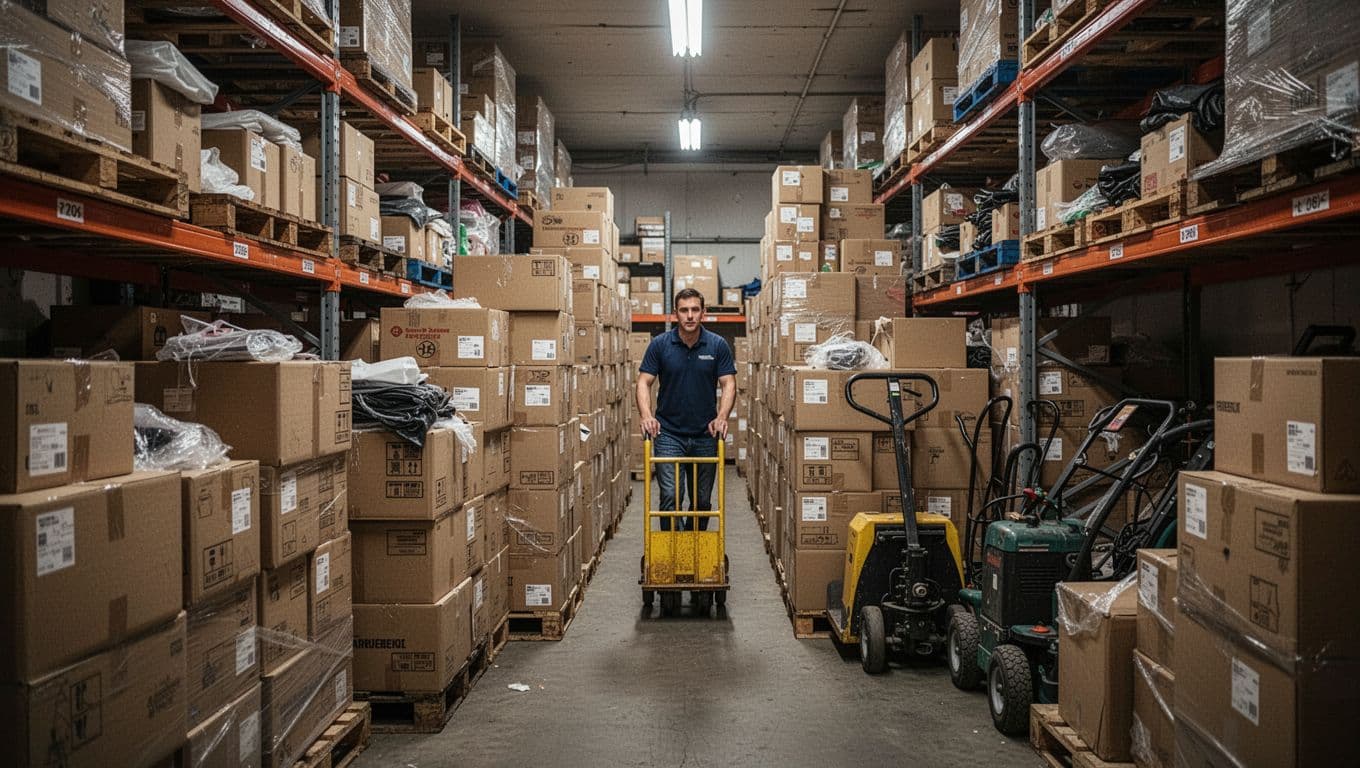
Space problems don’t look dramatic at first. A few pallets sit in the wrong place. Then aisles shrink, staging areas disappear, and the “temporary” overflow becomes permanent. Soon you’re spending more time moving product around than packing it.
Equipment creates a different trap. You might need a label applicator, a shrink tunnel, a date coder, or a faster case sealer. Buying it can make sense, until you realize it’ll sit idle between projects, or it’s the wrong size for your next SKU. Even worse, changeovers start taking longer than the run itself.
Outsourcing can cover the awkward, equipment-heavy needs that don’t justify a purchase, such as relabeling, rework, bundling, retail display builds, and fast changeovers across many SKUs. If you’re evaluating options in the area, this overview of contract packaging in Indianapolis gives a practical picture of common service types.
Cost and control, how to tell if outsourcing will save you money (or surprise you)
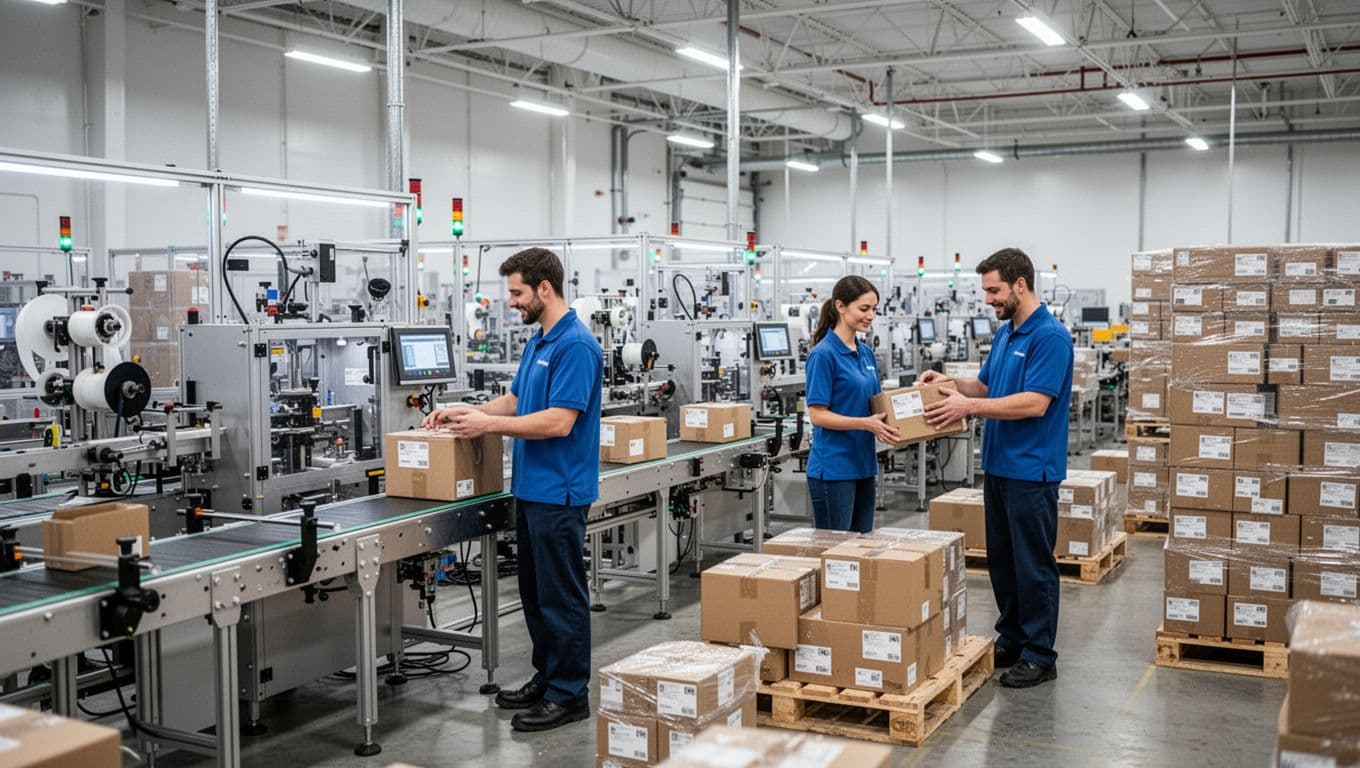
Outsourcing often lowers upfront costs. You avoid buying machines, adding supervisors, and expanding space. Still, it doesn’t automatically mean cheaper. The right question is, “What’s my total cost to get a correct, ship-ready unit out the door?”
This matters more in 2026 because contract packaging keeps growing. Market research firms estimate the global contract packaging market in the mid tens of billions of dollars in 2026 (often cited around USD 86 to 105 billion), driven by e-commerce volume, automation, and sustainability shifts. In plain terms, more brands are outsourcing because packaging has gotten harder to staff, harder to scale, and less forgiving when mistakes happen.
Compare total cost, not just the price per unit
Before you compare quotes, list every cost you carry today. A partner’s per-unit price might look higher, yet your real in-house cost might be higher once you count everything you’re currently absorbing.
Here’s a simple way to organize the comparison:
| Cost bucket | In-house, where it hides | Outsourced, what to ask |
|---|---|---|
| Labor and supervision | Wages, benefits, overtime, temp fees | Base labor rate, staffing flexibility |
| Training and turnover | Ramp time, mistakes from new hires | Who trains, how they document work |
| Equipment | Depreciation, repairs, downtime | Included or line-item charges |
| Space | Rent, utilities, congestion time | Storage fees, inbound scheduling |
| Quality and waste | Scrap, rework, returns | QC method, defect handling, credits |
| Changeovers and revisions | Lost time, new label approvals | Changeover fees, artwork update fees |
| Freight | Inbound materials, outbound finished goods | Freight terms, shipping lanes, pickup windows |
Two “gotchas” cause most surprises: minimums and special handling fees. Ask directly about rush jobs, changeovers, storage, labeling revisions, and any “project management” charges.
A basic break-even idea helps: stable, high-volume, same-SKU packaging often favors in-house once your line is efficient. Variable volume and frequent change often favors outsourcing because you’re not paying to keep excess capacity sitting around.
Know what you give up, and how to get it back with the right setup
The biggest fear is control. In-house means you can walk the floor and fix issues in minutes. With a partner, communication has to be designed, or you’ll feel blind.
You can still keep control, but you do it with structure:
- Clear packaging specs (pack-out, label placement, case counts, pallet pattern)
- “Golden sample” approvals (what “right” looks like)
- Simple SOPs and revision control (no mystery versions)
- Inbound checks on materials and labels
- Agreed quality checks (for example, AQL sampling) and defect reporting
- Service levels for on-time shipping, turnaround, and escalation paths
- A set reporting cadence (daily during launch week, weekly after stabilization)
Control also improves when packaging and shipping live under one roof. If you need storage and outbound coordination, it helps to align packaging with distribution and fulfillment services, so finished goods don’t bounce between vendors and schedules.
A simple decision framework, outsource, keep it in house, or use a hybrid model
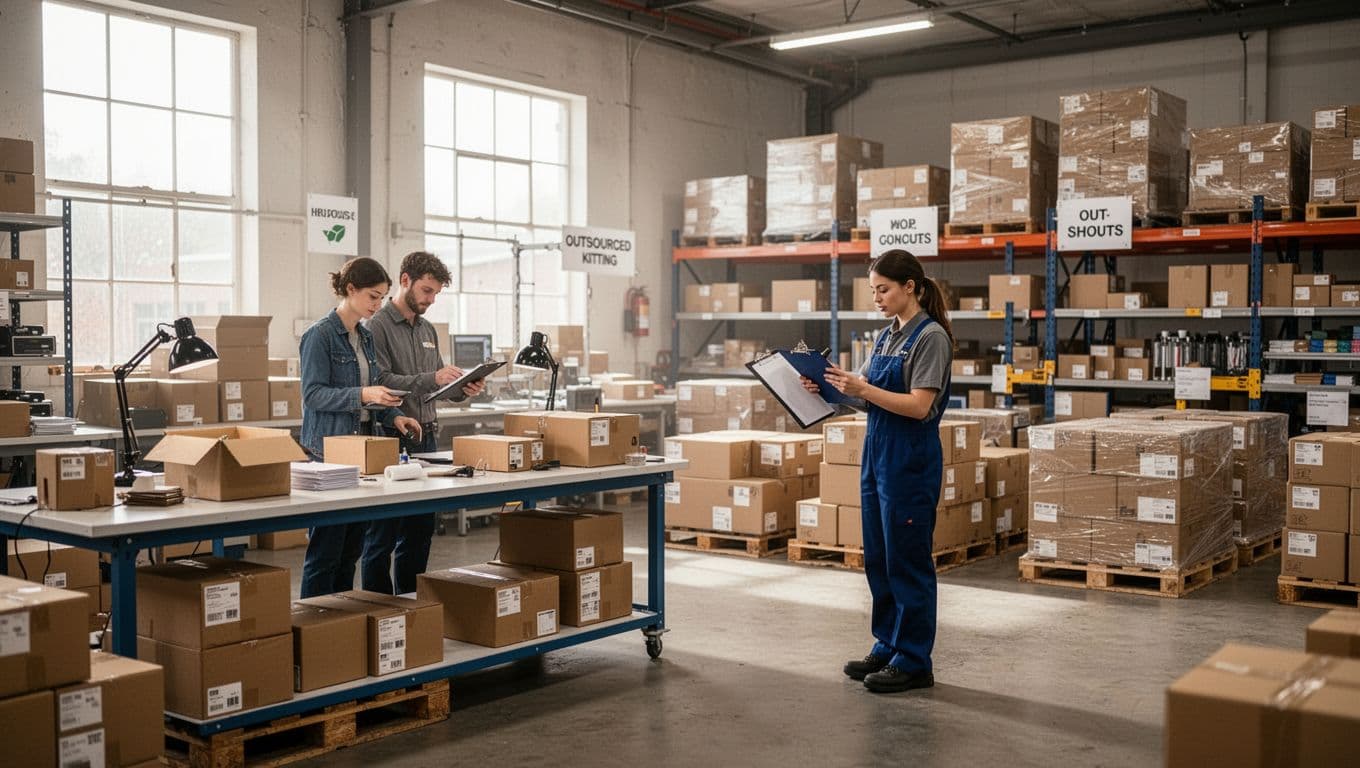
Think of this like choosing between owning a truck, renting one, or using a mix. Ownership gives control. Renting gives flexibility. A hybrid keeps a core route in-house and rents capacity when the calendar gets messy.
Use this “green light, yellow light, red light” scan. No spreadsheet needed.
- Green light (outsource): Your work changes often, demand swings, or you’re tight on space and labor.
- Yellow light (hybrid): One part of your packaging is stable, but promos, overflow, or rework keep disrupting it.
- Red light (in-house): You run steady high volume, with few changes, and tight on-site fixes are common.
If you’re deciding whether you need warehouse storage or a faster outbound hub, it helps to understand the difference between the two. This breakdown of warehouse vs distribution center differences makes that choice easier, especially if fulfillment is part of your plan.
The best model is the one that protects ship dates and quality, without forcing your team into constant overtime.
When outsourcing is the smarter move
Outsourcing tends to win when speed and flexibility matter more than owning every step.
- Frequent SKU changes: If every week brings a new pack-out, changeovers will eat your day.
- Promo kitting and bundles: Multipacks, gift sets, and variety packs take space and careful counting.
- Launches and pilot runs: You need fast output without buying equipment for an unproven SKU.
- Low or irregular volumes: Paying for a full-time crew doesn’t pencil out.
- Compliance labeling: If retailer labels, barcodes, or date codes must be perfect, a proven process reduces risk.
- Limited capital: You’d rather invest in inventory and growth than machinery and floor space.
A good partner already has trained crews, QA habits, and production rhythms in place. That reduces the “reinvent the wheel” pain that hits growing teams.
When you should keep packaging in house, at least for now
In-house packaging can still be the right call, especially when consistency and speed depend on being next to the product team.
Stable, high-volume lines often run cheapest internally once they’re tuned and staffed. The same is true when products need constant engineering tweaks, or when your team must adjust packaging daily based on production variation.
Security can be a deciding factor too. If you have strict IP controls, high theft risk, or sensitive product handling, keeping the work on your floor may lower risk.
In many cases, the best answer is “keep the core, outsource the chaos.” Run your main SKU internally, then outsource promos, retailer-specific packs, and seasonal builds.
How to start without risking your whole operation
A pilot is the safest way to outsource. Pick one SKU or one promo kit that represents real work, but won’t cripple you if the first run has bumps.
Set a short success list upfront:
- On-time rate (did it ship when promised?)
- Defect rate (label placement, missing parts, wrong counts)
- Throughput (units per hour or per shift)
- True cost (including freight and management time)
Plan the handoffs like a relay race. Decide who owns inventory at each step, how materials arrive, who approves label proofs, and what happens to leftovers, scrap, or off-spec units.
If your pilot involves staging and outbound shipping, align it with distribution center capabilities, so you can measure the full “pack to ship” cycle. This overview of a distribution center in Indianapolis shows what that end-to-end setup can look like.
Conclusion
The best time to outsource is when demand swings, space is tight, equipment needs pile up, or the real cost of in-house packing is higher than it looks. Start by totaling your costs, then write down your non-negotiables (quality, speed, compliance, and reporting). After that, choose an approach that fits your reality: outsource, stay in-house, or run a hybrid model.
A small pilot keeps the risk low and the learning high. If it hits your targets, you can expand with confidence. If it doesn’t, you’ll still walk away with clearer specs and a better handle on what your packaging operation needs to stay reliable.
