

How MSL Prepares Your Product for Retail Distribution
Moving a product from a manufacturer or brand warehouse into retail channels takes more than putting items in boxes. Missed deadlines, labeling errors, damaged goods, and incomplete orders can delay a launch, create chargebacks, and leave retail partners managing problems that should have been caught earlier.
Retail distribution requires the right packaging format, accurate labels, confirmed quantities, retailer-specific requirements, dependable fulfillment, and clear reporting at every stage. MSL COPACK + ECOMM’s retail packaging services help brands prepare products for store shelves while supporting the operational details behind each shipment. Based in Indianapolis, MSL provides contract packaging, assembly, fulfillment, retail EDI, B2B order processing, and D2C fulfillment for consumer brands and manufacturers.
Understanding How MSL Prepares Your Product for Retail Distribution starts with the complete workflow, not a single packaging step. The process includes planning, receiving, packaging, quality checks, inventory control, order coordination, and shipment preparation, with safety and accuracy built into the work. Next, we’ll look at how MSL manages each stage to help your products reach retail partners on time and in the condition expected.
What Retail Distribution Requires Before Product Ships
Retailers expect products to arrive retail-ready, correctly labeled, properly packed, and delivered within approved windows. Their distribution centers work against receiving schedules, inventory systems, and store replenishment plans. A shipment that arrives late, uses the wrong case configuration, or fails a labeling check can create delays, rejected freight, and chargebacks.
Before production begins, MSL reviews the details that connect packaging work with receiving, storage, fulfillment, and transportation. That early review gives the team a practical plan instead of leaving important decisions for the packing line.

### MSL reviews the product, packaging, and order requirements
The first step is to understand exactly what MSL will receive, assemble, store, and ship. The review covers each SKU, bill of materials, product components, packaging materials, dielines, case counts, pallet patterns, expected volumes, and sales channels. It also considers launch dates, replenishment frequency, lot tracking, shelf-life limits, temperature needs, and any special handling requirements.
Retailer instructions receive the same attention. Routing guides may specify carton dimensions, barcode placement, GTINs, labels, pallet height, packing slips, appointment rules, and shipping documentation. Federal labeling rules also apply to many consumer products. The National Institute of Standards and Technology explains that covered packages generally need the product identity, responsible business information, and net quantity in both U.S. customary and metric units. MSL’s review helps separate those baseline requirements from retailer-specific rules.
The team also looks for practical problems before work starts:
- Missing component specifications or unclear ownership of artwork approvals.
- Difficult assembly steps that may require fixtures, additional training, or quality checks.
- Packaging materials with limited availability, long lead times, or storage constraints.
- Volume estimates that exceed labor, equipment, dock, or floor-space capacity.
- Differences between the approved sample, production instructions, and retailer routing guide.
For example, a brand may supply separate shampoo and conditioner units for a promotional bundle. MSL must confirm the correct pairing, bundle count, barcode, film or carton format, lot requirements, and case configuration before operators begin. Brands that need help moving this labor-intensive work to a specialized partner can review MSL’s contract packaging and assembly services.
A clear specification should answer who supplies each component, who approves the finished pack, how quality is checked, and what happens when something does not match.
A clear plan connects packaging work to retail deadlines
Once requirements are confirmed, MSL can organize labor, materials, work instructions, storage locations, order cutoffs, and transportation coordination around the launch or replenishment schedule. The plan may include packing, labeling, kitting, inventory storage, order processing, and shipping preparation.
Receiving accuracy matters at this stage. Teams need to verify that incoming quantities, SKUs, and paperwork match the expected shipment. If damaged cartons or mismatched labels reach production, the error can spread into finished inventory and create rework later.
The plan should also account for peak demand, club-store promotions, multiple configurations, and changes to retailer requirements. A promotional surge may require extra labor or earlier material purchasing. Separate cutoffs may apply for different retailers, channels, or transportation modes.
Retail compliance guidance describes chargebacks as deductions tied to errors such as incorrect labels, documentation failures, damaged freight, or late delivery. MSL can use documented work instructions, training records, inspection points, and inventory controls to reduce those risks, while actual outcomes remain dependent on the program, materials, volumes, and retailer requirements. Retail compliance and chargeback guidance offers additional context on these vendor expectations.
How MSL Prepares Your Product for Retail Distribution
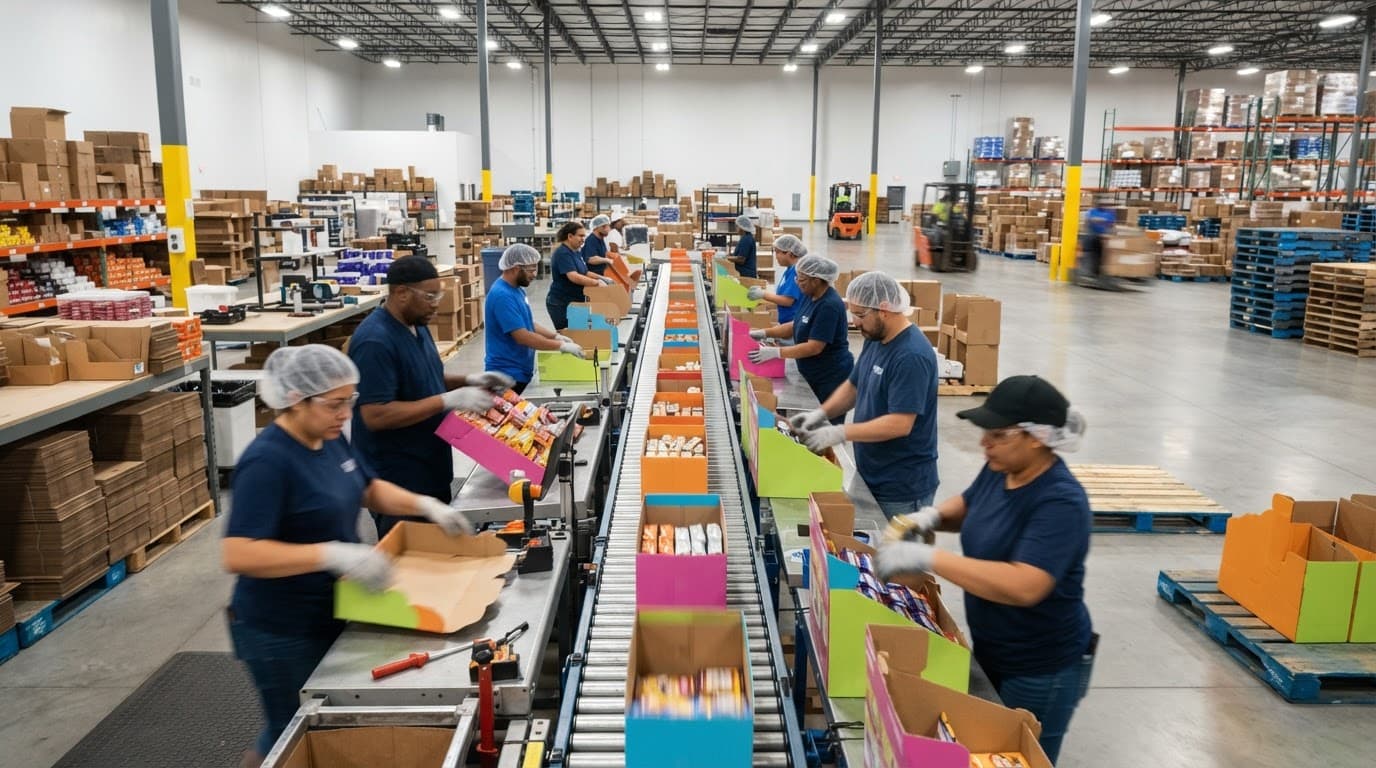
MSL manages retail preparation as a controlled process, not a single packing task. The workflow may include receiving components or finished goods, preparing the work area, following approved instructions, assembling units, checking finished goods, storing inventory, and fulfilling orders. The exact process depends on the product, sales channel, volume, and retailer specifications.
### Receiving and checking materials before assembly
Inbound receiving starts with a physical count and a comparison against the purchase order, packing list, and expected work order. MSL checks SKU numbers, lot information when required, packaging materials, and the condition of cartons or pallets before materials move into production.
Teams identify each component before separating materials by SKU, customer order, or work order. That organization prevents similar-looking items from being mixed and gives operators the correct materials for each job. It also helps reveal shortages early, before labor and equipment are committed to an incomplete assembly run.
Condition checks matter just as much. Crushed cartons, broken seals, moisture exposure, missing labels, or damaged product can create rework and affect the finished unit. MSL records inbound damage separately from warehouse damage and in-transit damage, so the source of the loss is easier to identify and correct.
After receiving, the team prepares the work area with the approved components, tools, labels, samples, and work instructions. Operators can then complete secondary contract packaging, raw component assembly, secondary assembly, or hand assembly with fewer interruptions. Suspect or nonconforming materials remain on hold until the appropriate person approves their disposition.
Building retail bundles, kits, displays, and promotional packs
Labor-intensive retail projects often involve more than one SKU. MSL may combine a shampoo and conditioner set, assemble a buy-one-get-one offer, build a club-store configuration, or prepare a seasonal promotional pack. The work may also include shrink-wrapping books, poly-bagging individual products, applying shrink bands, or filling a cardboard point-of-sale display.
A bill of materials identifies every item required for one finished unit. Work instructions explain the correct sequence, placement, orientation, seal, label, and case configuration. Together, these documents give operators a clear reference and give quality staff a standard for inspection.
For example, a promotional kit might require two books, one insert, a coupon, and a specific shrink-wrap finish. A missing insert or incorrect title can make the whole unit unsuitable for retail shipment. MSL’s retail packaging services support these multi-SKU projects alongside contract assembly and fulfillment.
Finished units receive checks for count, appearance, component accuracy, seal quality, and label placement. Approved inventory is then moved to the correct storage location, where SKU controls help prevent it from being picked for the wrong order.
Selecting packaging that protects the product and supports the sale
Packaging affects product protection, shelf presentation, handling, freight cost, and retailer acceptance. MSL may use shrink film, poly bags, cartons, display-ready packs, blister sealing, clamshells, or another format based on the product and channel.
A blister package uses a thermoformed pocket sealed to a backing card or foil. It works well when the product must remain visible, protected, and easy to hang. Clamshells may provide more rigid protection, while cartons can offer better stacking and branding space. Poly bags suit lightweight items, and shrink film can group products without adding much structure.
The team also considers clarity, toughness, barrier protection, recyclability, tamper evidence, and sealing requirements. Packaging must protect the item through distribution while leaving room for required product information and reliable barcode scanning. Brands should also review applicable packaging and labeling regulations before production begins.
Retail-Ready Labeling and Packaging Checks Prevent Costly Errors
A retail-ready product must arrive in the expected form, with readable labels, correct quantities, secure packaging, and every required insert or instruction. MSL uses approved samples, documented work instructions, and defined acceptance standards so operators don’t have to rely on visual judgment alone.
These checks cover more than the consumer-facing package. They can include unit labels, case labels, barcode placement, promotional messaging, country-of-origin information when required, and retailer-specific packaging rules. A small mismatch can cause a receiving delay, rework, or a chargeback after the shipment leaves the facility.
Barcode and label verification at pick and pack
MSL can use a two-point control model when a program requires scan verification. First, the operator scans products or components during picking. The system compares the scan with the work order and confirms that the selected SKU matches the order requirements before the item moves forward.
A second scan can occur during packing after the finished order or retail configuration is assembled. This check confirms that the completed unit, case, or shipment carries the expected SKU and quantity. If the scan does not match the work order, the order can be held for review instead of moving into shipping.

This second control helps reduce label swaps, especially when similar products share the same packaging format. It also catches errors that a quick visual check may miss, such as a barcode assigned to another size, flavor, title, or promotional bundle. GS1 barcode placement guidance provides a useful reference for keeping product barcodes positioned and printed for reliable scanning.
Checks may also confirm that the barcode remains unobstructed by shrink seams, tray walls, tape, or another label. Case labels need to match the contents, pack quantity, and retailer instructions. The same review can verify promotional claims, inserts, usage instructions, and country-of-origin information when the product or retailer requires them.
Handling missing inserts, mispicks, damages, and other exceptions
A strong exception log gives each problem a clear record instead of allowing it to disappear into informal conversations. MSL can document the SKU or work order, quantity affected, time, location, operator or process step, issue type, disposition, and corrective action.
The issue type should be precise. A mispick means the wrong product or component was selected. A wrong label means the label does not match the product, order, or packaging configuration. A missing insert may involve instructions, coupons, warranty information, or promotional material. Seal failures, damaged packaging, crushed cartons, leaks, scuffs, and other cosmetic defects should receive their own descriptions.
Nonconforming products remain on hold and away from shippable inventory until an authorized person decides whether to rework, relabel, replace, return, scrap, or release them. That decision protects the retailer from receiving questionable goods and keeps the disposition traceable.
Over time, exception records show where problems begin. Repeated shortages may point to receiving or storage. Wrong labels may start during assembly or packing. Seal failures can identify equipment or material issues, while crushed cartons may indicate handling or transportation damage. MSL can use that pattern to correct the process at its source and support dependable distribution and fulfillment services.
Quality Control and Inventory Accuracy Keep Retail Orders Reliable
Quality control continues after packaging is complete. MSL can combine in-process checks, finished-goods inspections, inventory controls, and performance reporting to catch issues before retail orders leave the facility. That discipline supports the shelf-ready packaging solutions retailers expect, while giving brands clearer answers when a shipment or inventory record needs review.
Cycle counts and inventory controls catch problems early
Cycle counting is a routine inventory check, not a once-a-year event. Instead of waiting for a full physical inventory, MSL can count selected SKUs, locations, or product groups on a schedule based on risk and program needs.
High-volume, high-value, lot-controlled, frequently picked, or historically inaccurate SKUs usually need more attention. A fast-moving retail item may require weekly checks, while a stable, low-risk item may fit a less frequent schedule. The right target should be agreed upon by SKU, customer, and service-level requirements. There is no single accuracy percentage that fits every program.
When a count differs from the inventory record, the team should investigate rather than simply adjust the number away. The process may include:
- Recounting the item and checking nearby locations.
- Reviewing receipts, picks, transfers, shipments, and other transactions.
- Confirming that similar SKUs were not stored or picked together.
- Correcting the record only with the required approval.
- Documenting the likely root cause and any follow-up action.
NetSuite’s cycle counting guidance also emphasizes recounting and reviewing variances as part of a controlled process.

### Lot control, FIFO, and FEFO support product traceability
Lot, batch, expiration, or production-date tracking matters when product age, formulation, or manufacturing history affects quality. Food, supplements, health and beauty products, medical items, and other date-sensitive goods may require these controls. The program should define which identifiers MSL records and where those identifiers appear on inventory and shipping documents.
FIFO, or first in, first out, uses older inventory before newer inventory. FEFO, or first expired, first out, prioritizes the product with the earliest expiration date. FEFO is often the better rule when expiration dates vary within the same SKU.
Approved lot controls help connect received materials to finished goods and customer shipments. As a result, traceability reports can identify affected units during a recall or answer a retailer’s question about production dates, quantities, and shipment destinations.
Root-cause actions make quality improvements stick
Reports are useful when they lead to a specific process change. A recurring wrong pick may call for a new storage location, clearer slotting, or an added scan step. A packaging defect may require different materials, revised work instructions, equipment maintenance, or staff retraining. Repeated carrier damage may point to stronger cartons or a changed carrier handoff process.
MSL can review order accuracy, inventory accuracy, damage rate, scan compliance, on-time shipment rate, and nonconformance rate in weekly summaries. Weekly review helps catch drift before it affects more orders. Monthly trend reviews then show whether corrective actions reduced repeat errors, rather than merely producing a short-term improvement.
From Indianapolis Fulfillment to Retail Delivery, MSL Coordinates the Flow
After products pass packaging and quality checks, the work shifts to storage, order release, picking, packing, and transportation. MSL connects those steps through one operating plan, reducing handoffs between separate packaging and fulfillment vendors. Its Indianapolis location supports regional and broader distribution programs without forcing brands to manage every movement independently.
Preparing cases, pallets, and displays for retailer requirements
A product can be physically complete and still fail a retail shipment requirement if its case or pallet setup is wrong. Case quantities must match the retailer’s purchase order, while cartons need the correct dimensions, strength, barcode, and label placement. Pallet patterns also affect stability, cube utilization, handling, and receiving speed.
MSL follows each retailer’s routing guide and packaging rules before releasing freight. Those instructions may define pallet type, maximum height and weight, stretch-wrapping method, carton labels, appointment procedures, and required shipping documents. A packing slip, bill of lading, advance shipment notice, or invoice may need to identify the purchase order, case count, pallet count, and product description.
Displays require the same discipline. Assembly instructions should define product placement, inserts, trays, graphics, and the final ship configuration. A display that looks correct on the worktable may still need additional protection for transit. MSL can prepare cases, pallets, and retail displays according to the approved requirements, while kitting and assembly services help keep multi-item configurations consistent.

### Managing retail EDI, B2B orders, and ecommerce fulfillment
Each order path carries different information and handling needs. Retail EDI orders may include purchase orders, order acknowledgments, shipment updates, routing details, and invoices. EDI isn’t one universal format, so each retailer can require different transaction sets, data fields, timing, and compliance rules.
Wholesale and B2B orders often depend on customer-specific pricing, case quantities, delivery instructions, and purchase order matching. D2C ecommerce orders usually require unit-level picking, protective packing, shipping-label creation, and direct shipment to the consumer. Inventory availability must remain accurate across all three channels.
MSL coordinates order release, pick confirmation, pack verification, shipment status, and exception communication. If inventory is short, a label fails inspection, or an order misses its cutoff, the issue should reach the right person before the shipment creates a larger problem.
Coordinating transportation and tracking shipment performance
Transportation planning begins with inbound movement to the facility and continues through outbound carrier handoffs. MSL can coordinate product, packaging materials, or finished goods moving between manufacturers, suppliers, the Indianapolis operation, and retail destinations. Its transportation services connect these movements within the broader fulfillment plan.
Retail shipments may require scheduled delivery windows, specific carrier instructions, or appointment confirmation. After handoff, tracking data helps confirm shipment progress and delivery. Damage reviews should compare product condition, carton strength, pallet configuration, stretch wrapping, and carrier handling rather than assigning blame without evidence.
Performance reports make recurring problems easier to find. A declining on-time shipment rate may point to late order release or transportation delays. A low complete-order rate can reveal inventory or picking issues. Rising transportation damage may call for stronger cartons, a revised pallet pattern, or better load protection. Reviewing those measures together helps MSL and the brand correct the process where the problem begins.
What Brands Should Ask Before Choosing a Retail Distribution Partner
Choosing a retail distribution partner requires more than comparing hourly rates or warehouse size. The right provider should show how it protects product quality, controls inventory, handles demand changes, shares information, and responds when an order goes wrong.
Ask for evidence, not broad assurances. A practical review should cover similar products and sales channels, current and peak capacity, packaging capabilities, quality systems, scan technology, lot tracking, returns handling, transportation coordination, insurance, facility security, and named escalation contacts. Your product samples, bill of materials, dielines, labels, routing guides, forecast data, target launch dates, and approval standards will also shape the provider’s quote and operating plan.

### Questions that reveal how a provider manages quality
Ask where scans occur during receiving, picking, assembly, packing, and shipping. Confirm whether the system blocks a mismatch or simply records it for later review. You should also ask how the provider prevents label swaps when similar SKUs, bundle configurations, or packaging materials share a work area.
Inventory controls deserve direct questions:
- How often are cycle counts performed by SKU, location, or risk level?
- What happens when a count fails or the system quantity does not match the physical count?
- How are suspect, damaged, or nonconforming items identified and held?
- Who approves release, rework, relabeling, return, or disposal?
- Are inbound, warehouse, and in-transit damages tracked as separate categories?
Request sample dashboards or redacted reports for mispicks, wrong labels, missing inserts, damages, cycle-count variances, inventory accuracy, nonconforming product, and corrective actions. A useful report should show the affected SKU, quantity, location, date, root cause, disposition, owner, and follow-up status.
Ask how corrective actions are documented and verified. A provider should be able to explain how it confirms that retraining, revised instructions, new scans, packaging changes, or equipment repairs actually reduced repeat errors. Safety metrics also deserve attention because incidents, near misses, and incomplete training can interrupt production and reduce available labor.
Questions that clarify cost, capacity, and service levels
A useful quote separates setup, packaging materials, labor, storage, fulfillment, transportation, and special handling. Ask whether the pricing changes with order volume, SKU count, packaging complexity, seasonal demand, rush orders, returns, rework, or change orders.
Clarify setup fees, storage charges, per-unit labor, order fees, material markups, minimum volumes, overtime rates, and charges for short runs. Then ask what happens when the forecast changes. A provider that can handle normal volume may still need a labor, equipment, or floor-space plan for a retail promotion.
Review the service-level agreement before signing. It should define targets for order accuracy, turnaround, inventory reporting, communication, issue resolution, and escalation ownership. The service-level agreement checklist can help you compare responsibilities, key performance indicators, review cycles, and contact requirements.
Finally, ask how EDI or API connections work, how often reports arrive, how returns are inspected and categorized, and who handles urgent retail issues. Those answers show whether the provider can support your operation after launch, when accurate information matters most.
Why an End-to-End Retail Packaging and Fulfillment Partner Can Simplify Growth
Growth often creates operational pressure before it creates predictable volume. A retail promotion, new product launch, or seasonal program can require more labor, packaging materials, storage space, and shipping coordination than your facility can support. An end-to-end partner helps you add capacity without permanently expanding every part of your operation.
Outsourcing labor-intensive packaging and fulfillment can also reduce handoffs. When packaging, storage, order processing, distribution, and transportation coordination sit with one partner, fewer teams need to exchange product and information. That structure can lower administrative work, improve visibility, and give your internal staff more time for product development, sales, and customer retention. Contract packaging can support growth without major investment in additional labor and infrastructure.

### Scaling promotions, new SKUs, and seasonal retail programs
Retail demand rarely stays level throughout the year. A brand may need a limited-time bundle, a club-store configuration, a new SKU launch, or extra displays for a holiday program. A flexible partner can adjust labor, work areas, materials, and storage plans for that period without requiring you to hire permanent staff or purchase equipment that may sit unused later.
MSL’s service mix supports promotional and multi-SKU kitting, POS and POP display assembly, shrink packaging, blister and club-store packaging, labeling, and repackaging. The same operation can support retail distribution, B2B fulfillment, and D2C fulfillment when products need to move through several channels.
Capacity planning should begin with a usable forecast, not a rough guess. The plan needs to account for expected units, SKU complexity, bill of materials, packaging lead times, labor hours, available floor space, storage requirements, order cutoffs, and retailer delivery deadlines. Earlier notice gives the partner more options when demand rises or a retailer moves a launch date.
Temporary capacity works best when the forecast, approved specifications, and retailer deadlines reach the packaging partner early.
Turning operational data into better retail performance
Outsourcing only helps when the brand can see how the operation performs. Weekly operating summaries can highlight order accuracy, inventory variance, damage, rework, on-time shipment, and recurring exceptions. Monthly trend reviews then show whether those issues are improving, holding steady, or spreading across other SKUs.
The report should lead to a process decision. Repeated inventory variances may require better location controls or cycle counts. Rising rework may point to unclear instructions, material problems, or a training gap. Late shipments may involve order release timing, labor coverage, transportation, or retailer appointment rules.
Safety data also belongs in the review because incidents, near misses, and incomplete training can reduce available labor and interrupt output. The goal is not to collect impressive metrics. It is to identify the cause, assign an action, and confirm whether the change reduced repeat problems. With accurate specifications, timely forecasts, clear approvals, compatible systems, and a defined scope of work, an end-to-end partner can make growth easier to manage.
Conclusion
Retail distribution succeeds when every step works together. Coordinated planning, correct packaging, accurate labeling, quality checks, inventory control, fulfillment, transportation, and reporting all affect whether a product reaches the retailer complete and on time. Safety performance also supports reliable output by reducing disruptions, retraining, and lost labor.
How MSL prepares your product for retail distribution is based on connecting these activities within one operating plan. With product packaging and distribution managed alongside fulfillment and shipment coordination, brands have a clearer process for producing retail-ready goods and responding to exceptions. Results still depend on accurate specifications, available materials, demand forecasts, and retailer requirements.
Before requesting a program review or quote, prepare your SKU details, bills of materials, packaging specifications, retailer requirements, forecasts, target dates, and quality expectations. Clear information at the start gives MSL the foundation to evaluate the work, plan capacity, and define the controls your retail program needs.
