
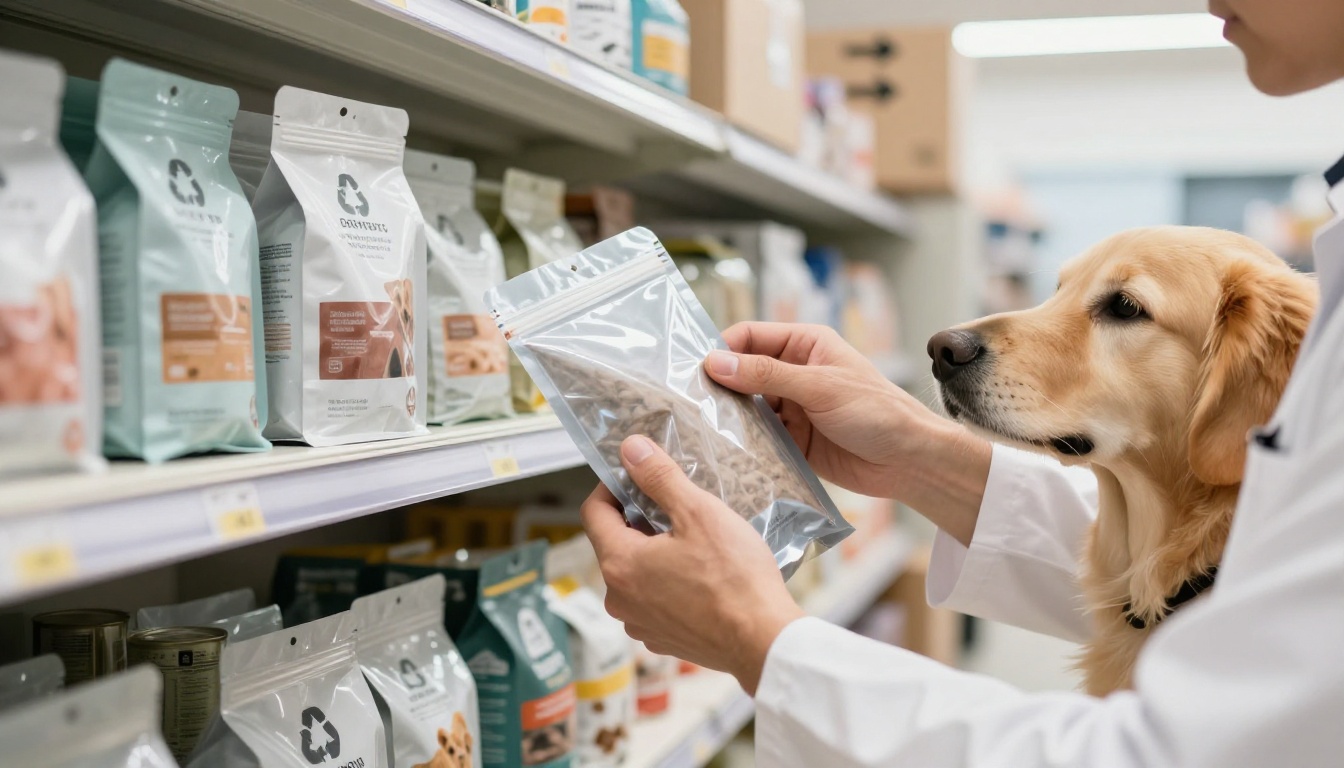
Pet Food Packaging Challenges: A Practical Guide
Pet food packaging has to protect freshness, safety, and shelf life while meeting sustainability goals, controlling costs, surviving e-commerce shipping, and standing out on retail shelves. Those demands often conflict: a lighter or recyclable package may affect barrier protection, sealing performance, or durability during fulfillment.
Packaging decisions affect far more than appearance. The right format helps preserve nutritional quality and prevent damage, while poor material selection or inconsistent seals can create waste, product complaints, line stoppages, and avoidable rework. E-commerce adds pressure because packages must withstand handling and reach customers with enough remaining shelf life, and small flexible formats can be difficult to collect and recycle at scale.
Brands also need to balance production realities with customer expectations, including resealability, clear labeling, accurate lot codes, and dependable presentation. Working with a contract packaging and fulfillment partner can help connect packaging execution with inventory control and distribution needs. The sections ahead examine the main pet food packaging challenges, compare common formats and material tradeoffs, explain testing requirements, and outline practical ways to improve performance across the line and supply chain.
Packaging Challenges in the Pet Food Industry: What Brands Must Balance
Pet food packaging is more than a container choice. Market growth, premium recipes, smaller portions, convenience, e-commerce, and sustainability are all pushing brands toward more packaging formats and shorter production runs. Current forecasts differ by source, but most point to steady mid-single-digit growth through the next decade. That growth creates more pressure to protect food, support branding, meet retailer and regulatory requirements, and keep production lines running reliably.
A package must work at several points in its life. It needs to protect the product in storage, communicate key information at retail, survive warehouse handling, and arrive intact in a customer’s home. At the same time, the format must fit available equipment, labor, shipping requirements, and inventory plans. A package that looks attractive but runs poorly can create just as many problems as one that fails to protect the food.
Growing product variety creates more packaging requirements
Different pet food products need different levels of protection. Dry kibble needs a strong moisture and oxygen barrier to preserve texture and prevent staleness. Wet food requires leak-resistant containers, dependable closures, and protection against contamination. Freeze-dried recipes are sensitive to moisture, while treats may need puncture resistance because sharp edges can damage thin films.
Supplements and prescription diets add another layer of control. Their packaging may need stronger light protection, clear dosage information, tamper evidence, or more precise lot and expiration coding. A single pouch structure rarely handles every requirement well. Material thickness, seal design, closure type, and package shape must match the product inside.
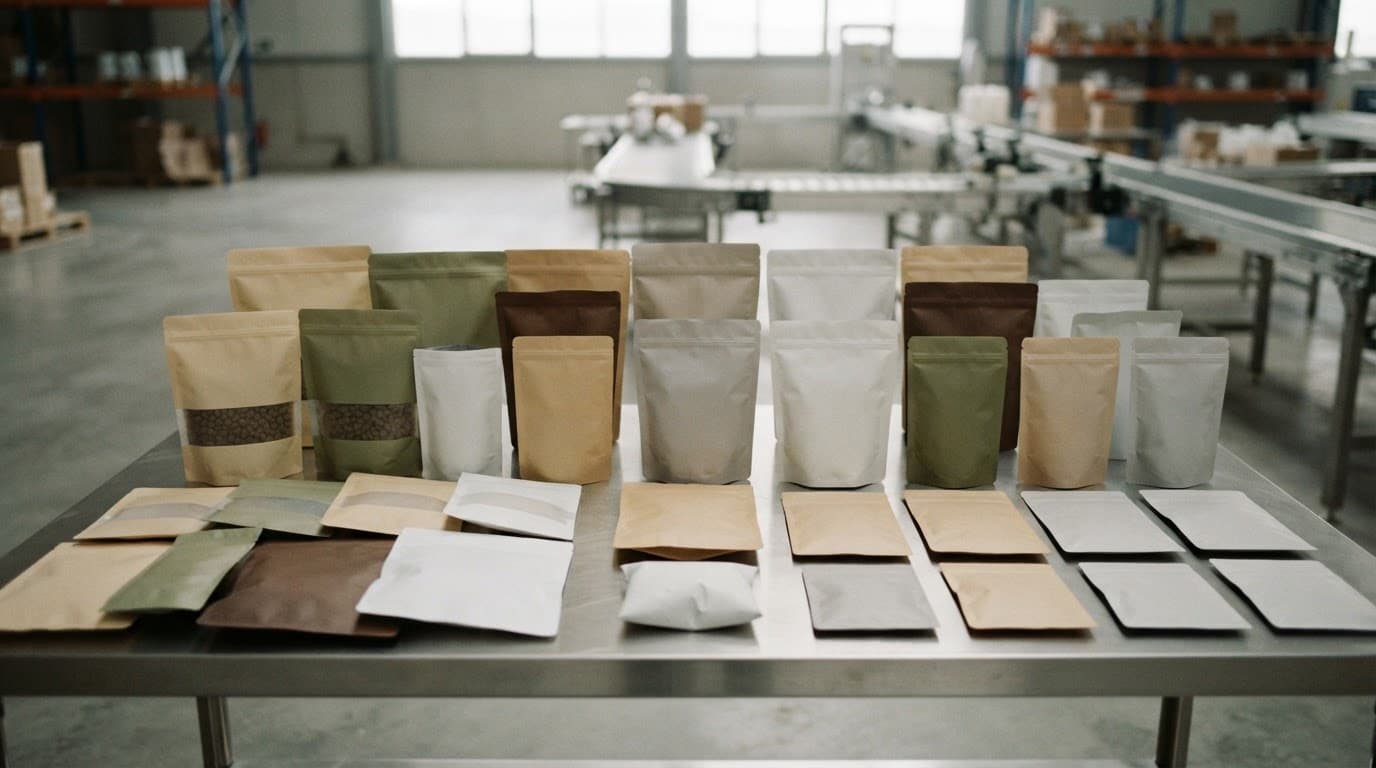
Product variety also multiplies operational complexity. Brands may offer several flavors, protein sources, life-stage formulas, dietary claims, and package sizes. Promotional bundles, variety packs, seasonal designs, and retailer-specific configurations add even more combinations. Premium pet food often increases this pressure because brands use specialty ingredients, smaller batches, and higher-value presentation.
Smaller trial packs and single-serve portions can help customers test a recipe or feed pets conveniently. However, each new size may require separate film, cartons, labels, cases, and inventory locations. As a result, packaging teams must balance customer choice against minimum order quantities, storage space, changeover time, and the risk of obsolete materials. Current pet food packaging forecasts reflect this continued demand for flexible formats and product differentiation.
Packaging affects quality, labor, and customer trust
Packaging errors quickly become operational problems. A weak seal can cause leaks or spoilage. An incorrect label can send the wrong formula to a customer or retailer. Damaged bags create repacking work, while a missed or unreadable date code can hold an entire pallet until someone verifies its status.
These issues waste product and labor, but they also disrupt warehouse output. Teams may need to stop a line, inspect finished goods, separate affected lots, correct records, or rebuild orders. Retailers may reject shipments, and customers may lose confidence after receiving a damaged or mismatched product.
Clear work instructions, employee training, seal and label inspections, and accurate packaging records help catch mistakes before products leave the facility. Brands that need additional capacity can also review contract packaging services to support labeling, kitting, repacking, and retail-ready preparation without losing control of inventory accuracy. The goal is dependable execution at every handoff, not simply a package that looks good on the shelf.
Keeping Pet Food Fresh, Safe, and Secure Through the Supply Chain
Pet food packaging must protect the recipe at every handoff, not only on the retail shelf. Moisture, oxygen, light, fat oxidation, odors, punctures, and poor seals can affect quality during filling, storage, fulfillment, delivery, and use at home. The right package depends on the formula, target shelf life, pack size, storage conditions, and distribution route.
Barrier materials must match the recipe and shelf-life goal
Each packaging layer has a practical job. PET can add stiffness, dimensional stability, and a clean surface for high-quality printing. Metallized films improve protection against moisture, oxygen, and light, which helps slow oxidation in recipes containing oils or high-fat ingredients. Nylon adds toughness and puncture resistance, while PE or HDPE can provide moisture protection and reliable heat sealing.
Multilayer structures often combine these strengths in one package. However, layers made from different materials can make recycling more difficult. Recycle-ready mono-material structures, including PE-based films, offer a promising option for some applications, but they still require careful validation for barrier performance, seal quality, stiffness, and puncture resistance.
A brand should review actual oxygen transmission rate, water vapor transmission rate, grease resistance, and seal performance instead of choosing a package based on a marketing claim. For example, a dry kibble formula shipped through humid regions may need stronger moisture protection than the same product sold locally. Wet food pouches also need structures that tolerate thermal processing without losing barrier or seal performance. See these packaging material options for a broader look at the tradeoffs.
### Seals, closures, and tamper evidence prevent avoidable failures
Even an excellent film cannot protect pet food if the package seal fails. Heat seals must remain strong across normal filling speeds, product contamination risks, storage temperatures, and transportation stress. Zipper closures help preserve freshness after opening, while tear notches make bags easier to open without scissors. Spouts, caps, and induction seals may suit liquid supplements, wet food, or specialty products.
Tamper-evident features support safety and customer confidence. Depending on the format, these may include tear-away bands, sealed openings, breakable caps, or visibly bonded inner seals. Brands should check seal strength, conduct leak testing, verify closure performance, and inspect finished packages for wrinkles, channels, contamination, or incomplete seals.
Higher-risk products and markets with counterfeit concerns may also benefit from authentication codes, serialized packaging, or traceable lot information. These features can help connect a package to its production record and make questionable products easier to investigate.
E-commerce puts more stress on pet food packages
Parcel networks expose packages to drops, compression, vibration, punctures, temperature changes, and rough handling. Lightweight flexible packaging can reduce shipping weight, but only when the structure survives fulfillment and delivery conditions. A thin pouch that performs well on a retail shelf may fail when packed tightly beside heavier items.
Distribution testing should cover the complete shipping system, including secondary packaging, case packs, pallet patterns, labels, and pack-out methods. Teams should also confirm that lot codes, expiration dates, and shipping labels remain readable after abrasion and handling.
Shelf-life testing and distribution testing answer different questions. Shelf-life studies measure how the product changes over time under defined storage conditions. Distribution tests examine whether the package and its seals survive movement through warehouses and parcel delivery. Brands need both before approving a new format for production. A custom packaging solution can then align the tested package with actual fulfillment and shipping requirements.
Sustainable Pet Food Packaging Still Has a Performance Problem
Pet food packaging has a difficult sustainability tradeoff. Brands want recyclable, recycled-content, compostable, or lighter formats, but the package still needs strong barriers, clean seals, hygiene, freshness, and puncture protection. A package that fails can spoil food, create returns, and waste the product it was designed to protect.
Flexible packaging remains popular because it can use relatively little material while supporting resealability, portion control, and shelf-life protection. However, collection and recycling systems for flexible films remain limited. One widely reported estimate puts flexible plastic packaging recycling in pet food at only about 9%, although recovery rates vary by location, package material, and available processing infrastructure. In the United States, the Pet Sustainability Coalition’s Flex Forward case study reports that more than 99% of pet food bags go to landfills.
Mono-material and recycled-content options offer a path forward
Mono-material PE or PP structures can simplify recycling because the package relies mainly on one polymer family instead of bonding PE, PET, nylon, foil, and other layers together. That simpler construction may fit more recycling processes, provided local facilities accept the material and the package meets their specifications.
Recycled content can also reduce dependence on virgin plastic. Yet the supply of food-grade recycled resin is limited, and not every recycled material is suitable for direct food contact. Recycled content may affect stiffness, appearance, odor, print quality, seal behavior, or consistency between production runs. Barrier performance can also change, which matters for oily recipes, freeze-dried foods, and products that need protection from oxygen or moisture.
Compostable packaging is not automatically a better choice. If industrial composting is unavailable, consumers may send it to a landfill or contaminate a recycling stream. The material must also protect the food through filling, storage, shipping, and use. A package that shortens shelf life can create more environmental cost through wasted food.
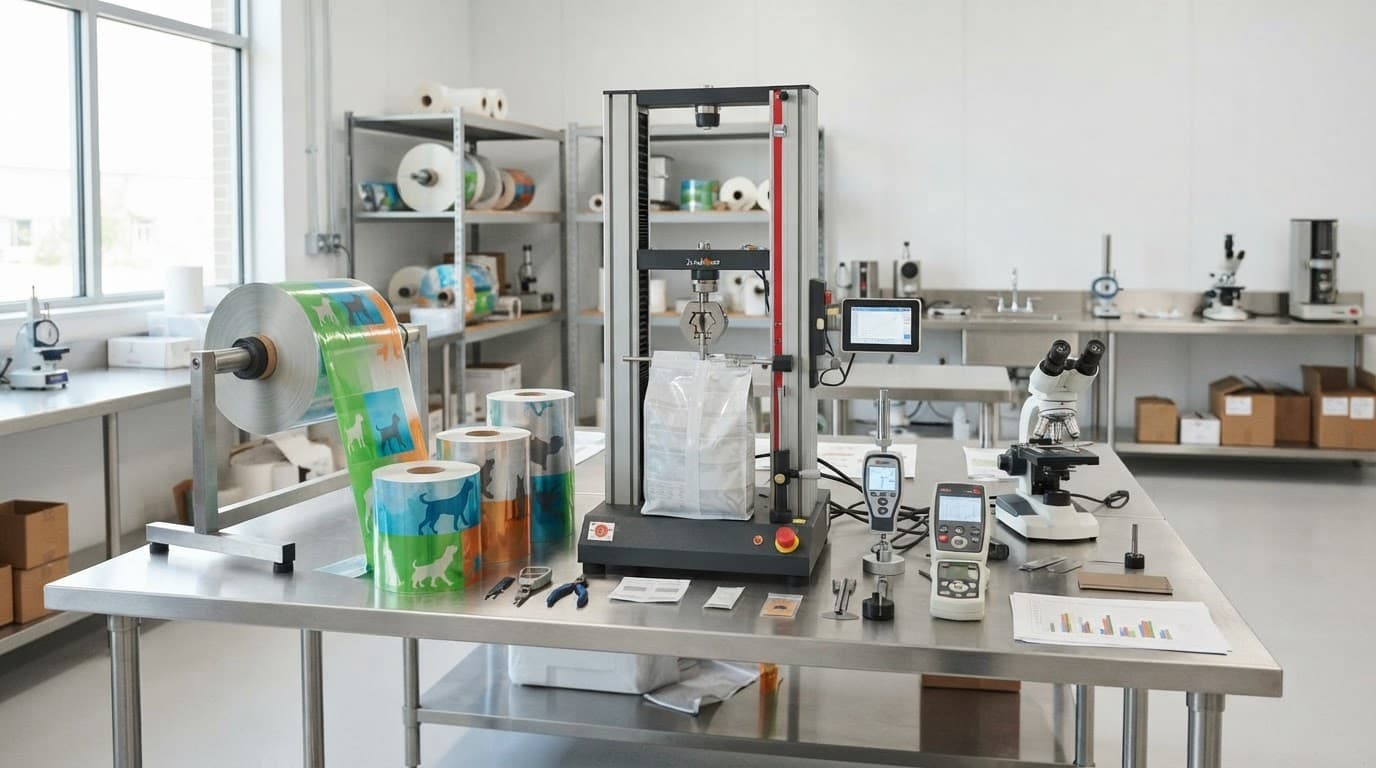
Test the complete package system, not only the film. Include seals, zippers, closures, inks, adhesives, coding, filling equipment, cases, and shipping conditions. A film may pass a lab test but fail after product dust enters the seal area or a pouch is compressed in transit.
Clear disposal instructions matter as much as material choice
Consumers need plain-language guidance that matches the collection system in their area. A package marked “recyclable” may still be rejected if local programs do not collect flexible film or lack the equipment to process its structure.
Brands should confirm the full package design before making claims such as recyclable, eco-friendly, or made with recycled content. Claims need to reflect the actual structure and disposal route, not just one layer or a supplier’s general statement. Current sustainable packaging trends also show why material selection and end-of-life planning need to develop together.
A QR code can provide extra information without overcrowding the package. It may link to nutrition details, sourcing information, feeding guidance, manufacturing data, and expanded disposal instructions. Still, the printed package should communicate the basic disposal action because shoppers may not scan the code.
Labeling rules and extended producer responsibility requirements vary by market. Review current requirements before launch, especially when selling across states or countries. Legal, packaging, recycling, and operations teams should approve the final claim together.
Sustainability goals must include the whole supply chain
Evaluate the package across material sourcing, conversion, filling, transportation, storage, consumer use, and end of life. A lighter bag may reduce freight weight, but a failed seal or punctured pouch can cause product loss, replacement shipments, and extra handling.
Compare packaging options using measurable criteria, including:
- Material weight and recycled content.
- Product loss during filling, storage, and shipping.
- Shipping damage and seal failures.
- Shelf-life performance under expected conditions.
- Recovery potential in the markets where the product is sold.
This approach keeps sustainability practical. The best package is the one that reduces material and waste without sacrificing food protection, production reliability, or a realistic recovery path.
Choosing the Right Pet Food Format for Product, Channel, and Shopper
Packaging format should follow the product, quantity, buying channel, and expected handling conditions. A small treat pouch has different needs than a large kibble bag, just as a wet-food cup faces different risks than a resealable supplement pack. Before approving a new SKU, test how the format protects the recipe, handles filling, stores after opening, and moves through the intended distribution network.
Dry food, wet food, treats, and supplements need different solutions
Dry kibble usually needs strong moisture and oxygen protection, dependable seals, and enough strength to resist punctures and crushing. Stand-up pouches work well for smaller quantities because they save space, support resealing, and create good shelf presence. For larger bags, gusseted or flat-bottom designs provide stability and usable capacity. Flat-bottom bags often look more premium and stack neatly, but they can cost more than simpler constructions. Multi-wall paper bags may suit bulk dry food when a traditional appearance and rigid outer structure matter, although the inner barrier still needs to protect against moisture and oil.
Wet food requires dependable leak protection. Cans offer a proven barrier and strong stacking performance, but they add weight and shipping cost. Cups and trays support portion control and easy serving, especially for single meals or multipacks. Spouted pouches reduce weight and can improve pouring, though the fit between the spout, closure, pouch film, and filling process requires careful validation.
Treats and supplements often benefit from smaller formats. A resealable pouch can protect soft treats and support repeated use, while cups or blister-style unit packs can control doses and keep supplements separated. However, blister packs may add packaging per serving and can increase material complexity. Product shape matters too. Sharp or dense treats can puncture thin films, while powders may enter the seal area and cause leaks.
| Product need | Formats to consider | Main tradeoff |
|---|---|---|
| Large dry-food quantities | Gusseted bags, flat-bottom bags, multi-wall paper bags | Capacity and stability versus material and freight cost |
| Wet meals | Cans, cups, trays, spouted pouches | Barrier strength and serving ease versus weight or seal complexity |
| Treats | Stand-up pouches, flat pouches, resealable bags | Convenience and freshness versus puncture risk |
| Supplements | Small pouches, cups, blister-style packs | Dose control versus packaging volume and cost |
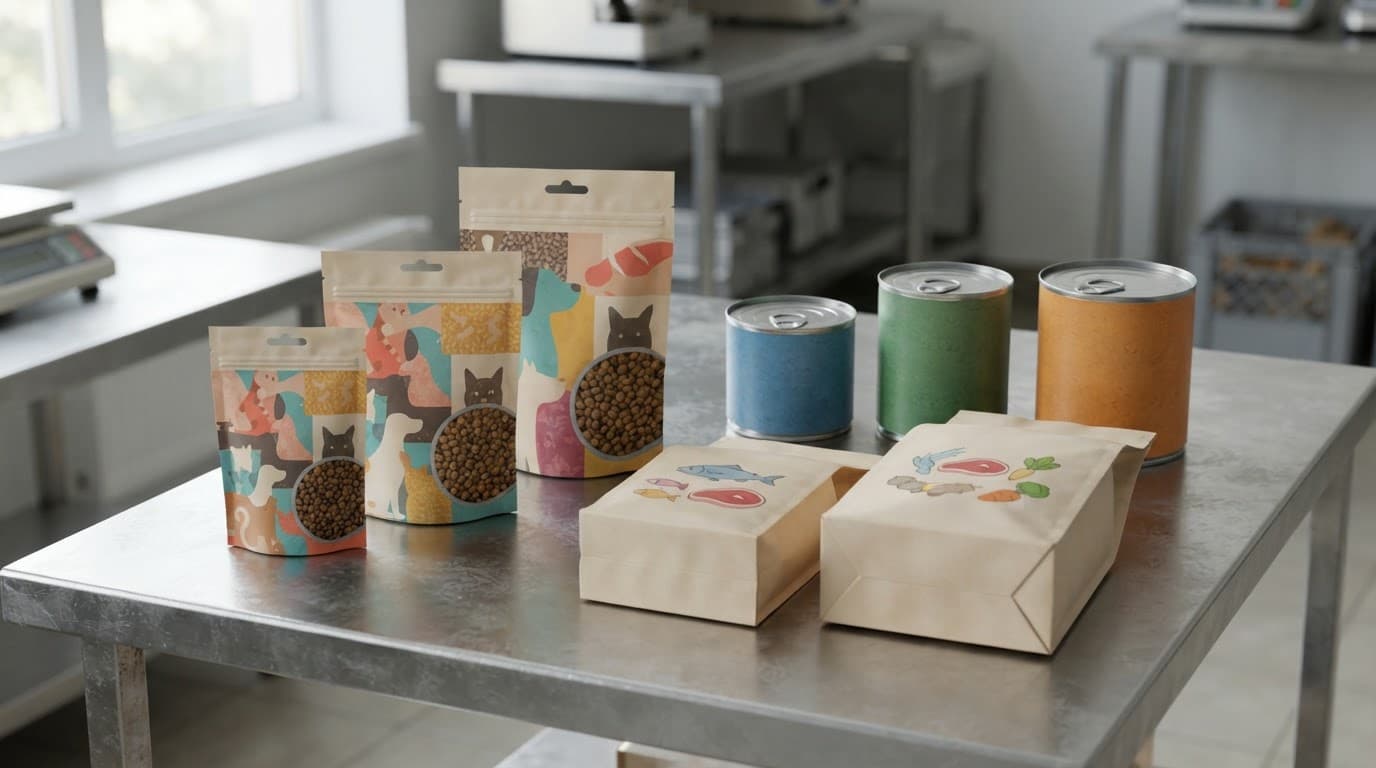
The package should also match how shoppers use it. Single-serve packs support trial, travel, and portion control, but they increase packaging per unit of product. For brands planning bundles or mixed-flavor assortments, food and beverage packaging services can help coordinate secondary packaging and promotional configurations.
Retail and e-commerce packaging solve different problems
Retail packaging must communicate quickly. Strong shelf presence, readable product information, clear pricing, easy handling, and consistent branding help shoppers compare options. Windows can show kibble or treats, while bold graphics, matte finishes, soft-touch coatings, laser scoring, and small interactive features can support premium positioning.
Those features cannot weaken the barrier, seal, recyclability, or coding area. A window may reduce protection if it changes the material structure. A specialty finish may complicate recycling or increase cost. Review each feature against the package’s actual performance requirements.
E-commerce adds compression, vibration, drops, and repeated handling. Packages need durable seals, efficient case packing, low shipping weight, and labels that remain readable after abrasion. A flat-bottom bag may stand well in retail but require protective case packing during parcel shipment. Smaller packs can reduce damage and support trial, yet they often increase packaging and fulfillment cost per serving.
For each SKU, compare shelf impact with shipping risk, then validate the complete case pack. A format is ready when it protects the food, fits the channel, and remains practical after opening at home. An external comparison of stand-up and flat pouch formats can help teams frame those early design decisions.
Reducing Cost and Complexity Without Sacrificing Package Quality
Lower packaging cost doesn’t come from choosing the cheapest film or removing every premium feature. A better approach is to examine how materials, equipment, labor, quality checks, inventory, and fulfillment work together. High-barrier laminates, specialty films, complex closures, and sustainable structures may improve package performance, but they can also increase tooling expense, minimum order quantities, setup time, and unit cost.
More SKUs create the same pressure. Each flavor, size, finish, and promotional pack can require different materials, machine settings, labels, cases, and storage locations. Before approving another format, compare its full operating cost with the quality and market benefit it provides. Guidance on pet food packaging cost control also emphasizes connecting package decisions with logistics and production planning.
New packaging formats can require new equipment and training
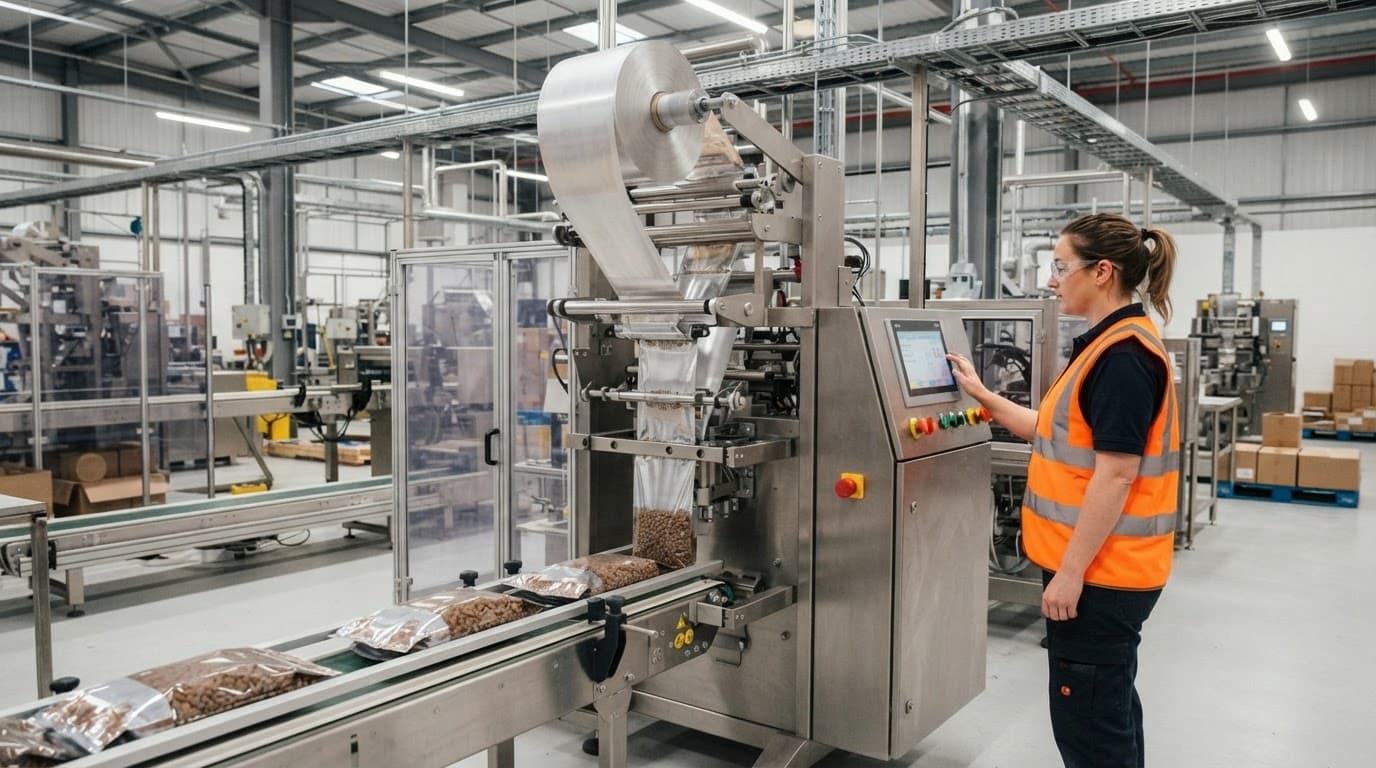
A material change can affect every stage of the line. Film feeding, pouch forming, filling, heat sealing, coding, inspection, and case packing may all need adjustment. A stiffer film may track differently through the machine. A sustainable structure may need different sealing temperatures. A new zipper can create misalignment if the forming tools or guides do not match its dimensions.
These problems often appear as inconsistent seals, wrinkled film, product trapped in the seal area, unreadable codes, slower line speeds, and longer changeovers. Premium finishes can also create handling issues if coatings affect registration, friction, or sensor performance. As a result, a package that looks excellent in a sample review may perform poorly during a short production run.
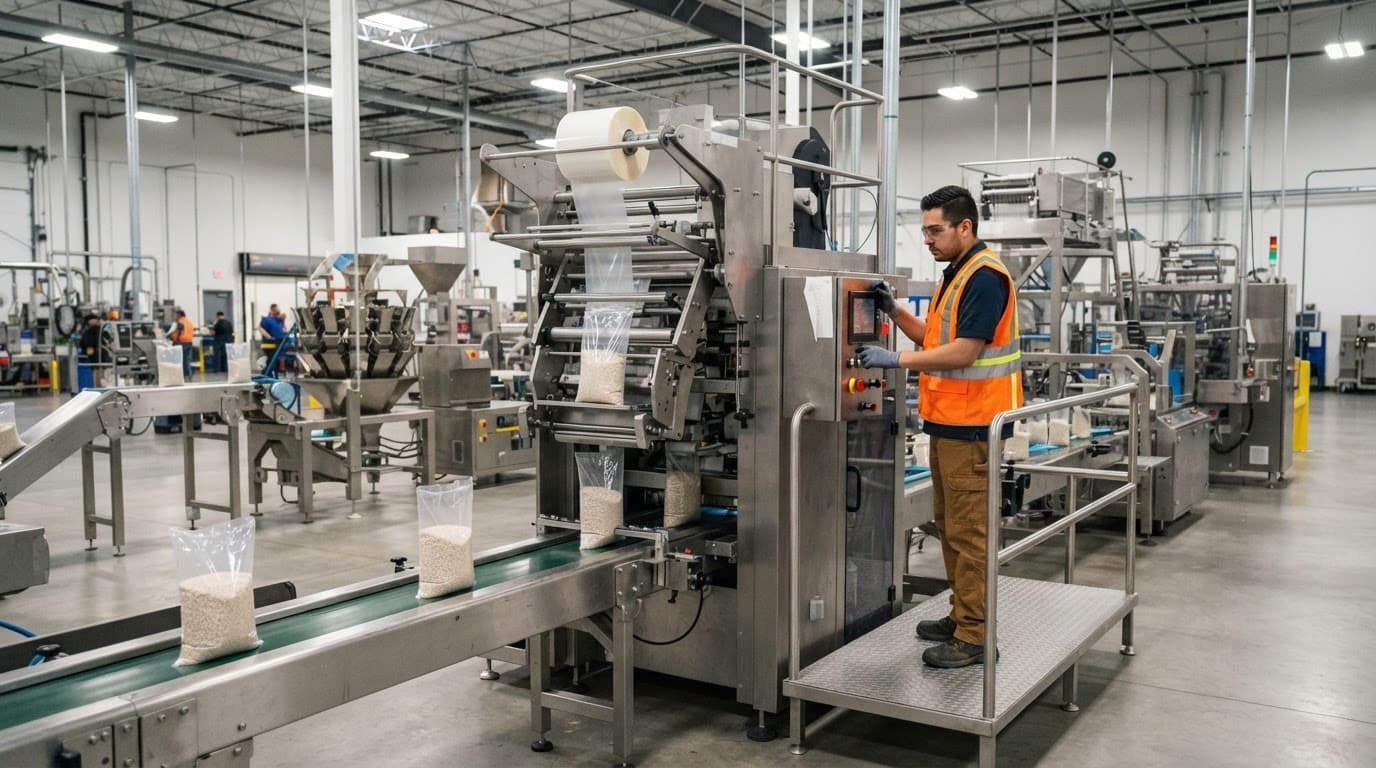
Run a controlled pilot before committing to a full launch. Use the trial to confirm:
- Film feeding, forming, filling, and seal performance at the planned speed.
- Zipper alignment, tear-notch function, coding, and inspection accuracy.
- Case packing, pallet patterns, storage behavior, and shipping durability.
- Changeover time, material waste, product loss, and operator workload.
Document the approved settings and sequence in clear work instructions. Train operators before the first commercial run, then verify that each person can complete the required tasks correctly. Training completion is a readiness measure, not an administrative detail. Untrained workers make more process errors, and one mistake can stop a lane, dock, or entire shift.
Preventive maintenance should cover sealing jaws, forming tools, sensors, printers, conveyors, and case-packing equipment. Standard quality checks should identify who verifies seals, weights, codes, labels, and finished cases. These controls reduce the chance that a small material variation becomes a costly line stoppage.
Use total cost instead of unit price alone
A lower package price can create higher operating costs. Compare each option across the full product life cycle, including:
- Material, printing, tooling, and minimum order quantities.
- Freight, storage space, inventory carrying cost, and obsolete materials.
- Labor, equipment modifications, setup time, and changeover losses.
- Film waste, rejected packages, product loss, and rework.
- Shipping damage, returns, retailer chargebacks, and customer complaints.
- Shelf-life performance, line efficiency, and shipping weight.
A slightly more expensive package may cost less overall if it reduces damage, protects freshness longer, improves line speed, or lowers freight weight. Operational cost analysis for pet food packaging highlights why changeover performance matters when manufacturers run many SKUs.
When internal equipment or labor cannot support the required variety, contract packaging solutions can add flexible capacity, specialized operators, and packaging experience. A co-packer can also help with short runs, kitting, labeling, or secondary packing while the brand retains control of specifications and quality standards.
A Practical Process for Designing and Scaling Better Pet Food Packaging
A reliable package starts with a shared process, not a last-minute artwork review. Bring operations, quality, logistics, marketing, procurement, and fulfillment into the discussion early. Together, these teams can connect product protection, customer expectations, equipment limits, shipping risks, cost, and compliance before a supplier produces samples.
Start with a clear package specification
Begin with a written specification that defines what the package must do. Include:
- Product type, formula characteristics, water and fat sensitivity, and target shelf life.
- Fill weight, package dimensions, case configuration, and pallet pattern.
- Barrier requirements for oxygen, moisture, light, grease, and odor.
- Closure needs, such as zippers, tear notches, spouts, caps, or tamper evidence.
- Distribution route, including retail, parcel shipping, club stores, or direct-to-consumer fulfillment.
- Labeling rules, coding needs, barcode requirements, and sustainability goals.
- Expected production volume, minimum order needs, equipment limits, and budget.
- Whether your team will fill the package in-house or use a contract packaging partner.
Ask each department to identify its non-negotiables. Marketing may need strong shelf presentation, while fulfillment may need a package that fits standard cartons. Quality may require lot traceability and inspection points. Procurement should review material availability and lead times before the design advances.
A complete specification gives suppliers the same information, which makes samples and quotes easier to compare. It also reduces redesigns caused by missing details. For packaging work that includes mockups, proofs, and testing, review the pet packaging design process before approving a final structure.
Test the package under real production and shipping conditions
Review prototypes for more than appearance. Test seal integrity, leak resistance, puncture strength, compression, drops, vibration, shelf-life behavior, label adhesion, closure use, and consumer handling. Use filled packages whenever possible because product weight, dust, oil, and shape can change how a package performs.
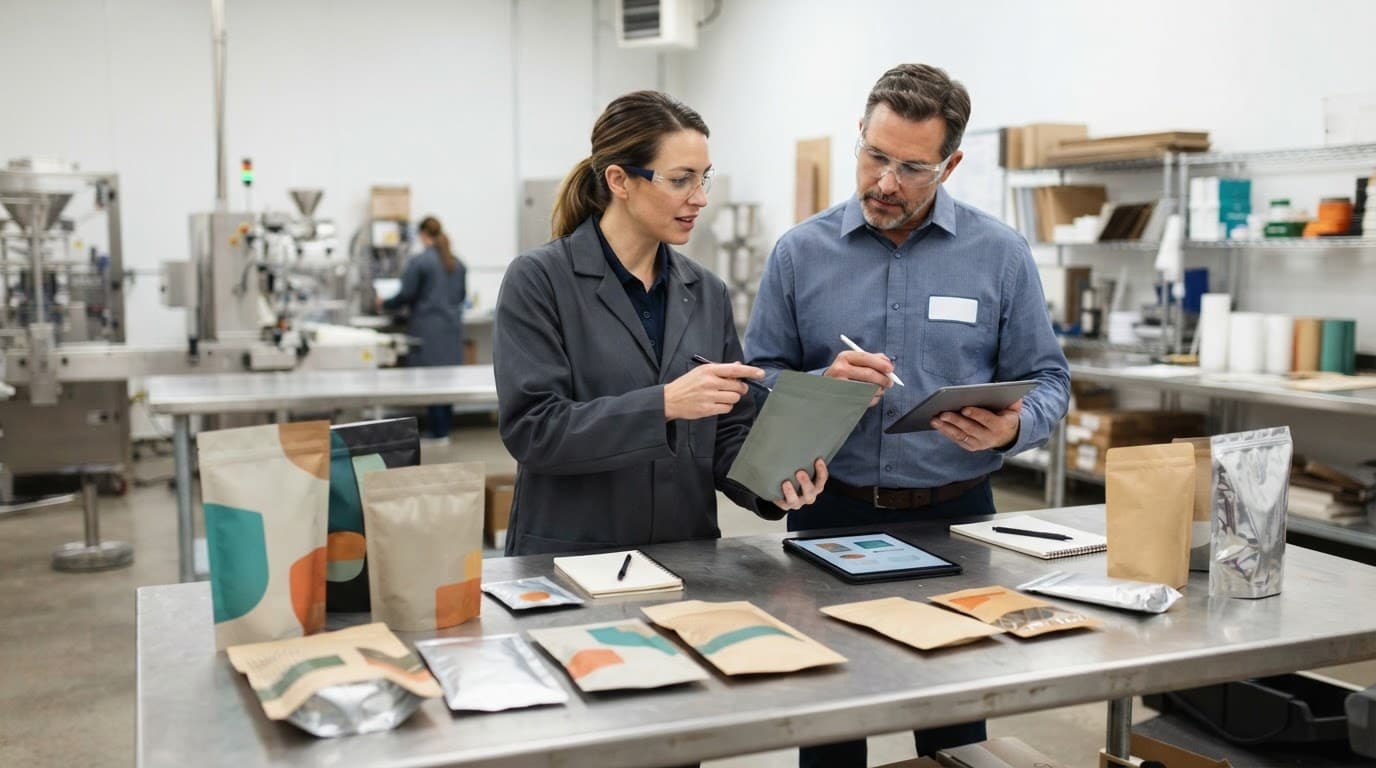
Next, run a controlled pilot using the intended equipment and materials. Watch for feeding problems, slow line speed, long changeovers, coding errors, product trapped in seals, and difficult case packing. Then ship filled cases through the planned distribution route. A package that passes a bench test may still fail after vibration, stacking, or parcel handling.
Record each result against an agreed acceptance standard. If a prototype fails, revise the material, seal design, closure, case pack, or work instruction before commercial production. Pilot work costs less than discovering the same issue across a full run.
Track the measures that show whether the solution works
After launch, measure both package performance and operating results. Useful metrics include packaging waste, first-pass quality, seal defects, line downtime, changeover time, damaged units, shipping claims, returns, complaints, inventory accuracy, on-time fulfillment, and product loss.
Safety and training measures belong in the same review. Track incident rates, near misses, lost-time injuries, and training completion. Fewer incidents keep employees on the floor, while complete training reduces errors that can stop a lane, dock, or shift.
Review results weekly during the early launch period, then examine monthly trends. Separate inbound, warehouse, and in-transit damage so the team can find the real source. Hold suspect product, document nonconformances, and assign root-cause actions rather than correcting each failure individually.
Use the evidence to adjust materials, pack sizes, case design, staffing, or work instructions. A validated package is not a finished idea. It is a controlled solution that continues to perform as products, channels, volumes, and fulfillment demands change.
When Outside Packaging Support Makes Sense for Pet Food Brands
Outside packaging support can help when packaging work starts competing with core production, warehouse, or sales priorities. Seasonal demand, labor shortages, new product launches, promotional bundles, relabeling, and direct-to-consumer fulfillment can all create temporary or ongoing capacity needs.
A contract packaging or co-packing partner may combine packaging labor with inventory control, transportation coordination, distribution, and e-commerce fulfillment. That connection reduces handoffs between vendors and gives your team one operating plan for materials, finished goods, orders, and delivery dates. Before choosing a provider, review its quality systems, equipment fit, traceability, communication habits, scalability, and on-time performance. Pet food co-packing capabilities can vary widely, so match the partner’s actual experience to your product and formats.

### Questions to ask before selecting a packaging partner
Use the first conversation to test operational fit, not just pricing. Ask:
- Does the team have experience with pet food, food products, or comparable consumer goods?
- Which formats can it support, including pouches, bags, cartons, shrink packs, labels, bundles, and multiple-SKU kits?
- What are the minimum and maximum volumes, changeover limits, and ability to handle seasonal demand spikes?
- Which equipment, inspection tools, coding systems, and warehouse spaces are available?
- How does the facility manage quality inspections, allergen controls, hygiene, employee training, and material sourcing?
- Can the partner provide sustainability documentation, food-contact information, and supplier records?
- How does lot traceability work, and how long are production samples and records retained?
- Can its warehouse receive materials, control inventory accurately, and coordinate transportation or outbound fulfillment?
- Which technology systems support inventory visibility, order management, reporting, and retailer requirements?
- What are standard turnaround times, escalation procedures, and contingency plans for labor, equipment, or supply disruptions?
Also ask what happens when something goes wrong. Who approves damaged-goods disposition? Can the partner inspect, rework, relabel, or repack affected units? How quickly can it support a recall, packaging change, retailer correction, or unexpected order increase?
Build a launch plan that protects quality and delivery dates
Treat the launch as a shared production schedule. Set milestones for specifications, artwork approval, material ordering, samples, testing, pilot runs, commercial production, inventory receipt, and outbound fulfillment. Each milestone needs an owner and an approval date.
Assign quality to testing and release decisions. Operations should own line readiness and staffing, while procurement tracks materials and supplier dates. Marketing should approve artwork and claims, and logistics should confirm receiving, storage, transportation, retailer routing, and e-commerce requirements.
When several SKUs or pack formats launch together, use one master schedule with separate material, production, and inventory checkpoints. Confirm item numbers, quantities, lot codes, case packs, and storage locations before goods arrive. Accurate inventory prevents a finished product from appearing available when one label, carton, or component is still missing.
Hold brief status reviews as dates approach, then document changes in writing. Reliable execution is part of the package’s value. A well-designed bag or pouch still fails commercially if the right product misses its ship date, arrives damaged, or cannot be traced.
Conclusion
Pet food packaging is more than a container for kibble, treats, or wet food. The best package protects freshness and safety, carries accurate labeling, survives distribution, runs reliably on the production line, supports convenient use, and fits the recycling or recovery systems available where it is sold.
That balance is especially important when brands compare barrier performance with sustainability goals. A lighter or simpler material may reduce waste, but it still needs to protect the product and maintain shelf life. The strongest packaging decisions come from clear specifications, filled-package testing, pilot production, total-cost analysis, and performance data collected after launch.
Review your current packaging with those standards in mind. Identify the largest source of waste, damage, downtime, labeling errors, or fulfillment disruption, then work with the right packaging or fulfillment resources to address it. A successful pet food package protects the product without creating new problems for production, customers, or the supply chain.
