

How to Identify and Eliminate Contract Packaging Bottlenecks
A contract packaging bottleneck can quickly lead to missed ship dates, idle labor, excess handling, rework, chargebacks, damaged goods, and frustrated customers. The problem often starts with one step that can’t keep pace with the rest of the operation, even when every other team is ready to move.
A bottleneck is any point that limits the flow of materials or finished units. It may involve a machine running below capacity, a labor shortage, an unclear specification, a slow approval, a poor handoff between teams, or a delay in packaging materials and other supplies. These constraints can affect kitting, labeling, shrink packaging, displays, repackaging, fulfillment, and other secondary packaging work.
The right response isn’t to add labor or equipment before you know what is holding production back. You need a clear process for finding the constraint, tracing it to its root cause, applying the right fix, and tracking whether results improve. Contract packaging services can also help when specialized labor, flexible capacity, or coordinated fulfillment support is part of the solution. First, identify the warning signs that reveal where your packaging flow is losing time.
Key Takeaways
- Map each packaging step, then use cycle times, queue lengths, rework, and missed ship dates to locate the true constraint.
- Common bottlenecks include processing, primary and secondary packaging, inspection, labeling, changeovers, material shortages, and breakage.
- Fix root causes before adding labor or equipment. Clear specifications, balanced workloads, preventive maintenance, and reliable material planning often restore flow.
- Track safety, training completion, quality, throughput, and on-time shipment together because workforce disruptions can reduce output.
- Copacking services can add flexible capacity when specialized labor, seasonal demand, or fulfillment coordination exceeds your internal resources.
How to Identify and Eliminate Contract Packaging Bottlenecks
The slowest or most constrained step sets the pace for the entire operation. A fast packaging machine cannot compensate for late materials, delayed approvals, or a quality hold that keeps finished units from shipping. To find the real constraint, examine the complete flow instead of judging performance by line speed alone.
Start with the Full Packaging Workflow, Not Just the Machine
Map every activity, handoff, queue, approval, and decision point. Begin with inbound receiving and material inspection, then follow components through staging, line setup, assembly or packing, labeling, quality checks, palletizing, storage, and outbound shipping.
Walk the floor while the work is happening. Ask employees where products wait, which materials arrive late, and where teams handle the same carton more than once. Record products that move backward, sit in temporary locations, or require duplicate scans and inspections. A value stream map or simple process flow diagram can make these delays easier to see.
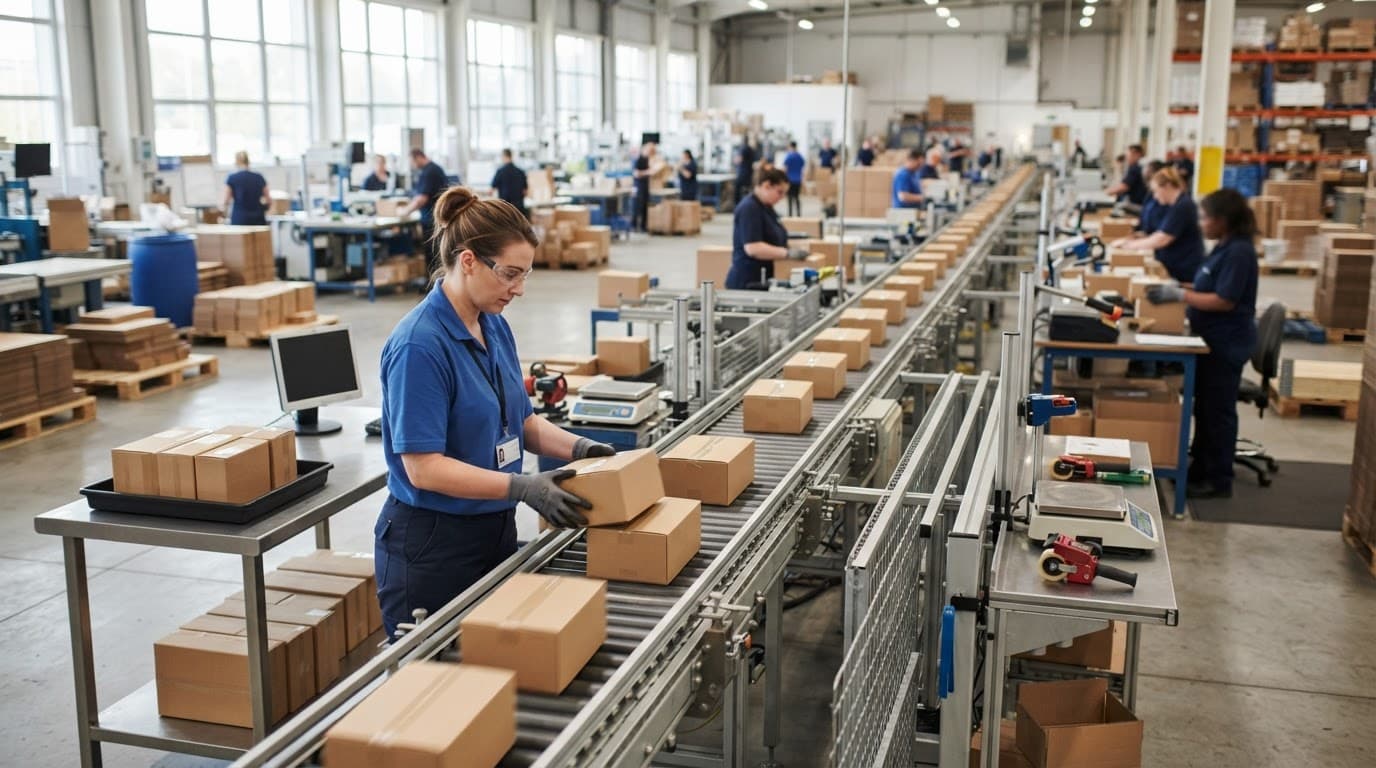
For example, a line may pack 100 units per hour, yet orders still miss their carrier cutoff because labels arrive late. The same result occurs when quality checks create a long hold after packing. In both cases, the machine is fast, but the workflow is slow.
An integrated provider offering efficient contract packaging can connect material planning, packaging, inventory control, and fulfillment. That wider coordination helps prevent a local improvement from creating a delay somewhere else.
Watch for Warning Signs That Point to a Constraint
A growing work-in-process queue is a symptom, not a diagnosis. The root cause may be poor material planning, an unbalanced changeover, slow approvals, equipment downtime, or insufficient inspection capacity.
Use floor observations and operating data together. Common warning signs often point toward these causes:
| Bottleneck signal | Likely cause |
|---|---|
| Queue building before one station | Uneven capacity or long cycle time |
| Workers waiting for components | Poor staging or inventory inaccuracy |
| Line starvation or overfeeding | Unbalanced rates between stations |
| Long changeovers | Weak setup planning or unclear specifications |
| Rework and rushed inspections | Quality issues found too late |
| Overtime and missed carrier cutoffs | Scheduling or fulfillment constraints |
Also watch for unplanned downtime, repeated adjustments, inventory that appears available in the system but cannot be found at the workstation, and products waiting for approval. A busy area is not always the bottleneck. It may be working steadily while waiting for a constrained upstream process. An underused station may simply lack materials because the true constraint is elsewhere. The goal is to identify where flow consistently stops, then trace that delay to its root cause.
Measure the Data That Exposes Packaging Delays
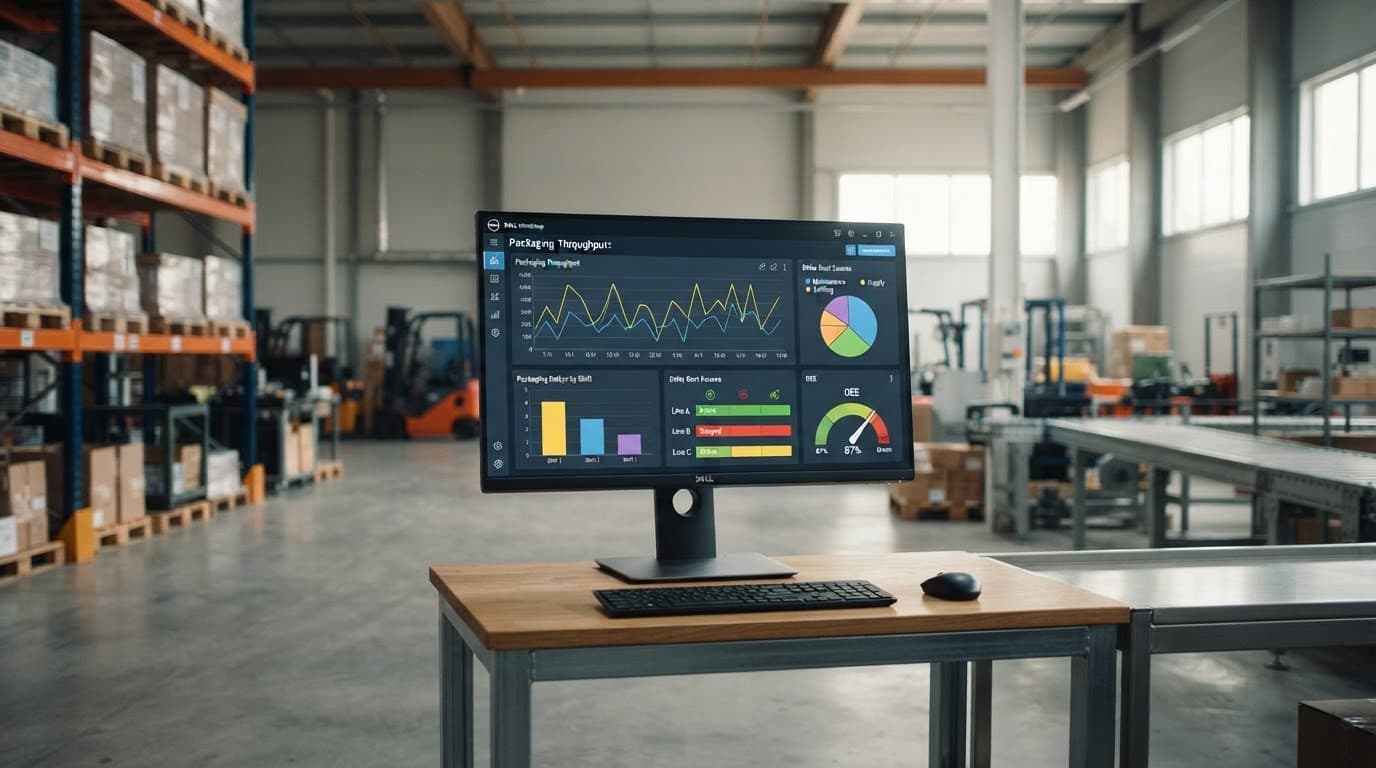
Assumptions rarely identify the true packaging bottleneck. A short baseline measurement period gives you evidence across normal demand, peak demand, and several product types. Track the same definitions throughout, then compare where time, labor, and materials are lost.
### Separate Waiting Time from Touch Time
Total lead time includes both hands-on work and waiting. A job may need only a few minutes of packaging labor, yet spend hours waiting for materials, approval, inspection, or access to a shared machine.
Add time stamps at receiving, staging, production start, quality release, and shipment. These points show whether calendar time disappears before production, inside the process, or after packing. Also track throughput by hour or shift, cycle time, queue time, setup and changeover duration, downtime by reason, first-pass yield, rework, scrap, labor hours per sellable unit, order lead time, and on-time shipment rate.
Use consistent definitions. Count only sellable units in throughput, separate planned setup from unplanned downtime, and record rework separately from first-pass output. Scan-based inventory and lot tracking can connect material movements to specific jobs, helping teams verify where a delay began.
Use Pareto Analysis to Find the Few Causes Creating Most Delay
Group delay reasons into practical categories such as equipment, materials, people, method, measurement, and environment. Then rank them by total minutes lost, units delayed, or cost. The most visible problem is not always the largest one.
For example, minor jams may happen 30 times in a week and lose 45 minutes. Missing labels may stop two jobs for 90 minutes. Changeovers may occur less often but consume six hours. A Pareto review points managers toward changeover work first, even if jams attract more attention on the floor.
OEE can help when equipment limits output because it combines availability, performance, and quality. However, OEE shouldn’t replace simple measures. A strong scorecard still needs queue time, material waits, labor hours, yield, and on-time shipment data.
| Metric | What it reveals | Warning signal |
|---|---|---|
| Queue time | Where work waits | Rising time before one station |
| First-pass yield | Quality at the source | More units need rework |
| Downtime by reason | Main causes of lost capacity | One reason dominates lost minutes |
| Labor hours per sellable unit | Labor efficiency | Hours rise while good output falls |
| On-time shipment rate | Customer service impact | Missed carrier or retailer cutoffs |
Check the Handoffs Between Teams and Systems
Packaging delays often begin before a line starts. Sales, brand, purchasing, warehouse, production, quality, and transportation may each hold part of the information, while no one owns the complete job.
An incomplete packaging brief, outdated artwork, unclear bill of materials, incorrect quantity, or disconnected inventory system can stop staging and production. Establish one shared source of truth for specifications, approved artwork, quantities, revisions, and release status. Assign one owner to each approval, including quality and transportation requirements.
A clear scorecard should show the metric, definition, owner, target, and action when performance slips. For teams reviewing packaging efficiency and performance metrics, that structure turns scattered data into decisions.
Fix the Most Common Causes of Contract Packaging Bottlenecks
The right fix depends on the constraint. Adding labor or buying equipment won’t solve a bottleneck caused by unclear specifications, late materials, or repeated quality holds. Start with the immediate action, then make the process stable enough to measure improvement.
Standardize Work Before Adding Automation
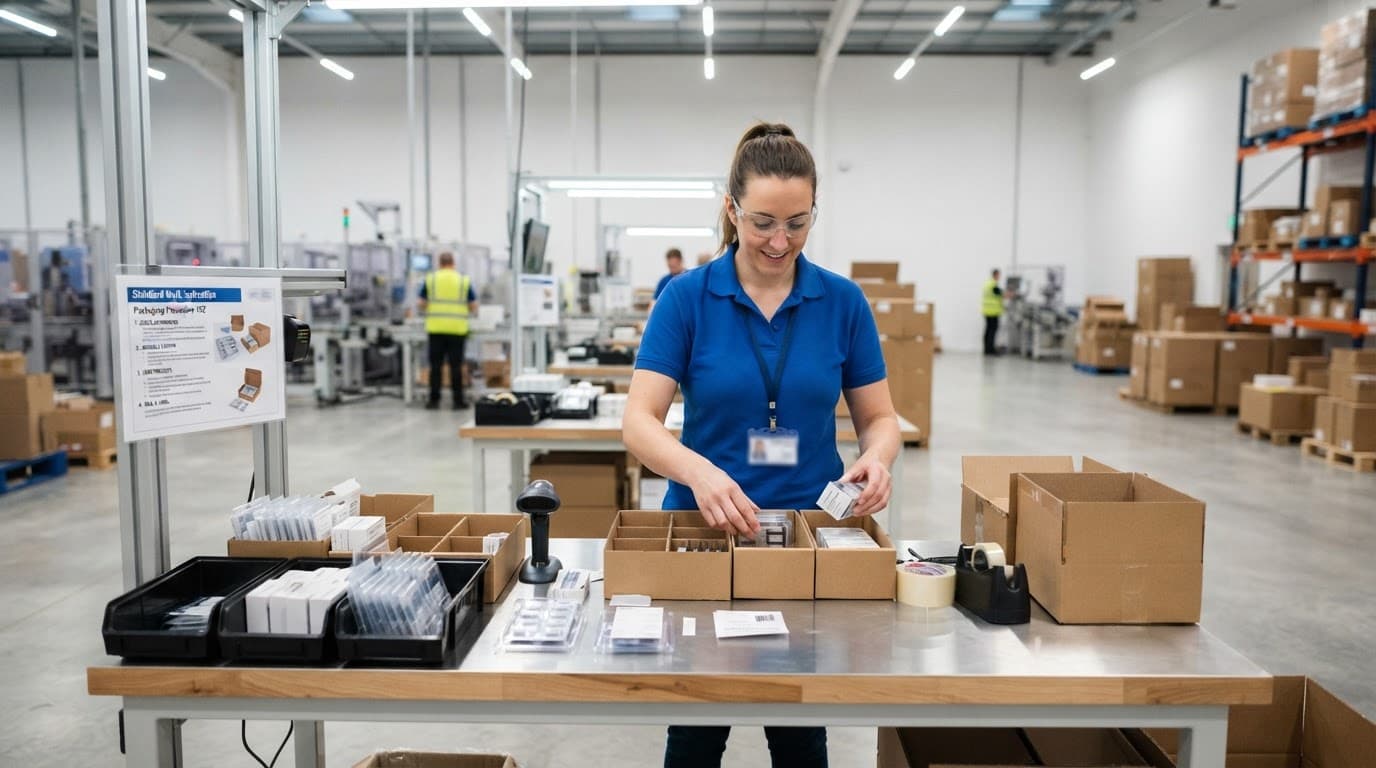
Manual variation often slows mixed-SKU kits, promotional displays, shrink wrapping, and fragile-product packing. Create standard work instructions with visual aids, a defined pack sequence, line clearance checks, and 5S practices that keep tools and components in fixed locations.
Use a one-page component specification for every job. It should state the material, dimensions, tolerances, finish, ship-pack rules, pallet pattern, and required testing. For fragile products, include approved inserts, corner protection, and handling checks. Automation cannot reliably fix a process that changes from shift to shift.
Start by observing one complete cycle and documenting the approved method. Then train each operator against the same instructions and compare first-pass yield, rework minutes, and units per labor hour. If those measures improve without adding equipment, the process standard was the real fix.
### Reduce Setup Time and Changeover Errors
More package sizes, label versions, components, and customer requirements create more changeovers. Each change increases the chance of using the wrong artwork, label, lot code, fixture, or pack sequence.
Group similar jobs when schedules allow, and prepare materials before the current run ends. Separate external setup tasks, such as staging cartons and label rolls, from internal tasks that require the line to stop. Label tools and fixtures by SKU or format, use a changeover checklist, and record actual setup time instead of relying on estimates.
Before the next SKU begins, verify approved artwork, labels, lot codes, component counts, and complete line clearance. Track setup minutes, startup defects, and the time required to reach steady output. A shorter changeover only counts as an improvement if quality remains stable.
Prevent Material Shortages and Poor Staging
Wrong or late components can stop a line even when labor and equipment are ready. Damaged cartons, missing labels, unpicked inventory, and unreleased materials create the same delay.
Use demand-based forecasts and reorder points for critical cartons, films, labels, inserts, and other components. Receiving checks should confirm SKU, quantity, condition, revision, and lot information. Barcode scans and lot controls reduce inventory mismatches, while a staged kit for each production order gives operators the right materials before the job starts.
Qualify a second supplier for materials that can stop production, especially labels, cartons, and films. Measure shortages per order, dock-to-stock time, material-related downtime, and emergency purchases. A lower shortage rate proves that planning and staging are working.
Stop Quality Holds from Becoming Production Queues
Rushed work can create defects that consume more time than the original delay. Use first-piece approval, in-process inspections, barcode or vision checks where useful, and seal and label verification for club-store packs, shrink-wrapped units, and promotional displays.
Define sampling plans, hold locations, disposition authority, and escalation times. A clear procedure keeps questionable product from entering finished inventory while preventing an entire order from waiting for one unanswered question.
Track first-pass yield, hold duration, rework, returns, chargebacks, refused deliveries, and damaged shipments. Quality protects more than output. It also protects customer trust, because repeated label errors, missing kit components, or damaged products can weaken the brand long after the bottleneck is cleared.
Remove Bottlenecks Before Production Starts
Many packaging delays begin before materials reach the line. A complete brief, controlled approval path, and channel-specific pack plan can prevent weeks of rework, material changes, and missed ship dates. Allow roughly four weeks from dieline receipt to production when procurement, tooling, inspections, and final approvals are involved.
Build a Packaging Brief That Production Can Use
A useful brief contains far more than a product name and target quantity. It should give production enough detail to plan labor, materials, equipment, inspections, and shipping without repeated clarification.
Include the following information:
- Product type, dimensions, weight, fill volume, and pack requirements.
- Component materials, package fit, tolerances, and required inserts.
- Decoration, custom finishes, artwork status, approved dielines, and color requirements.
- First-order quantity, expected annual volume, and target production dates.
- Transit protection, pallet requirements, destination channels, and shipping locations.
- Compliance rules, including food, allergen, nutrition, safety, recycling, and retailer requirements.
- Time needed for samples, testing, validation, procurement, and production release.
Attach the approved artwork, dielines, bill of materials, inspection standards, sample photos, and shipping requirements. If a package must fit a display tray, case, or pallet pattern, provide those measurements before production planning begins.

### Create One Approval Path and One Source of Truth
Scattered email threads create hidden bottlenecks. One person may approve an artwork revision while another team continues working from an older file. That confusion can produce wrong labels, unusable materials, and a line-side stop.
Store the master brief and supporting files in one controlled location. Use clear version names, such as SKU-Date-V03, and record who approved each revision. Name one decision maker, then assign due dates for brand, legal, sales, quality, and operations reviews. Late comments should go through that owner instead of restarting separate approval conversations.
Before signoff, confirm:
- Dimensions, dielines, glue areas, and package fit.
- Nutrition, allergen, warning, and other legal information when relevant.
- Barcode type, placement, readability, lot codes, and date codes.
- Case quantity, pallet pattern, carton labels, and shipping marks.
- Approved materials, artwork, sustainability claims, and inspection standards.
Use this approval discipline to address packaging challenges and fixes, including cost visibility, supplier risk, compliance, and sustainability decisions.
Design Packaging for the Real Channel
DTC, marketplace, wholesale, retail, and club-store orders often need different packaging. A parcel pack must control dimensional weight and damage risk, while a retailer pack may need exact carton labels, case quantities, pallet stability, and routing compliance. Marketplace orders may also require specific prep, labeling, or protective materials.
Test the final pack in realistic storage and shipping conditions before committing to a large run. Check stacking, vibration, drops, humidity, handling, and pallet movement. A pack that looks correct on the production table can still fail in a truck, warehouse rack, fulfillment center, or retail distribution system.
Improve Capacity Without Creating New Problems
Once you confirm the constraint, increase flow around it without flooding the process with extra work. Capacity improvements should reduce waiting, rework, and handling while protecting safety, quality, and delivery performance.
### Balance the Line Around the Constraint
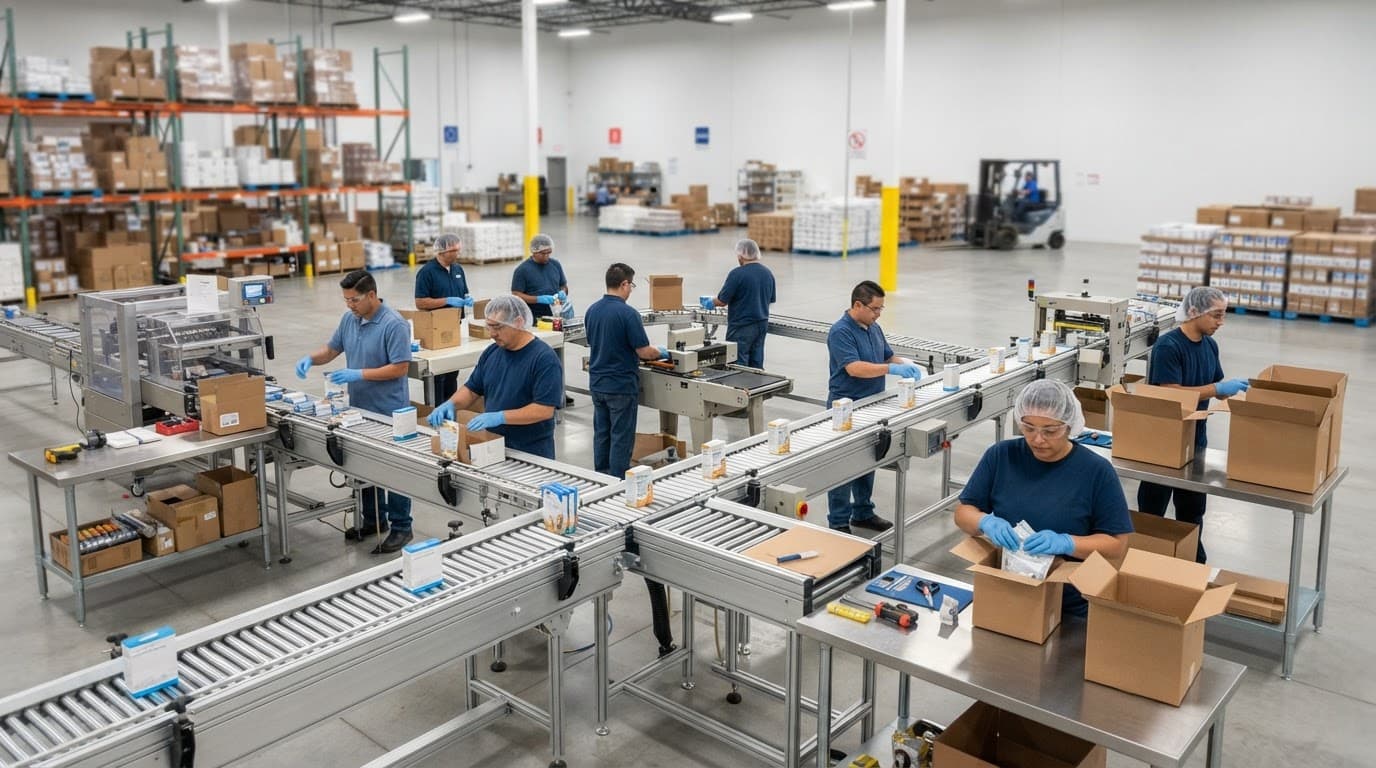
The goal isn’t to make every station run at maximum speed. The goal is to keep the constraint supplied and prevent downstream blockage. Match upstream rates to the bottleneck’s actual capacity, then place small, practical buffer zones between uneven steps.
For example, a staging area between kitting and labeling can prevent a brief slowdown from stopping the labeling station. However, the buffer should have a defined limit. Pushing more work into the system than the bottleneck can process only creates excess work-in-process, hides the original problem, and increases movement and double handling.
Adjust staffing when demand changes. Cross-trained operators can support the constrained station during seasonal peaks, labor absences, or promotional runs. If one station repeatedly limits output, change the work sequence, move tasks to another workstation, or use selective automation for repetitive steps such as case sealing, labeling, or wrapping.
Use Maintenance, Training, and Cross-Training as Capacity Tools
Preventive maintenance protects available capacity before a failure stops the line. Schedule equipment checks, keep critical spare parts accessible, and review recurring alarms instead of resetting them repeatedly. Document restart procedures so trained employees can return equipment to service safely and consistently.
Cross-training also gives supervisors more options during absences and demand spikes. Still, workers should perform independent tasks only after they meet documented qualification requirements. Training completion, incident rate, near-miss rate, downtime, first-pass yield, and overtime belong on the same scorecard. A productivity gain that increases injuries, errors, or unsustainable overtime is not a real capacity improvement.
Decide When a Third-Party Packaging Partner Can Help
A contract packaging partner can remove a bottleneck when your operation lacks specialized equipment, flexible labor, storage, fulfillment support, or time for a sudden surge. This can fit seasonal peaks, labor-intensive kitting, promotional assembly, mixed-SKU orders, and projects that require packaging plus shipping coordination.
Outsourcing won’t correct unclear specifications or poor demand planning. Before requesting support through contract packaging outsourcing, prepare the product specifications, volumes, timing, components, quality standards, and shipping requirements.
Use this decision checklist:
- Does the provider handle your volume and product complexity?
- Can it meet your service levels, reporting, and transportation needs?
- Does it have qualified labor, suitable floor space, and the required equipment?
- Can it manage compliance, inventory accuracy, changeovers, and quality controls?
- Does it have a contingency plan for equipment failure, labor shortages, and demand surges?
Review samples, inspect controls, confirm inventory procedures, and consider a pilot run before transferring a critical program.
Prove the Fix With Cost, Service, and Quality KPIs
A bottleneck fix is successful only when the whole operation performs better. Compare results before and after the change, then check whether the improvement holds during normal demand, peak volume, different shifts, and multiple SKUs.

### Track the Metrics That Lead to Action
Use a lean dashboard with an owner, target, current result, trend, and next action for every metric. Keep the dashboard focused enough that a missed target leads to a decision rather than another meeting.
Review backlog, service exceptions, output, safety issues, and urgent quality holds daily. Weekly reviews should examine root causes, missed targets, total lead time, cycle time, queue time, throughput, on-time-in-full delivery, first-pass yield, rework rate, scrap, changeover time, labor productivity, inventory accuracy, and dock-to-stock time.
Monthly reviews should support larger decisions about staffing, layout, equipment, storage capacity, and capital spending. Also review damage and return rates, customer or retailer chargebacks, and training completion. Safety belongs beside productivity because a faster process that increases incidents is not a real improvement. Track incident rate, near-miss rate, lost-time injury rate, and the percentage of employees who completed required task and safety training.
A useful cadence looks like this:
- Daily: Review backlog, service exceptions, labor output, safety events, and quality holds.
- Weekly: Study trends, missed targets, recurring causes, rework, downtime, and changeover results.
- Monthly: Decide whether staffing, layout, equipment, storage, or capital changes are needed.
Make Sure the Bottleneck Did Not Move
Improving packing speed can create a queue before inspection, shipping, or storage. Compare the complete flow, not just the station that changed. A line may produce more units while finished goods wait for release, pallets crowd the dock, or inventory records fall behind.
Measure total lead time, output, labor hours per sellable unit, quality results, and service performance before and after the fix. Include first-pass yield, scrap, rework, inventory accuracy, damage, returns, and chargebacks. Review both normal and peak volume, every shift, and different SKUs. One successful run proves very little.
Cost needs the same full view. Calculate true cost per shipped unit by including base packing charges, setup and changeovers, packaging materials, scrap, storage, handling, quality labor, freight, and accessorial charges. A low pack rate can hide expensive receiving, storage, rework, rush handling, or transportation fees. Use this co-packing pricing guidance when comparing the quoted rate with the actual cost of getting a sellable unit to the customer.
Use a Short Continuous Improvement Cycle
Keep the follow-up cycle simple:
- Identify the constraint and confirm it with data.
- Test one focused change.
- Measure cost, service, quality, safety, and output.
- Standardize the improvement in updated work instructions.
- Review it again when demand, equipment, materials, or product conditions change.
Assign a documented owner for each follow-up action. Ask operators for feedback during monthly audits because they often see new queues before reports show them. Maintain approved specifications, qualified backup suppliers, and contingency plans for labor, equipment, and material disruptions. These controls help prevent an old bottleneck from returning after the initial improvement fades.
Frequently Asked Questions
Bottlenecks rarely have one universal solution. The right response depends on where work waits, what causes the delay, and whether the constraint is temporary or built into the process.

### What is the fastest way to find a contract packaging bottleneck?
Walk through the full workflow while an order is moving, starting with receiving and ending with shipment. Measure queue time, waiting time, cycle time, and actual output at each step, then compare those results with the planned rates.
The longest line or busiest worker isn’t always the true constraint. A station may look busy because it is processing work released in batches, while the real delay sits upstream with missing materials, approvals, or quality holds.
Which contract packaging KPIs should we track first?
Start with throughput, total cycle time, changeover time, downtime by cause, first-pass yield, rework, on-time shipment rate, and labor hours per sellable unit. These measures connect production speed with quality, labor cost, and customer service.
Each metric should answer a decision and have a clear owner. If a number doesn’t show who must act or what action follows, it probably doesn’t belong on the primary dashboard.
Can more workers eliminate a packaging bottleneck?
Additional labor can help when staffing limits output, manual kitting requires more hands, or a temporary demand spike exceeds the normal crew. Cross-trained workers can also provide short-term coverage during absences or peak periods.
However, more people won’t fix missing cartons, slow approvals, equipment capacity limits, poor layout, or quality holds. Confirm the cause first, then test whether added labor improves sellable output without increasing errors, safety risks, or overtime.
How can we reduce changeover time without hurting quality?
Group similar jobs when scheduling allows, then prepare tools, labels, components, and materials before the line stops. A standard checklist should cover setup, line clearance, approved artwork, label verification, and first-piece approval.
Record the time and errors for every changeover. Faster setup only counts as an improvement when the first unit meets requirements and label, artwork, lot-code, and component checks remain accurate.
When should a company outsource contract packaging work?
Outsourcing may fit seasonal demand, labor-intensive kitting, unavailable equipment, promotional work, or programs that require packaging and fulfillment coordination. A provider can also help when internal growth depends on repeated overtime, borrowed space, or rushed schedule changes.
Compare total landed cost instead of the quoted pack rate alone. Include materials, setup, changeovers, storage, freight, rework, inventory control, quality, capacity, service levels, and flexibility. For the right product, choosing packaging materials can also affect protection, packing speed, damage rates, and shipping cost.
How often should packaging bottlenecks be reviewed?
Monitor active delays, safety events, quality holds, backlog, and service exceptions every day. Review trends, downtime causes, rework, changeovers, and missed targets weekly, then examine staffing, suppliers, layout, equipment, and capacity each month.
Schedule an additional review after launching a new SKU, changing equipment, increasing volume, or entering a new sales channel. Those changes can move the constraint even when the original process appears stable.
Conclusion
A reliable bottleneck review starts with one packaging workflow. Map each step, find the largest queue or delay, collect a short baseline, confirm the root cause, test one targeted fix, and assign an owner to the result. Sustainable improvement depends on clear specifications, reliable handoffs, balanced capacity, strong quality controls, trained teams, and KPIs that measure full cost, safety, quality, and customer impact.
Brands that need support with packaging, kitting, fulfillment, or peak-volume capacity can review this contract packaging guide and consider which parts of their operation need additional capacity or coordination. The strongest packaging process is one that keeps work moving while protecting people, products, and customer commitments.
