

Repackaging Services: When Does Your Business Need Them?
Many businesses outgrow their packaging process when products, sales channels, promotions, or retail requirements change. Repackaging services help manufacturers, ecommerce brands, distributors, and retail suppliers prepare existing inventory for resale, shipping, compliance, or a different sales format.
The work may include inspection, reboxing, relabeling, shrink wrapping, bundling, kitting, changing case counts, or adding inserts. It can also support returned or damaged inventory that needs inspection and new packaging before it goes back into sellable stock. For a closer look at repackaging and relabeling services, start with the tasks these providers handle and the problems they solve.
Next, we’ll look at what repackaging includes, when outsourcing makes financial and operational sense, how the process works, what it costs, and how to choose a reliable provider.
Key Takeaways
- Repackaging services help businesses adapt existing inventory for new retailers, marketplaces, promotions, case counts, or sales channels.
- Outsourcing can reduce in-house labor demands while improving packaging accuracy, inventory control, and fulfillment speed.
- Relabeling, barcode updates, quality inspections, kitting, shrink wrapping, and reboxing are common service options.
- Returned or damaged products may be inspected, repackaged, and restored to sellable inventory instead of written off.
- Businesses can compare contract packaging and co-packing services when packaging work exceeds internal capacity or requires specialized equipment.
Repackaging Services Explained: What They Include and Who Uses Them
Repackaging services change existing product packaging so goods meet a new retail, shipping, promotional, or compliance requirement. The work may involve removing old packaging, applying new labels, combining products, rebuilding cartons, or preparing inventory for a different sales channel. It differs from ordinary fulfillment, which mainly stores, picks, packs, and ships orders, and from manufacturing, which creates products from raw materials.
Manufacturers, ecommerce retailers, distributors, consumer brands, and retail suppliers use these services when their inventory needs a different presentation or pack configuration. Common tasks include inspection, sorting, relabeling, over-labeling, shrink wrapping, blister packaging, poly-bagging, display assembly, and final packing.
Common Repackaging Formats for Retail and Ecommerce Products
The right format must protect the product while making it easy to identify, stock, scan, and sell. Common options include:
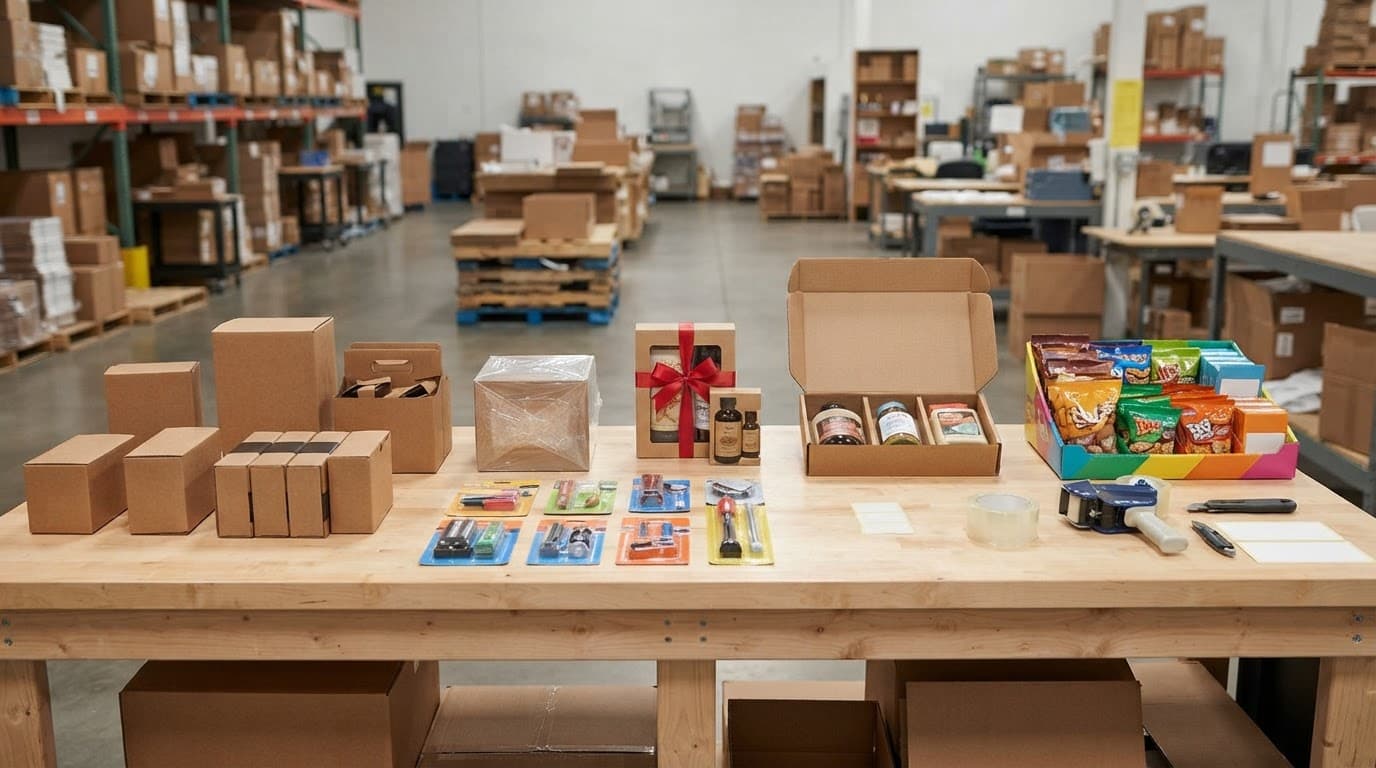
- Single-item repacks place one product in a new carton, sleeve, poly bag, or retail box. This helps when a retailer requires a specific package size or when damaged packaging needs replacement.
- Multipacks group identical units, such as three shampoos or six snack bars, for wholesale or retail sales.
- Club-store packs use larger counts, reinforced packaging, and pallet-friendly configurations for warehouse clubs.
- Promotional bundles combine a product with a sample, coupon, seasonal item, or limited-time gift. A sunscreen bottle paired with a travel-size lotion is one example.
- Multi-SKU kits combine different products into one sellable set, such as a shampoo, conditioner, and styling product kit.
- Shrink-wrapped products use clear film to hold products together, protect them from dust, and keep the bundle visible.
- Blister packs seal small products inside molded plastic pockets, which works well for batteries, accessories, and health or beauty items.
- Display-ready packaging arrives configured for quick placement on store shelves or counters, reducing stocking work.
- Custom labels update barcodes, product information, pricing, language, or retailer-specific details without replacing the entire package.
These formats support retail-ready packaging services when brands need products prepared for different stores, promotions, or pack sizes.
How Repackaging Differs From Kitting, Co-Packing, and Fulfillment
The terms overlap, but they describe different parts of the operation. Kitting combines separate items into one finished set. Co-packing, or contract packaging, is broader outsourced work that may include repackaging, filling, sealing, assembly, labeling, and display construction.
Fulfillment handles inventory storage, order picking, packing, shipping, returns, and distribution. One project may use all four services: a provider receives inventory, assembles a promotional kit, applies a new barcode, shrink-wraps the finished unit, and ships it to stores or ecommerce customers.
When Does Your Business Need Repackaging Services?
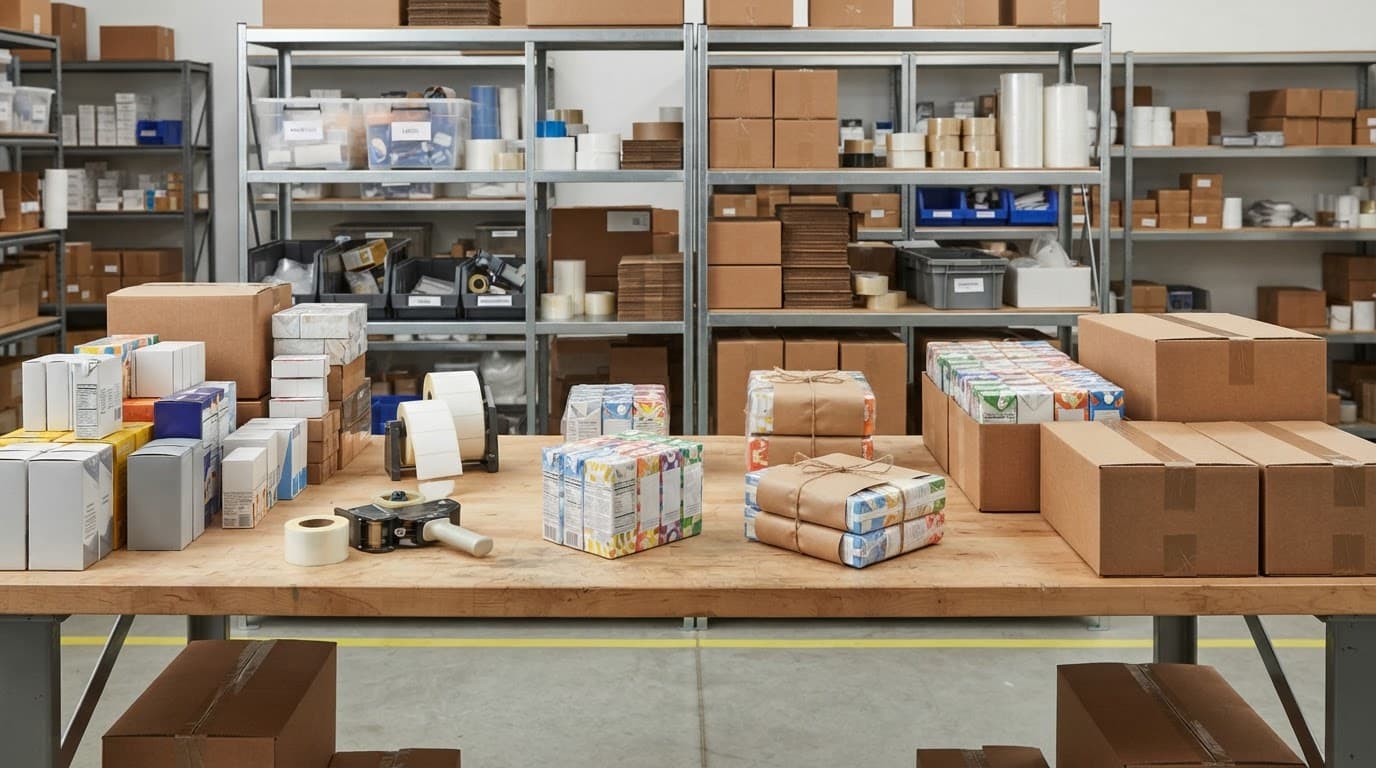
Repackaging services make sense when packaging changes, demand rises, labor becomes limited, or retail requirements exceed your internal capacity. Outsourcing can protect production output while your employees stay focused on manufacturing, quality, and customer orders.
Your Product or Packaging Is Changing
New SKUs, package sizes, artwork, warnings, languages, and retailer-specific labels can create more work than your current line can handle. Seasonal offers, market expansion, and new sales channels may also require different bundles, case counts, inserts, or shipping configurations.
A repackaging partner lets you make these updates without rebuilding your internal operation. For example, over-labeling may be practical when the original package remains usable but needs a revised barcode, product detail, language, warning, or retailer instruction. This can reduce material waste and avoid replacing otherwise sound packaging.
Demand Has Spiked or a Promotion Is Coming
Holiday demand, product launches, promotional bundles, club-store orders, and sudden retail commitments often create short-term labor needs. Hiring, training, and equipping a permanent team may cost more than the brief surge justifies.
Share your forecast, launch date, expected unit volume, package specifications, and retailer requirements as early as possible. Early planning gives the provider time to schedule labor, source materials, test the pack configuration, and coordinate shipping. Businesses that need packaging and shipping support together can also review integrated packaging and fulfillment solutions to reduce handoff delays.
Your Team Is Losing Time to Manual Packaging Work
Look for warning signs inside your facility. Production employees may be leaving normal tasks to build kits, pack displays, or replace labels. Inconsistent pack quality, dock backlogs, overtime, missed shipping windows, and repeated rework point to a capacity problem.
A specialist can use hand assembly for detailed kits and short runs, then apply more repeatable processes when volume increases. The decision should account for labor cost, throughput, and customer service, not packaging appearance alone. Frequent errors also consume time through cleanup, paperwork, retraining, schedule changes, and delayed shipments.
Retail, Labeling, or Compliance Requirements Have Changed
A new buyer may require different barcode placement, case markings, product instructions, warnings, lot details, or pallet labels. GS1 guidance distinguishes consumer units from shipping cases, and some workflows require data such as GTINs, lot codes, expiration dates, or an SSCC logistics identifier.
Provide regulatory, material-handling, temperature, and hazardous-product information before requesting a quote. Confirm final requirements with the applicable regulator, retailer, or compliance professional, since a repackaging provider can follow approved specifications but shouldn’t determine your legal obligations.
How the Repackaging Process Works From Intake to Final Shipment
A successful repackaging project follows a documented sequence, although the exact steps depend on the product, format, volume, and destination. Planning, receiving, inspection, setup, production, quality checks, inventory updates, and shipping should connect through written work instructions and approved samples.
Project Planning Starts With Product and Packaging Specifications
Before requesting a quote, prepare:
- Product dimensions, weight, and unit counts.
- Case quantities and current packaging details.
- Desired finished format, materials, labels, artwork, and barcodes.
- Pack-out rules, inserts, orientation, and sealing requirements.
- Expected volume, production timeline, and storage needs.
- Shipping destinations, retailer requirements, and delivery appointments.
Complete specifications give the provider a clear production target. They also help estimate labor, materials, storage space, equipment, setup time, and freight accurately. Missing artwork, unclear case counts, or late barcode changes can cause rework and delay production.
When packaging, distribution, transportation, and ecommerce fulfillment need to work together, a partner with a broader packaging, distribution, and transportation service offering may reduce handoffs.
Receiving, Inspection, and Repackaging Production
The provider first receives inventory against the purchase order or advance shipment notice. Staff count pallets, cases, and units, then check product condition, packaging damage, lot information, and expiration dates when relevant. Any shortage, damage, or mismatch should be documented before the inventory enters production.
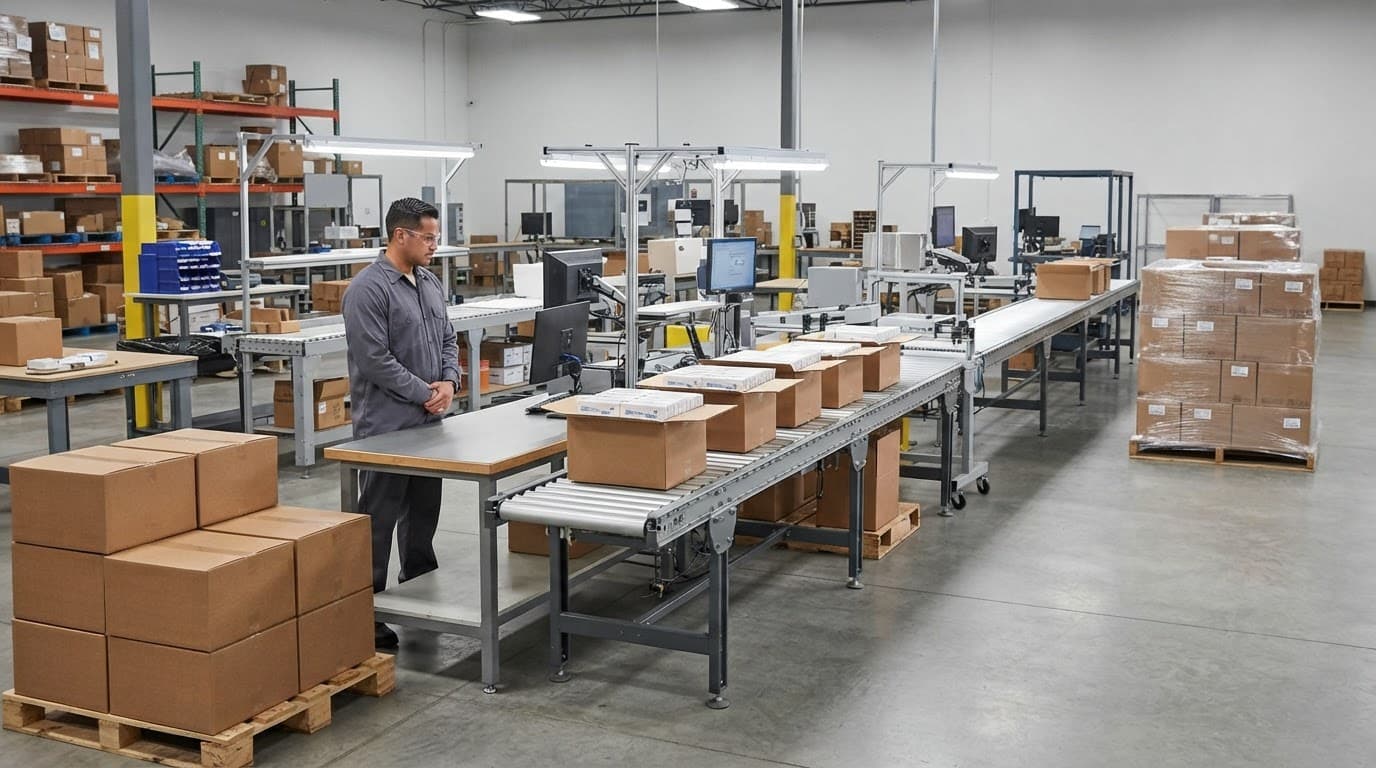
After inspection, materials move to a designated staging area. Workers follow approved instructions to remove old packaging, sort units, assemble components, apply labels, add inserts, seal packs, and build displays. Hand assembly often fits complex kits, unusual products, or short runs. For repeatable, high-volume work, standardized equipment can improve consistency and throughput.
Quality Control, Inventory Accuracy, and Release to Shipment
Quality checks should include approved sample comparisons, visual inspection, label review, barcode scans at pick and pack, and count reconciliation. Providers should record mispicks, wrong labels, missing inserts, seal failures, damage, and other defects by SKU, quantity, location, and date.
Lot or batch tracking supports traceability. Use FIFO for suitable non-expiring products and FEFO when expiration dates determine shipping priority. Suspect inventory should enter a documented hold process until an authorized person approves rework, replacement, return, disposal, or release.
Ask for weekly exception summaries and monthly trend reports. Repeated issues should lead to root-cause actions, such as revised instructions, retraining, added scans, or equipment adjustments. Only approved, accurately counted inventory should move to final shipment.
The Main Benefits of Outsourcing Repackaging Work
Outsourcing repackaging can improve more than packaging capacity. It can affect labor costs, production schedules, product protection, retail acceptance, inventory accuracy, and delivery performance. The right partner gives you access to trained labor and suitable equipment without requiring you to build every capability in-house.
Control Labor Costs Without Sacrificing Capacity
Repackaging demand rarely stays consistent. A promotion or new retail order may require extra labor for only a few weeks, while hiring and training short-term employees can create costs that last longer than the project. Outsourcing can reduce overtime, protect production schedules, and free your employees for manufacturing, quality control, customer orders, or other higher-value work.
A provider with both manual and automated capabilities can match the process to the run size. Hand assembly may fit a small promotional kit or complex multi-SKU bundle, while equipment may provide better consistency for a large shrink-wrapping or labeling run. Before choosing a vendor, compare the full operating cost, not only the quoted per-unit price. Include supervision, training, equipment, floor space, rework, materials, storage, and schedule disruption.
Compare contract packaging costs and ROI before assuming either option is cheaper. Savings depend on product complexity, volume, labor rates, materials, storage requirements, and shipping needs.
Improve Product Protection and Shelf Presentation
Packaging quality protects products during handling and transportation while helping them look ready for sale. Shrink wrapping can stabilize multipacks and pallet loads, limit shifting, and protect items from dust or incidental contact. Blister packaging can hold small products securely, reduce tampering opportunities, and display the item clearly on a retail peg.
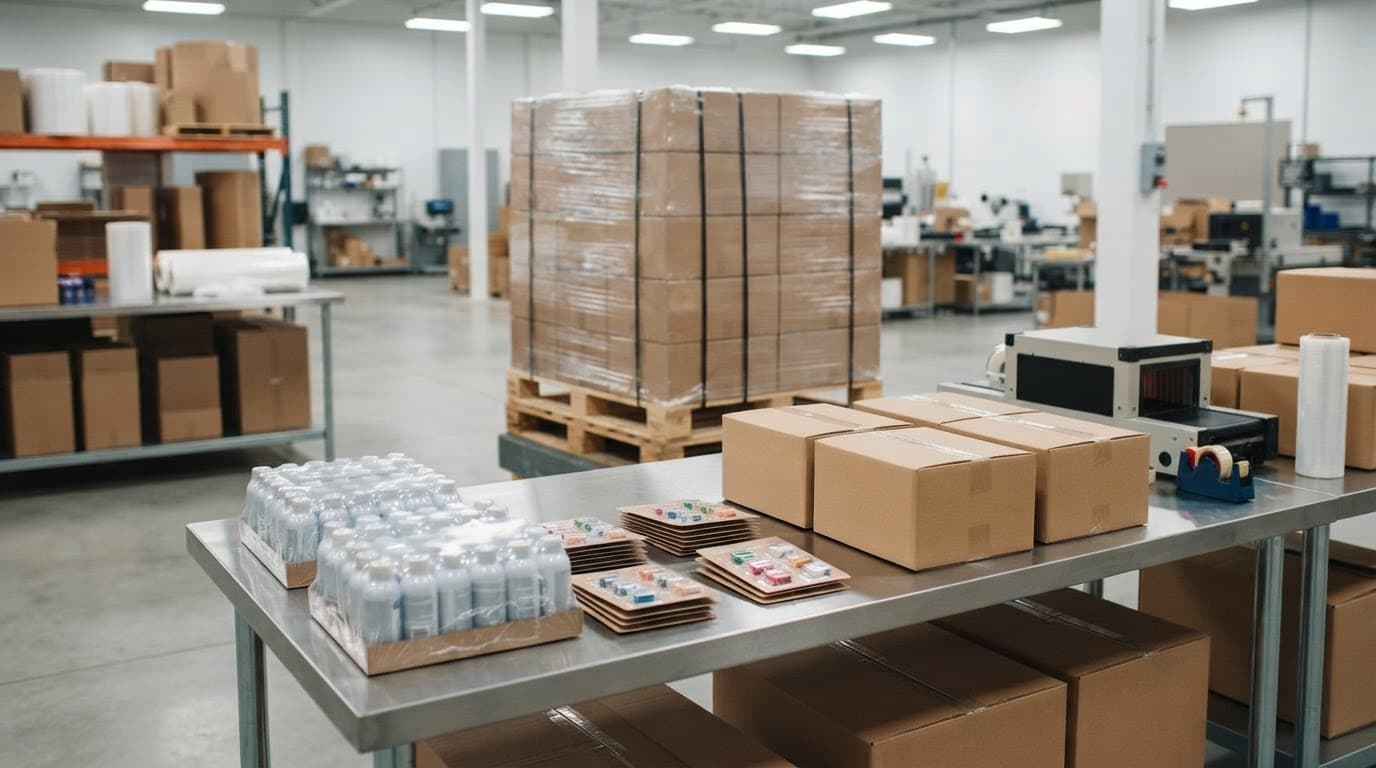
A reliable package can reduce damage, rejected shipments, returns, and product handling at the store. It also supports retail readiness through accurate labels, clean seals, consistent counts, and shelf-friendly configurations. Customers may not comment on a correctly packaged product, but they notice crushed cartons, broken seals, missing components, and poor presentation. Those problems can weaken trust and harm your brand reputation.
Connect Packaging With Fulfillment and Distribution
When one coordinated workflow covers repackaging, storage, order processing, retail distribution, transportation coordination, and direct-to-consumer shipping, products require fewer handoffs. That can reduce duplicate handling and communication gaps between packaging teams, warehouses, carriers, and fulfillment departments.
The practical gains include better inventory visibility, fewer quantity mismatches, faster order release, and improved on-time delivery. An integrated provider can move finished goods into storage or shipment preparation without repeatedly recounting or relocating them. Ask whether the partner supports blister packaging and order fulfillment when your products need both specialized protection and downstream distribution.
Repackaging Costs: What Determines the Price?
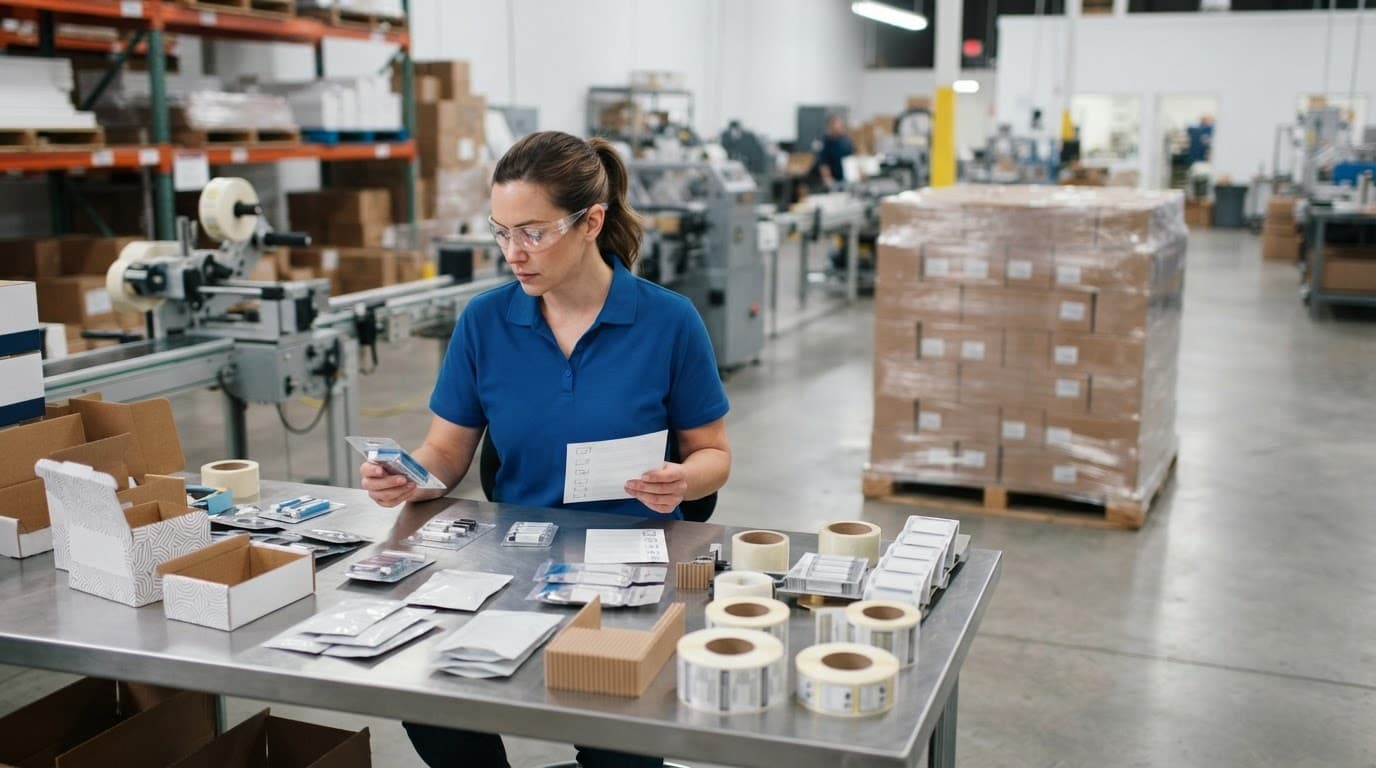
Repackaging providers usually quote each project individually because no two jobs require the same combination of labor, materials, equipment, and controls. A simple relabeling run may take minutes per unit, while a multi-SKU kit with inserts, inspections, and several approvals can require a very different process.
High-Volume Runs Compared With Short, Complex Projects
Large, repeatable runs often support equipment efficiencies, standardized work instructions, and faster operator training. As volume increases, setup costs and fixed expenses can spread across more sellable units. However, repeat orders still depend on run frequency, SKU count, and how often the line must change over.
Short projects can cost more per unit when they involve multiple labels, inserts, pack configurations, approvals, or special handling. Each added component creates another point for staging, counting, inspection, and rework. Product dimensions also matter because oversized, fragile, or unusual items may require slower hand packing or custom materials.
Ask whether the provider can support both steady demand and occasional spikes. A partner may use manual assembly for a complex short run, then apply suitable equipment to a larger repeatable program. Confirm minimum volumes, setup charges, artwork changes, storage, quality checks, rush timelines, and outbound shipping in writing.
How to Compare a Quote With Your Internal Cost
A per-unit price is only one part of the project cost. Compare the quote with your fully loaded internal expense, including:
- Wages, benefits, overtime, supervisors, and training.
- Packaging supplies, equipment, maintenance, utilities, and facility space.
- Setup time, changeovers, staging, storage, and inventory handling.
- Downtime, rework, damage, quality checks, and inventory errors.
- Missed shipping windows, expedited freight, and schedule disruption.
Request a sample cost model that states its assumptions for volume, labor hours, line speed, materials, yield, storage duration, and shipping responsibility. The true unit cost of repackaging should include base labor, setup, materials, quality control, storage, waste, and freight divided by the number of sellable units shipped.
The lowest unit price may not offer the best value if reporting is weak, inspections are limited, or delivery performance is unreliable. Before approving the work, document change-order rules, minimum charges, material markups, quality requirements, and fees for rush production or extra handling.
How to Choose a Repackaging Services Provider
The right repackaging provider should match your product, package format, volume, timeline, compliance needs, and sales channels. Review the operation as carefully as you would review a supplier, because a weak fit can create labeling errors, missed ship dates, and excess rework.

Check Capabilities, Capacity, and Flexibility
Ask whether the provider handles the formats your program requires, including:
- Shrink packaging, over-labeling, and barcode application.
- Blister packs, promotional kits, and multi-SKU bundles.
- Retail displays, club-store formats, and custom corrugate.
- Reboxing, inserts, case-count changes, and ecommerce-ready packs.
Then confirm how the operation handles new SKUs, seasonal demand, volume spikes, short-notice artwork changes, and repeat production. Request examples of similar products and pack sizes rather than accepting a general claim that the team can handle anything.
Capacity should include available lines, shifts, staffing, current lead times, and peak-season availability. Ask whether the same provider can support retail orders, B2B shipments, and direct-to-consumer ecommerce fulfillment when your channels overlap. Providers that support packaging design and assembly services may also reduce handoffs between planning, production, storage, and final delivery.
Review Quality, Traceability, and Reporting
A reliable partner should explain how it prevents wrong labels, mixed SKUs, count errors, and damaged shipments. Ask about barcode scans, label-swap controls, inventory accuracy, cycle counts, lot or batch tracking, and the use of FIFO or FEFO when product age affects shipment priority.
You should also understand how the provider handles damage categories, nonconforming-product holds, corrective actions, complaints, and final release. Request a sample production and inventory report, then ask how often you will receive performance data. Useful measures may include defect rates, rework, shortages, inventory adjustments, on-time completion, and shipment accuracy.
Safety belongs in the review as well. Ask for incident rates, near-miss rates, lost-time injuries, and training completion records. Frequent incidents can remove workers from the floor, interrupt a line, and delay orders. Check facility controls, employee training, insurance coverage, and any applicable quality certifications for your product category.
Confirm Communication, Timelines, and Total Scope
Before signing, identify who owns artwork approval, material purchasing, transportation, storage, inventory updates, retailer routing rules, and final release. Ask for standard lead times, service-level expectations, escalation contacts, contingency plans, and change-order procedures.
The quote should state what it includes, such as setup, materials, inspections, storage, freight coordination, waste, rework, and rush fees. A test run with real components and approved packaging gives you evidence before a major launch. Set acceptance criteria for accuracy, output, yield, damage, rework, and completion time, then compare the results with the provider’s promises. Finally, speak with recent customers handling similar volumes and formats. References often reveal communication and consistency issues that a sales presentation won’t show.
Common Repackaging Mistakes That Create Delays and Extra Cost
Most repackaging problems begin before the first unit reaches the worktable. Incomplete specifications, outdated product data, late artwork, and unclear ownership can turn a simple packaging change into rework, missed retail deadlines, or shipping errors. A documented process gives your provider and internal team the same operating standard.
Starting Production Without an Approved Sample
Production should not begin until a physical or digital sample receives written approval. The sample confirms the component count, label location, barcode readability, seal quality, product orientation, case pack, and finished appearance.
That reference gives the provider and client a shared standard. It also makes later quality checks more objective because inspectors can compare finished units against an approved result instead of relying on memory or informal instructions. GS1 guidance also emphasizes accurate barcode placement, size, contrast, and quiet zones, so a barcode that looks acceptable on artwork still needs testing on the finished package.
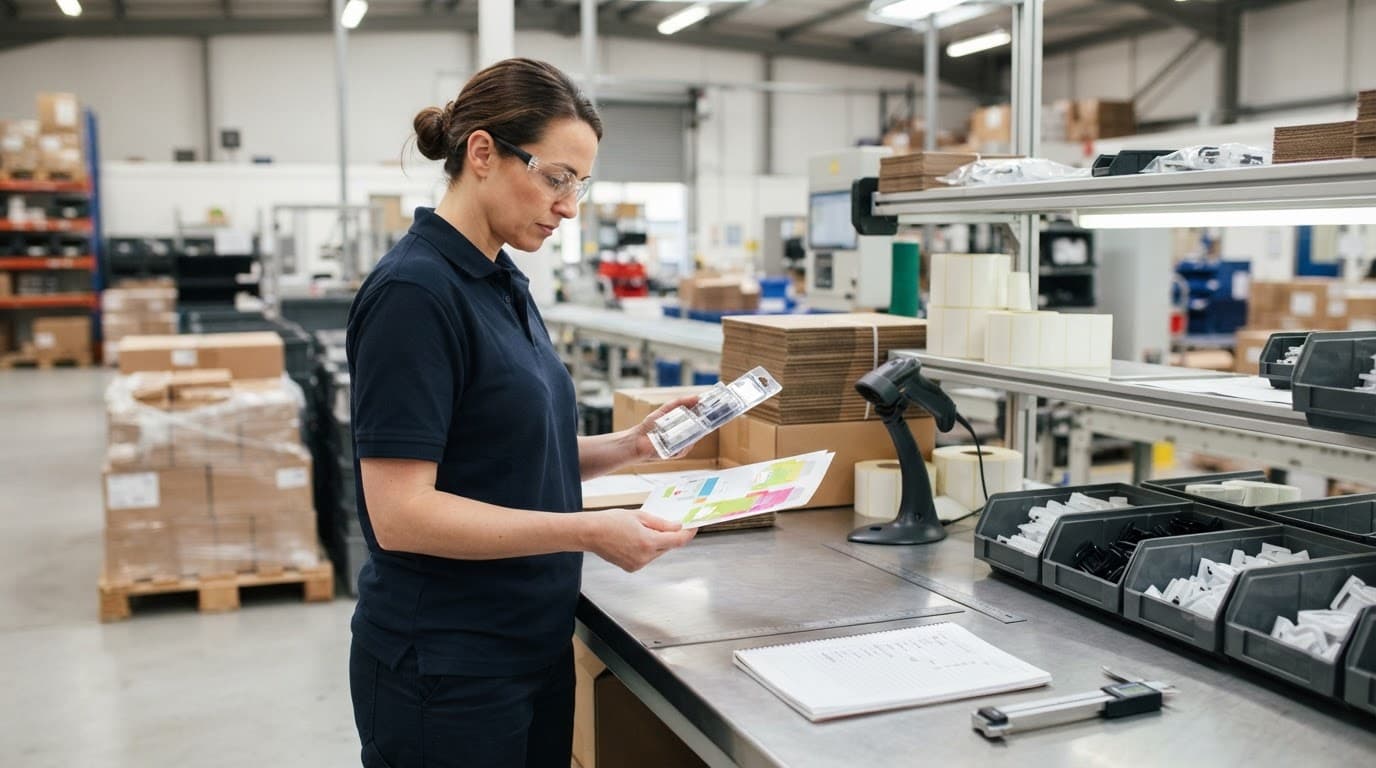
Late artwork or an unapproved label can stop an entire run. Assign one person to approve artwork, samples, and changes, then record the approval date and version before releasing materials.
Treating Inventory Data and Packaging Instructions as Separate
Packaging instructions and inventory records must agree. A wrong SKU number, outdated bill of materials, unclear pack-out direction, or missing lot rule can cause mispicks, mixed cases, incorrect counts, and rejected shipments.
Keep one controlled source for product master data, including SKU numbers, component quantities, case packs, dimensions, lot requirements, and expiration rules. Use version-controlled work instructions with revision dates, photos, barcode details, and acceptance criteria. Every change should identify who requested it, who approved it, when it takes effect, and which inventory is affected.
For brands combining packaging with fulfillment, scan-verified packaging and inventory accuracy can help connect pack-out controls with downstream order processing.
Choosing a Provider Based Only on Price
An inexpensive quote can become expensive after product damage, rework, extra handling, weak reporting, or a missed retail appointment. Compare reliability, quality controls, communication, scalability, and total landed cost alongside the stated unit price.
Also discuss returns before work begins. Your policy should define eligibility, deadlines, refund or exchange choices, and exceptions for final-sale, opened, damaged, or incomplete goods. If repackaged products reach consumers, clear return instructions and a documented inspection process help customer service respond consistently when an order has a problem.
Frequently Asked Questions
Repackaging projects often raise practical questions about volume, timing, materials, returns, and shipping. These answers can help you decide whether a provider fits your operation before requesting a quote.
Is there a minimum order volume for repackaging services?
There is no universal minimum for every project. Providers usually set requirements based on SKU complexity, packaging format, setup time, artwork, equipment, and whether custom materials or printing are needed.
A small relabeling job may have a different minimum than a multi-SKU kit or custom retail display. Ask about minimum run sizes, setup fees, and whether the provider can combine smaller runs into a scheduled production program. You can also review this repackaging services FAQ for additional planning considerations.
How quickly can a repackaging project be completed?
Turnaround depends on the number of units, inspection depth, assembly steps, material availability, and deadline. Standard relabeling or simple repacking may move quickly, while complex kits, damaged inventory, or custom printed packaging require more preparation.
Share your target ship date before production begins. The provider should confirm time for receiving, inspection, material sourcing, setup, production, quality checks, and outbound transportation.
Can a provider process customer returns?
Yes, many repackaging providers can inspect returned products and determine whether each unit can return to sellable inventory. The agreed procedure may include checking condition, photographing damage, replacing packaging, applying labels, restocking, returning products to a supplier, or disposing of nonconforming goods.
Your returns policy should define eligibility, deadlines, refund or exchange options, and exceptions. Clear rules help the warehouse make consistent decisions and give your customer service team accurate information.
Who supplies the replacement packaging materials?
The provider may supply plain cartons, corrugated boxes, polybags, protective fillers, inserts, tape, padded mailers, or other standard materials. Branded boxes and printed inserts require approved artwork, specifications, and additional planning.
Tell the provider whether the finished package must match your current design or only meet protection and channel requirements. A sample run can confirm fit, appearance, sealing, and shipping durability before you purchase materials in bulk.
What information should you provide for a quote?
Send a SKU list, product photos, unit quantities, packaging instructions, label files, barcode details, target format, deadline, and final destination. Include product condition when the project involves returns, damaged cartons, or inspection-based recovery.
Also explain required counts, inserts, lot controls, case packs, storage needs, and shipping responsibilities. Complete information produces a more accurate estimate for labor, materials, setup, quality checks, and freight.
Can repackaged products ship directly to customers or retailers?
Many providers can move finished goods into retail distribution, B2B orders, or direct-to-consumer fulfillment after repackaging. Direct handoff reduces extra handling and helps maintain accurate counts between production and shipment.
Confirm order processing, storage, carrier coordination, routing rules, delivery appointments, and inventory-system updates before signing. One documented workflow makes responsibility clear after the repackaging line finishes.
Conclusion
Businesses typically need repackaging services when packaging changes, labor pressure, retail requirements, demand spikes, or quality problems make internal work slow or risky. The strongest partner should match the required formats, maintain clear quality and inventory controls, provide accurate reporting, adjust to changing volumes, and deliver finished products on schedule.
Before requesting a contract packaging consultation and quote, document your products, volume, timeline, packaging specifications, and channel requirements. Clear information gives the provider what it needs to recommend a practical repackaging plan.
