
Flexible Packaging vs Rigid Packaging, How to Choose Right
Choosing between flexible packaging and rigid packaging affects more than how your product looks on a shelf. It shapes your costs, shipping weight, storage space, product protection, and the way customers feel when they open the box or pick it up in a store.
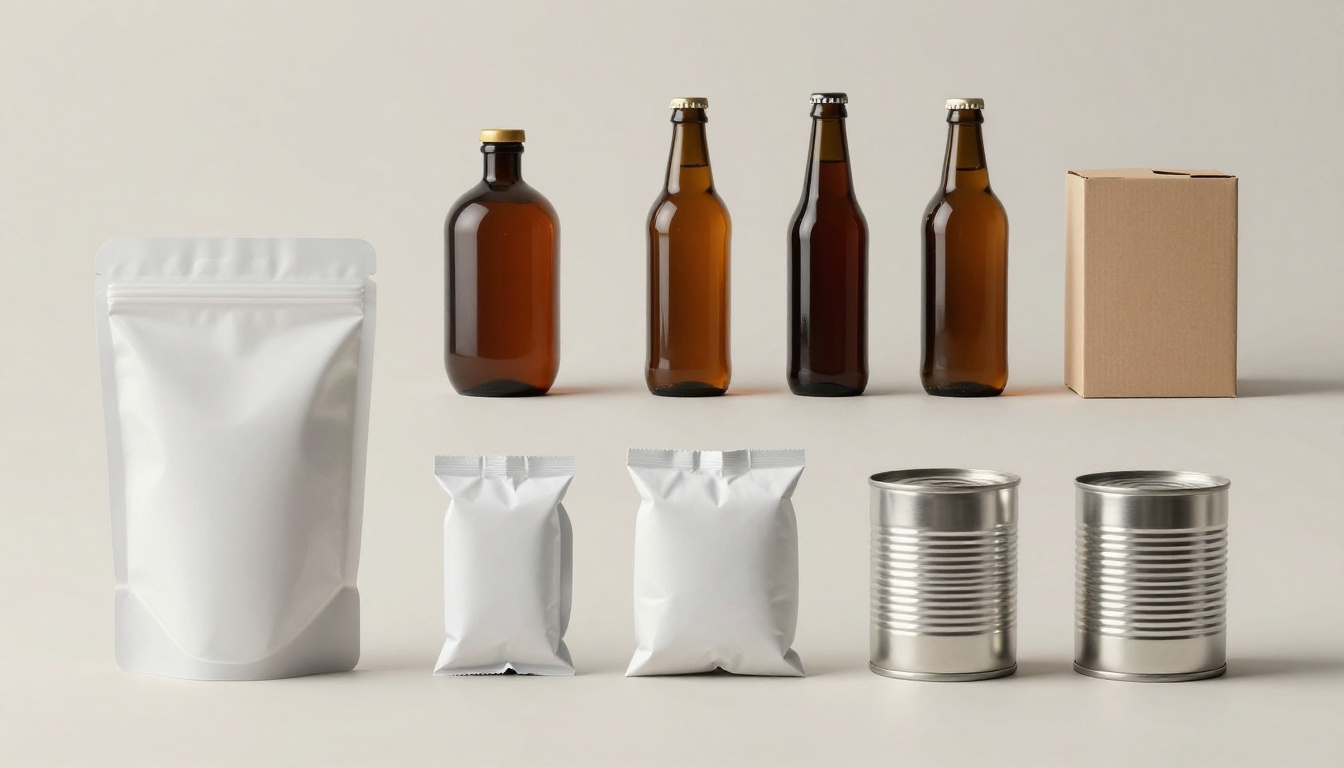
In simple terms, flexible packaging includes pouches, bags, wraps, and films that can bend or fold. Rigid packaging includes bottles, jars, cans, trays, and boxes that hold their shape. For business owners, product teams, and growing brands, the right pick depends on what you sell, how it ships, how long it needs to last, and what your buyers expect from your brand experience. If packaging is part of how customers judge quality, your visual identity matters too, which is why strong branding and rebranding services can support the decision.
There isn’t one right answer for every product. In most cases, flexible packaging wins on cost and shipping efficiency, while rigid packaging stands out for protection, structure, and shelf presence. Next, let’s look at the trade-offs that matter most before you choose.
Start with the basics: what flexible and rigid packaging actually mean
Before you compare cost, durability, or shelf appeal, it helps to define the two categories clearly. Flexible packaging bends, folds, or conforms to the product. Rigid packaging keeps its shape, even when empty. That sounds simple, but the difference affects almost every part of your operation, from shipping and storage to branding and customer trust.
What counts as flexible packaging
Flexible packaging covers a wide range of formats made from film, foil, paper, or layered materials. You’ll see it everywhere because it adapts well to different product types and takes up less space before filling.
Common examples include:
- Stand-up pouches, often used for coffee, pet treats, granola, powders, and snacks because they can stand on a shelf and hold a lot in a small footprint.
- Flat pouches, which work well for single items, sample packs, frozen foods, and dry mixes.
- Stick packs, popular for drink powders, supplements, sweeteners, and other single-serve products.
- Flow wraps, often used for candy bars, bakery items, bars, and small consumer goods.
- Vacuum bags, common for meats, cheese, seafood, and other products that need tighter sealing.
- Lidding films, used to seal trays and cups for items like yogurt, ready meals, fresh produce, and deli foods.
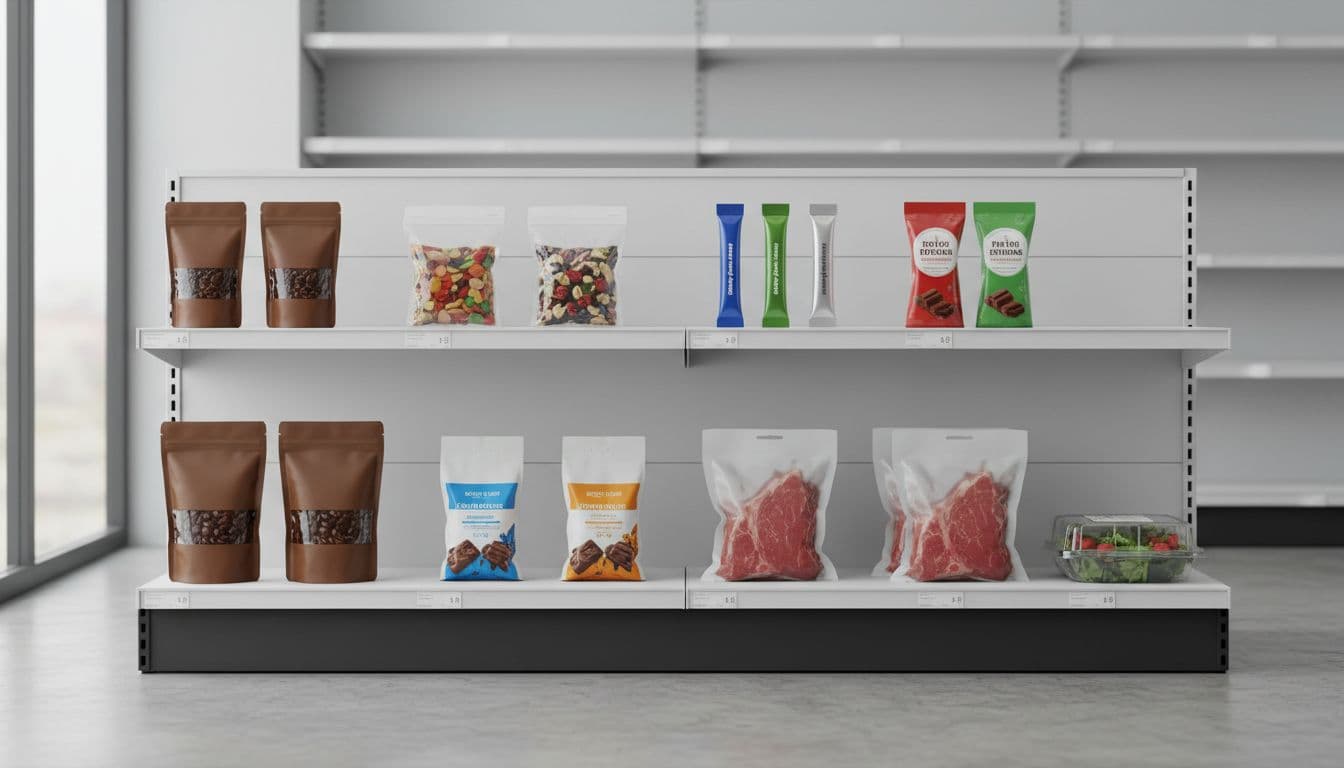
What makes flexible packaging attractive? First, it is usually lightweight, so shipping costs can drop. Second, it uses less space in storage and transit because empty packages ship flat or in rolls. In addition, it often adds shopper-friendly details like resealable zippers, tear notches, and easy-open seals.
That convenience matters. A pouch with a zipper can turn a one-time use pack into something customers keep reaching for in the pantry.
What counts as rigid packaging
Rigid packaging includes containers and structures that hold their form on their own. If you set it on a table empty and it still looks the same, it likely falls into this group.
Typical rigid packaging formats include:
- Bottles, used for beverages, sauces, health products, and cleaners
- Jars, often used for jams, spreads, sauces, and beauty products
- Clamshells, common for berries, salads, baked goods, and small retail items
- Tubs, often chosen for yogurt, dips, ice cream, and prepared foods
- Cans, used for food, beverages, aerosols, and shelf-stable goods
- Cartons, common for milk, broth, cereal, and many boxed goods
- Corrugated boxes, often used for shipping, retail displays, and bulk product protection
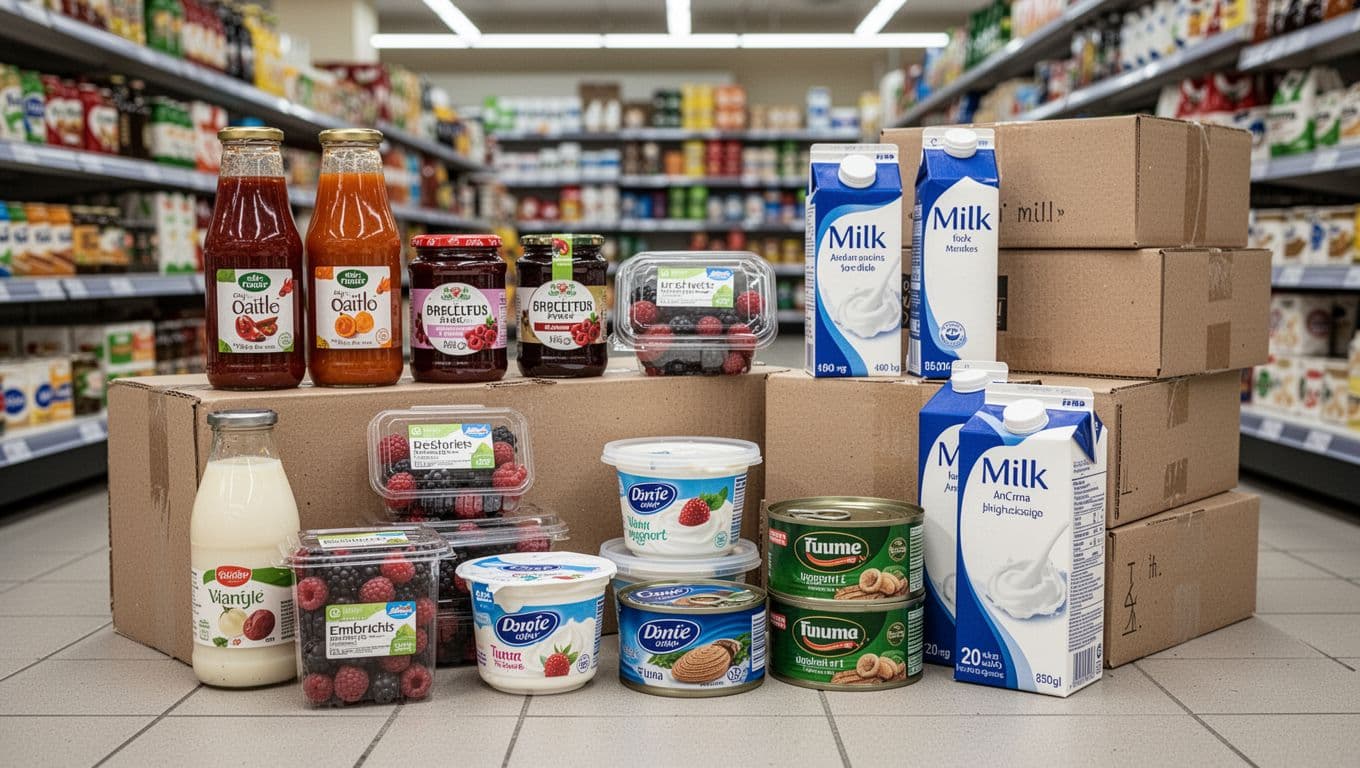
Brands often choose rigid packaging because it offers structure. It stacks well, protects fragile products better, and helps shape-sensitive items stay intact. A sauce in a glass bottle, for example, gives a very different feel than the same sauce in a pouch.
Rigid packaging can also create a stronger premium feel. Weight, shape, and shelf presence all influence how customers judge quality. That is one reason packaging choices often connect to broader brand identity fundamentals, especially when appearance plays a big role in buying decisions.
Rigid packaging is not always better protection, but it often gives brands more control over shape, presentation, and stacking strength.
Why the packaging type changes more than just looks
Packaging is not just a wrapper. It changes how a product moves through your business and how people experience it once it arrives. A lighter package can cut freight costs. A bulkier one can raise storage needs. A more protective format can lower returns and damage rates.
Here is a quick side-by-side view of the bigger impact:
| Business factor | Flexible packaging | Rigid packaging |
|---|---|---|
| Storage space | Usually takes less space before filling and during transport | Usually needs more room because it keeps its shape |
| Freight costs | Often lower because of reduced weight and volume | Often higher because of weight and bulk |
| Damage risk | Can work well, but depends heavily on product and film structure | Often better for fragile or shape-sensitive items |
| Shelf presence | Modern, efficient, and often strong for graphics | Strong visual structure and easier physical display |
| Unboxing and use | Often convenient, portable, and easy to reseal | Often feels sturdier and more substantial |
| Quality perception | Can feel smart and practical | Often feels premium or more protective |
The main point is this: choosing between flexible and rigid packaging is a business decision. It affects warehousing, shipping, merchandising, and customer perception all at once. If you are reviewing packaging as part of a larger growth plan, this is where operational thinking and business consulting services can help connect packaging decisions to margins, logistics, and brand goals.
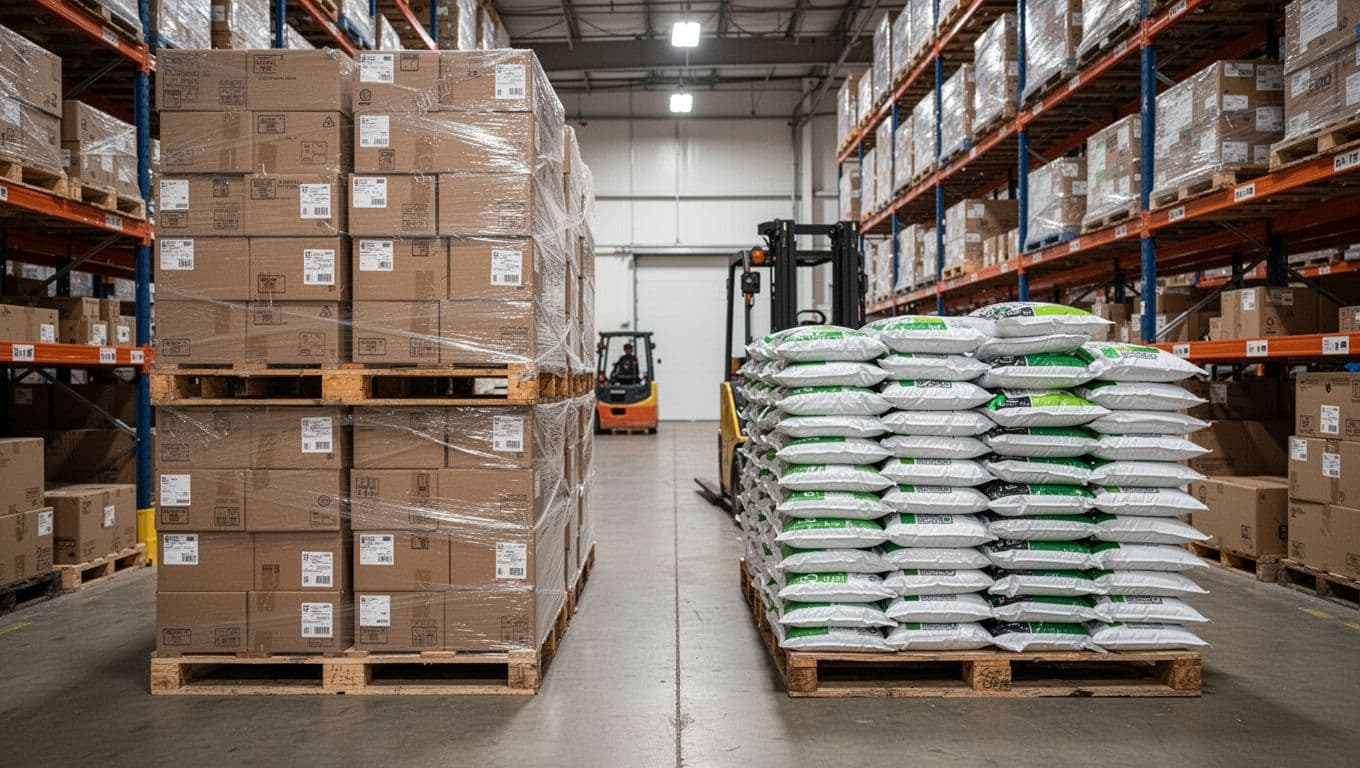
A good package works like a silent salesperson and a shipping assistant at the same time. It protects the product, supports the brand, and helps the numbers make sense. That is why the right choice starts with function first, then design.
Compare the trade-offs that matter most before you choose
Once you know the basic difference between flexible and rigid packaging, the real decision comes down to trade-offs. The best option is rarely the one with the lowest unit cost or the nicest look on a shelf. It is the one that fits your product, your shipping model, and the experience you want customers to have.
Think of packaging like a jacket. A light rain shell works great for some weather, while a heavy coat makes more sense in rough conditions. Packaging works the same way. The right choice depends on what your product needs day after day, from the warehouse to the customer’s hands.
Cost, shipping, and storage space
For many brands, flexible packaging wins the first math test. It usually uses less raw material, weighs less, and ships flat or in rolls before filling. That means you can store more units in less space, which helps if warehouse costs are tight or your operation needs to stay lean.
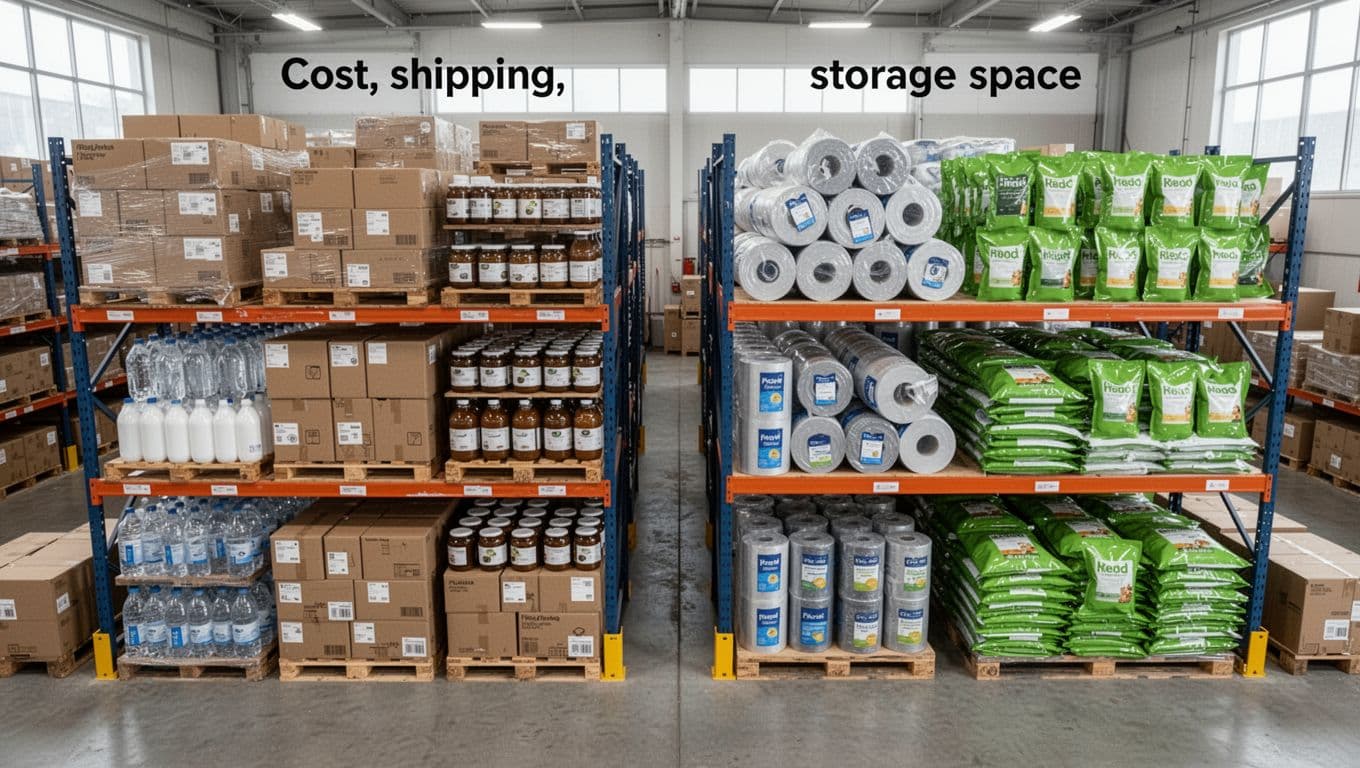
Freight often follows the same pattern. A lighter pouch or bag can lower shipping costs, especially when you move high volumes or ship direct to consumers. In e-commerce, every ounce matters. Smaller packs can also reduce how much space each order takes up in a carton, so you may fit more product into each shipment.
Rigid packaging, however, can earn back some of that higher cost in the right setting. Bottles, jars, tubs, and cartons hold shape better, stack more predictably, and can reduce product loss when items are heavy, fragile, or pressure-sensitive. If a flexible pack leads to dents, punctures, or crushed goods, the savings on freight can disappear fast.
Here is the practical way to think about total cost:
- Flexible packaging often lowers material use, storage footprint, and freight spend.
- Rigid packaging often adds cost in weight and space, but may lower damage rates.
- Your true cost depends on product type, order size, and how you fulfill orders.
A warehouse shipping pallets to retail stores may reach a different answer than a brand shipping single units through parcel carriers. In other words, do not judge packaging by price per piece alone. Look at the full chain, including storage, labor, freight, breakage, and returns.
The cheapest package on paper can become the most expensive one after storage fees, shipping charges, and damage claims show up.
Protection, shelf life, and leak resistance
Protection is where the choice gets more technical. Flexible packaging has improved a lot, and many modern films offer strong barriers against moisture, oxygen, and light. For coffee, powders, snacks, pet treats, and many dry goods, that can mean solid shelf life in a package that stays light and compact. Pet food is a prime example, since kibble and treats need strong moisture and oxygen barriers plus e-commerce durability, as covered in our guide to pet food packaging challenges.
Still, flexible formats have limits. They can face more risk from sharp edges, rough handling, or heavy stacking loads. A pouch may protect freshness well but still struggle if the product inside is hard, heavy, or likely to puncture the film. That is why barrier performance and physical toughness are not the same thing. A pack can keep air out and still need help resisting tears or pinholes.
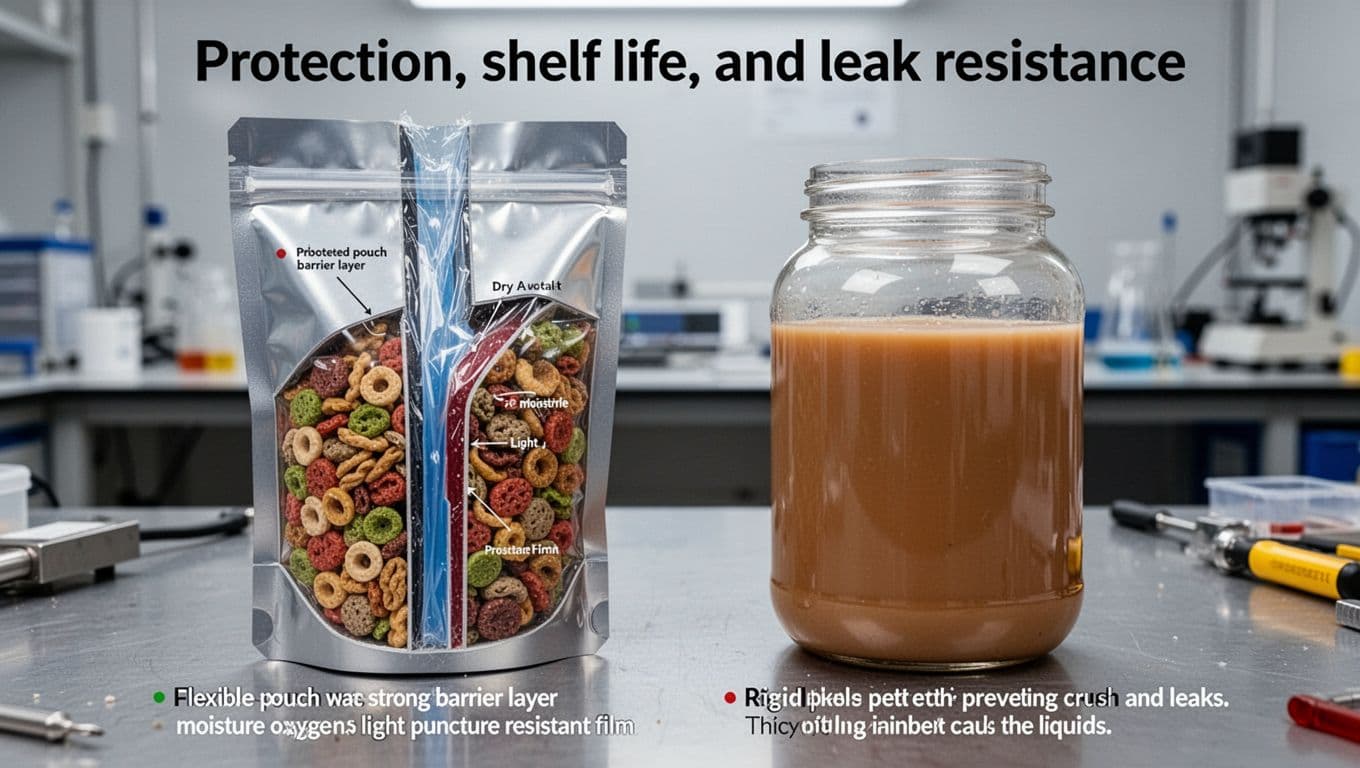
Rigid packaging brings different strengths. A bottle, jar, or tub gives the product shape support, which matters for liquids, delicate items, and products that should not get crushed. It can also improve leak control because closures, neck finishes, and wall thickness give you more structure to work with. If your product is heavy, breakable, or messy when spilled, rigid packaging often gives you a wider margin for error.
Tamper features matter too. Both formats can support tamper-evident designs, but they do it differently. Flexible packs may use tear strips, sealed seams, or shrink bands. Rigid containers often use induction seals, breakaway caps, or snap-fit closures. The right choice depends on how much reassurance your product category needs.
A simple rule helps here:
- Choose flexible packaging when barrier protection and space savings matter most.
- Choose rigid packaging when shape support, crush resistance, or leak control matter more.
- Test both if your product sits in the middle, especially for liquids, fragile foods, or heavy contents.
Shelf life should always be proven, not assumed. Lab testing, transit testing, and real-world handling tell the truth faster than specs on a supplier sheet.
Branding, shelf appeal, and customer convenience
Packaging does more than protect a product. It also tells customers what kind of brand they are buying from. Flexible packaging often gives you a large printable surface, bold color coverage, and space for strong front-panel design. A stand-up pouch can act like a mini billboard, especially in crowded categories where shelf attention is hard to win.
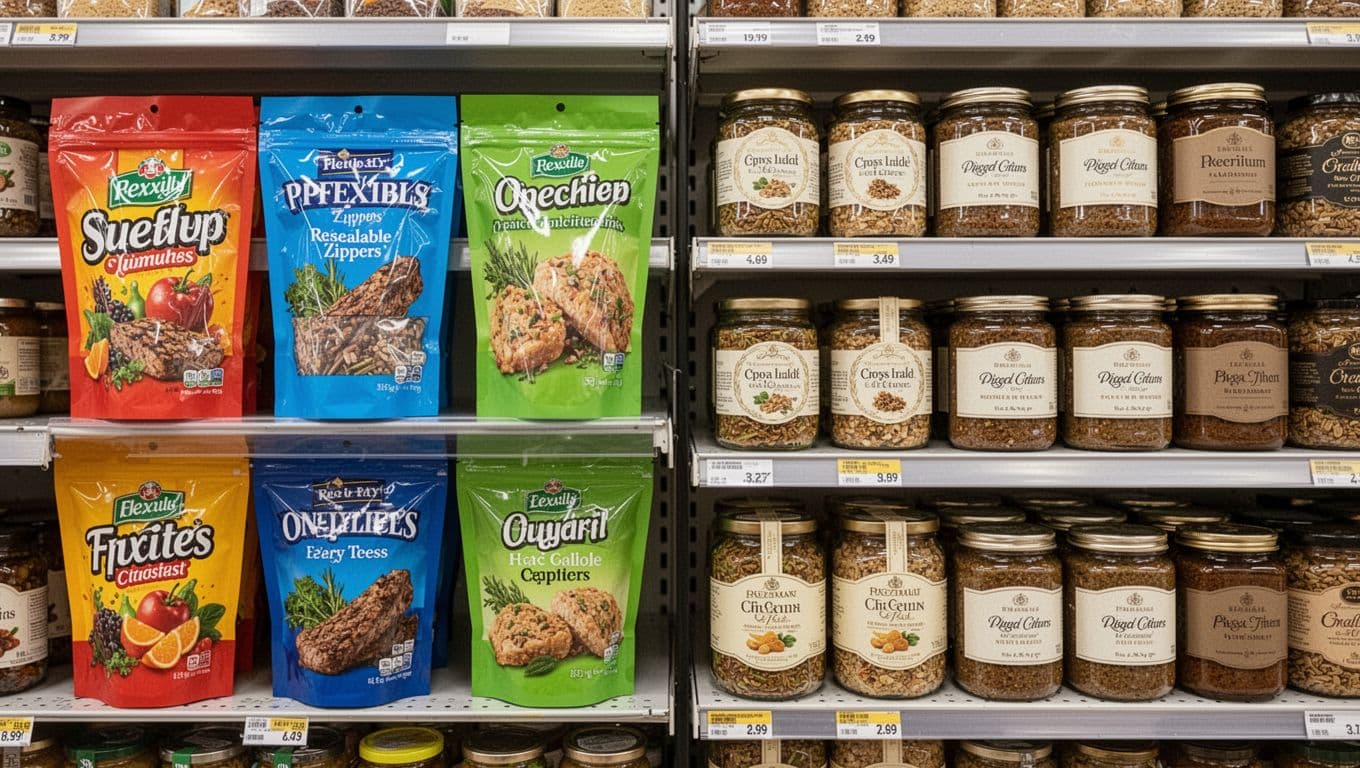
Flexible formats also tend to do well on convenience. They are easy to carry, easy to store, and often include details customers like, such as zippers, tear notches, or spouts. For busy buyers, that matters. A package that fits neatly in a bag or pantry often feels easier to live with, and that can shape repeat purchases more than brands expect.
Rigid packaging brings a different kind of appeal. Glass jars, sturdy bottles, and well-made cartons can feel more premium because they have weight, shape, and presence. They often look more durable, and for some products that sense of permanence supports trust. Think sauces, skincare, beverages, or giftable items. The container itself becomes part of the experience.
Presentation also affects how people see your business online and off. If packaging is a key sales tool, your visual identity should feel consistent across the shelf, your website, and your ads. That is where strong digital marketing services can help tie packaging presentation to the broader customer journey.
Here is where each format often stands out:
- Flexible packaging is strong for bold graphics, portability, resealability, and space-saving convenience.
- Rigid packaging is strong for premium feel, clear structure, label depth, and durability cues.
- Both can use transparent windows or clear materials, but the effect feels different. Flexible packs often feel modern and practical, while rigid containers can feel polished and substantial.
In the end, shelf appeal is not only about what looks best in a photo. It is about how the package feels in the hand, how easy it is to open and close, and whether it makes the product seem worth the price. That is the trade-off that tends to stick.
Match the packaging format to your product, industry, and buyer expectations
The best packaging choice depends on context, not preference. A pouch can be perfect for one product and a poor fit for another. The same goes for bottles, jars, tubs, and boxes.
Start with three filters: what you sell, where it sells, and what buyers expect when they hold it. When those line up, packaging feels natural. When they don’t, even a good product can feel awkward.
When flexible packaging is usually the smarter choice
Flexible packaging often works best for products that are light, dry, portable, or sold in smaller portions. Think snack foods, protein powders, drink mixes, spices, supplements, refill packs, and single-serve items. In these cases, a pouch or sachet does the job without adding bulk.
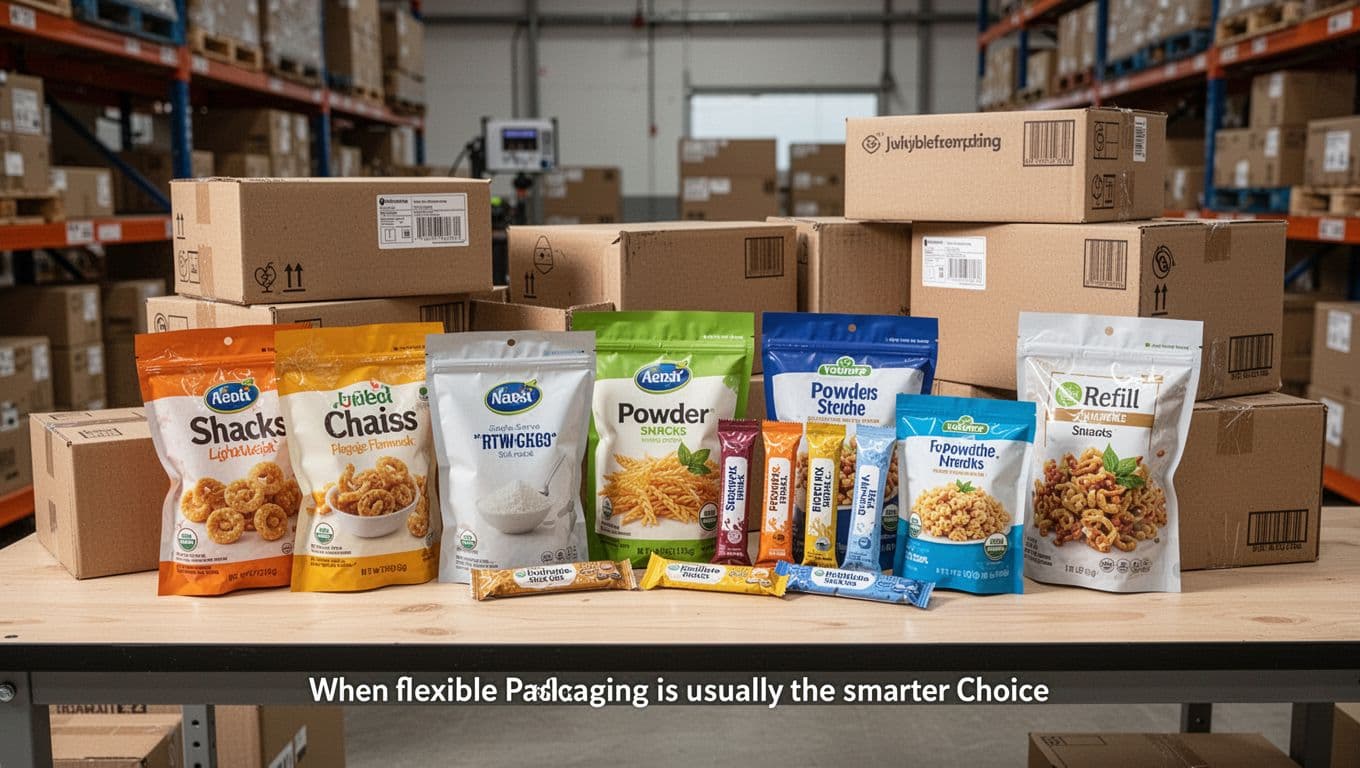
This format also helps brands that care about freight costs. Lighter packs usually mean lower shipping weight, less warehouse space, and better carton efficiency. For ecommerce brands and growing companies, that can protect margins fast.
Convenience is a big reason flexible packaging keeps winning. Buyers like packs that are easy to tear open, reseal, toss in a bag, or store in a small pantry. A refill pouch, for example, feels practical because it saves space at home and keeps repeat purchases simple.
In many categories, that ease becomes part of the pitch:
- Flexible packs travel well.
- They fit modern, on-the-go use.
- They make storage easier for both sellers and buyers.
If your customer wants something light and low-fuss, flexible packaging often feels like the right answer before they even read the label.
When rigid packaging makes more sense
Rigid packaging usually earns its place when the product needs more structure, more protection, or a stronger visual presence. Beverages are the obvious example. Bottles and cans handle liquids well, stack reliably, and support pouring, sealing, and portion control.
Fragile goods also lean rigid for a reason. Berries in a clamshell, a glass serum bottle in a carton, or a yogurt tub on a shelf all benefit from shape support. If the product can crush, leak, or lose form, rigid packaging gives you more control.
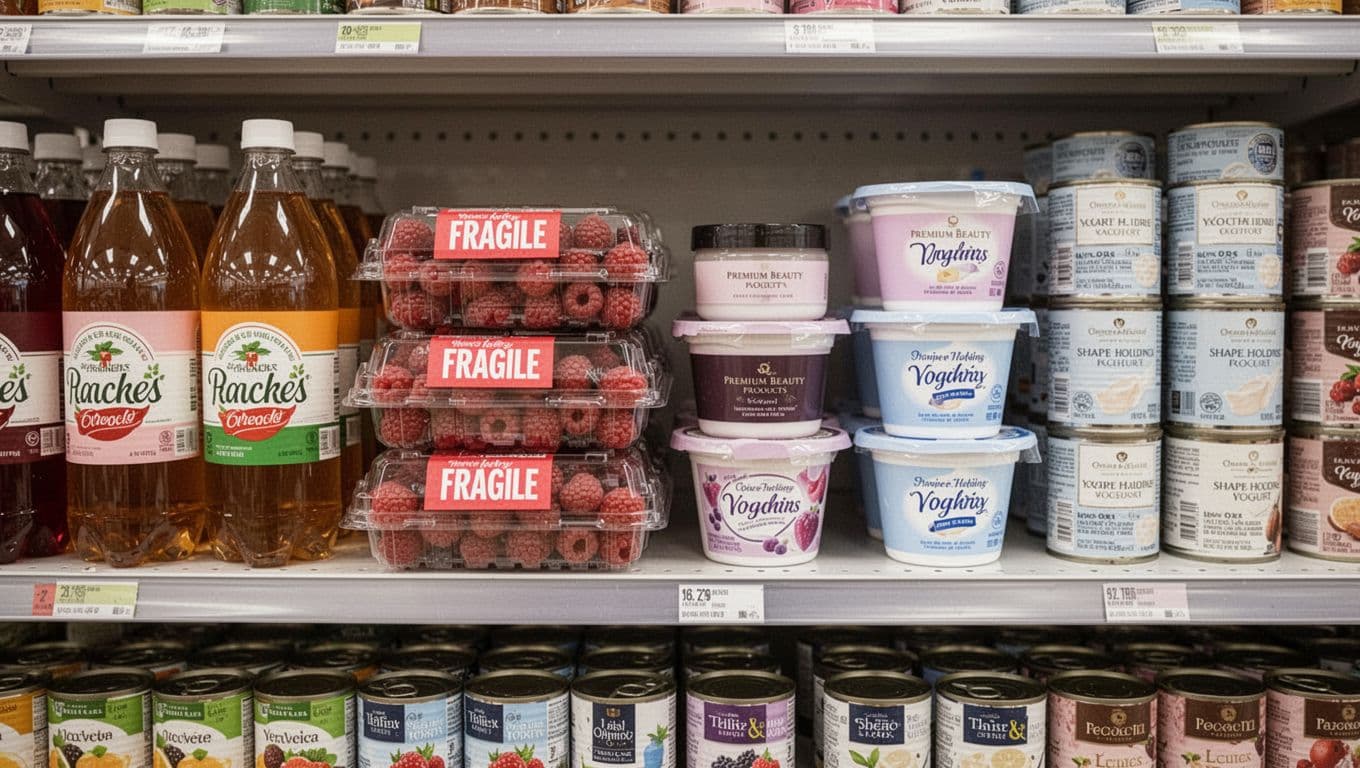
It also fits categories where trust matters at first touch. Premium beauty products, wellness items, sauces, and dose-sensitive goods often feel more credible in jars, bottles, or dispensers. That structure can signal quality, improve dosing, and support reuse after purchase.
Rigid packaging is often the better fit when you need:
- A container that holds shape all the time
- Better stacking strength in storage or retail display
- A more premium or protective feel
- Better support for shelf stability and repeat handling
Sometimes the package is part of the product experience. In those cases, rigid packaging is not just a shell, it’s part of why the item feels worth buying.
How sales channels can change the best answer
Sales channel can change the decision quickly. A product sold on a retail shelf faces different pressure than one shipped to a doorstep. In-store, packaging has to stand upright, catch attention, and survive stocking. In a warehouse system, stacking strength and pallet efficiency matter more.
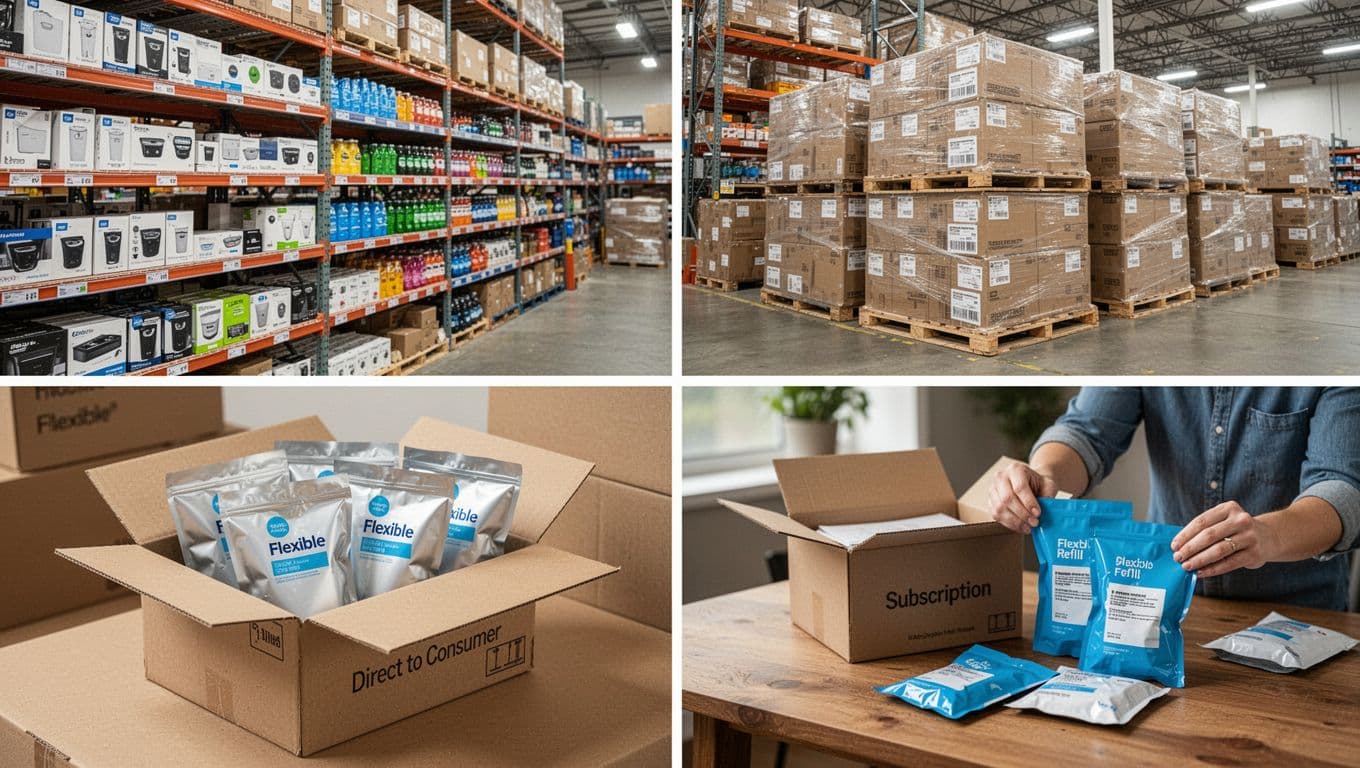
Direct-to-consumer brands often favor flexible packaging because parcel shipping punishes extra size and weight. A compact pouch can lower shipping costs and reduce storage needs at the same time. That matters even more when a brand is trying to boost e-commerce conversions by making the buying and delivery experience feel simple.
Subscription models shift the answer again. Refill packs can work well because they save space, travel well, and feel easy to reorder. Still, if presentation is part of the value, a rigid primary container paired with flexible refills can be the stronger model.
A quick channel check helps:
| Sales channel | What packaging usually needs most | Format that often fits |
|---|---|---|
| Retail shelves | Standout display, shelf presence, shape retention | Often rigid |
| Warehouse distribution | Stacking strength, pallet stability, damage control | Often rigid |
| Direct-to-consumer shipping | Lower weight, smaller parcels, easier fulfillment | Often flexible |
| Subscription | Repeat convenience, storage ease, refill potential | Often flexible, or hybrid |
Returns matter too. If a damaged package creates refunds, replacements, and support costs, the cheaper format may stop being cheaper. That’s why the best packaging choice is not just about the product itself. It’s also about the route that product takes before it reaches the buyer.
Think beyond the package: sustainability, operations, and long-term growth
Picking between flexible and rigid packaging is not just a cost or design call. It affects waste, freight, warehouse space, labor, and how easily your business can grow. A package can look smart on paper and still create problems later if it slows packing, raises damage rates, or locks you into the wrong supply setup.
That is why the best choice comes from looking at the full system. You are not only buying a container. You are shaping how product moves, how teams work, and how margins hold up over time.
What sustainability really looks like in flexible vs. rigid packaging
Sustainability claims can get shallow fast. A single label, such as “recyclable” or “lightweight,” never tells the whole story. What matters is how the package performs across sourcing, production, shipping, use, and end-of-life handling.
Flexible packaging often has a real advantage at the front end. It usually uses less material than rigid packaging, and it often weighs much less. As a result, more units can fit into each shipment, which may reduce freight emissions and storage needs. For high-volume products, that can make a meaningful difference.
Still, that does not make flexible packaging the automatic winner. In some markets, rigid formats like glass, aluminum, or certain plastics may be easier to collect, sort, reuse, or recycle because the local system already supports them. A sturdy bottle that gets reused many times can outperform a lighter pack that has no realistic recovery path.
There is also the product itself to think about. A package that reduces breakage, leaks, or spoilage may prevent more waste than a package with a better headline claim. If a fragile product arrives damaged, the environmental cost grows fast. You now have wasted product, replacement shipping, and extra disposal.
A practical review should look at four things together:
- The material source and how much material the pack uses
- The recycling or reuse access in the markets where you sell
- The transport impact from weight and cube
- The waste risk from damaged or spoiled product
The most sustainable package is often the one that works best in your real supply chain, not the one with the nicest claim on the label.
How packaging affects fulfillment, inventory, and scaling
Operations usually expose the true cost of a packaging choice. A package might save pennies per unit but add friction at every step after that. When order volume rises, those small delays start to feel like sand in the gears.
Flexible packaging often helps on space and speed. Empty pouches, films, and rollstock take up less room than jars, bottles, or tubs. That smaller footprint can free up warehouse space, lower storage costs, and make replenishment easier. In many setups, it also supports faster packing because staff handle lighter materials and fit more units into each carton or tote.
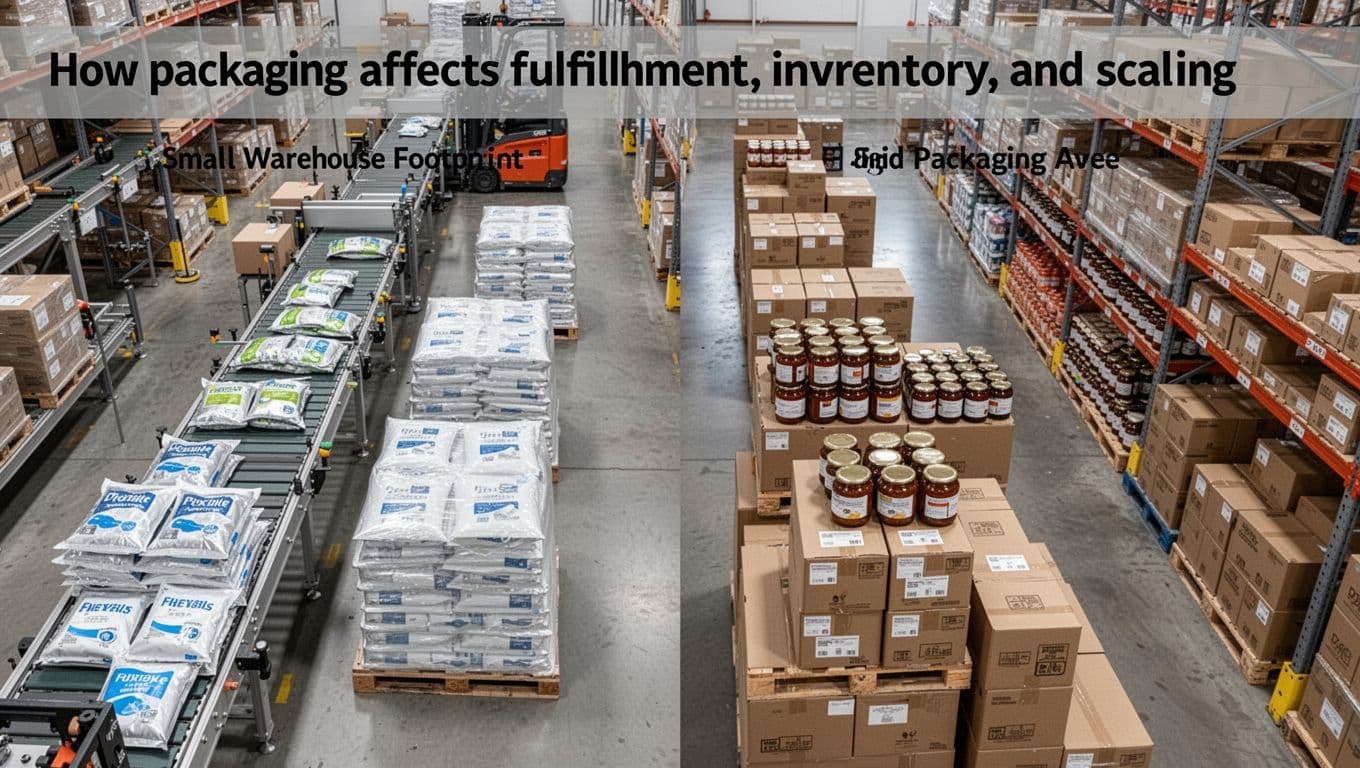
Rigid packaging brings different strengths. It can stack more predictably in some warehouse environments, and it may work better with products that need upright handling or stronger shape control. Yet it often asks for more room, more inbound freight, and more care during pick, pack, and ship.
The operational trade-offs usually show up in a few places:
- Packing speed can improve when the format is lighter and easier to handle
- Warehouse footprint grows when containers hold shape, even when empty
- Automation fit depends on the format, fill line, and case-packing setup
- Minimum order quantities may limit flexibility, especially for custom rigid runs
- SKU updates are often easier with flexible packaging, where artwork changes can move faster and at lower cost
This matters even more when you are testing new products. If you want to launch a seasonal item, try a new size, or update branding, packaging that is easier to revise can reduce risk. It lets you move faster without betting too much inventory on one forecast.
At scale, the right package lowers friction. It helps teams pack faster, store more, and adapt without constant workarounds. For brands building systems around growth, custom software development services can also help connect packaging decisions to inventory flow, order handling, and production planning.
In other words, packaging is not just what holds the product. It shapes how smoothly the business runs when demand starts to climb.
A simple decision checklist to choose the right packaging with confidence
If you’re stuck between flexible and rigid packaging, don’t treat it like a style choice. Treat it like a fit check. The right format should match your product, your sales channel, and the experience you want buyers to have.
A simple checklist can save time, cut guesswork, and stop costly changes later. Think of it as pressure-testing the decision before you lock it in.
Ask these key questions before you commit
Start with the product itself. Is it fragile, liquid, or shape-sensitive? If yes, rigid packaging often gives you more structure and protection. If the product is light, dry, and easy to contain, flexible packaging may be the smarter move.

Next, look at shipping. How important are freight savings to your margins? If you ship direct to consumers or move high volume, lightweight flexible packaging can lower both freight and storage costs. On the other hand, if damaged goods are a bigger risk than extra weight, rigid may still win.
Then think about buyer expectations. Does your customer expect a premium feel when they pick up the product? A jar, bottle, or sturdy box can add weight and presence. If convenience matters more, ask whether the package needs resealability, visibility, or tamper evidence. A zipper pouch, clear window, induction seal, or tamper band can change the answer fast.
Finally, consider where it will sell and what your brand stands for. Will it sell in stores, online, or both? Retail often rewards structure and shelf presence, while e-commerce rewards lighter packs. Also ask what your sustainability goals are. If brand presentation is part of that decision, a clear system for creating brand guidelines can help keep packaging choices aligned with the rest of your identity.
A good packaging choice should make sense in the warehouse, on the shelf, and in the buyer’s hands.
Test small, measure results, then scale up
Before a full rollout, run a small pilot. A short test tells you more than a long debate. It lets you spot weak points while the risk is still manageable.
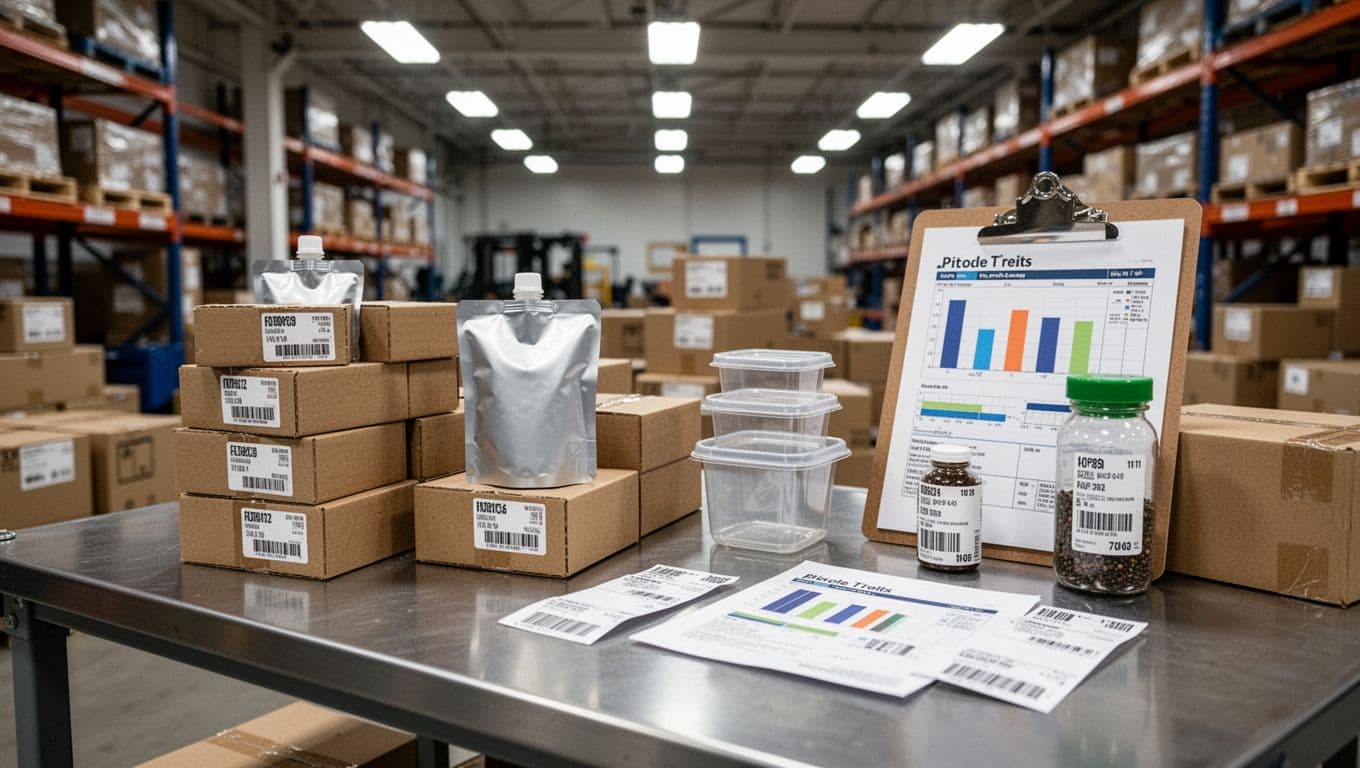
Track the numbers that matter most. Watch shipping costs, damage rates, and customer feedback first. Then pay attention to shelf performance, if the product sells in stores, and repeat purchase behavior, because convenience and perception often show up after the first sale, not before.
Keep the review simple. Did the package protect the product? Did it support the brand you want to build? Did the cost still make sense once shipping, handling, and returns were included? That’s the real test. The best packaging is the one that protects the product, supports the brand, and makes financial sense.
Conclusion
The right choice comes down to fit. Flexible packaging often makes more sense when you want lower shipping costs, easier storage, and better portability. On the other hand, rigid packaging usually wins when your product needs more structure, stronger protection, or a more premium look and feel.
That balance is what matters most. Your packaging should match the product, meet buyer expectations, and support how your team ships, stores, and grows the business over time. When those pieces line up, packaging stops being a simple container and starts working as part of your brand and your margins.
If you’re weighing the trade-offs for your business, it helps to get a clear outside view before you commit. Schedule your free consultation and choose a packaging direction that supports both today’s needs and your long-term goals.
