
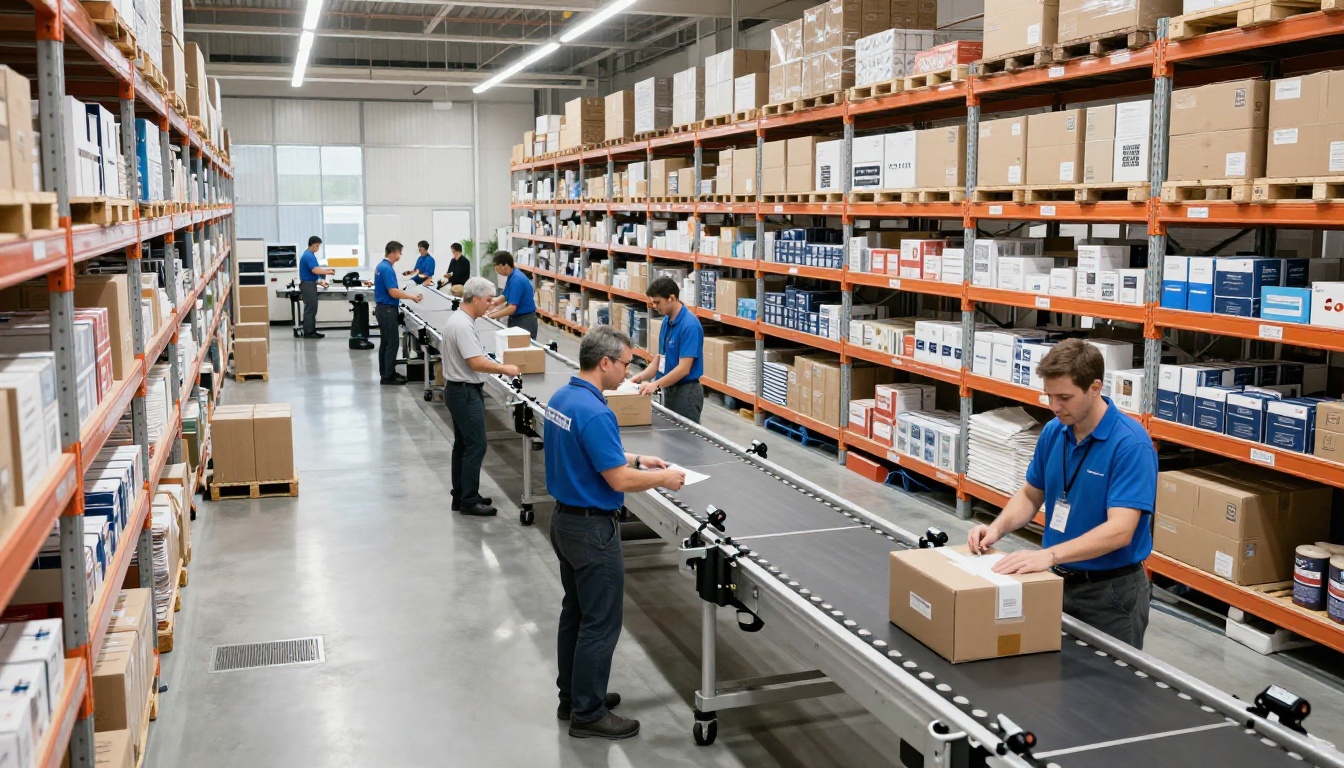
Amazon FBA vs. Contract Packager: Which Fits Your Brand?
Choosing between Amazon FBA and a contract packager comes down to what your business needs most, speed, control, or lower overhead. Both models can get products to customers, but they solve different problems, and the better fit often depends on your product type, order volume, and how much oversight you want.
Amazon FBA works well when you want access to Amazon’s fulfillment network and a simple path to Prime shoppers. A contract packager can be a better fit when your products need custom assembly, kitting, or tighter control over how items are packed and shipped, which is why many brands look at professional contract packaging services as part of the decision.
Cost matters too, along with storage needs and how quickly orders need to move. If you’re trying to choose the right model for your brand, the comparison gets clearer once you line up the tradeoffs side by side.
What Amazon FBA and contract packaging actually do
Amazon FBA and contract packaging both move products, but they do it for very different reasons. FBA is built for Amazon sellers who want Amazon to store inventory, pick and pack orders, ship to customers, and handle much of the post-sale work. Contract packaging is built for brands that need more flexibility, whether that means custom packaging, kitting, relabeling, assembly, or support across several sales channels.
That difference matters. One model centers on the Amazon marketplace, while the other centers on packaging and logistics support that can adapt to retail, wholesale, ecommerce, and promotional needs. If your brand sells in more than one place, or your products need more hands-on preparation, the right fit can change fast.
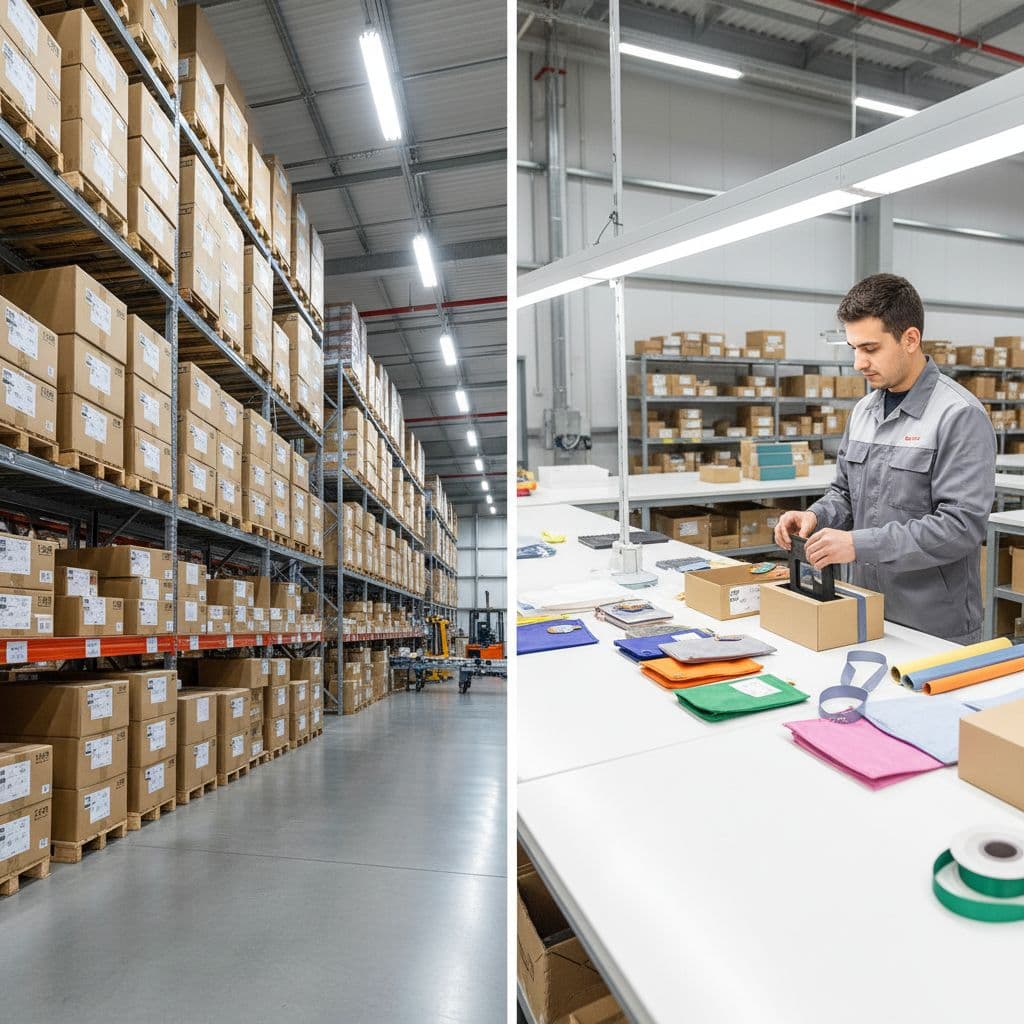
How Amazon FBA fits marketplace sellers
Amazon FBA works well when your main sales channel is Amazon and your fulfillment process is straightforward. You send inventory to Amazon, and Amazon handles storage, picking, packing, shipping, and customer service for those orders. That reduces the day-to-day burden on your team and gives you access to Prime eligibility, which can help products move faster.
For sellers with steady demand and simple packaging needs, FBA can feel like a clean setup. Orders move through Amazon’s network, and shoppers get the shipping speed they expect. Amazon’s own Fulfillment by Amazon overview lays out how the program supports storage, shipping, and returns for marketplace sellers.
Still, FBA comes with tradeoffs. You have to follow Amazon’s rules, manage storage fees, and accept less control over how the package looks when it reaches the customer. If your brand depends on special inserts, custom bundling, or a unique unboxing experience, that limits what you can do.
FBA works best when speed and marketplace reach matter more than packaging control.
How a contract packager supports broader distribution
A contract packager is a better fit when your products need more than standard pick-and-pack work. These partners handle packaging, kitting, assembly, labeling, and rework, and they can also support storage or shipping when your operation needs it. That flexibility makes them useful for brands that sell through retail, wholesale, ecommerce, and promotional programs at the same time.
This model gives you more control over presentation and product setup. You can create custom bundles, prepare retailer-specific packs, relabel items for compliance, or adjust packaging for different customers. A partner with distribution and fulfillment services can also help connect that packaging work to broader order movement, which matters when your sales mix changes from one channel to the next.
For brands that need to shape the product before it ships, contract packaging is often the better fit. It lets you match the packout to the channel instead of forcing every order into one process. The result is a setup that can handle more variations without putting all the pressure on your in-house team.
A simple side-by-side view makes the difference clear:
| Amazon FBA | Contract Packager |
|---|---|
| Focuses on Amazon orders | Supports multiple sales channels |
| Handles storage, picking, packing, shipping, and customer service for Amazon | Handles packaging, kitting, assembly, labeling, and rework |
| Strong fit for steady-demand marketplace products | Strong fit for customized or multi-channel fulfillment |
| Less control over presentation | More control over brand packaging and packout |
For brands that need ongoing ecommerce support outside Amazon, ecommerce fulfillment solutions can add another layer of flexibility. That matters when your orders come from more than one place and your packaging needs change by customer or channel.
A contract packager also supports professional contract packaging services when product prep has to match retailer specs, promo plans, or seasonal campaigns. That kind of control is hard to replicate with a marketplace-first model.
The biggest factors that should shape your choice
The right choice usually becomes clear when you stop comparing labels and start comparing business needs. Amazon FBA works well in one set of conditions, while a contract packager fits better in another. The real decision comes down to where you sell, how much control you need, how your demand changes, and what your product demands before it reaches a customer.
A practical review of those points keeps the decision grounded. It also helps you avoid paying for features you do not need, or limiting your brand with a setup that feels too rigid.
Your sales channels and where the product needs to go
Channel mix is often the first filter. If most of your sales happen on Amazon, FBA usually makes the most sense because it lines up with the platform’s rules, shipping expectations, and Prime demand. You send inventory into Amazon’s network, then Amazon handles the rest.
When your product needs to move through more than one path, the picture changes. Retail stores, distributors, direct-to-consumer orders, and promotional kits often need different packouts or labels. In those cases, professional packaging and fulfillment services can support a setup that adapts to each channel instead of forcing every order into the same mold.
That flexibility matters when one product has to support several customers at once. A club pack for wholesale, a single-unit carton for ecommerce, and a display-ready bundle for retail all call for different handling. FBA is built for Amazon shipments; contract packaging is built for more varied outbound work.
If the product leaves your building in more than one format, your fulfillment model should match that reality.
How much control you need over packaging and branding
Packaging control can make a bigger difference than many brands expect. FBA has clear limits on how products are packed, labeled, and presented. That works fine for simple SKUs, but it leaves less room for branded boxes, custom inserts, shelf-ready packaging, or special labeling needs.
A contract packager gives you more room to shape the customer experience. You can use branded cartons, add inserts, build kits, or prepare packs that meet retail specs. That matters when the package itself is part of the brand story, or when a buyer expects a very specific presentation.
For example, a subscription-style bundle may need a custom insert and a tidy unboxing layout. A retail item may need shelf-ready packaging with barcode placement and clear case counts. These details are hard to manage inside a marketplace-first model, but they fit naturally into a contract packaging workflow.

A quick comparison helps here:
| Packaging need | FBA fit | Contract packager fit |
|---|---|---|
| Branded boxes | Limited | Strong |
| Custom inserts | Limited | Strong |
| Shelf-ready packaging | Limited | Strong |
| Special labeling | Some limits apply | Strong |
| Simple standard packout | Strong | Strong |
If your brand needs the package to do more work, a contract packager usually gives you the control you want. For a deeper look at how Amazon structures its service, Amazon’s FBA overview is a useful reference point.
Order volume, seasonality, and inventory swings
Steady volume is easier to plan around, and that is where FBA can work well. If your orders stay fairly predictable, you can move product into Amazon in a regular rhythm and keep the process simple. That can be a good fit for stable sellers with repeat demand.
Seasonal spikes tell a different story. So do launch campaigns, holiday pushes, and changing order patterns. When demand jumps, you may need a packaging partner that can scale up fast, handle short-run changes, or build mixed batches for different channels. That kind of flexibility matters when your inventory does not move in one clean pattern.
Contract packaging also helps when you need promotional builds or mixed kits. A single run might include several product combinations, special inserts, or retailer-specific case packs. Those jobs are harder to force into a fixed fulfillment model, especially when timing changes week by week.
For brands with sharp peaks and uneven demand, flexibility is often more useful than simplicity. That is where a partner with ecommerce order fulfillment solutions can help connect packaging to shipping without losing control over the build.
Product complexity, fragility, and compliance needs
Some products need more handling before they are ready to ship. Assembly, lot tracking, expiration dates, temperature-sensitive storage, special labeling, and careful packout all add layers to the process. If your product needs any of those steps, contract packaging or a specialized logistics partner often makes more sense than FBA alone.
Fragile products deserve extra attention too. Glass, cosmetics, supplements, and multi-part kits can require protective materials and precise packout methods. A small mistake can lead to damage, returns, or compliance problems that cost more than the packaging step itself.
Brands in regulated or detail-heavy categories often need a partner that can handle the prep work before fulfillment starts. That may include relabeling, date coding, kitting, or inspection. For operations that need that kind of support, integrated packaging and fulfillment solutions can make the handoff between preparation and shipping much easier to manage.
If your product has more rules than a standard box-and-ship item, that matters. The more steps required before the order leaves the dock, the more value you get from a partner built for custom packout instead of a one-size-fits-all fulfillment flow.
When Amazon FBA is usually the smarter fit
Amazon FBA makes the most sense when Amazon is already the center of your sales plan. If your products are built for quick movement, simple prep, and steady marketplace demand, FBA can save time and help you reach shoppers who expect fast delivery.
It also fits brands that want a cleaner day-to-day operation. Instead of managing every Amazon order in-house, you send inventory to Amazon and let the platform handle fulfillment for you. That setup works best when your product line is easy to store, pack, and ship without special handling.

You sell mostly on Amazon and want Prime access
If Amazon drives most of your revenue, FBA is often the cleaner path. It puts your inventory inside Amazon’s fulfillment network, which can make your listings Prime-eligible and more appealing to shoppers who want faster shipping. That matters because Prime status can remove a lot of friction at checkout.
For many brands, that speed also builds trust. Customers know what to expect, and Amazon handles the shipping process behind the scenes. If your business is centered on marketplace sales, that convenience can matter more than having full control over every box that leaves the warehouse.
This is where Amazon FBA prep services can help too, especially if you want inventory ready for send-in without tying up your own staff. When your product line is simple and your Amazon channel is strong, FBA often feels like the natural fit.
Your products are simple, standardized, and easy to ship
FBA works best with products that do not need much attention before they ship. Small, durable items with consistent sizing usually fit well. So do products with limited prep work, clear labeling, and no custom assembly.
That kind of inventory keeps the process predictable. Fewer steps mean fewer chances for delays, compliance issues, or damage claims. In other words, the simpler the product, the better FBA tends to work.
A few product traits usually point in FBA’s direction:
- Consistent dimensions: Boxes and units that stay the same are easier to receive and store.
- Low breakage risk: Durable products create fewer packing headaches and returns.
- Minimal prep: Items that only need labeling or carton-ready packaging move through faster.
- No customization: Standard units are a stronger fit than bundles or special packs.
FBA gets easier when your product behaves like a standard shelf item, not a custom kit.
If your products need extra steps before shipping, that is where the fit starts to weaken. For simple items, though, the process can stay clean and manageable.
You want to reduce hands-on fulfillment work
FBA is also attractive when your team is stretched thin. Picking, packing, printing labels, and answering Amazon order issues take time. If you run a small operation, those tasks can pull attention away from sales and growth.
By shifting Amazon orders to FBA, you can spend more time on the work that moves the business forward. That might mean improving listings, testing new products, managing ads, or sourcing inventory with better margins. When fulfillment stops eating the day, your team gets more room to think.
The tradeoff is cost. FBA fees still need to make sense for your margins, and the numbers should work before you commit. For brands with steady Amazon volume, though, the time saved can be worth far more than the extra setup work.
If you are comparing models, this Amazon fulfillment strategy guide can help you see where FBA fits alongside other options. When the product is simple and Amazon is the main channel, FBA often removes more problems than it creates.
When a contract packager gives you more value
A contract packager becomes the stronger choice when your operation needs more than basic order shipping. If your product has to be assembled, bundled, relabeled, or prepared for more than one channel, the value shows up fast in fewer mistakes, cleaner handoffs, and better control over the final packout.
That matters because fulfillment alone only moves a box. Contract packaging helps shape what goes in the box, how it looks, and where it needs to go. For brands with growth plans, that extra control can be the difference between a system that just works and one that actually supports the business.
You need custom kitting, assembly, or special packouts

This is where contract packaging usually pulls ahead. If you sell bundles, subscription kits, promo sets, or sample packs, you need a partner that can assemble products before they ship. Amazon FBA is built for standard fulfillment, but it often falls short when the order needs hands-on setup.
A few common examples make that clear:
- Bundles and multipacks: A skincare brand may want a cleanser, toner, and moisturizer packed together as one gift-ready set.
- Subscription kits: A coffee company might ship a monthly box with beans, tasting notes, and a small add-on item.
- Promotional sets: A seasonal campaign could include a main product, a coupon insert, and a branded sample.
- Shelf-ready packaging: A retail buyer may want case packs arranged so store staff can place them on shelves quickly.
- Sample packs: A health and beauty brand may need small trial items sorted into custom mailers.
- Assembly work: A publisher might need books, inserts, and marketing cards collated into one finished package.
A contract packager can handle those steps before shipment, which keeps the process consistent. For brands that need organized kit builds, professional kitting services can save time and reduce rework.
If the product has to be built before it ships, contract packaging is doing real work that fulfillment alone cannot cover.
You sell through more than one channel
Multi-channel brands need a partner that can keep different order types on the same track. Ecommerce, retail, wholesale, and distributor orders often require different pack formats, carton sizes, labels, and case counts. A fulfillment-only setup can get messy when those needs start to overlap.
Contract packaging helps keep the operation steady across those channels. One product might ship as a single unit to an online customer, as a case pack to a retailer, and as a mixed bundle to a wholesaler. Each version needs different preparation, but the process still has to stay consistent.
That consistency matters when orders move through several buyers at once. A contract packaging partner can manage those variations without forcing your team to rebuild the workflow every time the channel changes. For brands that sell in more than one place, distribution and fulfillment support can connect packaging, storage, and outbound shipping in one place.
It also helps when customers expect different shipping rules. Retailers may want palletized cases. Distributors may want mixed SKUs. Ecommerce buyers want small, fast parcels. Contract packaging gives you one operational base, then adapts the packout to fit each route.
For more context on how multi-channel brands use this model, this guide to contract packaging shows how packaging supports multiple distribution paths.
You need better visibility, flexibility, and brand control
Contract packaging gives you more say over how products are handled before they leave the building. That includes how they are prepared, labeled, packed, and shipped. For brands that care about presentation and process, that control is not a small detail.
It also gives you more room to react. Demand changes. Packaging specs change. Retailers change their requirements. A good partner can adjust without forcing you to redesign the whole operation. That flexibility matters when you launch new SKUs, switch packaging materials, or update a promo plan halfway through the quarter.
The operational benefit is simple. You get a partner that can adapt to short runs, custom builds, and customer-specific requirements without losing track of the basics. That can mean tighter inventory handling, cleaner packouts, and fewer surprises at the dock.
When visibility matters, the right partner should also help you see what is happening at each step. If you need packaging, labeling, and shipping support in one workflow, integrated packaging and fulfillment solutions can keep the process easier to manage. Brands that want a broader look at how outsourcing fits into the bigger picture can also review how to outsource contract packaging.
A contract packaging model also gives you a stronger hand when brand presentation matters. You can control the insert, the carton, the count, and the final look, which is hard to do when a marketplace platform owns the last mile.
When the package is part of the product experience, control matters as much as speed.
In the long run, that control helps protect your brand across channels. It reduces drift between what your team planned and what the customer actually receives. It also gives you a better path when your packaging needs become more complex than standard fulfillment can handle.
For brands that expect to grow, that is often the real edge. A contract packager does not just ship product, it helps your operation stay organized while your sales model keeps changing.
Questions to ask before you commit to either path
The right choice gets clearer when you move past the pitch and ask hard questions about cost, control, and growth. A model can look affordable on paper and still create expensive problems later, so the goal is to compare how each option works day to day.
Bring your team into the conversation early. Sales, operations, finance, and customer service all see the business from different angles, and their answers will help you spot issues before they turn into delays or missed margin.

What are the true costs, not just the headline fees?
Start with the quote, then keep going. Storage, prep, packaging, labor, shipping, penalties, and handling charges all affect the real price of each order. A low sticker price can turn into a costly setup if it creates mistakes, delays, or rework.
Ask for a full breakdown, not just the base rate. That means monthly minimums, carton fees, pallet moves, relabeling, inspections, return handling, and any seasonal or peak-period charges. If you want a clearer frame for those costs, understanding 3PL fulfillment costs is a useful place to start.
A simple review list helps keep the discussion honest:
- Storage costs for shelf, bin, or pallet space
- Prep charges for labeling, bundling, or kitting
- Packaging materials and special inserts
- Labor for receiving, assembly, and packout
- Shipping rates, fuel surcharges, and dimensional weight fees
- Penalties for low volume, slow turns, or non-compliant freight
- Hidden handling fees for returns, counts, and rework
Compare the total landed cost, not only the first quote.
That last point matters because the first number is rarely the full number. A provider with a lower rate can cost more once you add corrections, lost time, and extra touches. The better question is simple: what will it cost to get the product ready, shipped, and accepted without drama?
How will the model affect speed, accuracy, and customer experience?
Price matters, but so does what the customer receives. Order accuracy, delivery speed, and brand presentation shape how people feel about your business after the sale. One wrong packout or damaged shipment can create a return, a complaint, and a lost repeat buyer.
Think beyond outbound orders. Ask how each option handles returns, damaged goods, and mistakes in the pick or pack process. If the model slows down your team or strips out quality checks, your customer experience pays for it later.
A useful question to ask is whether the setup protects the details that matter most. Does it keep product condition intact? Does it support fast shipment without sacrificing accuracy? Does it present the brand in a way that builds trust? For a broader view of service structure, end-to-end fulfillment services can help you compare the moving parts.
You can also use a short checklist during partner meetings:
- How often do orders leave with errors?
- What happens when a shipment is damaged in transit?
- How are complaints and returns handled?
- How is brand presentation kept consistent?
- What checks prevent repeat mistakes?
If the answer to any of those is vague, dig deeper. A lower monthly cost does little good if the operation creates refunds, negative reviews, or weak repeat purchase rates. Good operations protect revenue just as much as good marketing does.
Can the option grow with your business over the next 12 to 24 months?
Your current volume matters, but your next year matters more. New channels, larger order runs, seasonal spikes, and product launches can change the shape of your operation quickly. The best path should fit today and still make sense when demand changes.
Ask whether the model can handle more SKUs, more units, or more complex packouts without forcing a full switch later. If you expect retail expansion, wholesale growth, or more ecommerce volume, your partner should be able to support that shift. A good fit should also reduce the need to keep moving inventory between systems every time your sales mix changes. For brands planning that kind of growth, e-commerce fulfillment cost control can be part of the wider decision.
A few growth questions are worth putting on the table:
- Can the setup handle seasonal spikes without breaking down?
- Will it support new product lines or bundles?
- Can it work across Amazon, retail, and direct-to-consumer channels?
- What happens if order volume doubles?
- How much switching would be needed if your channel mix changes?
The right choice gives you room to grow without forcing a new search six months later. That matters because constant switching creates risk, extra work, and more training. A stable partner or platform should let you scale without rebuilding the whole operation each time the market shifts.
A model that answers those growth questions clearly is usually the safer bet over a 12 to 24 month horizon.
A simple way to make the final decision
The easiest way to choose is to look at where the product needs the most help. If Amazon is the main sales channel and the product is simple, FBA usually wins. If the product needs custom packout, multiple channels, or tighter control, a contract packager is the better fit.

A good rule of thumb is simple: choose the option that removes the most friction without creating new limits. If Amazon already owns your sales flow, FBA reduces work. If your brand needs packaging control or multi-channel support, contract packaging protects more of what matters.
Choose Amazon FBA when Amazon is your main channel
FBA is usually the better fit when your business is built around Amazon, your products are straightforward, and your main goal is to make marketplace fulfillment easier. It works best when you want Prime access, standard packout, and less hands-on shipping work.
If your SKU is simple and your Amazon sales are steady, FBA keeps the process clean. You send inventory in, Amazon handles the rest, and your team can focus on listings, ads, and inventory planning instead of daily order work.
Choose a contract packager when flexibility matters more
Contract packaging is usually the better fit when your brand needs custom packaging, multi-channel support, better control, or more complex product handling. It gives you room to build kits, add inserts, meet retailer specs, and manage different packouts without forcing every order into one format.
That flexibility matters when your business sells beyond Amazon. It also matters when the customer experience depends on how the product is packed, labeled, or presented. If the package has to do more than ship a box, contract packaging usually gives you the stronger option.
Use your next order cycle as the test case
The fastest way to make a real decision is to use one current SKU, one new launch, or one seasonal program as your test case. Map that order against both models and compare the actual steps, not just the theory.
Look at what happens from receiving to packout to shipment. Then ask a few direct questions:
- Which option needs fewer touchpoints?
- Which one handles your packaging needs without workarounds?
- Which one supports your sales channels with less stress?
- Which one protects your margin once real labor and fees are added?
For a more structured comparison of fulfillment models, this Amazon FBA vs. 3PL guide gives a helpful outside perspective. The right answer is usually the one that fits your next order cleanly, not the one that sounds best in theory.
If one channel dominates and the product is simple, FBA is usually enough. If the operation needs more control, contract packaging is the safer long-term fit.
That single test keeps the decision practical. When you match one real order to both paths, the better choice tends to show itself fast.
Conclusion
The best choice comes down to where the product sells, how much packaging work it needs, and how much control the brand wants over the final result. Amazon FBA is a strong fit for many Amazon-first brands that sell simple products and want faster fulfillment with less hands-on work.
A contract packager makes more sense when the job is more complex. If you need custom kitting, multiple sales channels, or tighter control over how products are packed and presented, that model gives you more room to work.
The right answer is usually the one that fits your current order flow without creating extra limits later. When you match the fulfillment model to the channel, the product, and the level of control you need, the whole operation runs with less friction.
