

Amazon Prep and Contract Packaging: One Partner, Fewer Handoffs
Amazon stopped providing prep and item labeling for US-store FBA shipments on January 1, 2026. That means every unit sent to Amazon must arrive properly labeled, packaged, and ready for receiving, whether you prep inventory in-house or use an outside provider.
For manufacturers, ecommerce brands, and growing sellers, combining Amazon Prep with contract packaging, kitting, and fulfillment can remove several handoffs from the process. One partner can apply FNSKU labels, polybag or protect products, assemble bundles, manage inventory, and coordinate shipments through a connected workflow. As a result, you may gain better inventory control, reduce unnecessary transportation and handling, and resolve labeling or pack-out problems faster. You can review Amazon shipment prep and labeling services to see what this work involves.
However, relying on one provider also creates dependency risks, so service capacity, reporting, quality controls, and backup plans matter. Next, we’ll look at why brands are consolidating these operations and what to evaluate before choosing one partner.
Key Takeaways
- Amazon no longer provides prep or item labeling for new US FBA shipments, so every unit must arrive compliant and ready for receiving.
- Combining Amazon-compliant packaging services with kitting, labeling, inventory control, and fulfillment reduces handoffs and duplicate handling.
- One partner can improve accountability, but you should confirm capacity, scan verification, reporting, quality controls, and contingency plans.
- Build prep labor, packaging materials, inspections, and transportation timing into your operating plan before creating shipments.
- Review errors, inventory accuracy, and turnaround times regularly to protect margins and prevent avoidable receiving delays.
Amazon Prep + Contract Packaging: What Changed for Brands in 2026
Amazon’s US prep and item-labeling service ended on January 1, 2026. The change applies to inventory sent through FBA, including shipments routed through AWD, AGL, Amazon SEND, or Supply Chain Portal when the inventory ultimately goes to FBA. Products must now arrive properly prepared and labeled before Amazon receives them. European stores have a separate transition date, July 1, 2026.
The Amazon FBA prep tasks a partner can complete upstream
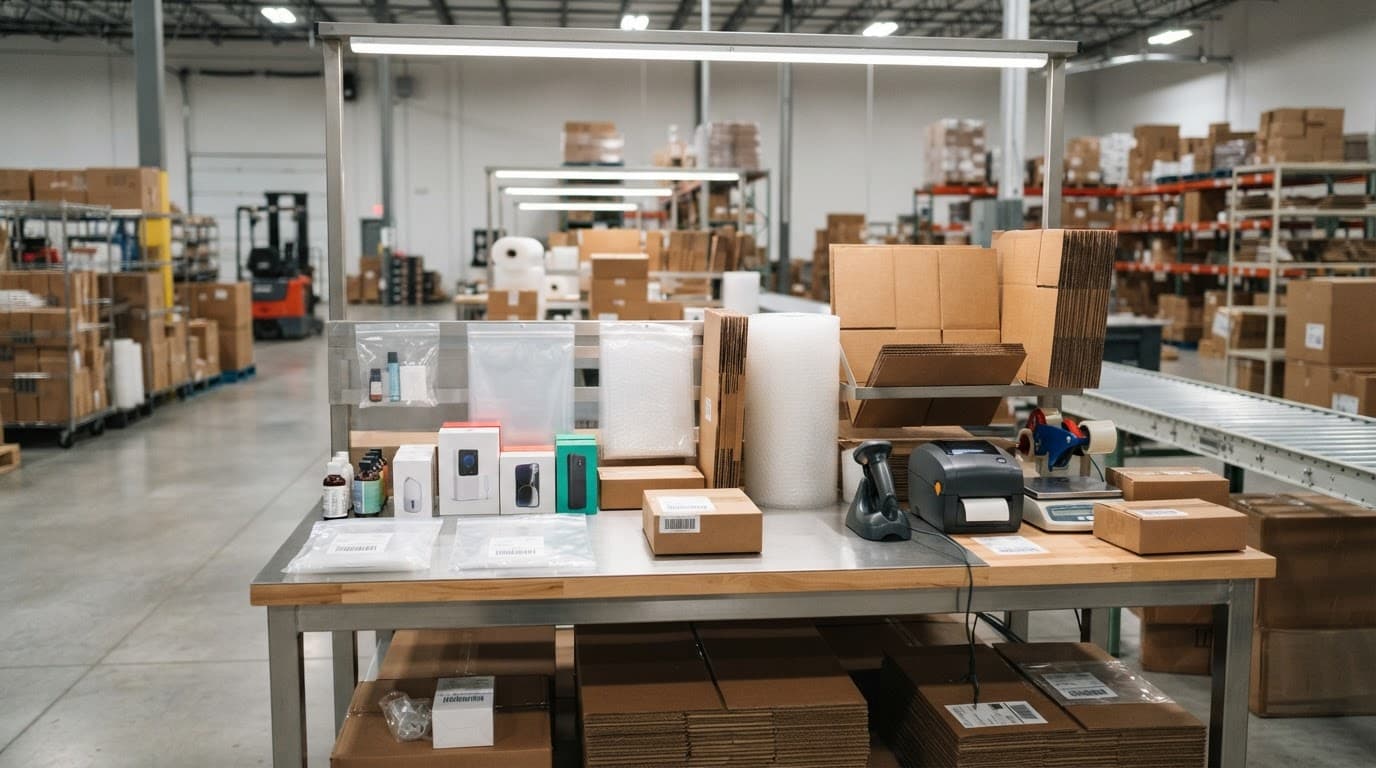
Amazon Prep handles the specific steps required to make inventory acceptable for inbound shipment. A provider can receive products, verify the SKU and condition, and compare the units against the shipment plan. The team can then apply visible, scannable FNSKU or other required barcode labels, add bubble wrap or other protective materials, polybag units, seal bags, and check that warnings are present.
Carton preparation comes next. Staff may box or overbox products, confirm carton contents, check weights and dimensions, apply carton labels, and review the shipment before it leaves the facility. These checks help prevent receiving delays, damage exposure, and problems with reimbursements when packaging or labeling errors make a claim harder to support.
Requirements vary by product type, size, weight, category, and the seller’s barcode settings. For example, Amazon’s bagging guidance calls for polyethylene bags at least 1.5 mil thick where polybags are required. Bags with openings of 5 inches or more when laid flat need a visible suffocation warning. Heavy, sharp, or fragile products may also need additional cushioning or a stronger outer box. Review the Amazon FBA packaging requirements before setting work instructions.
Where contract packaging adds value beyond basic FBA prep
Contract packaging covers a wider production and distribution job. A provider may repackage inventory, build multipacks, assemble promotional bundles, add inserts, apply retail labels, or create display-ready packaging. That work changes the product’s configuration, not just its barcode.
One product can need several packouts. Amazon may require a sealed, scannable unit inside a shipping carton, while direct-to-consumer orders need branded presentation and protective void fill. Wholesale customers may want case quantities, shelf-ready cartons, or retailer-specific labels. A contract packaging partner can manage those configurations from shared specifications and inventory.
The distinction matters because simple relabeling won’t solve every operational need. When the same facility handles Amazon Prep, kitting, assembly, and fulfillment, brands reduce handoffs while keeping each sales channel’s requirements separate. That is the practical value of Amazon and ecommerce contract packaging.
Why Brands Put Amazon Prep, Kitting, and Fulfillment With One Partner
Splitting work among a manufacturer, prep center, packaging vendor, 3PL, and freight provider creates more than extra emails. Each handoff can introduce a new count, label file, appointment, or interpretation of the packout. A single partner can receive imported or domestic freight, inspect it, assemble kits, apply Amazon-ready labels, store finished units, and ship them to FBA or other channels.
Fewer handoffs can mean fewer label and bundle errors
Consider a kit containing two product SKUs, one accessory, an instruction card, and a promotional insert. The manufacturer may build the kit, a separate facility may apply the final FNSKU label, and a third provider may pick and ship it. During those transfers, the accessory can be missed, the insert can be placed in the wrong version, or a label can be applied to an unfinished component instead of the sellable kit.
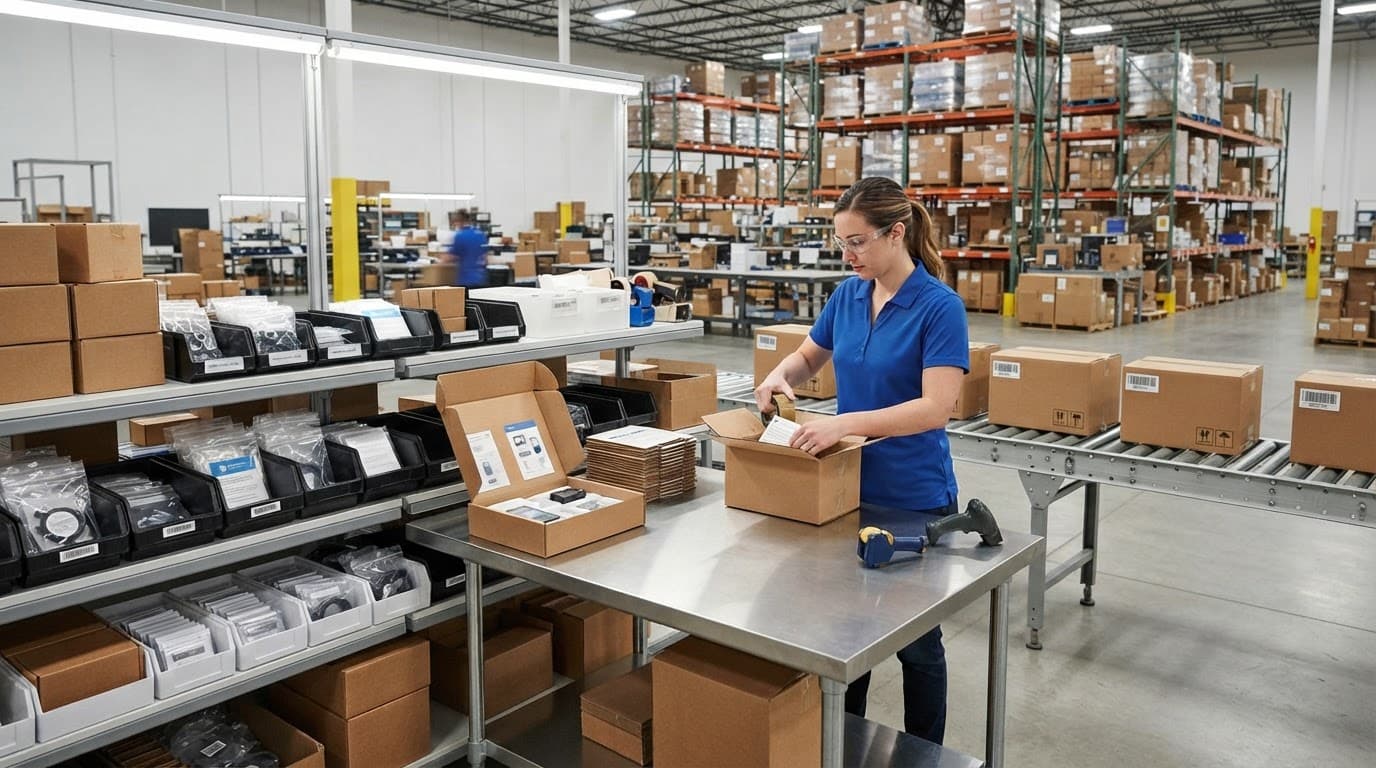
A connected Amazon Prep and kitting workflow gives every team the same operating record. The shared item master identifies each component, the finished SKU, the approved barcode, and the required packout. Staff can then:
- Count every component before assembly and compare the result with the work order.
- Scan the finished SKU and verify that the barcode matches the kit being packed.
- Use a packout checklist to confirm the accessory, instruction card, insert, seal, and label.
- Hold incomplete or questionable units before they enter finished inventory.
Amazon states that a scannable label must remain visible after preparation, so final-unit verification needs to happen after the kit is sealed, not only when individual items arrive.
One inventory view connects packaging work to Amazon shipments
Brands need more than a finished-unit total. A useful inventory record separates received quantities, work-in-process units, completed kits, quarantined goods, damaged items, and shipped cartons. Reporting should also identify the SKU, lot or batch when relevant, location, status, and outbound shipment.
That visibility helps planners see whether a replenishment order is truly ready or still waiting for components, inspection, rework, or labeling. FIFO or FEFO controls can guide allocation when product age or expiration matters. Better data supports earlier shipment planning, fewer emergency freight moves, and less excess safety stock.
A central US partner can simplify multi-channel distribution
An Indianapolis-based provider can coordinate freight between suppliers, packaging operations, Amazon fulfillment centers, retail customers, and DTC buyers. Keeping channel-specific finishing work near storage and fulfillment also reduces duplicate transportation and makes schedule changes easier to manage.
For example, multi-channel kitting fulfillment can support one finished kit for Amazon, a different case configuration for retail, and separate packouts for ecommerce orders. With one chain of custody, teams can investigate shortages, damage, or labeling exceptions without calling several vendors to reconstruct what happened.
How the Combined Amazon Prep and Contract Packaging Workflow Works
A reliable workflow begins before freight reaches the facility. One partner can connect planning, receiving, packaging, inventory control, and shipment release through shared records and defined quality controls.
Start with product rules, channel needs, and a written packout
The process starts with an item master for every SKU. Record dimensions, weight, barcode strategy, packaging materials, Amazon category rules, retail requirements, bundle components, warning labels, and desired ship quantities. Each finished configuration should have its own SKU or clearly defined packout code.
A written standard operating procedure should include approved materials, reference photos, acceptable quality limits, label placement, sealing instructions, and exception handling. For example, the SOP might state when a unit needs polybagging, bubble wrap, shrink wrapping, boxing, or overboxing. Amazon prep should be planned before inventory arrives, not improvised at the dock.
Receive, inspect, and reconcile inbound inventory
When freight arrives, the receiving team inspects cartons before unloading them into regular storage. Staff compare the bill of lading, purchase order, expected SKU, carton count, and unit quantity. They also record lot or batch information when traceability, expiration control, FIFO, or FEFO applies.
Damage records should separate inbound damage, warehouse damage, and in-transit damage. That distinction helps identify whether the issue began with the supplier, handling process, or carrier. Suspect products move to a clearly identified hold location while an authorized person decides whether to rework, relabel, return, scrap, or release them.
Assemble, label, protect, and verify finished units
Next, the team follows the approved packout to assemble kits, bundles, inserts, or promotional configurations. Depending on the product, preparation may include polybagging, bubble wrapping, shrink wrapping, boxing, or overboxing. The finished product label must remain visible and scannable after every protective layer is applied.
Scan verification at both pick and pack helps prevent label swaps, especially when SKUs look alike or bundles contain similar variations. A second person or system check should confirm the components, barcode, seal, quantity, and final configuration before the unit enters sellable inventory.
Stage and ship to Amazon or another sales channel
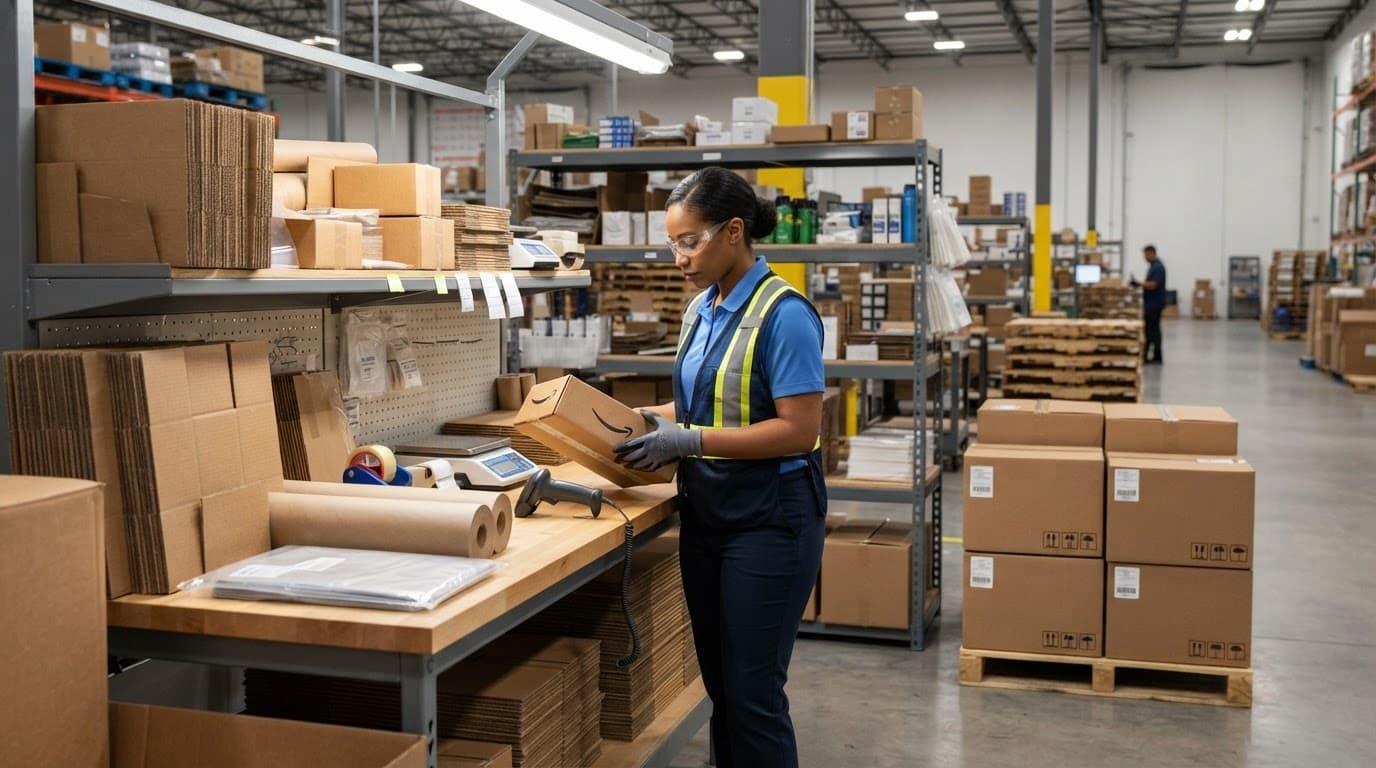
Completed units can then be stored, allocated, and packed into shipment cartons according to the brand’s shipping plan. The provider prepares carton maps, shipment documentation, carton labels, carrier instructions, cutoff times, and status updates. Shipment records should show the SKU, quantity, carton count, weights, dimensions, lot information when needed, and release status.
Amazon-ready preparation doesn’t replace the need to follow the current inbound shipment requirements in Seller Central. The brand should approve the shipment plan, while the partner confirms that the physical cartons match it before carrier pickup. Brands comparing Amazon prep and fulfillment options should also ask how exceptions, delays, and shipment changes are reported.
The Business Benefits of Using One Amazon Prep Partner
One Amazon Prep partner can connect receiving, packaging, storage, fulfillment, and returns under one operating plan. The result is easier accountability and clearer measurement for both growing sellers and established brands.
Reduce handling, duplicate freight, and internal labor
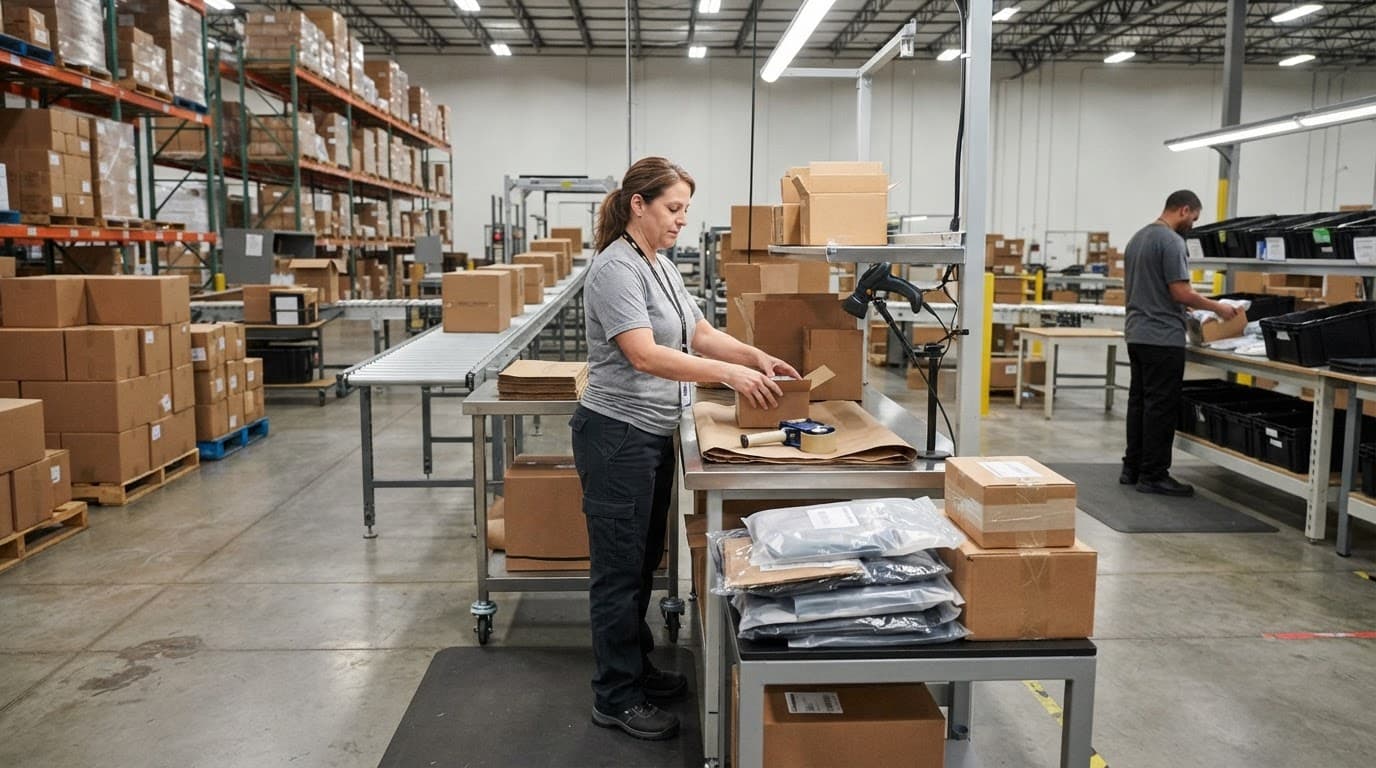
When separate vendors receive products, assemble kits, apply labels, store inventory, and ship orders, each transfer adds time and cost. A single provider can move goods through fewer facilities, reducing duplicate receiving, relabeling, pallet transfers, and rehandling.
That consolidation may also reduce internal labor spent scheduling appointments, reconciling counts, correcting labels, and resolving handoff issues. However, savings depend on volume, shipping distance, materials, service scope, and provider pricing. Compare total landed cost, including receiving, prep, storage, rework, freight, and returns, rather than choosing the lowest per-unit rate.
Brands can compare integrated packaging and fulfillment solutions against their current process using cost per compliant unit, dock-to-stock time, and labor hours saved.
Improve quality control and protect the customer experience
Consistent packout instructions and scan checks can reduce mispicks, wrong labels, missing components, seal failures, damaged cartons, retailer rejections, and customer complaints. Track these measures by SKU and shipment:
- Mispicks and wrong-SKU shipments.
- Missing inserts or bundle components.
- Seal failures and damaged cartons.
- Inventory variances and Amazon receiving exceptions.
Recurring errors should trigger a documented root-cause action. The fix might involve revised instructions, an additional scan, employee retraining, a packaging change, or a new inspection point. Lower error rates protect reviews, reduce returns, and limit support tickets.
Scale launches, promotions, and seasonal volume with less disruption
A flexible partner can support product launches, subscription kits, limited-time bundles, and holiday surges without requiring permanent equipment or full-time hires. Growing sellers gain access to trained labor as orders increase, while established brands can add volume without interrupting core production.
Capacity still needs verification. Ask for labor plans, equipment availability, lead times, daily throughput, peak staffing, and contingency procedures. Confirm how the provider handles rush orders, component shortages, late freight, and sudden channel changes before committing inventory.
Create a better returns and reverse-logistics process
The same partner may receive returns, inspect condition, identify missing parts or damage, and assign each unit to restock, rework, quarantine, refurbishment, or disposal. Clear grading rules prevent returned goods from mixing with sellable inventory.
Track return-to-sellable rate, disposition time, inventory adjustments, and handling cost per unit. Faster decisions support quicker refunds, reduce customer support workload, and give you more accurate inventory. Distribution and fulfillment services can connect those return decisions with outbound orders and inventory records.
What Amazon Prep and Contract Packaging Really Cost
The cost of Amazon Prep depends on more than a label or packing rate. Quotes change with unit volume, product size, labor time, materials, kit complexity, storage needs, transportation, and the number of exceptions a provider must resolve. Compare the full cost of producing a sellable, compliant unit, not just the lowest prep line.
Separate setup costs from ongoing per-unit work
One-time costs often appear before regular production begins. These may include project onboarding, sample builds, packaging design changes, testing, SOP creation, tooling, barcode mapping, and initial inventory transfers. Freight to the provider and temporary dual operations also belong in the transition budget if your current site continues running during the move.
Ask the provider to separate these charges from recurring work, which may include:
- Receiving, inspection, counting, and inventory reconciliation.
- Labeling, bagging, wrapping, boxing, and protective packaging.
- Kitting, bundling, packing, storage, and fulfillment.
- Freight coordination, shipment preparation, and returns handling.
Transition expenses need two views in your financial model. Show the full amount as an immediate cash requirement, then spread it across the analysis period when calculating ROI. For example, $24,000 in transition costs over a 24-month model equals $1,000 per month for planning purposes. This prevents a project from appearing profitable while creating a cash shortfall during implementation.
Ask about variable charges before comparing providers
A useful quote identifies what is fixed, volume-based, and triggered by a change. Ask about minimum order quantities, pallet or location-based storage, receiving fees, material markups, order changes, rework, disposal, special labels, rush labor, seasonal staffing, freight accessorials, and returns.
Also confirm who pays for unused packaging materials, failed samples, replacement samples, packaging redesign, and compliance corrections. These details matter when Amazon updates requirements or a product changes after materials have been purchased.
An itemized co-packing pricing guide can help you organize these questions before requesting quotes. Require each provider to show the rate, billing unit, included steps, minimum charge, and approval process for unexpected work.
Compare total cost per sellable unit, not just prep price
Your comparison should include in-house labor, supervision, equipment, floor space, maintenance, quality checks, waste, rework, inventory carrying costs, transfers, Amazon-bound freight, returns, and chargebacks. A low prep rate can cost more if it causes relabeling, delayed shipments, rejected cartons, or extra transportation.
Test three scenarios: best case, expected case, and downside case. Include realistic error rates, seasonal volume, rush orders, and storage dwell time. The strongest partner is the one that delivers the lowest dependable cost per compliant unit, not merely the cheapest initial quote.
How to Choose a Reliable Amazon Prep and Contract Packaging Partner
Choosing one provider for Amazon Prep and contract packaging requires more than comparing per-unit rates. The right partner should demonstrate current Amazon knowledge, packaging expertise, warehouse controls, reporting discipline, available capacity, and a written commercial agreement.
Check capabilities, capacity, and channel experience
Ask whether the provider has handled your product category, materials, dimensions, and risk profile. Fragile goods, static-sensitive electronics, liquids, oversized items, and products with expiration dates each require different controls. Confirm experience with multi-SKU kits, Amazon FBA, DTC orders, wholesale cases, and retail compliance.
Request examples of similar work, including packout photos, inspection steps, and finished-unit specifications. Then review monthly production capacity, peak-season staffing, equipment availability, expected turnaround times, and backup plans for labor shortages or equipment failures. A provider that supports an Amazon product launch should explain how it handles sudden volume changes without sacrificing accuracy.
Amazon’s 2026 barcode changes make current knowledge especially important. For example, Amazon says resellers must use Amazon barcodes for inventory sent to fulfillment centers beginning March 31, 2026. Your partner should also understand label placement, competing barcode coverage, polybag requirements, and final-unit scan checks.

Test inventory accuracy, scan controls, and traceability
Ask how often the warehouse performs cycle counts and measures receiving accuracy. Pick and pack should include scan points that verify the SKU, quantity, and approved label before shipment release. Request sample inventory, exception, and shipment reports rather than accepting a software demonstration alone.
For each exception, the record should identify the SKU, quantity, location, date, root cause, owner, disposition, and corrective action. Confirm whether the system tracks lot or batch numbers and supports FIFO or FEFO where product age matters.
The provider should separate inbound damage, warehouse damage, and transportation damage. Nonconforming products must move to a controlled hold location until an authorized person approves rework, relabeling, return, disposal, or release.
Review service levels, communication, and contract protections
Document SLAs for receiving, prep completion, order accuracy, shipment release, inventory reporting, support response, and issue escalation. The agreement should also cover pricing, material and inventory ownership, quality standards, change orders, technology outages, capacity shortages, contingency plans, insurance, and confidentiality.
Require mutually approved written amendments when scope or pricing changes. Before a full launch, run a pilot with measurable targets for accuracy, turnaround time, reporting, and damage rates. That test shows whether the provider’s promises hold up under your actual products and order volume.
When One Partner Is Not the Best Fit
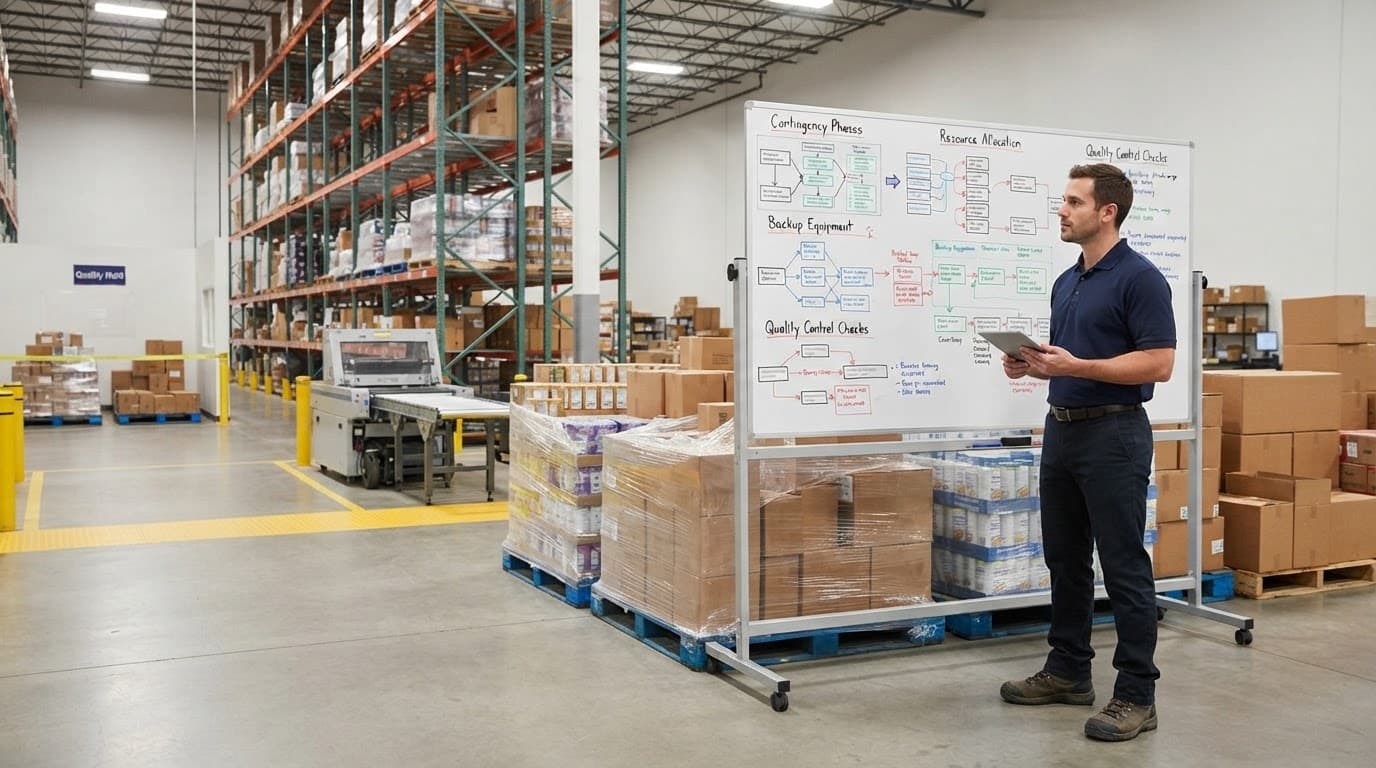
Consolidating Amazon Prep, contract packaging, and fulfillment can simplify accountability, but it also concentrates operational risk. One provider may improve control during normal weeks, yet a single failure can affect every channel at once. Before moving all inventory under one roof, confirm that the provider has the systems, capacity, and recovery plans to protect your business when conditions change.
Watch for single-vendor dependency and capacity bottlenecks
A labor shortage, equipment failure, severe weather event, cyber incident, or sudden demand spike can slow production and delay Amazon shipments. If one site handles all prep and fulfillment, that disruption may affect FBA, retail replenishment, and DTC orders at the same time.
Ask practical questions before signing:
- Can trained backup labor cover an absent shift or unexpected volume?
- Is there an alternate site, qualified subcontractor, or recovery location?
- How quickly can the provider restore warehouse systems after an outage or cyber incident?
- Can you access inventory, shipment records, and reports if its software is unavailable?
- What is the procedure for releasing or transferring your inventory during an emergency?
- Who contacts you, how often, and through which channel during a disruption?
Amazon places responsibility for compliant labeling, packaging, and shipping on the seller. A continuity plan should therefore cover more than routine throughput. It should explain how the provider keeps units compliant and available when normal operations stop.
Avoid concentrating errors across every sales channel
One incorrect item master, barcode rule, or packout instruction can spread through Amazon, retail, and DTC inventory in the same production run. That makes document control and release checks as important as labor capacity.
Require approval samples before broad production begins. Use version-controlled SOPs, first-article inspections, scan verification, and clear quarantine rules for units that fail inspection. A limited pilot run can reveal incorrect labels, missing components, weak seals, or confusing work instructions before the error reaches thousands of units.
Separate facilities or dual sourcing may reduce exposure when products have high sales volume, strict retail requirements, or significant recall risk. Channel-specific partners can also make sense when Amazon bundles, retail displays, and DTC orders require very different processes. Use this contract packaging partner checklist to compare quality controls, reporting, capacity, and contingency planning.
Know the warning signs of a weak provider
Judge the operation by evidence, not only by a polished sales presentation. Warning signs include:
- Vague pricing or unclear charges for rework, storage, materials, and rush labor.
- No sample inventory, exception, quality, or shipment reports.
- Unclear barcode controls and no demonstrated scan checks.
- Weak returns procedures or no documented disposition rules.
- No formal quality holds or reluctance to run a pilot.
- Limited peak capacity, poor response times, or broad promises that Amazon requirements will be handled without showing the process.
A strong relationship includes continuity planning, measurable controls, and transparent communication. Without those safeguards, fewer handoffs can create a larger single point of failure.
Frequently Asked Questions
Amazon Prep and contract packaging often raise practical questions about responsibility, timing, data, and ongoing control. These answers address issues that can affect daily operations after you choose a single partner.

Can an Amazon Prep partner work with inventory from multiple manufacturers?
Yes, a qualified provider can receive products from several suppliers and consolidate them under one operating process. Each source should have separate receiving records, purchase orders, lot details when needed, and approved instructions so components don’t enter the wrong kit or finished SKU.
What information should I provide before sending inventory?
Give the provider more than a product name and quantity. Share SKU details, dimensions, weights, barcode files, packaging specifications, bundle components, inspection standards, shipment plans, and any warnings or compliance requirements.
Approved samples and clear reference photos also help workers identify acceptable units quickly. When product specifications change, update the item master and SOP before the next production run.
How should we handle Amazon requirement changes?
Assign one person to monitor Seller Central requirements and approve related work instruction updates. Before each shipment, confirm the current unit-label, packaging, carton-label, and shipment-document requirements rather than relying on an old template.
A strong partner should document the revision date, affected SKUs, required materials, and effective production date. Run a sample check after each significant change to catch errors before a full batch ships.
Can a provider prepare products for Amazon and other channels at the same time?
Yes, provided each channel has its own approved configuration and inventory rules. One facility can prepare an FBA unit, a retail case pack, and a DTC order from the same base inventory, but the team must keep labels, inserts, carton quantities, and shipping instructions separate.
Channel-specific SKUs or packout codes reduce confusion. Scan checks at picking and packing add another safeguard when similar products share the same storage area.
How often should we review an Amazon Prep partnership?
Review operational results monthly, then hold a more detailed quarterly business review. Track inventory accuracy, prep turnaround, shipment errors, rework, damage, receiving exceptions, returns, and response times.
Use those results to address recurring causes rather than isolated mistakes. If performance declines, agree on a corrective action, owner, deadline, and follow-up measurement before the issue affects more shipments.
