
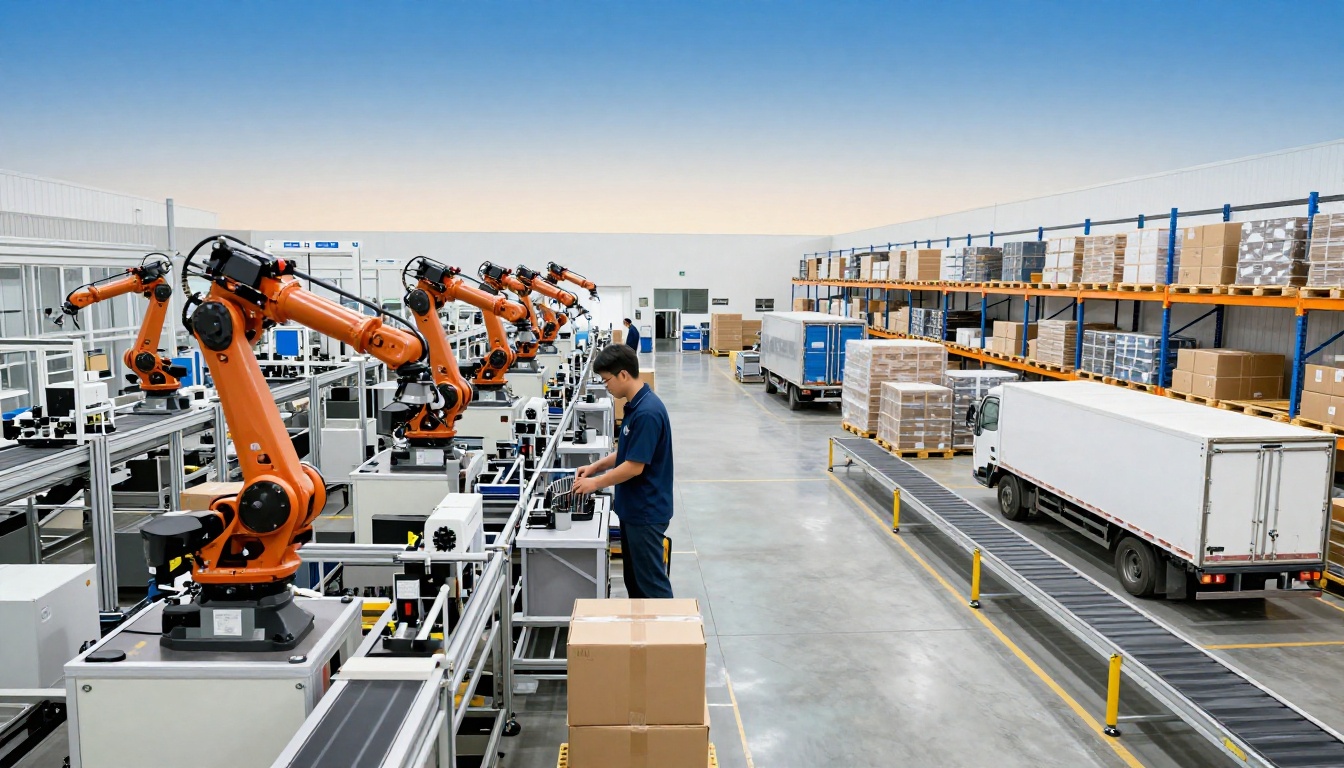
Contract Manufacturers vs. 3PL Providers, Which Is Right for Your Business?
A lot of brands get stuck here because both partners help you outsource operations, but they solve very different problems. The short answer is this: contract manufacturers help make or assemble your product to your specs, while 3PL providers take over what happens after production, like storage, order processing, shipping, and returns.
That difference matters more than it first appears. If you need a partner to produce, blend, pack, or build finished goods, you’re usually looking at a manufacturing or co-packing relationship. If your product is already made and you need help moving it accurately and quickly, you’re likely looking for fulfillment support, or the role of 3PL in modern packaging.
Some providers can support both sides of the process, especially when projects include co-packing and product assembly services along with distribution. Still, the core jobs aren’t the same, and choosing the wrong model can raise costs, slow growth, and create gaps in quality or service.
This article breaks down the real differences in roles, cost structure, control, speed, scalability, and best-fit use cases. By the end, you’ll have a clear sense of which partner fits your operation, and when it makes sense to use both.
What each provider actually does in your supply chain
Think of the supply chain as a relay. One partner makes the product, the other moves it. In plain English, a contract manufacturer handles production, assembly, blending, or packaging to your brand’s specs, while a 3PL provider manages storage, orders, shipping, and returns after goods are ready to go.
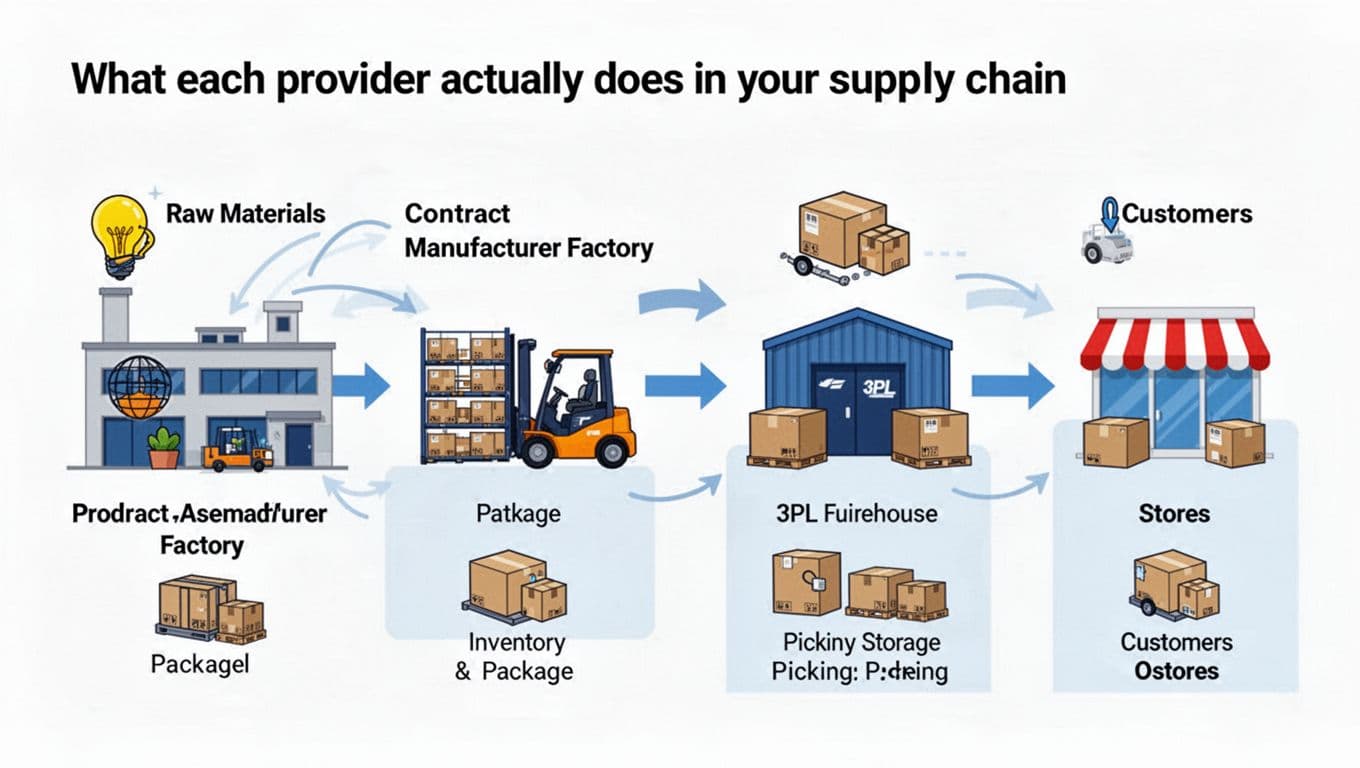
A contract manufacturer helps create or assemble the product
A contract manufacturer works on the product side of the chain. That can mean sourcing materials, running production lines, assembling parts, filling packages, labeling units, and checking quality before anything leaves the floor. If your item has tight specs, custom pack formats, or regulated handling needs, this is usually the partner you need.
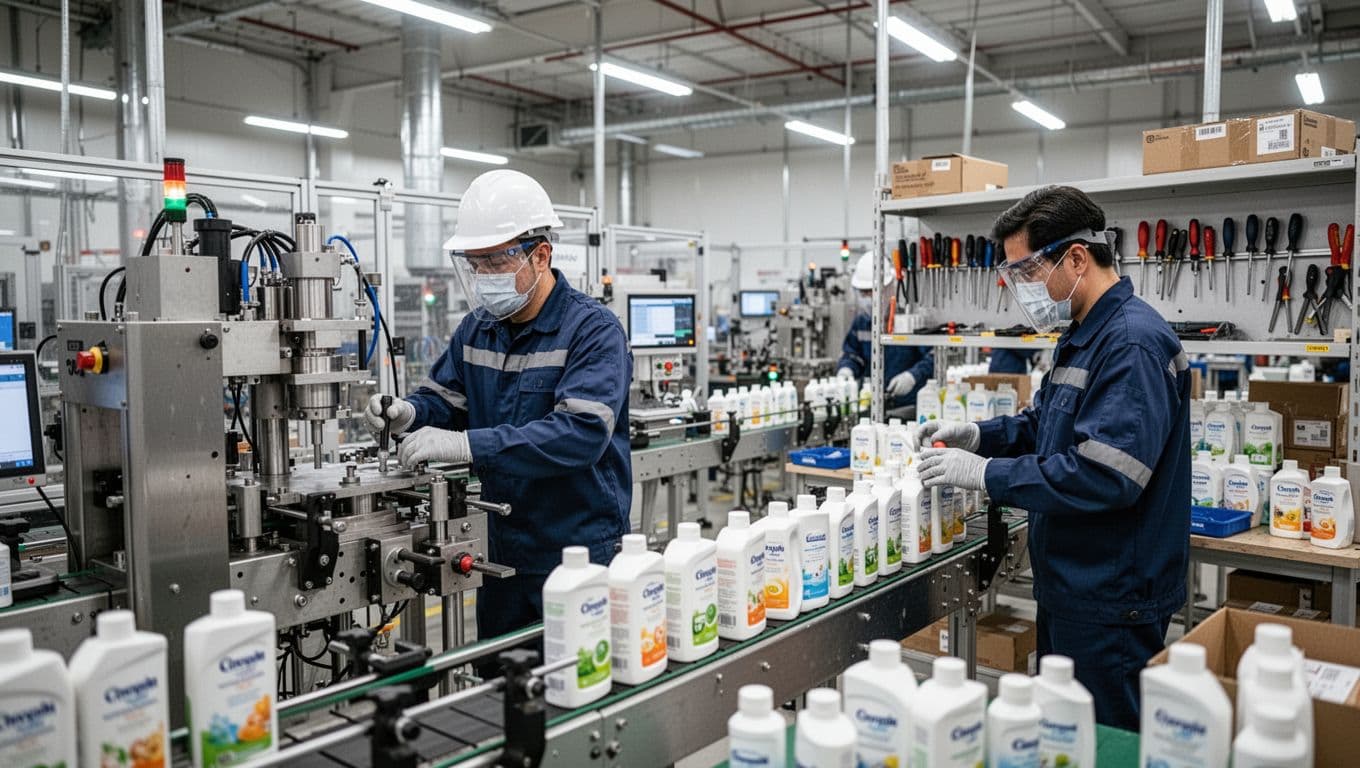
Many brands also use contract manufacturers for repeatable output. That’s a big deal when every batch has to look, fill, seal, or perform the same way. If you’re weighing when outsourcing production makes sense, this model often fits products that can’t afford inconsistency.
A 3PL provider takes over after the product is ready
A 3PL steps in once finished goods are produced. Its job is to store inventory, track stock, route orders, pick and pack units, manage retail compliance, and ship to stores or end customers. In other words, the product is already made, and now it has to move fast and accurately.
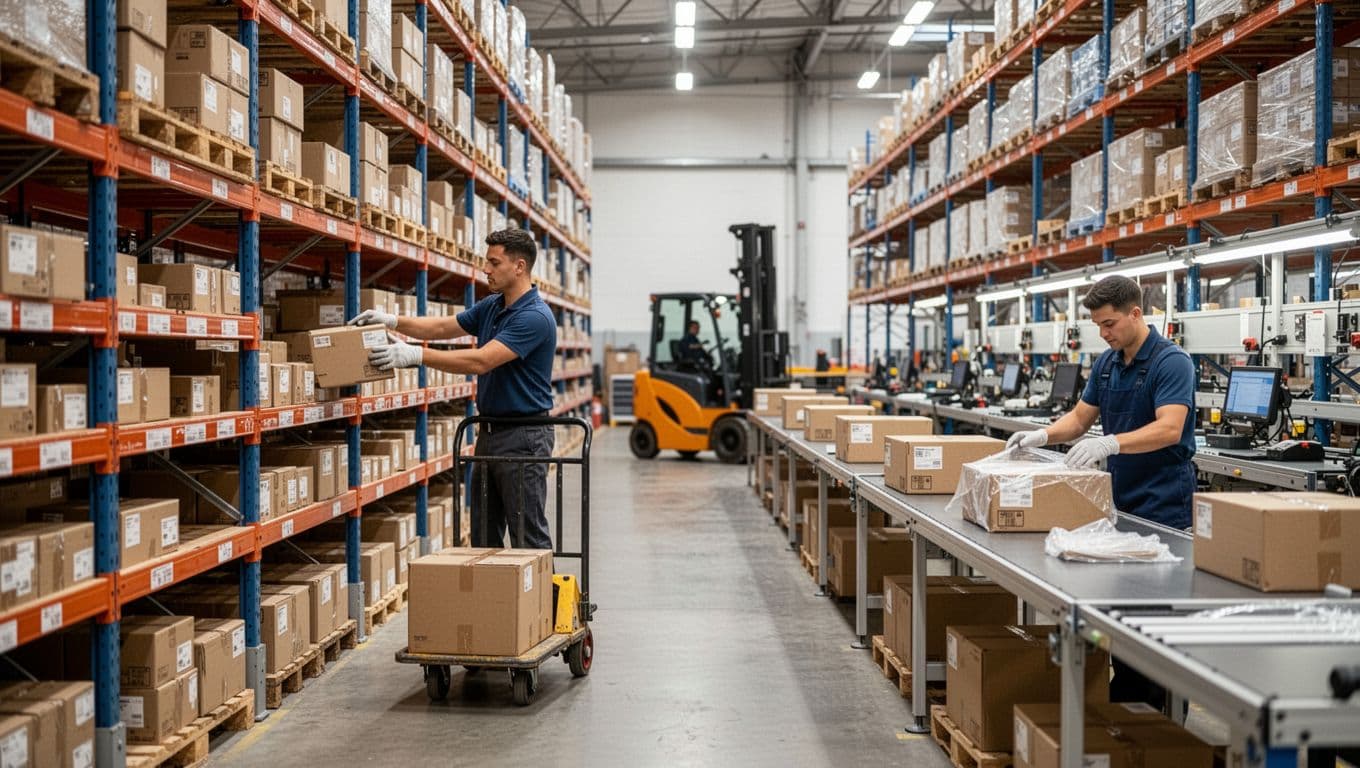
Current expectations are higher than ever. Brands want real-time inventory visibility, faster shipping, and room to flex during peak periods. They also need support for both B2B and D2C orders, which is why many teams look closely at the order fulfillment benefits a 3PL can bring.
Why some brands need both, not one or the other
For many companies, this is not an either-or choice. A brand might use a contract manufacturer or co-packer to make and package the product, then hand finished goods to a 3PL for warehousing and distribution. That split keeps each part of the process in expert hands.
Some providers combine packaging and fulfillment under one roof. That can reduce handoffs, limit delays, and cut freight costs between vendors. If your operation includes assembly, pack-out, and order shipping, a partner with outsourcing contract packaging steps plus fulfillment support can make the whole flow easier to manage.
The biggest differences come down to control, speed, and flexibility
This is where the choice gets practical. A contract manufacturer gives you tighter control over how your product is made. A 3PL gives you more freedom in how your product moves. If you’re deciding between them, think about what would hurt more right now, a quality miss or a shipping bottleneck.
For most brands, the answer isn’t abstract. It’s tied to growth stage, customer expectations, and how often things change.
Choose contract manufacturing when product quality and customization matter most
If your product has strict specs, contract manufacturing usually makes more sense. You can set tighter rules around materials, formulas, pack formats, testing, and production methods. That matters when a small change can affect shelf life, performance, or compliance.
For example, if you’re selling a food item, a personal care product, or a retail-ready bundle with exact packaging rules, you probably want more say in how every unit gets made. A contract manufacturer is built for that kind of control. You can define what goes in, how it gets handled, what checks happen during production, and what must happen before release.

This model also helps when compliance is part of the job. If your business needs traceability, documented testing, or repeatable production standards, deeper oversight is a major benefit. That’s why many teams spend extra time choosing the right contract packaging partner before they scale.
Still, more control usually comes with more setup. Line trials, approvals, documentation, and material planning take time. In many cases, you also commit to longer runs or longer-term agreements. So once production is live, quick changes can be harder. Think of it like laying train tracks, great for consistency, but not ideal if you need to switch direction every week.
Choose a 3PL when order volume changes fast and shipping speed matters
A 3PL is usually the better fit when demand moves up and down fast. If you sell online, run promotions, serve retailers, or deal with holiday spikes, logistics flexibility starts to matter more than production control.
That’s where shared warehouse space and pay-for-what-you-use pricing can be a big advantage. Instead of building your own network, you tap into space, labor, systems, and shipping workflows that already exist. As a result, you can expand faster without taking on the full cost of doing it yourself.
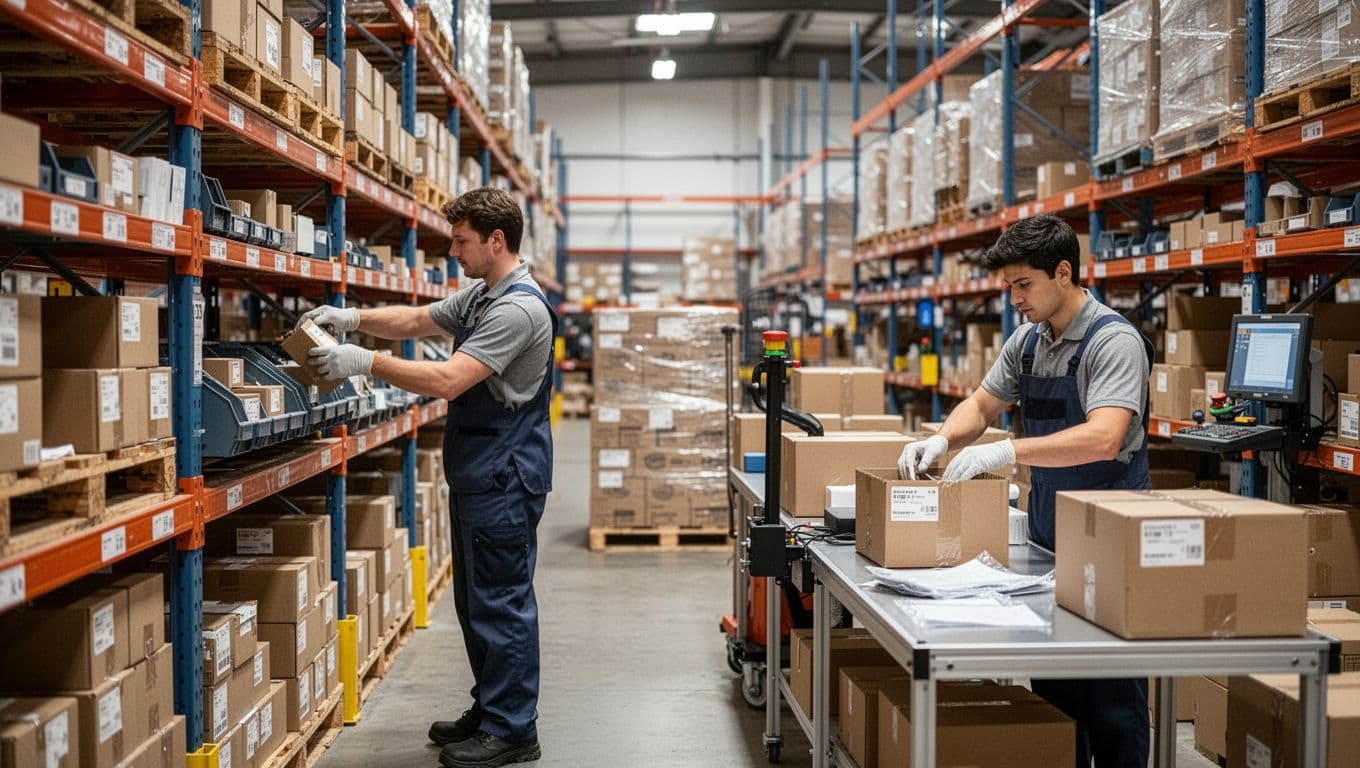
Picture a brand that gets steady sales most of the year, then triples volume during Q4. A 3PL can often absorb that jump better than an in-house team. The same goes for a brand adding new ecommerce channels or trying to meet stricter retailer ship windows. In those cases, 3PL value-added services can help you grow without building new logistics from scratch.
Understand the tradeoff between dedicated support and shared resources
Here is the real tradeoff. Contract manufacturing relationships are often more dedicated, customized, and process-specific. A 3PL usually runs on shared labor, shared space, and shared systems across multiple clients.
Neither model is automatically better. Shared resources can lower cost and make scaling easier. They can also help you stay flexible when volume is unpredictable. On the other hand, a more dedicated setup often gives you stronger process control and clearer accountability.
If your product itself is the risk, lean toward control. If fulfillment speed is the risk, lean toward flexibility.
In short, contract manufacturers tend to win on product precision. 3PLs tend to win on speed and scale. Your best choice depends on which side of the operation needs the most help right now.
How costs, contracts, and risk look different with each model
Price matters, but the shape of the deal matters just as much. A contract manufacturer and a 3PL can both lower workload, yet they change your cost structure in very different ways.
The easiest way to think about it is this: manufacturing often asks for more commitment up front, while 3PL fulfillment usually lets costs move with activity. That can be a strength or a problem, depending on how stable your product, demand, and forecasts really are.
Contract manufacturers often need a longer commitment upfront
Contract manufacturing usually comes with more setup before the first unit rolls out. Custom tooling, line configuration, quality checks, material sourcing, and production planning all take time and money. Because of that, many manufacturers want longer agreements, steadier forecasts, or minimum volume commitments.
That structure can work well when your product is proven and demand is fairly steady. In that case, the upfront effort may pay off through better unit economics, tighter consistency, and fewer surprises over time. If you want a closer look at quote structure, this co-packing pricing breakdown helps explain where setup and storage costs can show up.
Still, this model can feel tight for a brand that is testing channels, adjusting packaging, or changing forecasts every quarter. It is a bit like reserving a custom-built kitchen before you know your menu. You get precision, but you give up some room to pivot.
3PL pricing is often more flexible, but costs can move with volume
A 3PL usually charges in a more variable way. Instead of one large setup commitment, you often pay for what you use each month, such as storage, pick and pack, shipping, returns, and special projects like relabeling or kitting.
That approach supports cash flow because you are not tying as much money up front. It also helps when order volume changes fast, which is common in ecommerce, promo-heavy retail, and seasonal demand. Many providers now offer short terms or lower lock-in periods, which gives growing brands more breathing room.
The tradeoff is simple: monthly invoices can climb as volume rises. Peak season surcharges, added service requests, or slower-moving inventory can all push costs up. So while 3PL pricing looks lighter at the start, it can swing more from month to month.
The real cost includes errors, delays, and handoffs between vendors
The biggest risk is not always the base rate. It is what happens when the process breaks. A missed ship date can trigger retailer penalties. A packaging mistake can cause rework. Inventory errors can lead to stockouts, backorders, or rushed freight that wipes out your margin.
These hidden costs show up most when production, packaging, and fulfillment sit with separate partners. Every handoff creates another chance for delay, damage, or miscommunication. In other words, the rate card is only the tip of the iceberg.
That is why many brands look hard at integrated models. When packaging and fulfillment work together, there are fewer touchpoints, less extra freight, and clearer accountability. If your operation crosses both sides, contract packaging agreement essentials can help you spot risk before it turns into cost.
The cheaper quote is not always the lower-cost option. The real winner is the model that creates fewer mistakes, fewer handoffs, and less fire-drill work.
What type of business should choose each option
The best choice usually comes down to where the pressure is in your operation. Some businesses need tight control over how the product is made and packed. Others already have finished goods and simply need them stored, shipped, and delivered on time. And for many brands, the smartest answer sits in the middle.
Contract manufacturing is often best for specialized, custom, or regulated products
If your product has little room for error, contract manufacturing is usually the better fit. This is common for regulated product lines, custom kits, or retail programs with exact packaging rules. In those cases, repeatable output matters more than broad shipping flexibility.
A startup supplement brand is a good example. It may need precise fill levels, lot tracking, tamper seals, and batch testing before anything ships. The same goes for a health and beauty line with custom pack sizes, shrink-banded sets, or strict label placement. Here, production quality is the main risk, so you want a partner built for control.

This model also fits retail programs where presentation has to look the same every time. Think club-store multipacks, blister packs, or shelf displays that must meet buyer specs. If the product needs exact assembly steps or pre-grouped components, it helps to understand kitting in manufacturing explained before choosing a partner.
Choose contract manufacturing when the product itself is complex, sensitive, or hard to remake once it leaves the line.
3PL providers are often best for brands focused on storage, fulfillment, and delivery
A 3PL makes more sense when your goods are already made and your biggest challenge is moving them well. This is often the case for fast-growing ecommerce sellers, wholesale brands, and retail suppliers with rising order volume.
Picture an online brand selling skincare, apparel, or packaged consumer goods. The product is finished, but daily orders keep jumping around. One week is normal, the next week a sale doubles volume. A 3PL helps by handling storage, inventory tracking, pick and pack, shipping, and often returns. That support is especially useful when speed and accuracy affect customer reviews and repeat business.
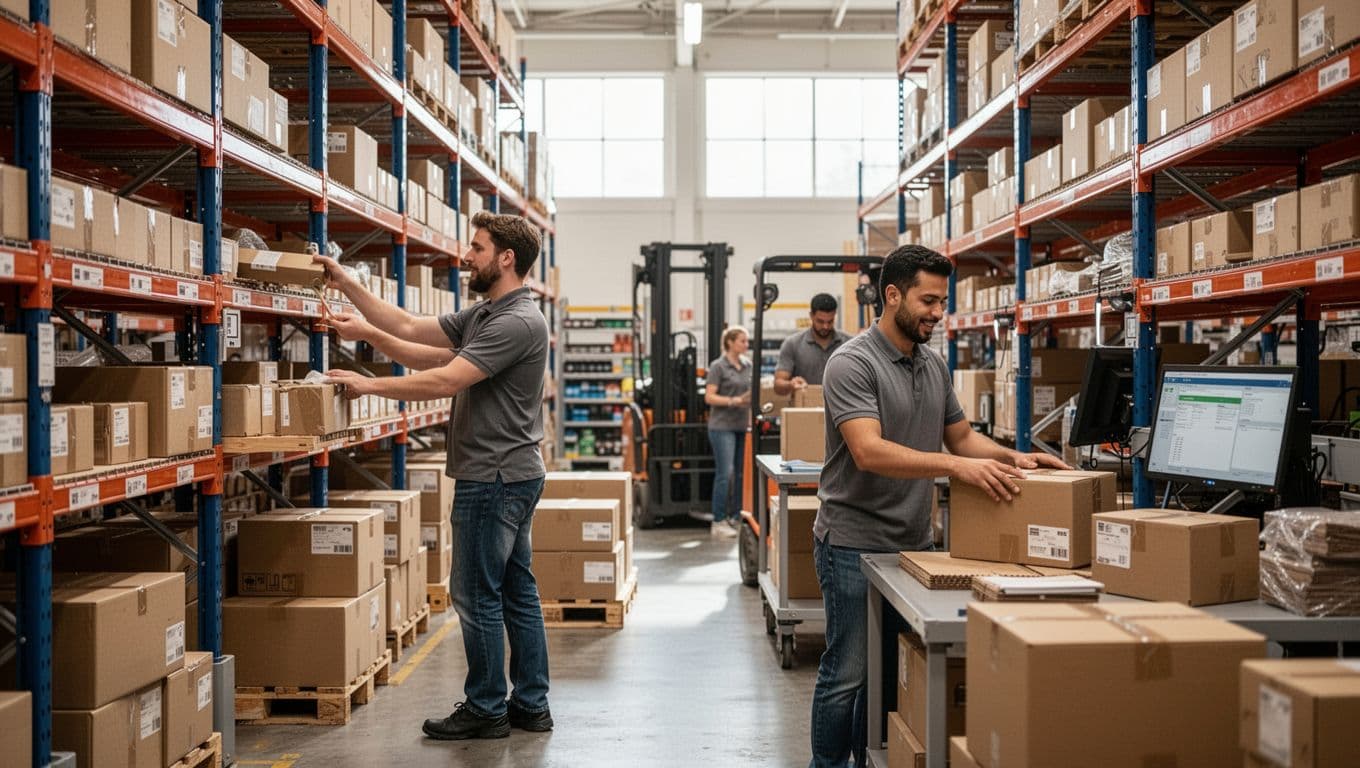
This option also works well for brands selling across channels. If you need to ship direct to consumers, send case packs to retail, and keep inventory accurate at the same time, a 3PL is built for that kind of flow. For brands in growth mode, end-to-end fulfillment services can give you the scale without building your own warehouse operation.
A hybrid model works well when you need production support and fulfillment support
Many businesses do not stay in one lane forever. A brand might need product assembly, relabeling, or promo pack-out before those goods move into normal fulfillment. In that case, a hybrid setup can save time and reduce handoffs.
A simple example is a retail promotion. Your core product may already be made, but now it needs a sample added, a new UPC applied, and the final pack turned into a shelf display. Or maybe an ecommerce seller wants subscription kits built, then shipped as orders come in. That is where combined support makes sense.
For those situations, services like shelf-ready packaging solutions or a strong repackaging services guide become part of the bigger picture. You still get production-side support, but you also keep fulfillment moving.
In short, choose the model that solves your biggest problem now. Then make room to blend both as your business grows.
Questions to ask before you decide on a partner
Before you pick a contract manufacturer, a 3PL, or a hybrid setup, slow the decision down. A good partner should fit the way your product is made, packed, and shipped today, but also the way your business is likely to grow next. Use these three questions as a quick filter. They help you spot whether you need production control, logistics flexibility, or a mix of both.
How complex is your product, and how much control do you need
If your product is simple and consistent, a standard fulfillment model may be enough. But if it involves custom materials, exact labeling, compliance rules, lot tracking, or frequent production changes, you need more than storage and shipping.

Ask yourself: who will manage the details that can go wrong before the order ever leaves the building? That includes:
- Materials and components, especially if substitutions are risky
- Customization and pack format, when every unit must match exact specs
- Labeling and compliance, if retail or regulated channels are involved
- Quality checks, when one missed step can create rework or returns
The more specialized the product, the more likely you need contract manufacturing or co-packing support. If you’re comparing providers, these 5 key factors for choosing a contract packing partner can help you pressure-test the fit.
How fast are your orders growing, and how much flexibility do you need
Now look at demand. Are orders steady, or do they jump with promos, seasonality, D2C growth, or retail launches? If volume moves like a dimmer switch, not a light switch, flexibility matters.
Fast-changing order patterns often point to 3PL strengths. A 3PL is built to absorb spikes, shift labor, and support new channels or regions without forcing you to rebuild the whole operation. That matters even more as brands keep favoring 3PLs for variable demand and lower upfront commitment.
If your biggest pain is changing order volume, not changing product specs, a 3PL usually solves the right problem.
Do you want one partner for packaging and fulfillment, or separate specialists
This question is about tradeoffs. One partner can reduce communication gaps, cut freight handoffs, and make accountability clearer. Fewer touchpoints often means fewer mistakes.
Still, separate specialists can make sense if your needs are highly unique. For example, you may want one expert for product assembly and another for fast multi-channel shipping. In short, choose one partner for simplicity, or choose two specialists for narrow, high-skill needs.
Conclusion
The simplest way to decide is to look at where your biggest problem starts. If the hard part is making the product right, with the right specs, quality checks, and pack format, contract manufacturing is usually the better fit. If the product is already finished and the real pressure is storage, order accuracy, and shipping speed, a 3PL is usually the better fit.
For many brands, though, the best answer is a combined model. That matters most when packaging, kitting, retail prep, and fulfillment all need to work together without costly handoffs. In those cases, integrated packaging and fulfillment solutions can help reduce delays, limit errors, and keep inventory moving with less friction.
The next step is practical. Map your workflow from production through delivery, then mark where delays, extra cost, or quality issues happen now. Once you can see the weak spots clearly, the right partner choice usually gets a lot easier.
