
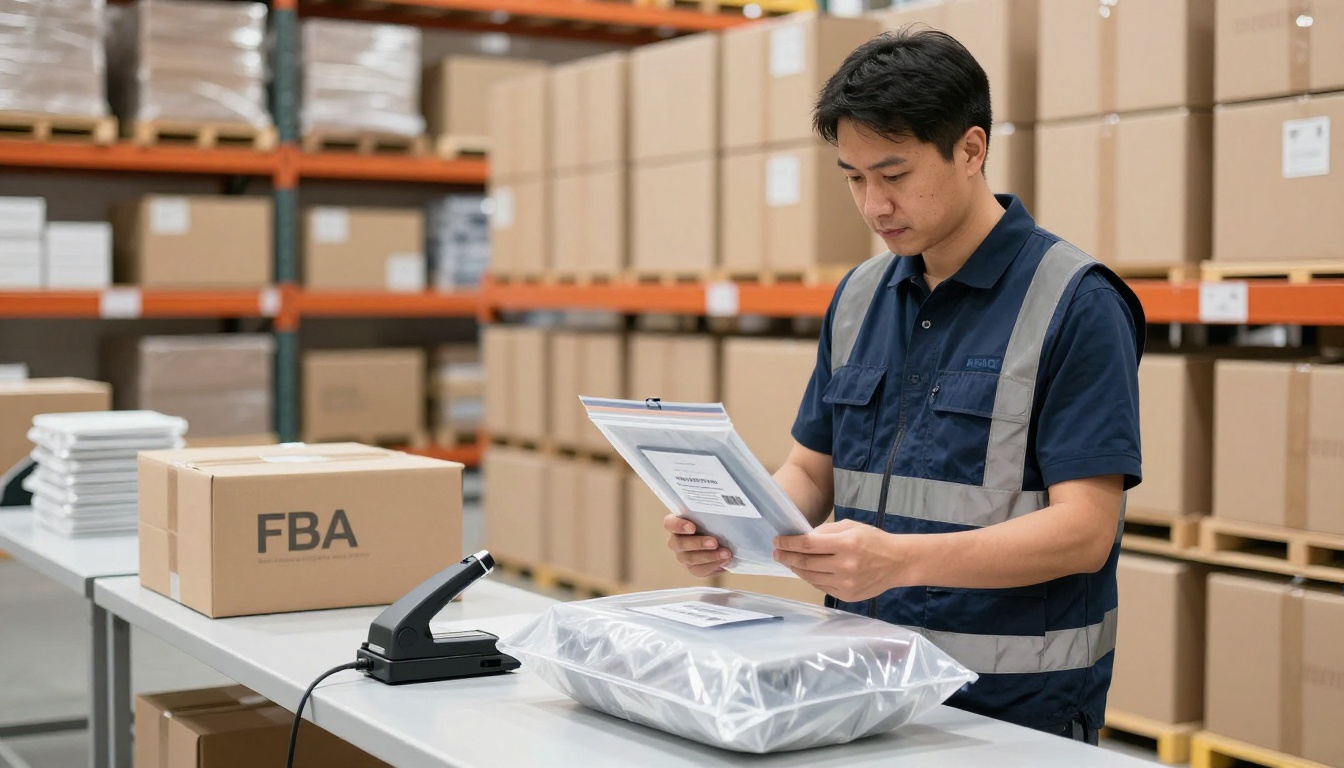
Amazon FBA Poly Bagging: 2026 Requirements and Costs
Products that arrive at an Amazon fulfillment center without the right prep can face delays, rework, extra handling, or customer complaints before they ever reach the shelf. Poly bagging helps protect items from dust, moisture, leakage, loose parts, and damage while supporting Amazon’s packaging and labeling requirements.
Amazon ended its US FBA prep and item-labeling services on January 1, 2026, so sellers must now prepare compliant inventory themselves or work with a qualified third-party provider. That change applies to inventory sent through US FBA, including shipments moving through programs such as AWD, AGL, Amazon SEND, and the Supply Chain Portal when they enter FBA. A reliable Amazon FBA prep service can handle tasks such as selecting the right bag, sealing each unit, applying required warnings and barcodes, checking finished units, and preparing cartons for shipment.
This guide explains what Amazon FBA poly bagging services include, the current US requirements, the preparation process, typical pricing factors, outsourcing options, and how to evaluate a provider’s quality controls, reporting, and capacity. Next, we’ll look at when Amazon requires poly bags and the specifications your products must meet.
Key Takeaways
- Amazon ended US FBA prep and item-labeling services on January 1, 2026, so inventory must arrive compliant.
- Poly bags generally need to be clear, sealed, at least 1.5 mil thick, and compatible with barcode scanning.
- Bags with openings measuring 5 inches or more when laid flat require a visible suffocation warning.
- Costs depend on bag materials, labor, labeling, inspection, volume, rework, storage, and shipping requirements.
- A qualified Amazon-compliant contract packaging provider can manage poly bagging, labeling, inspections, and shipment preparation.
Amazon FBA Poly Bagging Services: What Sellers Actually Get
Amazon FBA poly bagging is the process of placing a product inside a protective plastic bag, sealing it, labeling it, and preparing it for delivery to an Amazon fulfillment center. In 2026, this work matters even more because Amazon no longer provides US FBA prep and item-labeling services. Sellers must send inventory that already meets the required standards.
What the Poly Bagging Process Includes
A prep team first receives and checks the inventory against your SKU list. Workers inspect each unit for visible damage, confirm the product and packaging configuration, and select a bag that fits without crushing or leaving excessive loose material.
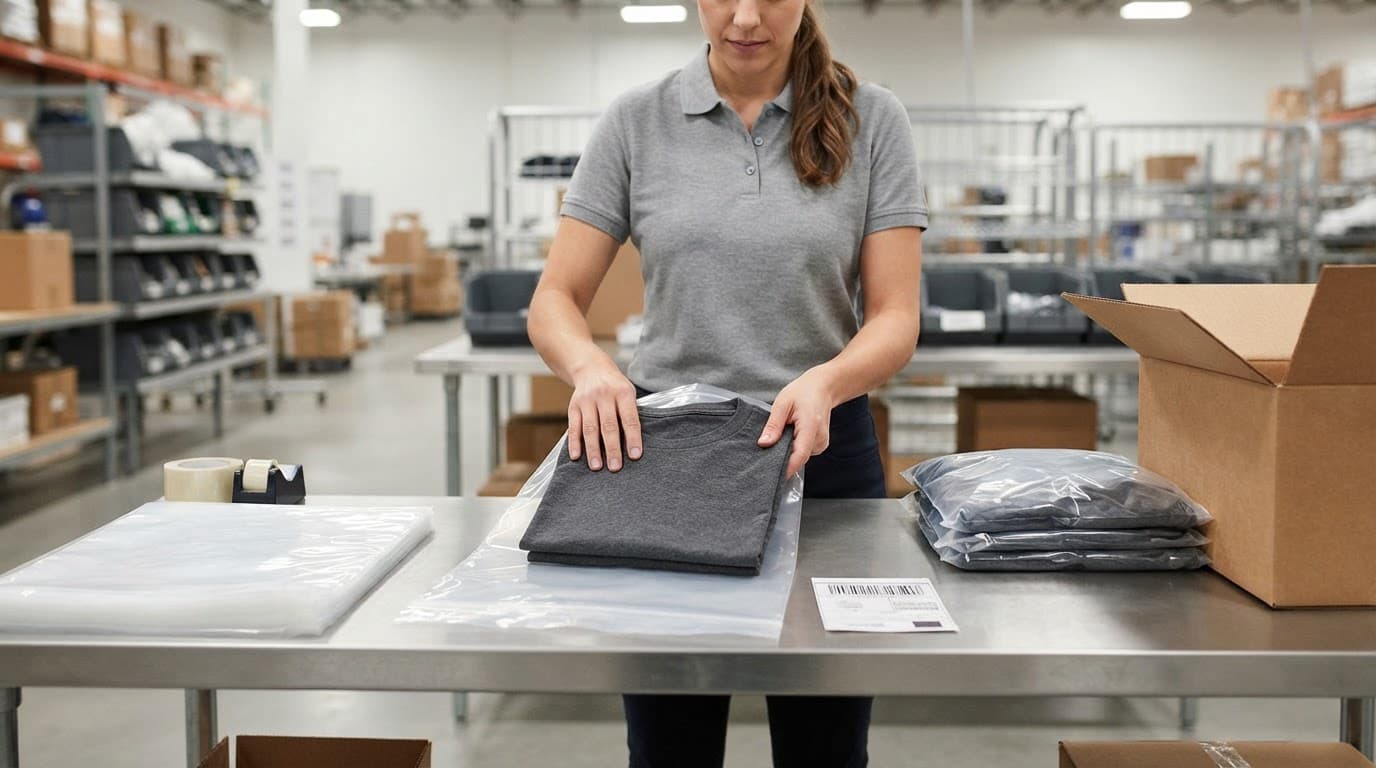
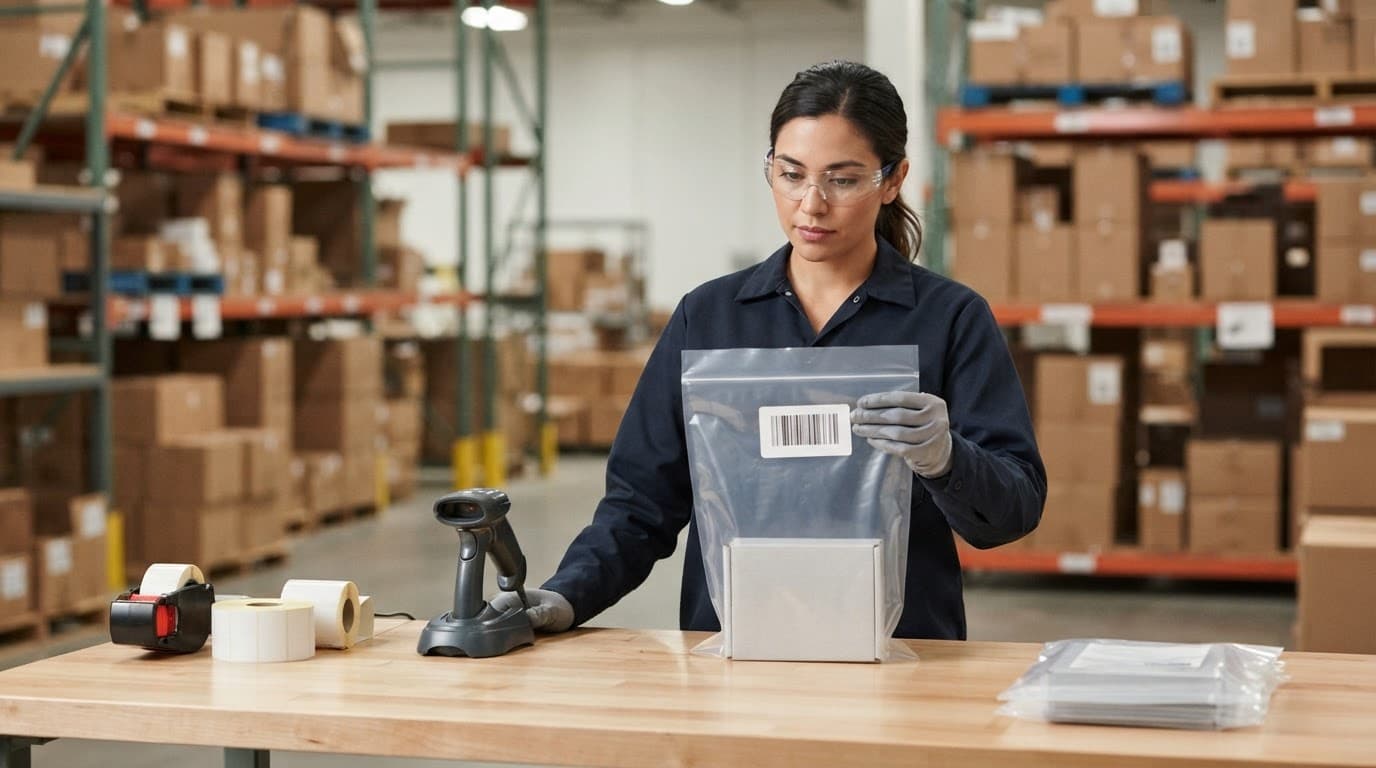
Next, the worker places the item inside the bag and closes it with an adhesive strip, heat seal, or approved tape. The bag must fully enclose the product, remain sealed during handling, and generally meet Amazon’s minimum thickness of 1.5 mil. Bags with openings of five inches or more when measured flat also need a visible suffocation warning.
The team then applies or verifies the FNSKU label. If the product’s barcode cannot scan clearly through the bag, the FNSKU usually goes on the outside where fulfillment center scanners can read it. A final check confirms that the label matches the correct SKU and does not cover important product information.
Which Products Commonly Need Bagging?
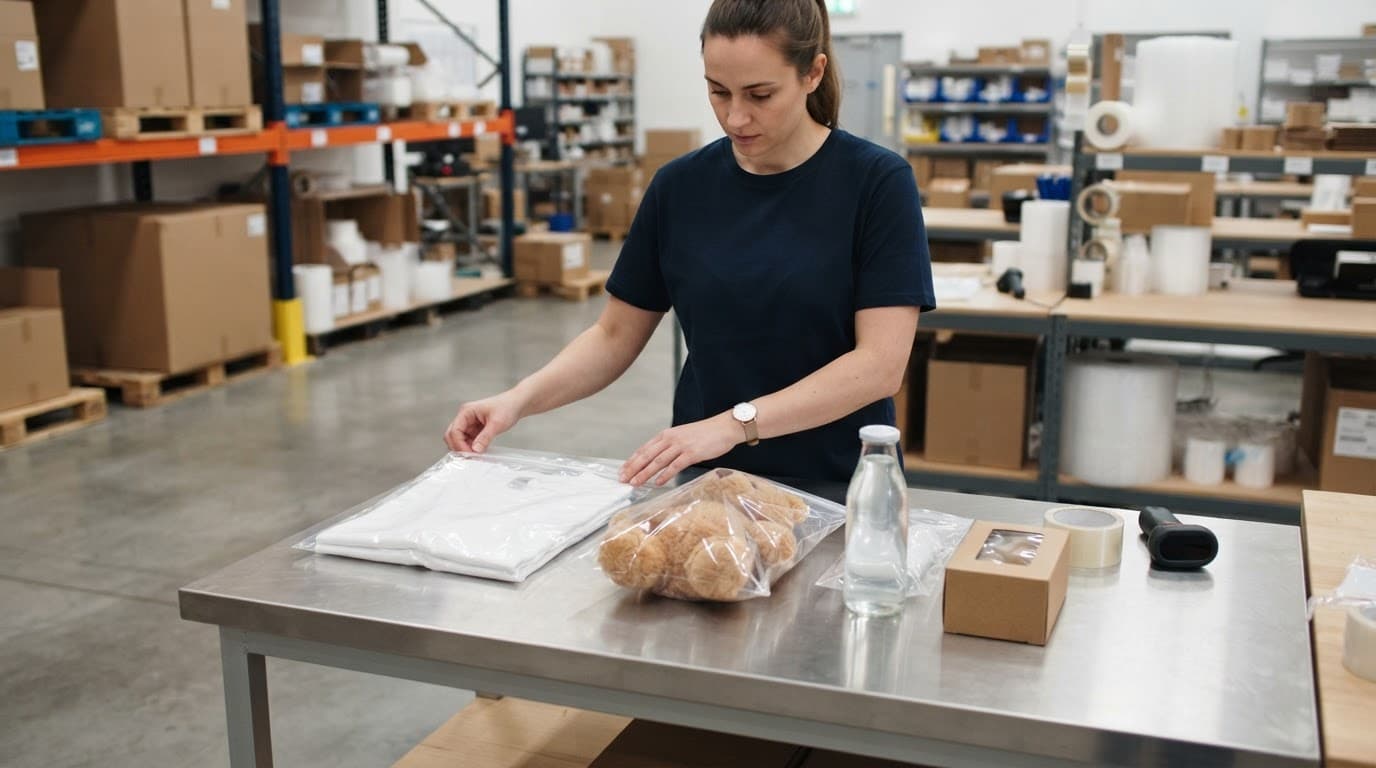
Poly bags protect products that could collect dirt, absorb moisture, spill, shed fibers, or lose small components during transit. Common examples include:
- Apparel, shoes, bedding, towels, and other textiles that need protection from dust and warehouse handling.
- Plush toys and fabric goods that can become dirty or damaged when shipped loose.
- Liquids, creams, powders, and other products that could leak or contaminate nearby units.
- Small parts, accessories, and products with loose pieces that need to stay together.
- Multipacks and bundled products that must arrive and scan as one sellable unit.
- Items with finishes that could scratch, scuff, or suffer moisture damage.
For liquids, standard bagging may not be enough. Amazon may require specialized testing and packaging controls, so sellers should review Amazon prep services that cover the product’s specific risk profile.
Bagging Versus Full FBA Prep
Simple poly bagging covers the bag, seal, warning label, and barcode. A full FBA prep service can also include receiving, inspection, repackaging, bundling, inserts, carton packing, carton labels, inventory counts, and shipment creation.
That broader support reduces handoffs and gives you one process for turning inbound inventory into shipment-ready units. It also creates clearer records when a unit fails inspection, needs rework, or requires a label correction before shipping.
Amazon Poly Bagging Requirements Sellers Must Meet in 2026
Amazon’s current US Seller Central guidance requires sellers to match packaging to each product’s risks. A compliant poly bag must fully enclose the item, be sealed, measure at least 1.5 mil thick, and leave no more than 3 inches of excess plastic beyond the product. Noncompliant units may be re-bagged, delayed, or held during receiving.
Which Products Usually Need Poly Bagging?
Amazon commonly requires bagging for products that could collect dust, leak, shed material, lose parts, or arrive as an incomplete set. Typical examples include:
- Clothing and fabric goods, such as shirts, bedding, towels, shoes, and plush toys. A bag keeps fabric clean and protects it from dust, moisture, and warehouse handling. Shoes also need packaging that leaves no shoe material exposed.
- Liquids, creams, gels, pastes, and powders, which could leak onto nearby inventory. Some products need added controls, such as a cap seal, so review Amazon liquid bagging services for product-specific preparation.
- Items with loose components, including craft supplies, hardware, accessories, and toys with detachable pieces. Bagging keeps every part with the main unit.
- Sets and multipacks that must remain together and sell as one unit. The bag prevents components from separating during transport or storage.
- Small items, which can be misplaced, damaged, or difficult to identify when shipped loose.
- Dust-, moisture-, scent-, or contamination-sensitive products, including polished goods, scented items, and materials that could transfer odors.
Adult products require opaque bagging or opaque shrink wrap, with the barcode placed outside where scanners can read it. The exact prep requirement still depends on the category, product packaging, and the latest instructions shown in Seller Central.
How to Check Bag Size, Thickness, Warning Labels, and Barcodes
Use this pre-shipment check before approving a finished unit:
- Choose a close-fitting transparent bag with enough room to insert and seal the product safely. Oversized plastic creates handling risks, so trim or replace bags when more than 3 inches extends beyond the item.
- Measure the bag opening while it lies flat. An opening of 5 inches or more requires a visible suffocation warning printed on the bag or added as a label.
- Confirm the film is at least 1.5 mil thick. Also inspect the warning for clear placement, contrast, and legibility. The commonly cited font scale is based on the bag’s total length plus width, but confirm the current Seller Central wording before production.
- Seal the bag completely with adhesive, tape, or an approved heat seal.
- Scan the barcode through the transparent bag. If it won’t scan, place the FNSKU or item identifier on the outside and test it again. Poor adhesion, covered codes, and wrinkled film can cause receiving delays.
Amazon’s current poly bag requirements should be checked again whenever a product, bag design, or category changes.
How the FBA Poly Bagging Process Works From Receiving to Shipment
A reliable third-party prep workflow follows a controlled sequence, so each unit can be traced from arrival through carrier handoff. Receiving, inspection, bagging, labeling, carton packing, and shipment verification should connect through documented scans and inventory records.
What Happens When a Unit Fails Inspection?
The provider should match the inbound shipment to the purchase order, SKU list, and expected quantities before work begins. Workers then inspect each unit for damage, leaks, missing components, incorrect packaging, and label or barcode problems.
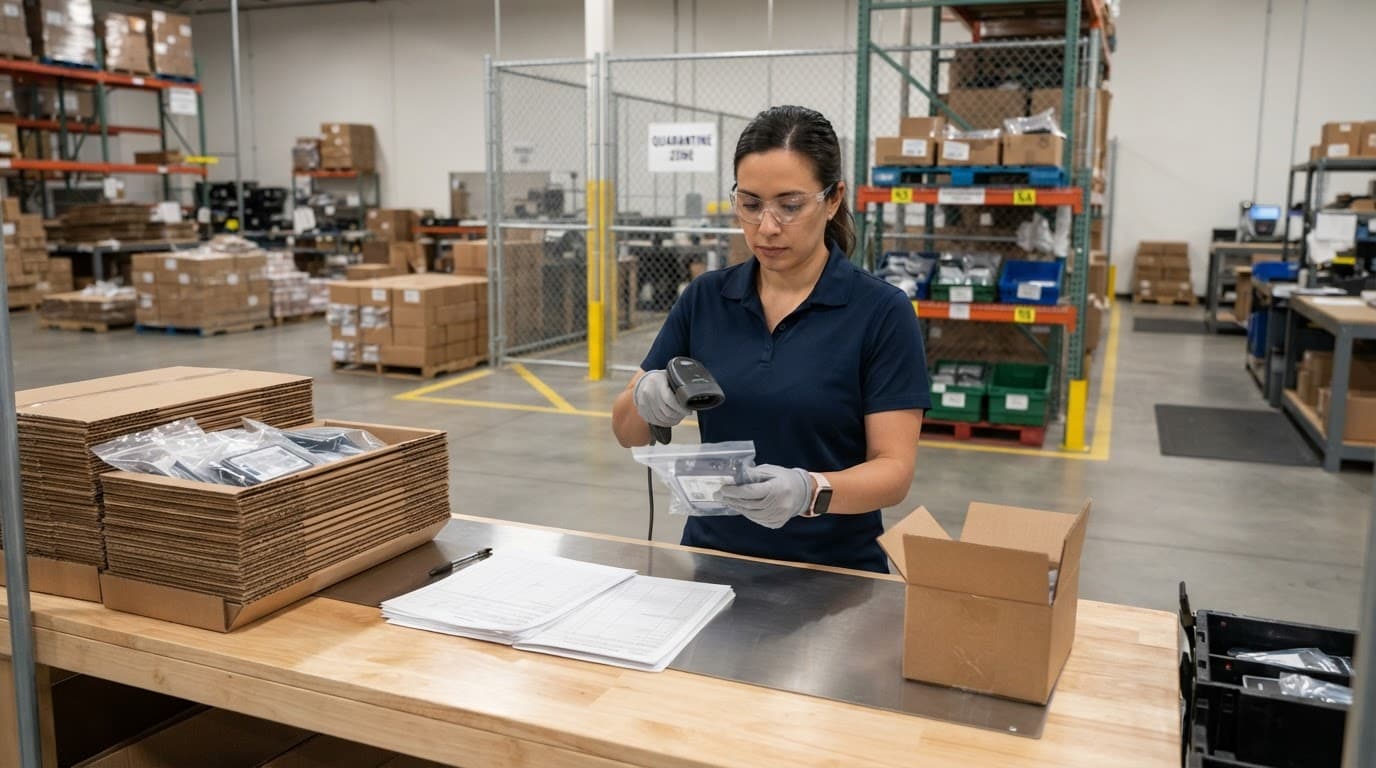
Any questionable product goes into a clearly identified quarantine area, separate from sellable inventory. This prevents a damaged bottle, mislabeled unit, or incomplete set from being picked accidentally. The exception record should include the SKU, quantity, lot or batch when relevant, defect type, photos, and the employee who found the issue.
An authorized person then approves the disposition. Depending on the problem, the provider may:
- Rework the unit with a replacement poly bag, seal, warning label, or FNSKU.
- Replace damaged packaging or missing components when approved.
- Return the product to the seller for review.
- Dispose of the unit when it cannot be sold or safely reworked.
- Release the unit only after a documented reinspection.
Approval records matter because they show why inventory was reworked, held, returned, discarded, or released. A provider should never mix suspect stock with finished units while waiting for instructions.
The Quality Checks That Prevent Amazon Receiving Problems
Quality control continues after bagging. Workers should scan the SKU at pick and pack, verify counts, inspect seals and label placement, review required warning labels, and confirm that the barcode scans through the bag or appears clearly on the outside. Sample checks can catch wrinkled film, inaccessible labels, seal failures, mispicks, and label swaps before cartons close.
Carton audits should compare packed quantities with the shipment plan. The team should also confirm carton labels, shipment documentation, carton strength, partitions, stretch wrapping, and suitable void fill. These materials protect master cartons during transit, but they don’t replace unit-level poly bagging.
Before carrier handoff, inventory reconciliation should confirm that received, reworked, quarantined, packed, and shipped quantities agree. Weekly exception reports reveal recurring damage or mismatches, while monthly trend reviews help identify root causes and corrective actions. Brands needing labeling, kitting, repackaging, and fulfillment in one operation can also consider contract packaging for Amazon brands.
How Much Do Amazon FBA Poly Bagging Services Cost?
Amazon FBA poly bagging costs depend on the product, monthly volume, and services included. Published US benchmarks commonly place bagging alone at $0.20 to $0.50 per unit, while broader FBA prep often costs $0.50 to $1.50 per unit after receiving, inspection, labeling, and shipment preparation.
At higher volume, standard prep rates may fall to roughly $0.40 to $0.75 per unit. Low-volume accounts can see about $1.00 to $1.50 per unit, especially when providers apply minimum monthly charges. These figures are planning benchmarks, not guaranteed quotes. Review the latest Amazon FBA packaging requirements before requesting pricing.
The Cost Factors That Change Your Per-Unit Rate
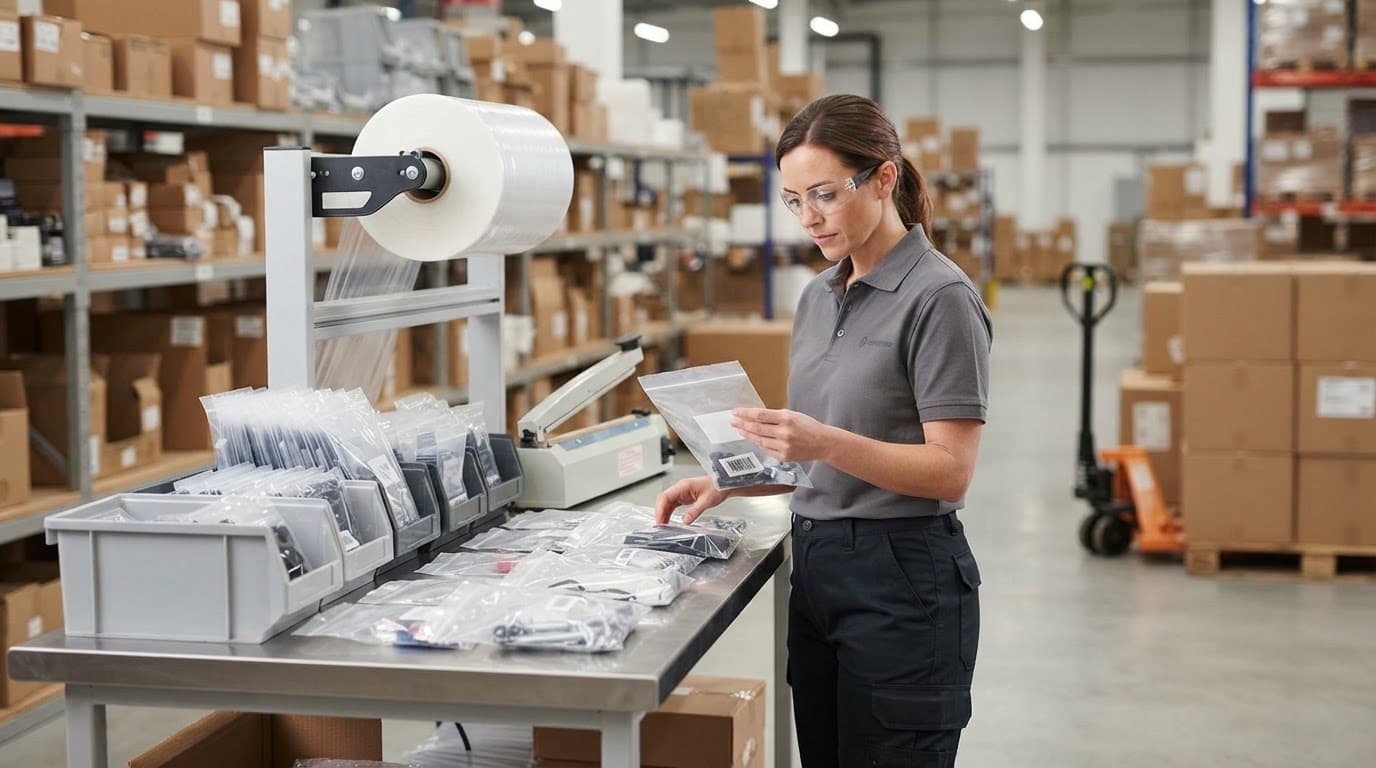
A liquid needs leak protection, cap checks, and sometimes additional sealing. Fragile goods may need bubble wrap or protective inserts, while apparel requires careful folding and packaging. Oversize units, irregular shapes, and products with sharp edges take more material and labor than compact standard-size items.
Seasonal demand can raise rates when a provider must add labor or reserve short-term capacity. Low SKU quantities may also cost more because setup, receiving, and equipment time gets spread across fewer units. Extra FNSKU labels, warning labels, relabeling, bundle assembly, and inspection steps add further charges.
Ask who pays for packaging redesign, failed validation, replacement samples, unused materials, storage, and inventory transfers. Also clarify fees for rework, disposal, bubble wrap, multipacks, freight accessorials, rush orders, and temporary dual operations during a warehouse transition.
How to Compare Quotes Without Missing Hidden Fees
Request an itemized quote that separates each cost instead of accepting one low bagging rate. It should identify:
- Receiving, inspection, and inventory counting.
- Poly bags, warning labels, FNSKU labels, and other materials.
- Labor, cartonization, and shipment preparation.
- Storage, rework, disposal, and inventory transfers.
- Freight accessorials, rush work, and minimum monthly charges.
Providers may charge fixed project fees, per-unit rates, pallet fees, or volume-based tiers. Compare the total landed prep cost, not just the advertised bagging fee.
A simple comparison formula is:
Outsourcing cost - (labor saved + materials avoided + error reduction + storage savings + freight savings) + transition costs
Include packaging redesign, sample runs, staff training, freight to the provider, and temporary dual operations. Test the assumptions with a 60 to 90 day pilot, then review actual unit costs, error rates, turnaround time, and peak-volume performance before signing a long-term agreement.
Should You Poly Bag Products Yourself or Hire an FBA Prep Partner?
The right choice depends on more than the quoted bagging rate. Compare labor, workspace, equipment, materials, quality checks, turnaround time, and the cost of mistakes under your actual sales volume.
When In-House Poly Bagging Is a Practical Choice
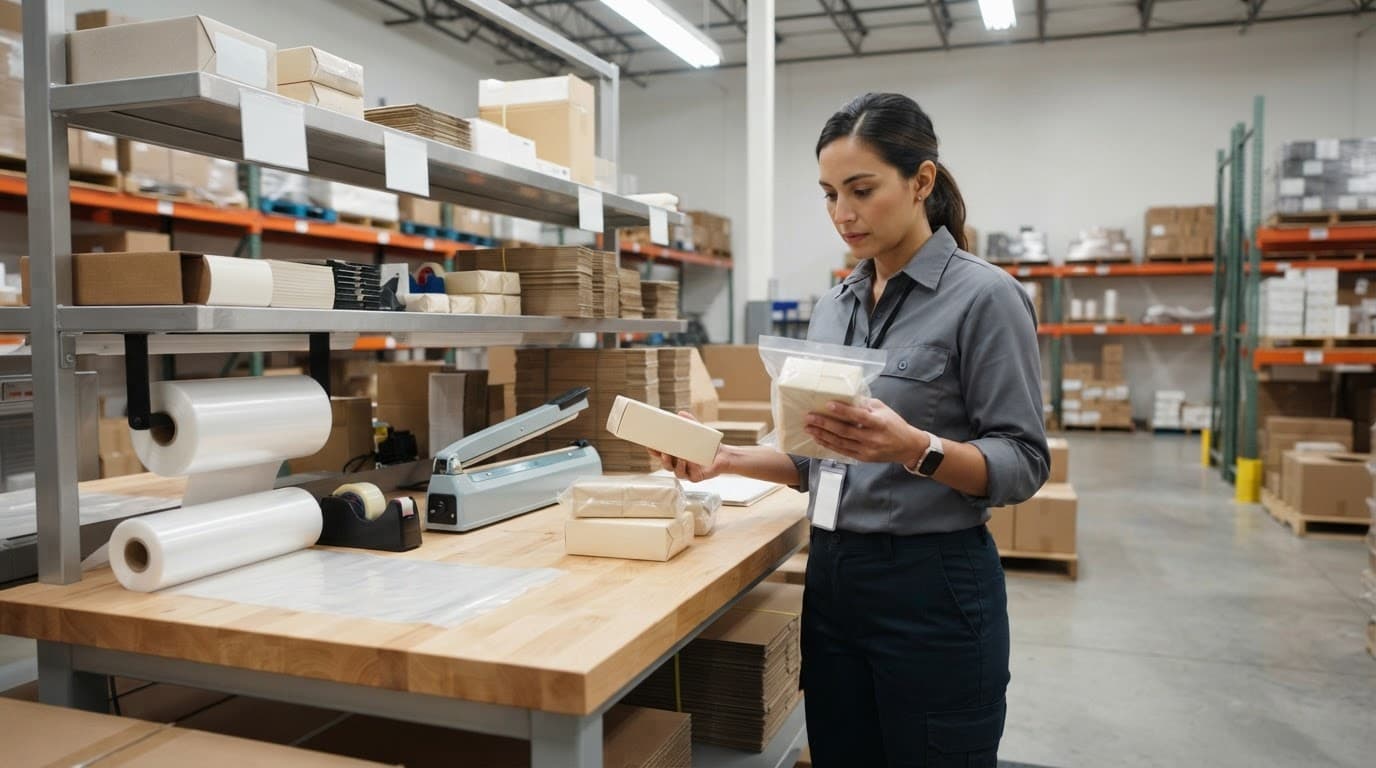
DIY preparation can work well for a small seller or established brand with predictable volume, few SKUs, and simple products. A stable flow of repeat items makes it easier to train staff, order supplies, and maintain a consistent packing routine. Existing warehouse space, a label printer, barcode scanner, clean worktables, and available employees can also reduce the added expense.
Before starting, create a written Amazon compliance checklist. It should cover bag thickness, sealing, excess plastic, suffocation warnings, barcode visibility, SKU matching, carton counts, and final inspection. Assign one person to control label files and verify that the correct FNSKU reaches each product.
Internal labor is not free, even when employees are already on the payroll. Track:
- Minutes spent bagging, labeling, inspecting, and packing.
- Poly bags, warning labels, printer supplies, and replacement materials.
- Errors, rework, damaged units, and inventory discrepancies.
- Overtime, training, equipment, storage space, and missed higher-value work.
A growing brand may start internally, then reach a point where promotions, new SKUs, or seasonal launches overwhelm its packing area. Review the numbers before that bottleneck affects replenishment.
When Outsourced FBA Prep Creates More Value
An FBA prep partner can absorb labor spikes without requiring permanent hires, extra equipment, or warehouse expansion. Outsourcing often fits brands with many SKUs, fragile or liquid products, frequent promotions, limited space, retail compliance needs, or rapidly changing order volumes.
A capable provider can combine poly bagging with labeling, kitting, repackaging, inspection, storage, carton preparation, and shipment coordination. A 3PL may also manage fulfillment, returns, inventory counts, and transportation, giving you one operating partner across Amazon and other sales channels. Compare FBA and 3PL fulfillment options before choosing a model.
Small sellers may prefer outsourcing because variable fees are easier to manage than idle staff and unused supplies. High-volume operations may keep routine SKUs in-house while sending complex or seasonal work to a prep center.
The best choice is the one with the lowest total operating cost, not necessarily the lowest unit price. Include receiving fees, storage, freight to the provider, minimums, rework, rush charges, and transition costs. Then test the arrangement with a limited SKU group for 60 to 90 days, measuring accuracy, turnaround time, damage, and actual cost per sellable unit.
How to Choose a Reliable Amazon FBA Poly Bagging Provider
A dependable provider should offer more than a low per-unit bagging rate. Evaluate its Amazon prep experience, category knowledge, inventory controls, facility security, insurance, capacity, and ability to support your operation as it grows.
The Questions to Ask Before Signing a Prep Agreement
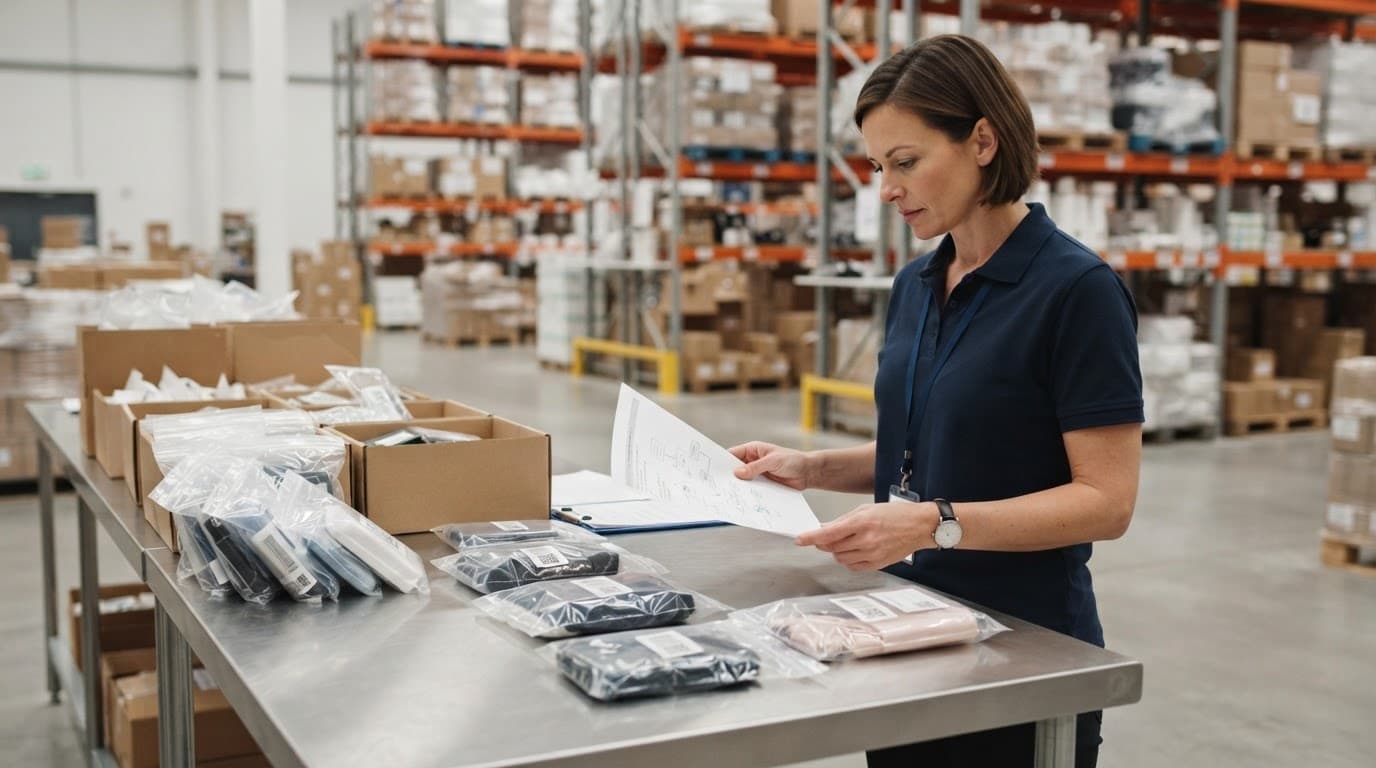
Request a sample workflow, quality report, references, insurance certificate, and itemized pricing sheet. Then confirm:
- Which charges apply to receiving, materials, storage, rework, rush orders, disposal, and packaging changes?
- Are there minimum monthly volumes, storage minimums, or peak-season surcharges?
- When does the receiving clock start, and how quickly will the provider count, inspect, and prep inventory?
- Who approves rework, relabeling, disposal, or release of nonconforming units?
- Who owns inventory during storage, and who pays for loss, damage, mispicks, or Amazon rejections?
- How does the facility protect confidential product, packaging, pricing, and customer information?
- What capacity is reserved during Prime-related demand spikes or seasonal launches?
- What insurance covers inventory while it is being received, stored, bagged, relabeled, and shipped?
- Does the service-level agreement include accuracy targets, turnaround times, reporting duties, and service credits?
- How often will you receive inventory, damage, rework, and exception reports?
- What happens to your inventory, data, materials, and open orders if the agreement ends?
The contract should define scan points at receiving, picking, packing, and shipment. Ask about cycle counts, lot or batch control, returns handling, label-swap prevention, damage categories, and root-cause corrective actions. Document every bag thickness, warning label, seal method, barcode position, SKU configuration, inspection rule, and approval step in a signed SOP.
For brands adding retail or direct-to-consumer orders, verify whether the provider can also coordinate inbound transportation, meet carton and pallet requirements, and support integrated inventory and order fulfillment.
The Warning Signs of a Weak Prep Operation
Be cautious when a provider offers unclear pricing, vague turnaround promises, or refuses to share a sample report. Other warning signs include:
- No barcode scans or independent count checks.
- Inventory reports that show totals without exceptions or locations.
- No quarantine area for damaged, mislabeled, leaking, or incomplete units.
- Limited peak capacity with no staffing or overflow plan.
- Refusal to run a small pilot before a long-term commitment.
- Inability to explain how Amazon bagging, warning, sealing, and barcode rules are checked.
A low advertised price can become expensive after rework, relabeling, delayed replenishment, Amazon chargebacks, and inventory discrepancies. Choose the provider that can show how it prevents errors, isolates failures, and fixes recurring causes before they reach Amazon.
Common Poly Bagging Mistakes That Delay FBA Inventory
Small packaging errors can stop an otherwise complete shipment at receiving. A bag that tears, a barcode that will not scan, or an incorrect FNSKU can create rework, delays, and customer complaints. Written work instructions and a final audit help prevent these problems before cartons leave your facility.
A Final Pre-Ship Checklist for Sellers
Use one approved checklist for every SKU, especially when multiple employees or a third-party prep provider handle the work. Confirm each point before releasing inventory:
- Match the product identity, SKU, and quantity against the shipment plan and purchase order.
- Confirm the bag is at least 1.5 mil thick, fully encloses the product, and uses the approved size and material.
- Use a transparent bag when the barcode must scan through it. Use opaque packaging only when the product requirement calls for it, such as adult products.
- Check that the bag is completely sealed with an adhesive strip, tape, or approved heat seal. No opening should expose part of the item.
- Add a visible suffocation warning when the bag opening measures 5 inches or more when laid flat.
- Scan the barcode through the bag, or scan the outside label if the code cannot read through the film.
- Verify that the FNSKU matches the exact product and condition. Never rely on a similar-looking label from another SKU.
- Confirm that excess plastic extends no more than 3 inches beyond the product dimensions.
- Separate SKUs during storage and packing. A final count should confirm that no units, colors, sizes, or variations were mixed.
- Remove damaged, leaking, dirty, or incomplete units from sellable inventory and record the corrective action.
- Reconcile carton counts, carton contents, shipment labels, and shipping plan details before carrier handoff.
- Confirm that the first-article sample and any approved exception match the finished units.
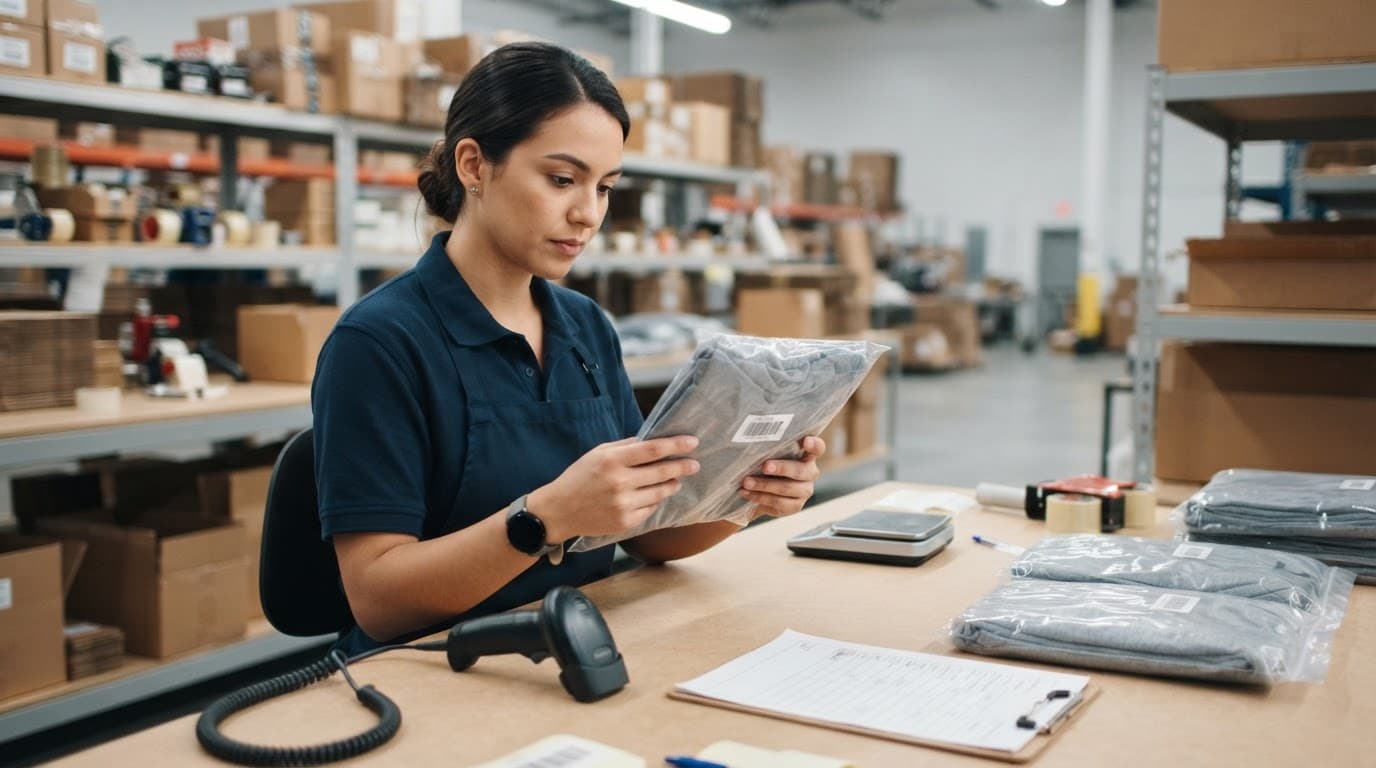
A first-article approval should happen before full production. Keep the approved sample, packaging specifications, label files, scan results, and inspection photos with the SKU record. If an audit finds a failed seal, wrong label, exposed product, or excessive plastic, quarantine the affected units, correct the work instruction, and document the reinspection.
A fast packing line does not help when every unit needs rework after Amazon receives it.
Amazon’s Seller Central rules and service policies can change, so review the current FBA labeling and packaging requirements before each new product launch, packaging change, or seasonal shipment. A current rule check belongs in the go-live approval, not after inventory is already in transit.
Frequently Asked Questions
Amazon FBA poly bagging rules are easier to manage when you separate product requirements from service pricing. These answers address common questions that remain after reviewing the preparation process, compliance checks, and outsourcing options.
Does Amazon still provide poly bagging and FNSKU labeling for US sellers?
No. Amazon ended its US FBA prep and item-labeling services on January 1, 2026. Sellers must now prepare inventory before shipment or use a qualified third-party prep provider that can bag, label, inspect, and document each unit correctly.
What thickness must an Amazon FBA poly bag be?
Current Amazon US guidance calls for poly bags with a minimum thickness of 1.5 mil. The bag must also fit the product properly, close securely, and meet any added requirements for the product category or packaging type. Check Seller Central before ordering materials because Amazon can update requirements by marketplace or product.
When does an FBA poly bag need a suffocation warning?
A bag needs a suffocation warning when its opening measures 5 inches or more when laid flat. You can print the warning directly on the bag or apply it as a separate label in a prominent, readable position. Before placing a large material order, verify Amazon’s current wording, print size, contrast, placement, and legibility rules.
Can a poly bag cover the product barcode?
Yes, a transparent bag can cover the barcode if scanners can read the code clearly through the film. If wrinkles, glare, product placement, or thick packaging interfere with scanning, place the FNSKU or other required item identifier on the outside instead.
Always test finished units with the same type of scanner used in your workflow. The barcode must be accurate, unobstructed, firmly attached, and scannable without opening the package.
What is a normal price for FBA poly bagging?
Published planning benchmarks place bagging alone at about $0.20 to $0.50 per unit. However, a complete quote may cost more after receiving, inspection, labeling, storage, special handling, shipping preparation, and rework are included.
Ask for an itemized quote that separates fixed fees, per-unit charges, material costs, minimums, and exception work. The lowest bagging rate may not produce the lowest total cost.
Can an FBA prep company also handle fulfillment and returns?
Many 3PL and contract packaging providers can connect FBA prep with storage, order fulfillment, returns inspection, repackaging, and transportation. That arrangement can reduce handoffs, especially when the same inventory supports Amazon, wholesale, and direct-to-consumer orders.
Before signing, confirm the exact services, warehouse systems, turnaround times, inventory reports, return-condition rules, and approval process for disposal or rework. Brands comparing Amazon FBA and contract packaging should also review minimums, storage fees, service levels, and peak-season capacity.
Conclusion
Poly bagging is both a compliance requirement and a product-protection step. A properly sized, clear bag with at least 1.5 mil thickness, a secure seal, limited excess plastic, and a visible suffocation warning when required helps protect inventory from dust, moisture, leaks, loose parts, and handling damage. Accurate FNSKU labeling and barcode scans are just as important because a well-protected product can still create receiving problems if Amazon cannot identify it correctly.
Since Amazon no longer provides US FBA prep and item-labeling services, sellers must control these checks before inventory ships. Strong receiving records, quarantine procedures, first-article approvals, and final inspections reduce the risk of mislabeled or nonconforming units reaching Amazon. Products with added liquid protection needs may also require Amazon-compliant shrink packaging services.
Review Amazon’s current requirements, audit your product mix, and identify which SKUs need standard or specialized preparation. Then request an itemized quote that includes materials, labor, receiving, storage, rework, labeling, and freight. Run a limited 60- to 90-day pilot before scaling. The best poly bagging solution protects the product, meets Amazon’s rules, and delivers a reliable total cost per sellable unit.
